REVIEW · ROME
Colosseum with Arena Floor & Ancient Rome, Semi-Private Tour
Book on GetYourGuide →Operated by LivTours - We craft tours, you live them · Bookable on GetYourGuide
A day at the Colosseum can feel like a blur. This one breaks the grid: Arena Floor access plus a small group means you actually hear the stories instead of just sprinting past stone.
You also get a guided walk through the Roman Forum area’s big ideas, from government-space to entertainment and ritual. One thing to watch is the practical side: you’ll need photo ID for entry, and the Colosseum start time can shift based on ticket availability.
In This Review
- Key things to know before you go
- Meeting Largo Gaetana Agnesi and getting your bearings fast
- Victor Emmanuel Monument to the Roman Forum excavation zone
- Curia streets, Caesar’s altar, and a serious underground stop
- Arch of Constantine and Arch of Septimius Severus: victory made stone
- Walking onto Palatine Hill and why it changes the story
- Entering the Colosseum: fast-track tickets that actually save time
- The Arena Floor: the close-up access that justifies the price
- Colosseum exits into the Roman Forum finish
- Price and value: what you’re paying for (and what you’re not)
- Who should book this semi-private Colosseum and Ancient Rome tour?
- A quick practical checklist before you go
- Should you book this tour?
- FAQ
- How long is the Colosseum with Arena Floor & Ancient Rome tour?
- Where do we meet for the tour?
- Which parts of the Colosseum and Ancient Rome are included?
- Is skip-the-line entry included?
- Do I need photo ID for entry?
- Is luggage allowed during the tour?
- Is this tour suitable for wheelchair users?
Key things to know before you go
- Arena Floor access: see the level gladiators stood on, not just the view from below
- Fast-track entry: priority tickets help you skip the main ticket line
- Small group size (max 6): easier questions and a more human pace
- Roman Forum + Palatine Hill combo: you’ll connect the political city to the imperial city
- Victor Emmanuel Monument viewpoint: you get orientation over Ancient Rome before the walking starts
- Local, story-first guides: guides may include names like Francesca, Elena, and Giorgio
Meeting Largo Gaetana Agnesi and getting your bearings fast
This tour starts at Largo Gaetana Agnesi, in front of the SOS sign outside the Colosseum Metro station on the upper level. It’s a small detail, but it matters: the station has an upper and lower entrance, and you’ll want the one with the SOS sign on top. Arriving 10–15 minutes early lets you calm your nerves and meet everyone before the group tightens up.
I like this start because it sets the rhythm. You’re not wandering aimlessly for your first hour; you’re pointed toward orientation, then you move into the ruins with a plan.
The tour runs about 3 hours, and the exact order of stops can change depending on the Colosseum time slot. That flexibility is normal for ticketed attractions in Rome, but it’s good to know so you’re not surprised if Palatine Hill or Forum timing shifts.
You can also read our reviews of more private tours in Rome

Victor Emmanuel Monument to the Roman Forum excavation zone
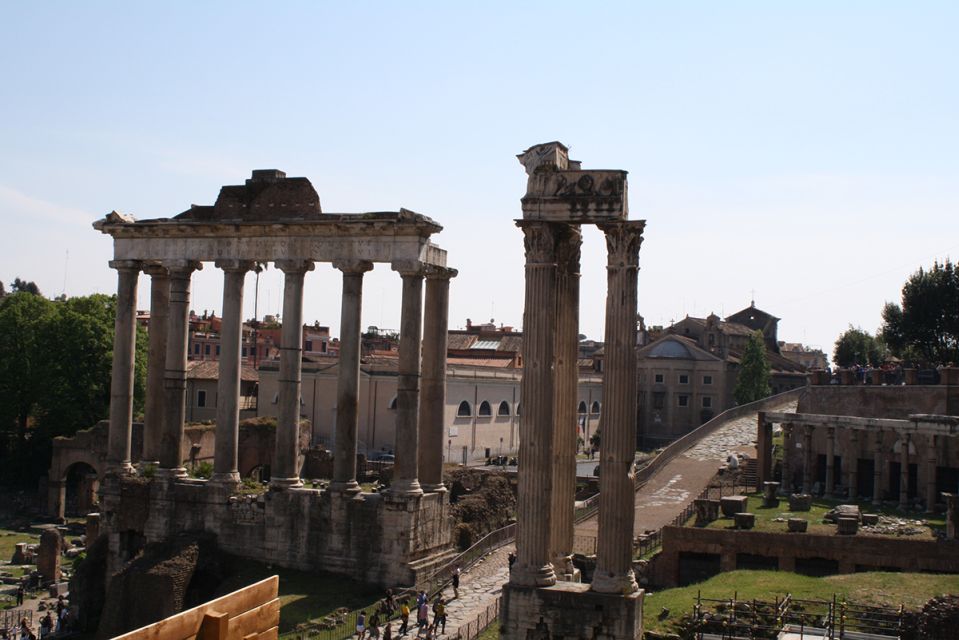
Before you hit the Colosseum, you’ll go to a viewpoint at the Victor Emmanuel Monument for an overview of the heart of Ancient Rome. If you’ve ever been in Rome and felt like the ruins are everywhere and nowhere at once, this is the antidote. Seeing the layout first helps everything you walk through later make more sense.
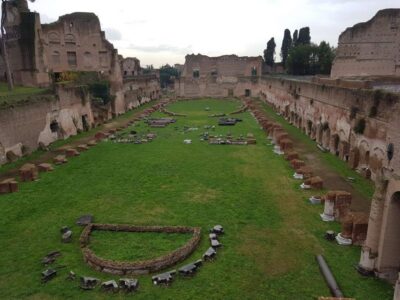
Then you head down to the Roman Forum excavation site. This is where the city stops feeling like a theme park and starts feeling like a functioning place. You’ll look at remains of temples, basilicas, government buildings, and entertainment centers—structures that explain how power, law, religion, and public life tangled together.
Curia streets, Caesar’s altar, and a serious underground stop
One of the most memorable parts is the walk along cobblestone roads used long ago, where heated political debate happened between senators in the Curia. You get the sense that this was not just a backdrop for photos. It was the stage for decisions that shaped daily life far beyond the Forum.
You’ll also see the altar where Julius Caesar was cremated. Even if you don’t know the full sequence of events, the guide’s storytelling typically connects the symbol to the shock behind it: Rome absorbed power shifts through ceremony, not just policy.
Next comes the underground prison where Saints Peter and Paul were interned. It’s a different tone from the political stones above, and that contrast helps you understand why visitors keep returning to this area across centuries. Rome doesn’t give you one mood; it gives you layers.
Arch of Constantine and Arch of Septimius Severus: victory made stone
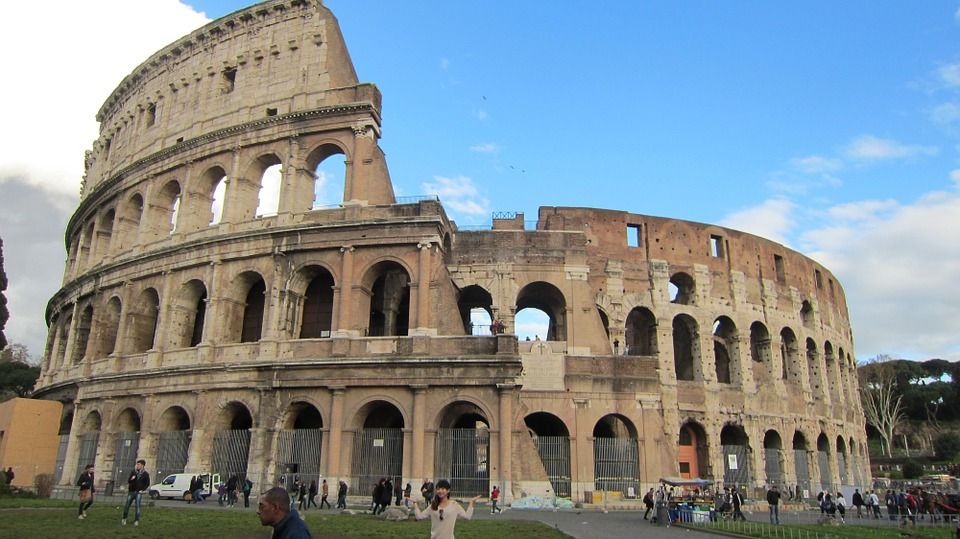
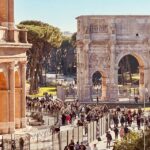
You’ll view the Arch of Constantine and the Arch of Septimius Severus as part of the imperial narrative. Arches like these weren’t built for decoration. They were built to say: remember this moment, remember who won, and remember who deserves authority now.
This is where you’ll start noticing how Roman power liked repetition. Themes of victory, legitimacy, and control show up again and again, and arches make those themes visible at street level—right where you’re standing.
Walking onto Palatine Hill and why it changes the story
Palatine Hill is more than a stop on the map. It’s one of the key places that helps you understand Rome as an empire centered on status. You’ll get a guided visit here, with your guide linking what you’ve already seen (government and ceremonial space) to what came next: the imperial world.
Even if you’re not a “ruins person,” Palatine Hill is useful. From here, the city feels like it’s been built, expanded, and reclaimed repeatedly—like Rome kept upgrading its own foundation.
One practical note: this part involves walking, and you’ll be on uneven ground. If your footwear is only good for smooth sidewalks, consider switching to something sturdier.



Entering the Colosseum: fast-track tickets that actually save time
When you finally reach the Colosseum, you’ll skip the long ticket line with priority access. That matters more than it sounds. The Colosseum is crowded, yes, but it’s the waiting time that wears you down. Getting inside faster protects your energy for the parts you came for: the arena level and guided context.
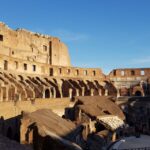
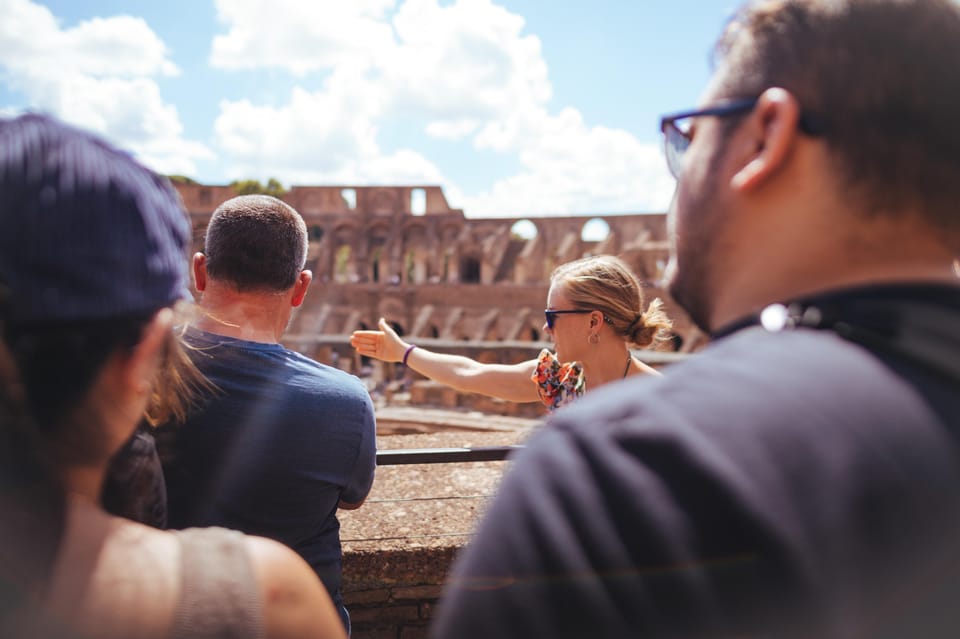
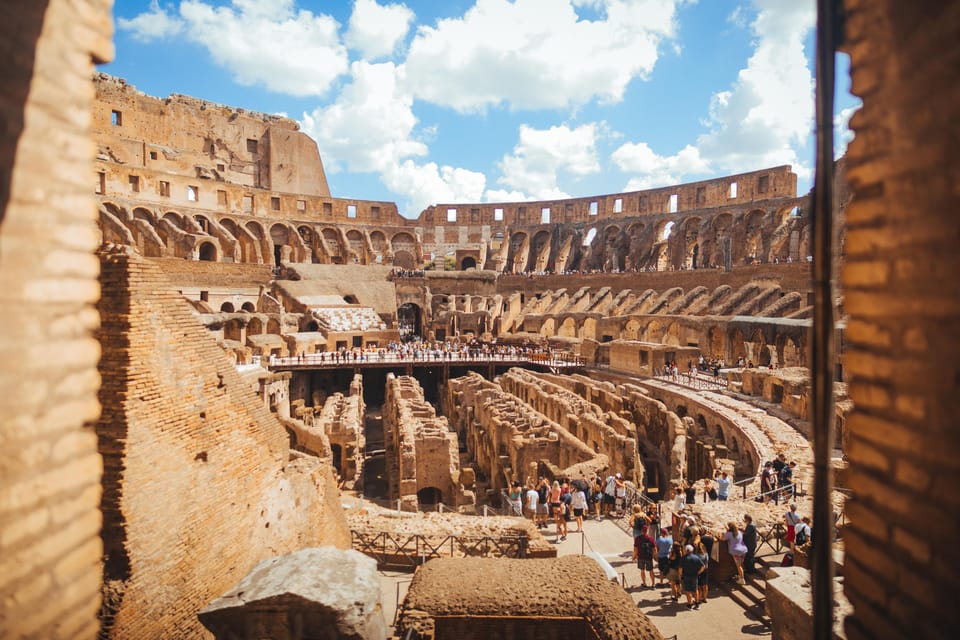
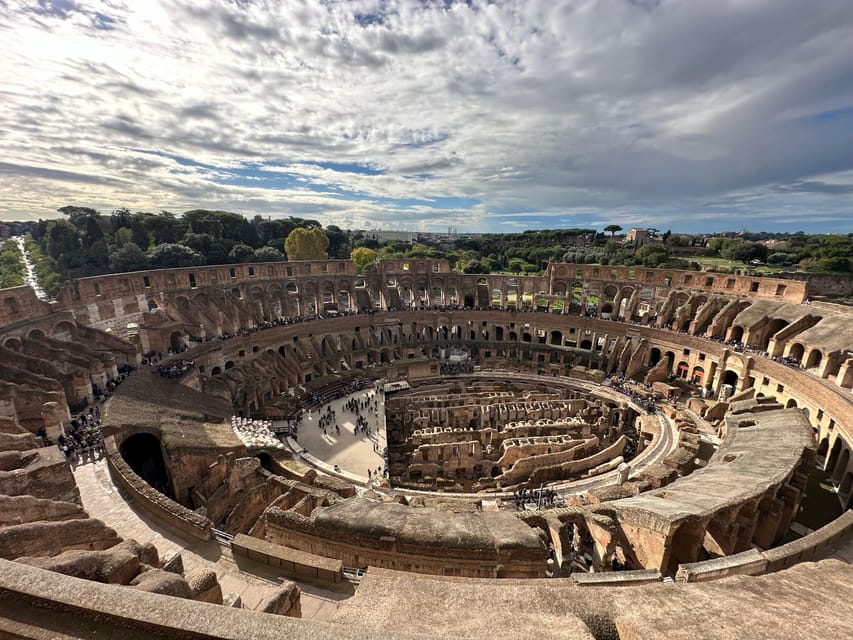
You’ll get a guided tour through the Colosseum itself, including access to the main floor and 1st tier. That combination is a sweet spot. It keeps you close enough to understand scale without losing you to the highest viewpoints where you sometimes feel far from the action.
Your guide will paint vivid scenes of what happened inside, including the gladiatorial spectacle. Expect stories that lean dramatic, including the harsh realities of the arena. It’s part of what makes the Colosseum more than a ruin.
The Arena Floor: the close-up access that justifies the price
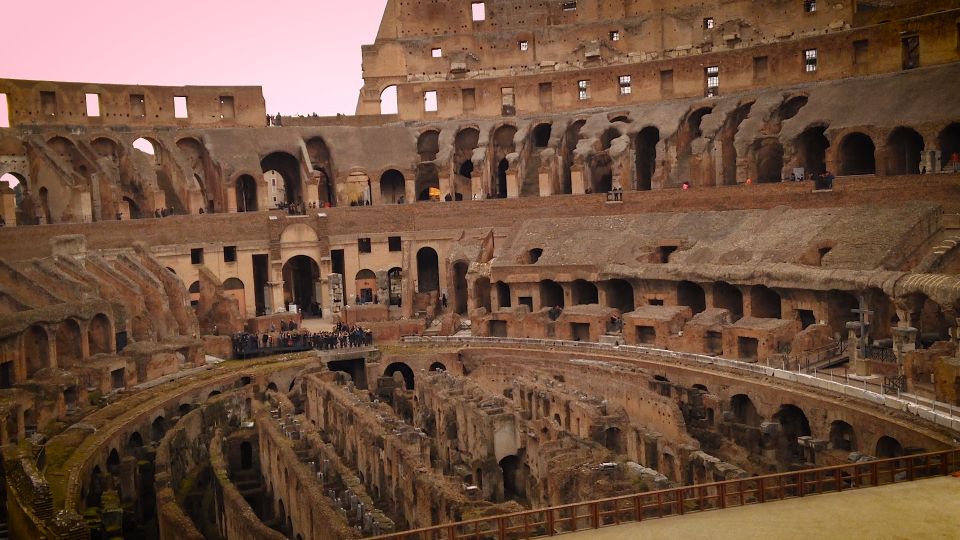
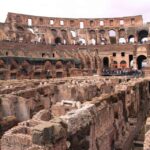
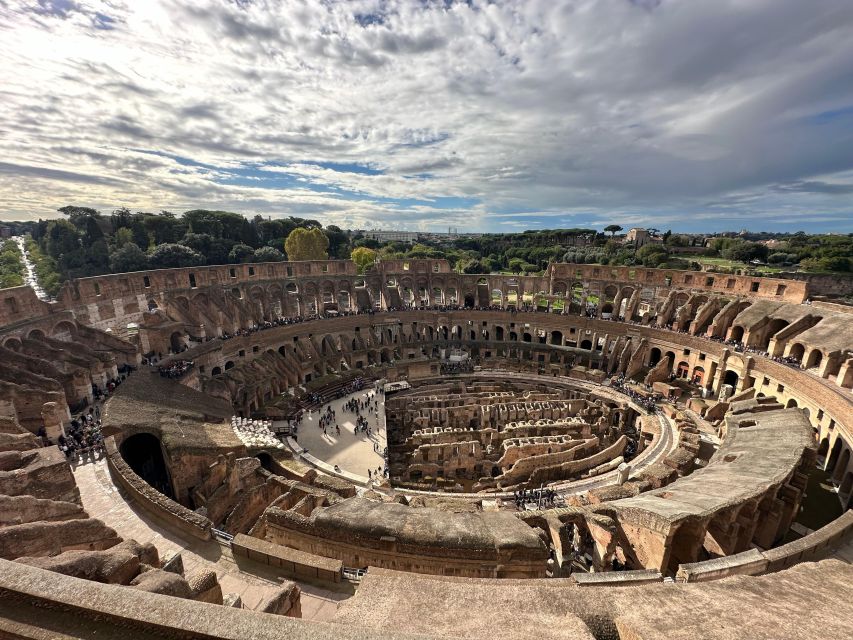
The headline feature here is the Colosseum Arena Floor access. This is not a casual “look from a railing” situation. You’ll visit the arena floor area with your guide, giving you a direct sense of where gladiators stood and where the spectacle played out.
From a value perspective, arena-level access is the difference between passive sightseeing and a guided, physical understanding. You feel the geometry of the space: openings, sightlines, and how the crowd likely moved with each moment.
The best part is that your guide doesn’t treat the arena as a generic wow factor. You’ll hear explanations that connect the architecture to what people believed and feared—and why the Roman elite invested so much in public spectacle.
Colosseum exits into the Roman Forum finish
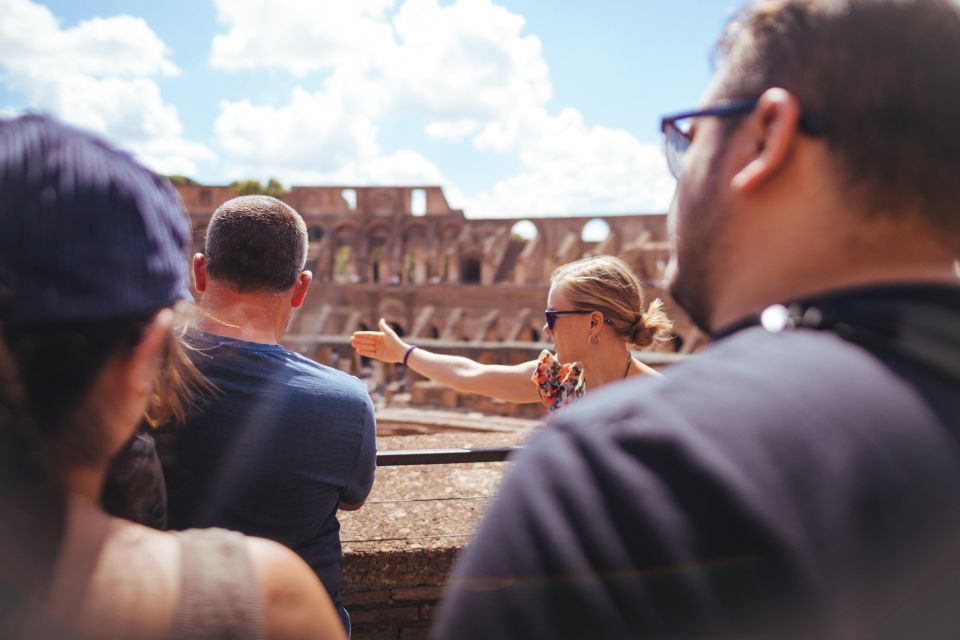
After the Colosseum and related stops, the tour finishes back at the Roman Forum area. This is a smart flow: it keeps your “Rome understanding” building until the end instead of splitting it into disconnected fragments.
If you have time afterward, this is a good moment to wander a little nearby while your guide’s framework is still fresh. You’ll be able to look at the stones and think, I know what that space was for.
Price and value: what you’re paying for (and what you’re not)
The tour costs $168.79 per person and runs about 3 hours. That’s not the cheapest way to see the Colosseum, but it’s easier to justify when you count what’s included.
You’re paying for three main things:
- Priority/fast-track entry that reduces the time you spend stuck in lines
- Arena Floor access, which is the big-ticket item most standard tours can’t offer
- A structured guided route through the Colosseum and Roman Forum context, plus Palatine Hill
This is especially good value if your priority is understanding over just collecting sights. If you’re the type who wants the “what am I looking at, and why should I care?” version of Rome, the small-group format helps. With a max group size of 6, you’re not competing for attention when you ask something.
If you’re mostly after photos with minimal reading or listening, you might find a lower-cost Colosseum ticket more your style. But if you want the arena to feel like a place, not a postcard, this one makes sense.
Who should book this semi-private Colosseum and Ancient Rome tour?
Book it if you want:
- A guided Colosseum that goes beyond architecture basics
- Arena Floor access and first-hand closeness to the main spectacle space
- A small group pace where you can ask questions
- A combined look at Roman Forum + Palatine Hill, so the city feels connected
You might want to think twice if you’re dependent on wheelchair accessibility. This tour notes difficulty for wheelchair users, and you’d need to ask customer support about alternative routes before booking.
A quick practical checklist before you go
Bring:
- Passport or ID card (photo ID is required)
- Comfortable clothes for walking and standing
Leave at home:
- Luggage or large bags (not allowed)
Also, keep your expectations flexible. Colosseum starting times can change based on ticket availability, so plan for a calm morning rather than a tightly scheduled itinerary.
And one more tip: if you’re the kind of person who gets overwhelmed by crowds, arrive early and keep your head clear at the meeting point. Rome rewards the prepared.
Should you book this tour?
If your top goal is Arena Floor access plus a guided, connected tour of the Colosseum and the Roman Forum area, I think this is a strong booking. You’re not just buying entry—you’re buying time saved, context delivered, and a format (small group, English guide) that makes Rome’s story easier to follow.
I’d skip it only if you’re comfortable doing the sights at your own pace with standard tickets, or if mobility/access needs make the route a concern.
FAQ
How long is the Colosseum with Arena Floor & Ancient Rome tour?
The tour duration is 3 hours.
Where do we meet for the tour?
Meet in front of the SOS sign outside the Colosseum Metro station’s upper floor entrance at Largo Gaetana Agnesi.
Which parts of the Colosseum and Ancient Rome are included?
You’ll visit the Colosseum Arena Floor, the Colosseum, Palatine Hill, and the Roman Forum, with a guided tour throughout.
Is skip-the-line entry included?
Yes. The tour includes priority access tickets and skips the ticket line for the Colosseum and Roman Forum.
Do I need photo ID for entry?
Yes. All participants need photo ID, and you should bring your passport or ID card on the day of the tour.
Is luggage allowed during the tour?
No. Luggage or large bags are not allowed.
Is this tour suitable for wheelchair users?
No, it is not suitable for wheelchair users. The provider notes you should inquire with customer support for alternative routes.
If you want, tell me your travel dates (and whether you’re more into photos or stories), and I’ll help you pick the most sensible time slot strategy for the Colosseum.