REVIEW · ROME
From Rome: Florence and Accademia Guided Tour
Book on GetYourGuide →Operated by My Tour in Italy · Bookable on GetYourGuide
A fast train, slow art, and great walking. I like how this day trip from Rome hands you the hard parts on a plate: round-trip high-speed train and a guided morning at the Accademia Gallery built around Michelangelo’s David. It is one of the cleaner ways to do Florence for people who want big sights without turning the day into logistics math.
I especially like the way the Accademia visit is framed, with a monolingual guide walking you through why David matters and what it represented in its own time. And after that, you get free time for lunch and wandering, then a second guided walk that gives you a map-shaped sense of the city, from Roman roots to a 15th-century palace setting.
One thing to consider: you will need to climb and descend stairs, and the morning starts with an early train while you handle your own travel to Rome Termini and your own pickup in Rome is not included.
In This Review
- Key things I’d bank on before you book
- From Rome to Florence by high-speed train: the schedule that actually works
- Accademia Gallery tour: seeing David up close with the story that gives it meaning
- Lunch break and independent wandering: use it to reset your legs
- The afternoon walking tour: Ponte Vecchio, the Uffizi courtyard, and Dome architecture
- Why the two-part structure feels like good value
- Price and what you’re actually paying for at $288.88
- Who should book this tour, and who might not love it
- Quick practical facts you’ll want on hand
- FAQ
- FAQ
- What time does the train leave Rome?
- Where do I meet the guide in Florence?
- How long is the activity?
- What’s included in the price?
- Is lunch included?
- Do I get pickup or drop-off in Rome?
- Is Accademia open on the first Sunday of the month?
- Is the tour wheelchair-friendly?
- Should you book this Rome-to-Florence Accademia day trip?
Key things I’d bank on before you book
- Skip-the-line entry to Accademia so your morning focuses on art, not queues
- A David-centered guide story that connects the sculpture to what Florence wanted it to mean
- A two-part Florence day: museum facts first, then a walking tour that ties the city together
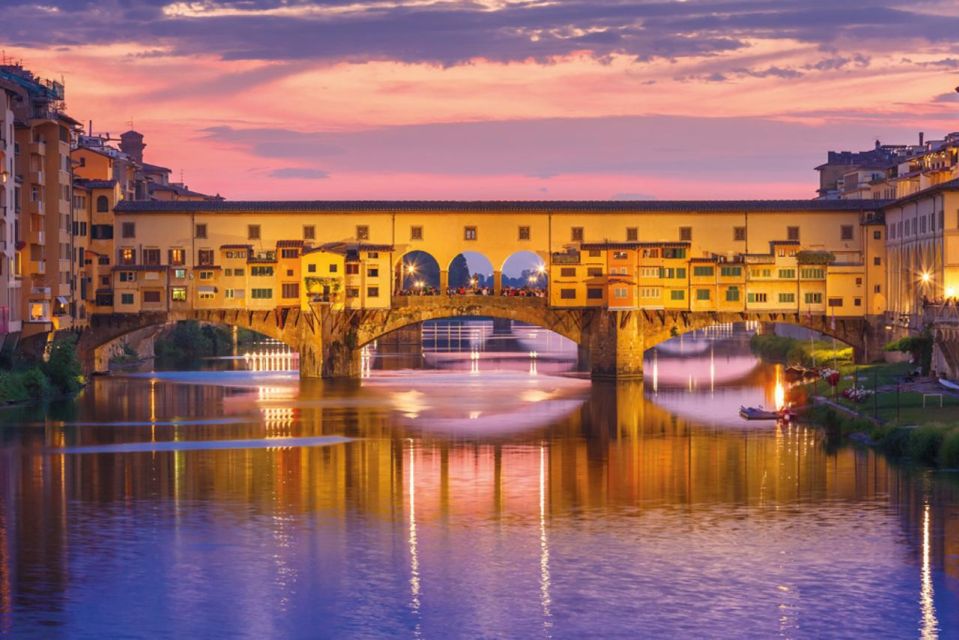
- Ponte Vecchio and Brunelleschi’s Dome are explicitly part of the afternoon orientation walk
- Roman origins to 15th-century Florence gets explained as you move through streets and viewpoints
From Rome to Florence by high-speed train: the schedule that actually works
This is a true day trip, designed around one simple idea: if you are in Rome and you want Florence, do it fast in the morning and spend the rest of the day with a guide.
The train from Rome to Florence leaves at 7:15 AM. You take it from Rome Termini to Florence SMN. Train tickets are provided by email the day before, which matters because it reduces last-minute searching and helps you move smoothly once you are at the station. Just remember: this tour’s included transport covers the train itself, but you are still responsible for getting to Termini and being ready for that departure.
The meeting point in Florence is set at 10:00 AM, at Piazza della Repubblica, in front of the Colonna dell’Abbondanza. The end of the activity is back at that same meeting point. In plain terms: you are not getting picked up from a hotel, and you are not meeting your guide in Rome. You meet the guide in Florence and then the day is run as one guided experience.
You can also read our reviews of more guided tours in Rome
Accademia Gallery tour: seeing David up close with the story that gives it meaning
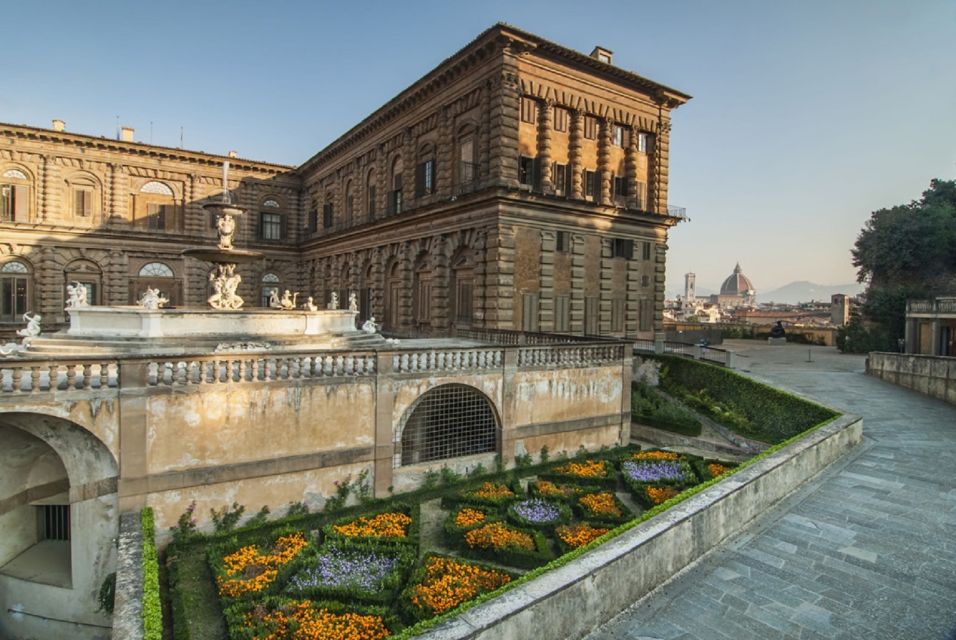
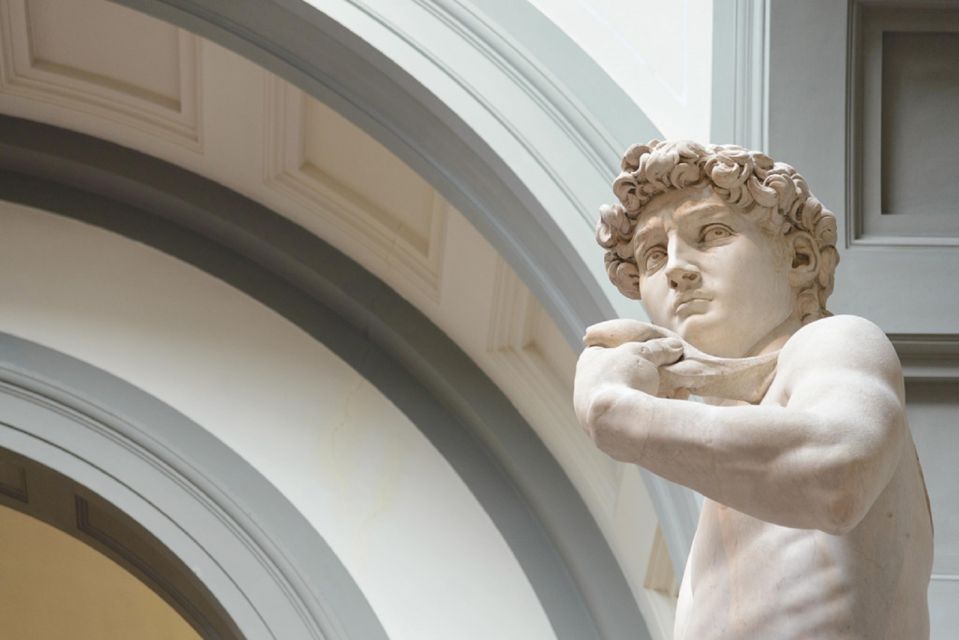
The Accademia Gallery is the headline, and it is handled in a way that makes sense. You get entrance to the Accademia Gallery plus a visit with a monolingual live guide. There is also skip the ticket line, which is a real time-saver at a major museum where delays can cut into your ability to actually look.
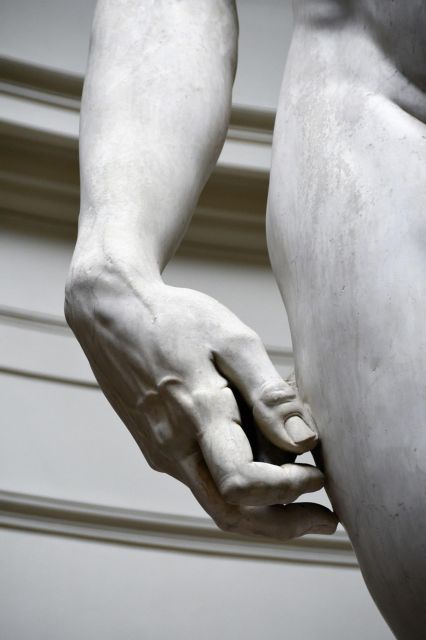
What you get isn’t just a look at the statue. The guide specifically helps you understand why the David became the recognizable symbol of Florence, and what it used to represent during the time when it was created. That framing is useful because a famous sculpture can turn into a postcard if you only see the surface. When someone connects David to the civic and cultural intentions behind it, the experience feels less like checking a box and more like understanding why Florentines treated it as a statement.
You will also have a close encounter with timeless works of art. The tour description is clear that the guide shares the inside story of the life and times of the consummate artist, so expect more than dates and locations. It is the kind of explanation that helps you notice details in the work itself, even if you are not an art scholar.
One practical note: the tour assumes you can move around museum spaces that involve stairs. The activity is not suitable for wheelchair users, and customers must be able to climb and descend stairs.
Lunch break and independent wandering: use it to reset your legs
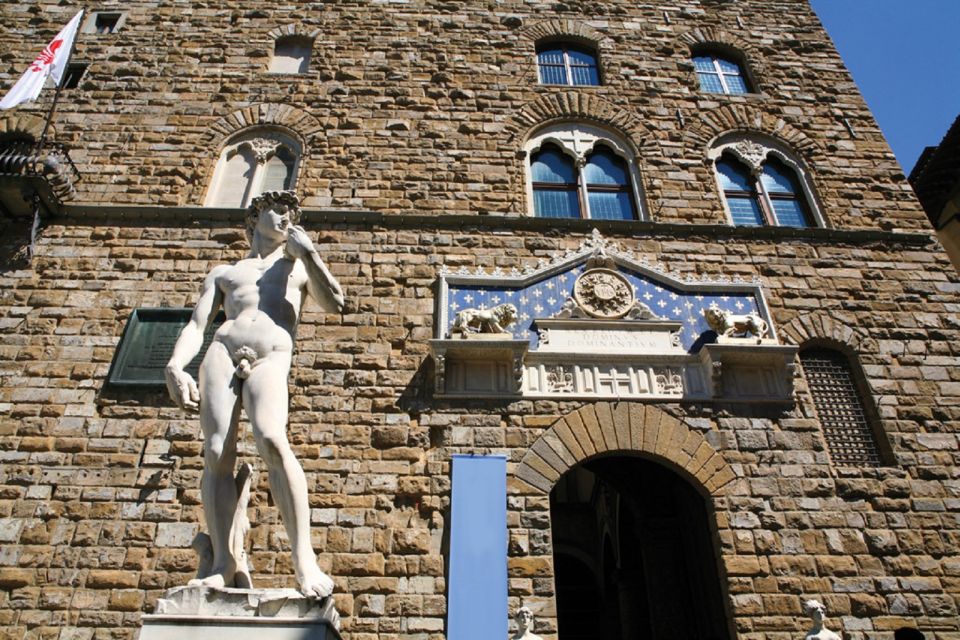
After the guided Accademia time, you get free time to wander and have lunch. Lunch is not included, so you will be choosing on your own. This is actually a good setup for many people because Florence rewards curiosity, and you will have a buffer to reposition yourself for the afternoon walking tour.
Here is how I would use the break if I were planning your day:
- Walk a few blocks with no agenda first, just to get oriented visually.
- Pick a lunch spot that is easy to reach on foot from where you are, since you will want to arrive back for the afternoon guide portion.
- If you want to shop or do a quick photo circuit, do it here. Once the afternoon tour starts, you will be moving with the group.
You do not need to overthink lunch. The value is that the schedule gives you a human pause between the museum focus and the city-orientation walk.
The afternoon walking tour: Ponte Vecchio, the Uffizi courtyard, and Dome architecture
The afternoon is where the day trip starts to feel like Florence instead of just a museum highlight.
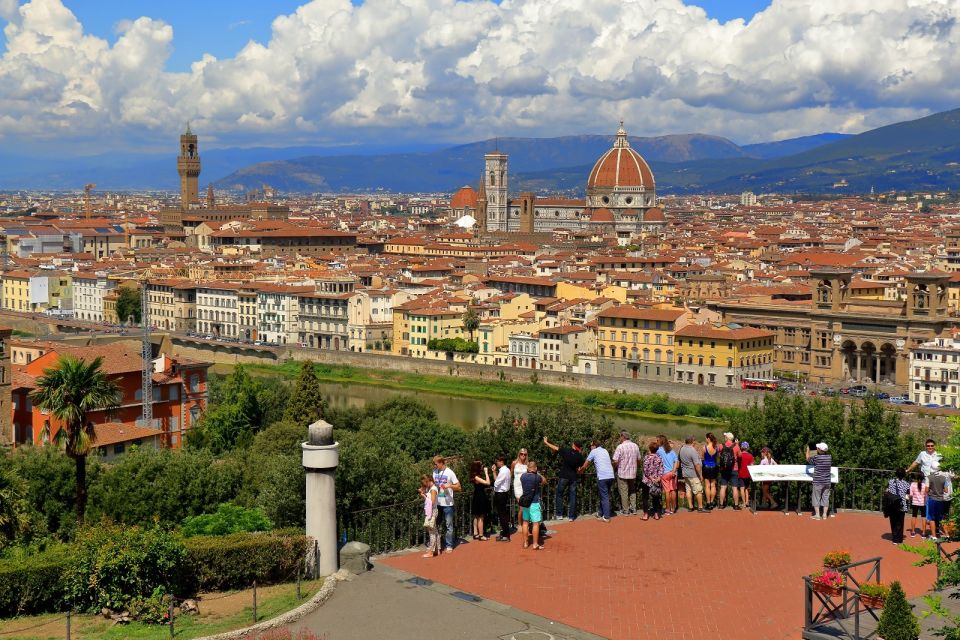
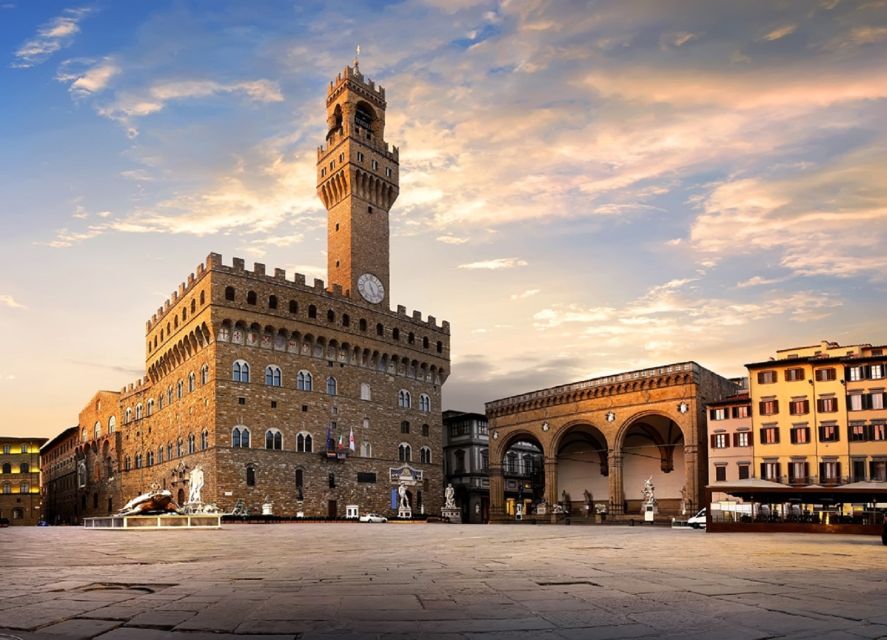
You get a walking tour described as an excellent and complete introduction to the city. The guide covers facts and secrets of two thousand years of Florentine history, beginning with the city’s Roman origins and moving forward to a 15th-century palace context. That span matters because Florence can feel like a collection of eras that never touch. A guide helps stitch it into one evolving story.
You also get specific stops tied to major landmarks and viewpoints:
- Ponte Vecchio, the famed bridge that people know instantly when they see it
- The Uffizi courtyard, which is a familiar name even if you do not go inside Uffizi proper
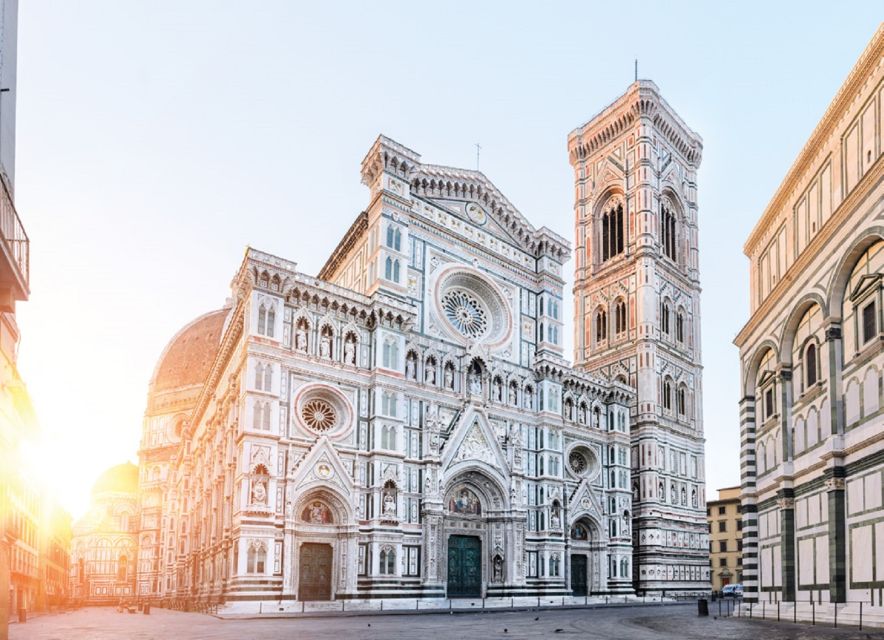
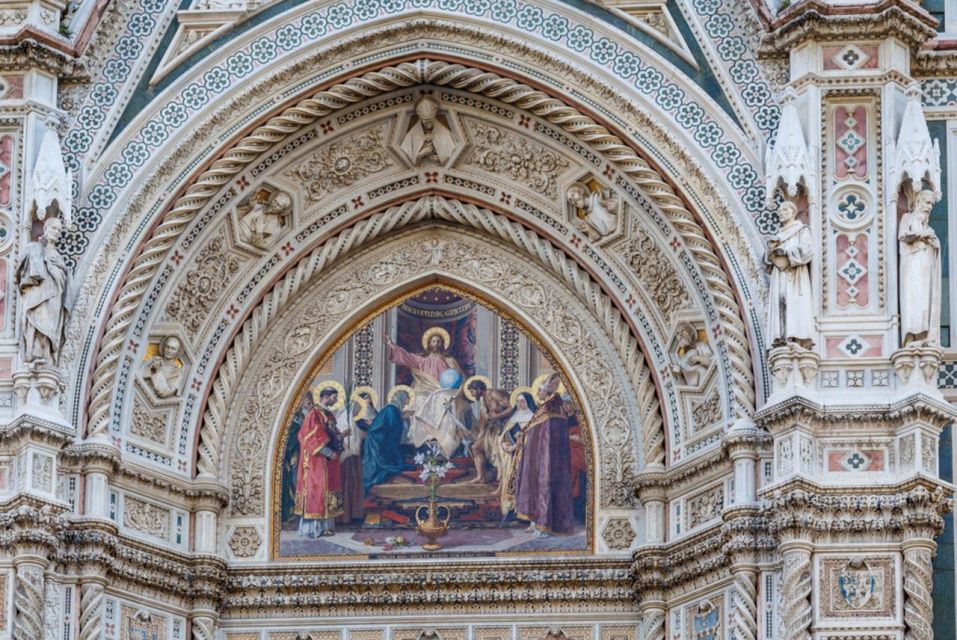
- The wonders of the architecture of Brunelleschi’s Dome, which gives you a reason to look upward instead of only at shop windows and street-level views
Even without getting lost in details that you cannot verify from street level, those three points give you a practical mental map. Ponte Vecchio anchors your geography near the Arno. The Uffizi courtyard connects you to the cultural center of the city. And Brunelleschi’s Dome is the visual landmark that helps you understand why Florence looks the way it does in long-distance views.
The walking format is also the best way to understand Florence’s “why.” Many cities are easy to list: museum here, church there. Florence is about relationships—how buildings face each other, how bridges channel movement, how viewpoints change how you interpret the same street.
Why the two-part structure feels like good value
A lot of Rome-to-Florence tours either cram museums back-to-back or skip the connecting tissue that makes the city coherent. This one uses a sensible rhythm: museum first, guided sightseeing second.
Morning: you start with a focused visit to a single mission-critical museum, the Accademia, with skip-the-line entry. Then you learn why one artwork matters so much to Florence’s identity.
Midday: you get free time, so you can eat and re-group without feeling rushed.
Afternoon: you switch from art-specific attention to city-wide orientation, using a walking tour that ties history and landmarks into one narrative.
That flow is what makes the day feel manageable. You are not trying to absorb everything at once. Instead, you get one deep hit in the morning and one guiding framework in the afternoon.


Price and what you’re actually paying for at $288.88
At $288.88 per person, this is not a budget day trip. But it also is not just a guided walk with a train as an add-on. The price reflects a few concrete included elements:
- High-speed train round-trip between Rome Termini and Florence SMN
- Accademia Gallery entrance plus a live monolingual guide
- A guided Florence walking tour in the afternoon
For value, the question is simple: would you otherwise spend a big chunk of a day piecing together your own train, paying museum entry, and then booking two separate guided experiences? If the answer is yes, this starts to make sense. If you are the kind of traveler who loves planning routes and skipping guided time, you might feel the cost more sharply.
Also, the “skip the ticket line” detail is worth money in time saved. In a city where schedules can be tight, shaving off waiting can be the difference between a calm look and a rushed one.
Who should book this tour, and who might not love it
This tour fits best if you want Florence as a guided experience within one day and you like structured storytelling.
You’ll likely enjoy it if:
- You are in Rome and want the most famous Florence art moment, especially David, with context
- You want an afternoon orientation so the city makes sense even after one day
- You prefer a plan that reduces decision fatigue—train time handled, guide meeting point set, museum timing built in
You might want to skip or be cautious if:
- You cannot do stairs, since the activity requires climbing and descending stairs and is not suitable for wheelchair users
- You do not want to manage your own transport to Rome Termini and then meet the guide in Florence (pickup and drop-off are not included)
Also, check the museum schedule: the first Sunday of every month the Accademia Gallery is closed. If your dates fall on that day, this stops being a workable plan.
Quick practical facts you’ll want on hand
This is a 12-hour activity, so even though it is “just a day trip,” plan for a full day. The guides speak Spanish and English. The tour is described as having a monolingual guide for the Accademia and a guided Florence walk with a monolingual guide as well.
If you like to travel with minimal friction, the email delivery of train tickets the day before helps. It’s one less moving part.
FAQ
FAQ
What time does the train leave Rome?
The train from Rome to Florence leaves at 7:15 AM.
Where do I meet the guide in Florence?
Meet at Piazza della Repubblica, in front of the Colonna dell’Abbondanza, at 10:00 AM.
How long is the activity?
It runs for 12 hours.
What’s included in the price?
High-speed train round-trip (Rome Termini to Florence SMN), Accademia Gallery entrance with a monolingual guide, and a guided Florence walking tour with a monolingual guide.
Is lunch included?
No. Lunch is not included, but you do get free time to have it.
Do I get pickup or drop-off in Rome?
No. Pickup and drop-off are not included, and transportation from/to Rome is on your own. You meet the guide directly in Florence.
Is Accademia open on the first Sunday of the month?
No. The Accademia Gallery is closed to the public on the first Sunday of every month.
Is the tour wheelchair-friendly?
No. It is not suitable for wheelchair users, and customers must be able to climb and descend stairs.
Should you book this Rome-to-Florence Accademia day trip?
If you want Florence fast but not shallow, I think this is a strong choice. The included high-speed train, skip-the-line Accademia entry, and two guided parts (David in the morning, then an orientation walk with Ponte Vecchio, the Uffizi courtyard, and Brunelleschi’s Dome in the afternoon) add up to a day that feels planned, not improvised.
I would book it if you value context and a clear route more than you value free roaming. I would hesitate if stairs are an issue or if your dates hit the first Sunday when Accademia is closed. If neither of those applies, this tour is a practical way to get a real taste of Florence’s art and streets without spending your whole trip coordinating trains and tickets.