REVIEW · ROME
Ancient Rome with Archaeology – Small Group Only
Book on GetYourGuide →Operated by LeonardoDC · Bookable on GetYourGuide
Rome makes sense at street level. This small-group walk uses archaeology and art-history storytelling to help you understand how today’s monuments grew out of earlier Rome. I love how the guide ties the sites together with a clear timeline and the practical question of why, when, and how each space was built. I also like the route’s balance: you don’t just stare at the big icons—you connect them to the smaller structures around them, like the Theater of Marcellus archaeological area and its nearby religious and memorial spaces.
One thing to consider: this experience does not include going inside monuments or buying tickets, so it’s best if you’re happy learning from the outside and from viewpoints. The good news is that you still get a lot of “how to read the city” thinking while you walk.
In This Review
- Key Points at a Glance
- How Archaeology Changes the Way You See Rome
- Meeting at Piazza Mattei and Getting Oriented Fast
- Colosseum Stop: Big Views, Clear Context
- Imperial Fora: Where Rome Shows Its Shifts in Priorities
- Roman Forum and Palatine: Understanding the Layers
- Piazza del Campidoglio: How Rome Used Space and Power
- Theater of Marcellus Finale: An Archaeological Area Worth Slowing Down For
- Price and Value: What You’re Really Paying For
- Pace, Walking Comfort, and Who This Tour Best Fits
- Practical Details That Help You Plan
- Should You Book This Ancient Rome Archaeology Tour?
- FAQ
- How long is the Ancient Rome with Archaeology small-group tour?
- What does the tour include?
- Are Colosseum and other monuments included for entry?
- What is the group size?
- Where do we meet?
- Where does the tour end?
- Which language is the guide?
- Is it a lot of walking?
- Is the tour wheelchair accessible?
- What sights are covered besides the Colosseum?
Key Points at a Glance
- Archaeology-led explanations that focus on how Rome’s monuments evolved in context
- Small group limit of 6, which keeps the pace more personal
- Route coverage from the Colosseum and Imperial Fora to the Roman Forum and Capitoline area
- A strong finale in the Theater of Marcellus archaeological area, plus Temple of Apollo and Porticus of Octavia
- No monument entry tickets included, so plan for an exterior-focused visit
How Archaeology Changes the Way You See Rome
If you’ve ever stood in front of the Colosseum and felt like you’re looking at a single moment in time, this tour gives you the missing layer. The whole point is that archaeology helps explain the evolution of the monuments—how the spaces you see today fit into a longer story of Rome’s growth.
I especially appreciated the way Leonardo frames the trip before you reach the sites. You get a short introduction on Rome’s timeline, plus the main features of its art and architecture. That matters because the monuments can feel overwhelming otherwise. With an early map in your head, the walk becomes a guided set of cause-and-effect moments: what you’re seeing, why it exists where it does, and how the city’s priorities likely shifted over time.
The other big win is that the tour doesn’t treat the big landmarks as isolated “must-sees.” Instead, it treats them like chapters that connect—Roman Forum to Imperial Fora to the Capitoline area—so your understanding builds as the route progresses.
You can also read our reviews of more tours and experiences in Rome.
Meeting at Piazza Mattei and Getting Oriented Fast
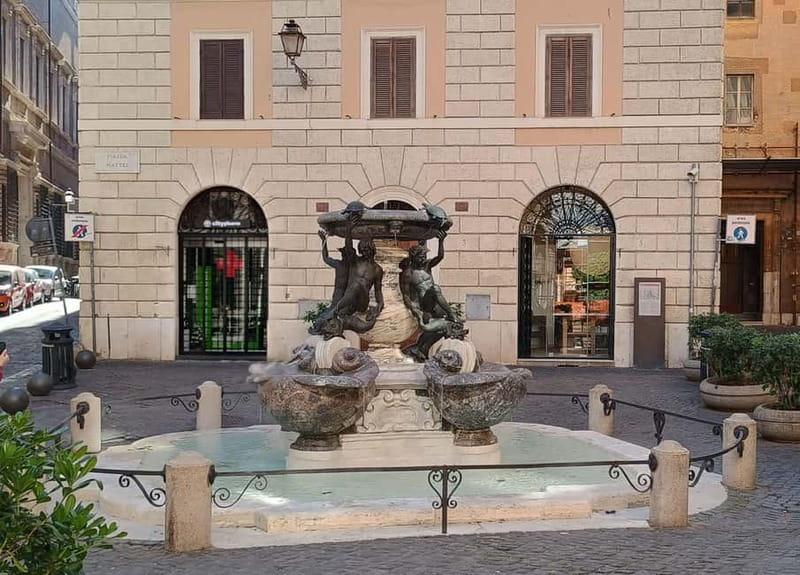
The tour starts right in front of the Fountain of the Turtles at Piazza Mattei, 1. It’s a smart way to begin because you’re not scrambling to find a meeting place mid-adventure. From there, you head out on foot with Leonardo, learning how to look at what’s around you, not just what’s straight ahead.
You also get to set the tone early. The guide starts with a brief introduction in a café or while walking (depending on the flow), covering Rome’s historical timeline and the key ideas behind its architecture. This is one of those small details that turns a sightseeing walk into something closer to a guided lesson—with a human pace.
Because the group is limited to 6 participants, you’re more likely to feel like you’re part of the discussion instead of watching a lecture from the back. The tour is also described as a light walk suitable for all ages, and wheelchair access is provided by the city—so this is not a marathon-style plan. Still, you’ll be on your feet for about 2.5 hours, so comfortable walking shoes are a good idea.
Colosseum Stop: Big Views, Clear Context
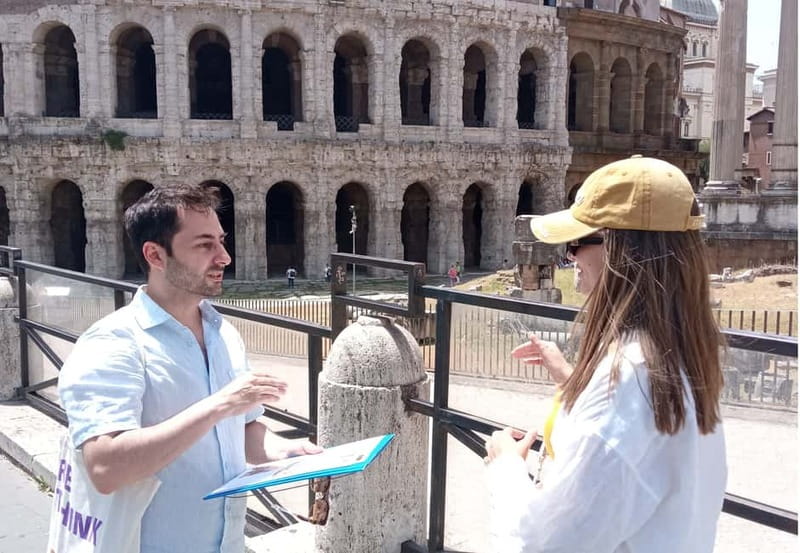
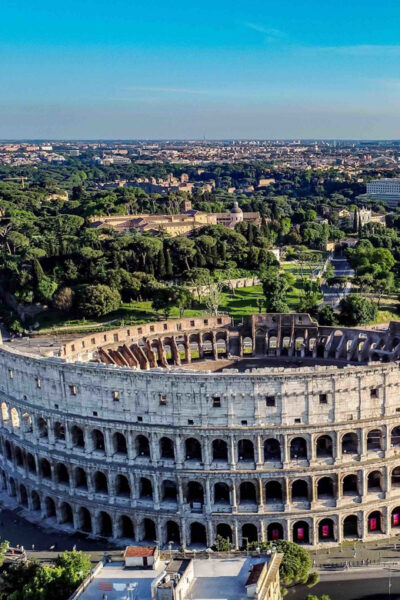
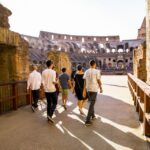
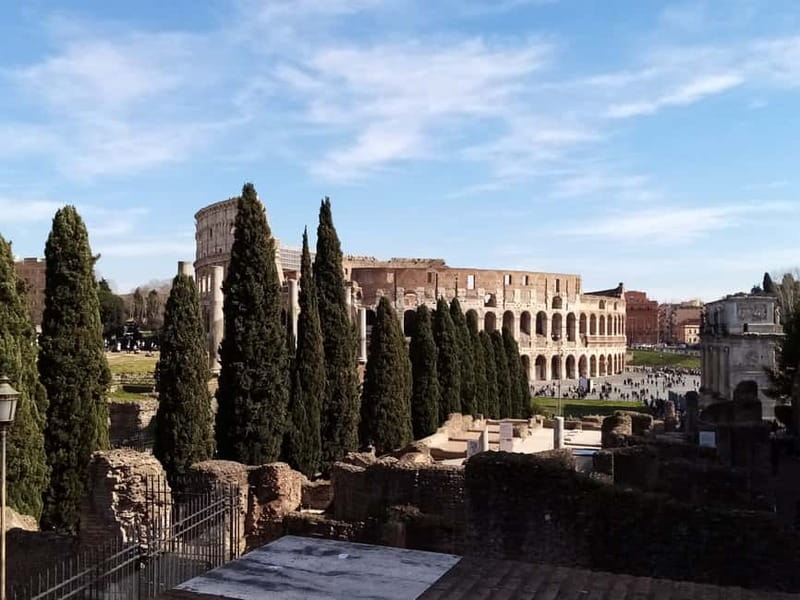
The Colosseum stop includes a guided tour and a walk of about 30 minutes. You’ll spend time at major vantage points, and Leonardo’s focus is on understanding what you’re seeing through context—how the monument fits into the larger development of Ancient Rome.
This is where the archaeology-first approach really pays off. Instead of only learning the famous surface story, you get help reading the monument as part of a changing urban world. The structure becomes less of a single photo object and more of a clue.
One practical note: since the experience does not include entering the Colosseum or tickets, you’re relying on viewpoint learning. That’s fine, and honestly it can be a great choice if you dislike long ticket lines or want a calmer pace.
Imperial Fora: Where Rome Shows Its Shifts in Priorities
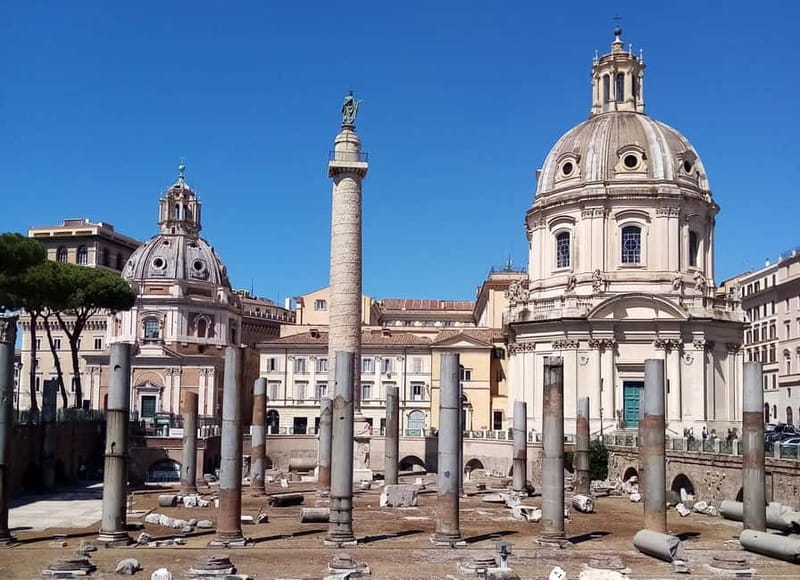
Next comes the Imperial Fora, with another guided, sightseeing-focused 30-minute segment. This stop is perfect for the way Leonardo teaches: you pass by key areas and analyze them from vantage points, connecting architecture and history to the evolution of Rome’s public spaces.
The Imperial Fora portion matters because it helps explain Rome as a city that kept reworking its own center. If you’ve ever wondered why Roman monuments can feel like they overlap rather than replace each other, this kind of archaeology-led framing gives you a better way to interpret those layers.
You’re also walking during this part, which helps your brain connect visuals to explanations. You’re not stuck in one spot. Instead, you get guided sight lines across the area, building a sense of how the different parts relate to one another.
Roman Forum and Palatine: Understanding the Layers
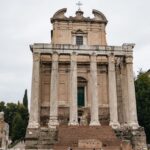
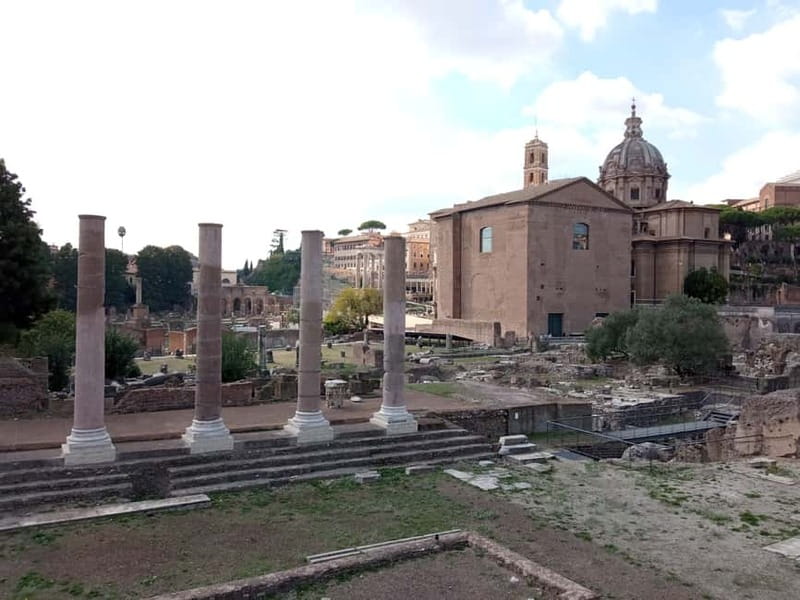
The Roman Forum stop is another guided sightseeing walk of about 30 minutes. Here, the tour leans into the idea that archaeology helps you understand evolution, not just magnificence. You’ll connect what you see around the Forum with Rome’s broader development, and Leonardo helps translate why these spaces were built and how they fit into the city’s growth.
Even if you’ve read about the Roman Forum before, I think this stop is where a guide like Leonardo can change your approach. The Forum area can feel like a jumble of ruins if you don’t have a framework. With the timeline setup early in the experience, you’re better prepared to notice what feels connected and what feels like a change in purpose or style.
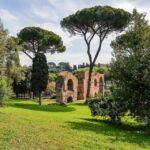
Also, the tour specifically mentions Palatine Hill as part of the Roman Forum experience. That’s a meaningful detail because it expands the stop from a single landmark mindset into a broader sense of Rome’s topography and monumental focus.



Piazza del Campidoglio: How Rome Used Space and Power
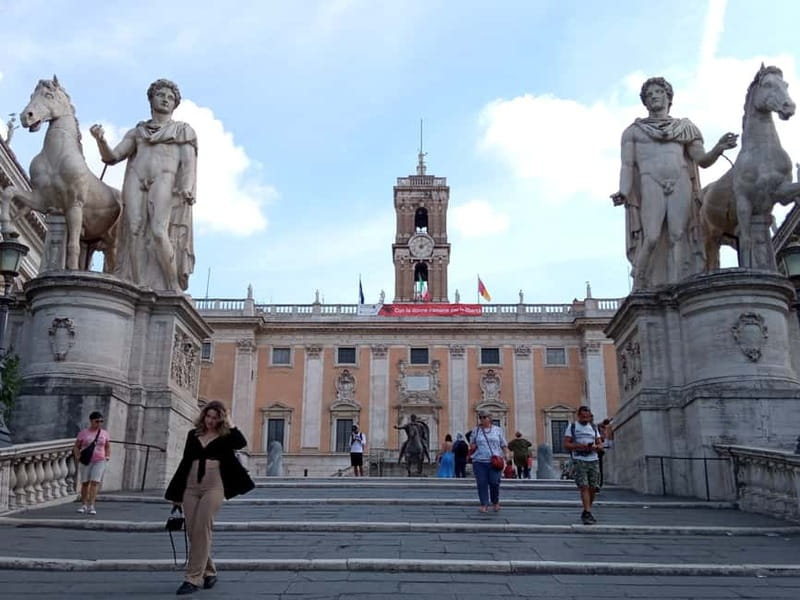
You then reach Piazza del Campidoglio (Campitoline Hill square), where you get guided tour, sightseeing, and a walk of about 30 minutes. This portion is valuable because it adds the feel of Rome not just as an ancient site, but as a place where civic and religious identity played out in built form.
Leonardo’s explanation style—history plus art history—helps you see the square area as part of the same long story as the Forum and Imperial zones. You start to feel that Rome’s monumental planning wasn’t random. It was tied to identity and meaning, not only spectacle.
If you enjoy when a guide helps you interpret what you’re looking at instead of listing facts, this is one of the most satisfying stops. You’ll likely come away with a better sense of how different zones of Rome were connected by purpose and by design.
Theater of Marcellus Finale: An Archaeological Area Worth Slowing Down For
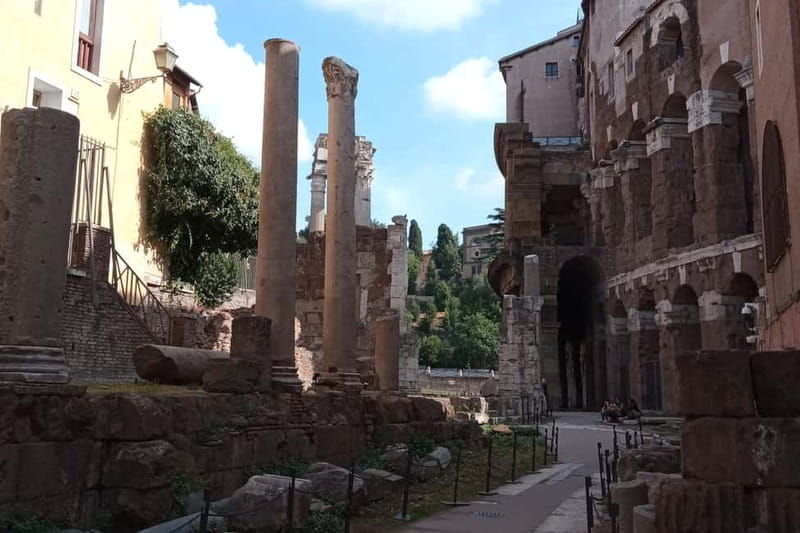
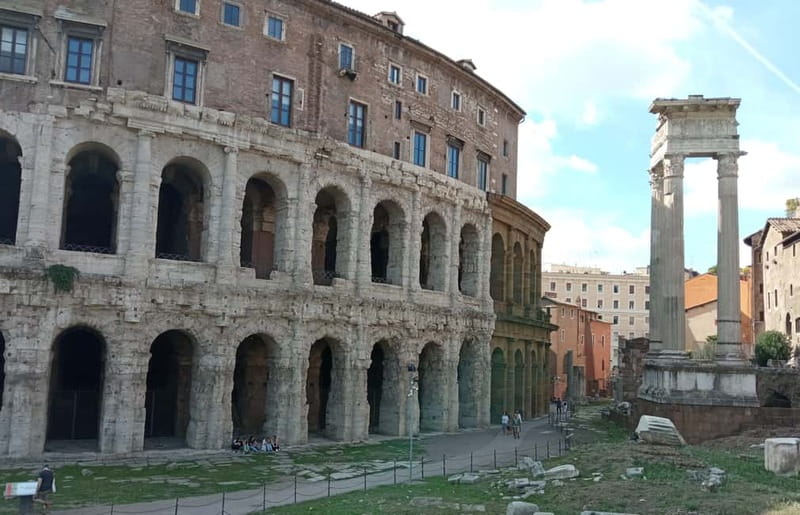
The final stop is the Theatre of Marcellus area, with a guided visit and about 30 minutes of sightseeing and walking. This is where the tour earns extra points for variety. You’re not only ending at another famous ruin—you’re ending in an archaeological area that also connects you to specific nearby sites.
The experience finishes at the archaeological area that includes Temple of Apollo and Porticus of Octavia. That trio—Theater of Marcellus plus those adjacent spaces—helps you see how entertainment, religion, and public identity overlap in Rome’s monumental landscape.
And because it’s a free entrance archaeological area (tickets for monuments are not included), you can focus on learning rather than managing entry. I found that the finale works well because it gives you a different type of structure to think about, not just arenas and forums.
If you like finishing a tour with something that feels more intimate than the Colosseum, this ending is a strong fit.
Price and Value: What You’re Really Paying For
At $36.08 per person for about 2.5 hours, you’re paying for guided interpretation and a tightly organized walk between major zones. The value here isn’t “access to interiors”—since it does not include tickets or entering monuments. The value is the mental upgrade you get while looking from outside: timeline context, art and architecture framing, and archaeology-based explanations of evolution and meaning.
The small-group size also matters for value. With a limit of 6 participants, the guide can likely tailor the pacing and keep the story connected to your interests. The experience is described as personalized to your interests, pace, and time, which is exactly what you want on a route this dense.
So if your travel style is more about understanding and connecting rather than checking off photo spots, this price-to-experience ratio feels fair.
Pace, Walking Comfort, and Who This Tour Best Fits
This tour is listed as light walking and suitable for all ages, with the note that it does not require effort. That doesn’t mean “sit the whole time.” You will walk between major sights, and the timing suggests steady movement. The upside is that the tour is only 2.5 hours, so you’re unlikely to get worn down.
You’ll also appreciate the setup if you want a small group, not a crowded scramble. The guide is teaching in Portuguese and English, and the reviews highlight Leonardo’s ability to make architecture and history click. If you learn best when a guide explains what to look for, you should feel at home here.
This is also a good choice if you want a Rome history experience that stays focused on the monuments you can clearly see from the outside. If you’re the type who gets frustrated by ticket logistics, the fact that entry into monuments is not part of the plan may actually suit you.
Practical Details That Help You Plan
Start and meeting point: Piazza Mattei, 1, right in front of the Fountain of the Turtles.
End: It says the activity ends back at the meeting point, which is convenient if you like to keep the logistics simple.
There are also two drop-off locations listed: Via Nicola Salvi, 65, 00184 Roma RM, Italia and Piazza del Colosseo. So even if you don’t want to retrace your steps afterward, you may have options depending on how the operator structures the final segment.
Languages: Portuguese and English.
Accessibility: Wheelchair accessible due to city accessibility, and the walk is described as light.
If you’re deciding on timing, note that durations are fixed at 2.5 hours, but starting times vary—so check availability for the schedule that fits your day.
Should You Book This Ancient Rome Archaeology Tour?
I think you should book this tour if you want to understand Rome instead of just see it. The archaeology-first approach plus Leonardo’s ability to connect timeline, art, and architecture makes this a strong option for anyone who loves monuments but feels they’re missing the “why.”
I’d skip it if your top priority is going inside major sites or collecting inside-the-building experiences with tickets, since this tour explicitly does not include monument entry or tickets. Also, if you hate walking between sites, keep in mind you’ll be moving steadily for about two and a half hours.
If you fall in the middle—comfortable with an exterior-focused walk, curious about how Rome evolved, and happy with a small group guided format—this is a solid value way to see Ancient Rome with your brain turned on.
FAQ
How long is the Ancient Rome with Archaeology small-group tour?
The tour lasts 2.5 hours.
What does the tour include?
It includes guided walking and sightseeing at the Roman Forum, Colosseum, Imperial Fora, Capitoline area, and the Theater of Marcellus archaeological area, with explanations tied to archaeology, history, and art history.
Are Colosseum and other monuments included for entry?
No. The experience does not include going inside the monuments or tickets for them.
What is the group size?
It is a small group limited to 6 participants.
Where do we meet?
The meeting point is right in front of the Fountain of the Turtles at Piazza Mattei, 1.
Where does the tour end?
The activity ends back at the meeting point. Drop-off locations are also listed at Via Nicola Salvi, 65 and Piazza del Colosseo.
Which language is the guide?
The live tour guide speaks Portuguese and English.
Is it a lot of walking?
It is described as a light walking tour that does not require effort.
Is the tour wheelchair accessible?
Yes. It is listed as wheelchair accessible, with physical accessibility provided by the city.
What sights are covered besides the Colosseum?
In addition to the Colosseum, you’ll see the Imperial Fora, Roman Forum (with Palatine Hill), Piazza del Campidoglio, and the Theater of Marcellus area, including Temple of Apollo and Porticus of Octavia.