REVIEW · ROME
Pompeii and Naples Day Trip from Rome
Book on GetYourGuide →Operated by Romaetravel · Bookable on GetYourGuide
Pompeii feels closer than you expect. This day trip from Rome is built around a guided walk through Pompeii and then a fast, focused sweep of Naples highlights. I like that you get an official guide at Pompeii, which helps you read the site instead of just passing ruins. One possible drawback: the Naples portion can feel short, and late-day traffic can mean a less-than-perfect drop-off.
You’ll start with hotel pickup if you’re within the Aurelian Walls, then ride out along the Mediterranean coast for views toward the Amalfi Coast before reaching Pompeii. I also appreciate the practical extras: skip-the-ticket-line at Pompeii and a tasting stop for an authentic sfogliatella. Just plan your day for comfort—this isn’t wheelchair accessible, and lunch isn’t included, so eat smart before you go.
In This Review
- Key things that make this trip work (or not)
- 10 hours, small group, and a packed route from Rome
- The drive out of Rome: Mediterranean roads and Amalfi Coast sightlines
- Pompeii with an official guide: what changes when someone explains the site
- Food market remnants: reading an ancient city through daily habits
- Thermal baths: seeing comfort and status in the Roman way of relaxing
- Wealthy residences: the homes that show social distance
- Naples highlights by foot: from San Gregorio Armeno to Piazza del Gesù
- Piazza Plebiscito and the Bourbon kings’ imprint
- Galleria Umberto I and Castel Nuovo: quick hits that make Naples make sense
- Sfogliatella break: the taste stop that keeps the day human
- Transportation, time control, and what to watch for on return
- Is $292.28 per person good value? Here’s where you’re paying and what you get
- Who should book this Pompeii and Naples day trip
- Should you book Pompeii and Naples from Rome?
- FAQ
- How long is the Pompeii and Naples day trip from Rome?
- Does the tour include hotel pickup?
- Is lunch included?
- Is Pompeii guided by an expert?
- What languages is the tour guide available in?
- Is this tour wheelchair accessible?
Key things that make this trip work (or not)
- Guided Pompeii with an official guide so you learn what you’re actually seeing
- Amalfi Coast views on the drive without having to switch tours
- Naples highlights on a tight schedule, from San Gregorio Armeno to Piazza del Gesù
- A real food break with sfogliatella from a local bakery
- Small group capped at 7, which usually means easier questions and less waiting
10 hours, small group, and a packed route from Rome

This is a single-day mission. The scheduled duration is 10 hours, and the group size is limited to 7 people. That small-group cap matters more than you might think: it reduces bottlenecks at Pompeii, helps the guide keep everyone together, and keeps the bus-and-walk rhythm from turning into a slow shuffle.
The itinerary is also “two-city” focused. Pompeii is the core, with guided time on-site. Naples is the second act: you see major monuments and squares, but you’re not getting an in-depth Naples lecture with an expert guide.
If you’re the kind of traveler who wants hours in one place, this setup may feel rushed. If you’re happy trading depth for breadth—especially when Pompeii is the main goal—you’ll likely find it a good fit.
You can also read our reviews of more tours and experiences in Rome


The drive out of Rome: Mediterranean roads and Amalfi Coast sightlines
You get hotel pickup in Rome (possible if your hotel is within the Aurelian Walls), then head out by vehicle along the Mediterranean coastline. The big carrot here is the view: the route is timed so you catch magnificent views of the Amalfi Coast en route to Pompeii.
Even if you’ve seen Amalfi photos online, you’ll likely notice how different the coast looks from a moving car window—cliffs, curve of shoreline, and the layered towns. It’s a “travel moment” that makes the day feel like more than just ruins plus bus.
Practical note: this ride is part of the day’s total 10-hour clock. If you tend to get travel-sick or tired quickly, bring water and a snack in your bag since you can bring your own drinks and snacks. (And yes, lunch isn’t included.)
Pompeii with an official guide: what changes when someone explains the site
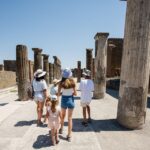
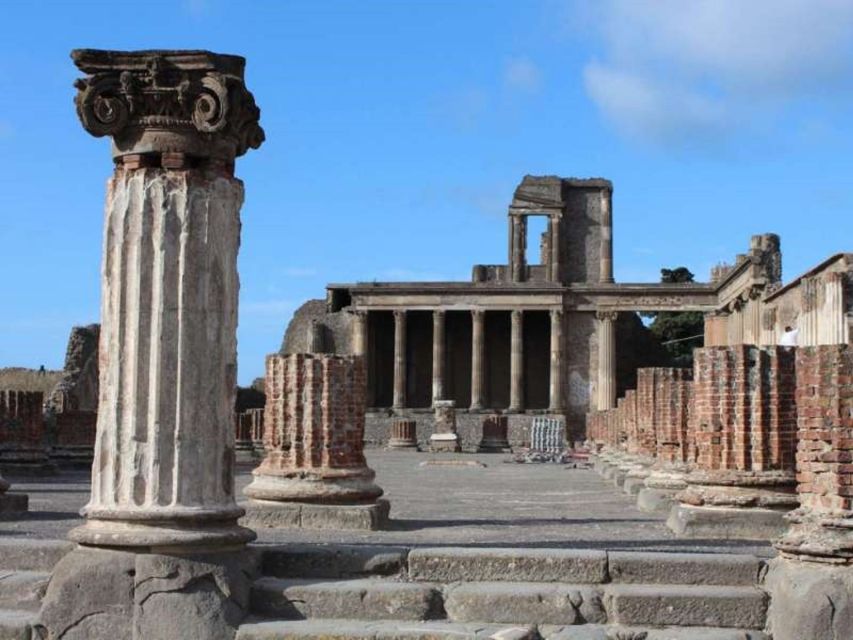
Once you arrive at Pompeii, you’ll join a guided tour. This is where the trip earns its value. Pompeii is huge, and without context, it’s easy to wander and miss what matters. With an official guide leading the way, you learn how people lived—how they worked, ate, cooled off, and spent time.
You also skip the worst of the waiting. The tour includes entrance fees to Pompeii and skip-the-ticket line, which is a relief at a high-demand site.
The guide focus in Pompeii is built around everyday life during the Roman Empire. You’ll spend time around remains tied to daily routines, not only the dramatic set pieces.
Food market remnants: reading an ancient city through daily habits
One Pompeii stop you’ll get is the remains of the food market. This is more useful than it sounds. Markets are where you can understand how a city actually functioned: not just who had money, but what people bought, how goods moved, and how public space worked.
When you walk through market areas with a guide, you start noticing details that would otherwise look like piles of stone: movement space, clustered zones, and the way buildings faced foot traffic. You’re basically learning how commerce shaped the city’s flow.
If your interest is in ordinary life—what it felt like to get through the day—this kind of stop often ends up being the most memorable.
Thermal baths: seeing comfort and status in the Roman way of relaxing
Another major theme is the thermal baths. Roman baths are a great example of how architecture tells a story. Baths were social spaces, not just plumbing projects. They also show the engineering level and the importance of public recreation.
Even if you don’t know the exact terms for every room, you’ll pick up the layout with a guide’s help. You’ll be able to connect what you see (room shapes, access points, and circulation) to how people would have used the space.
This is the kind of stop that flips Pompeii from ruins into a place with rhythm. It’s easier to imagine the day because baths represent downtime, talk, and routine.





Wealthy residences: the homes that show social distance
The tour also points you toward the residences of wealthy citizens. This is where Pompeii stops being only about technology and turns into sociology. In many places, your eyes can’t tell you who lived where. In Pompeii, class shows up in building layout and features.
With a guide, you’ll learn how wealth was expressed in home structure and in the way different spaces were arranged for guests, family, and daily use. It’s not just “fancy houses.” It’s how status shaped privacy and hospitality.
If you’ve ever wondered how Romans differed from each other beyond politics, this part gives you a tangible answer—stone, stone, and more stone, but with meaning.
Naples highlights by foot: from San Gregorio Armeno to Piazza del Gesù
After Pompeii, you continue to Naples for city highlights. This is not a slow wander with a specialist. It’s a guided loop of key sights, with a big emphasis on squares and churches.
Here are the specific areas you’ll cover in Naples:
- Via San Gregorio Armeno
- Piazza San Domenico
- Piazza del Gesù, including Church of Gesù Nuovo
- Basilica di Santa Chiara
Via San Gregorio Armeno is one of those streets where Naples’ character feels visible fast. Even if you don’t shop, it’s a good orientation stop because it anchors you in the city’s everyday texture.
Then the route shifts to religious architecture and grand public spaces. Piazza del Gesù is the kind of place that makes your brain recalibrate from Pompeii’s Roman grid to Naples’ layered city life. You’re seeing how the city’s identity expresses itself in churches and piazzas rather than in archaeology.
With the time available, focus on two things: (1) getting photos of the main facades and (2) noticing how the squares connect streets. That’s how you’ll feel you understood Naples, not just “passed through Naples.”
Piazza Plebiscito and the Bourbon kings’ imprint
From the church-focused stops, the Naples route continues to Piazza Plebiscito. Here you’ll see the Royal Palace tied to the Bourbon kings, plus the Church of San Francesco di Paola.
This segment is valuable because it shows Naples as a capital-city machine. Pompeii tells you about an ancient world. Piazza Plebiscito shows you how a later power era wanted to look and feel—through monumental architecture and bold symmetry.
If you’re into European royal history, this stop is a satisfying payoff. If you’re more into food and street life, it still helps you understand why Naples looks the way it does in the center: the city’s layout and building style reflect who ruled and how they wanted to project authority.
Galleria Umberto I and Castel Nuovo: quick hits that make Naples make sense
The tour also includes:
- Galleria Umberto I on Via Toledo
- Piazza Municipio
- Castel Nuovo
These stops work well together. Via Toledo is a classic Naples artery, and Galleria Umberto I offers a different pace—an indoor-outdoor architectural pause that helps you recover from the walking.
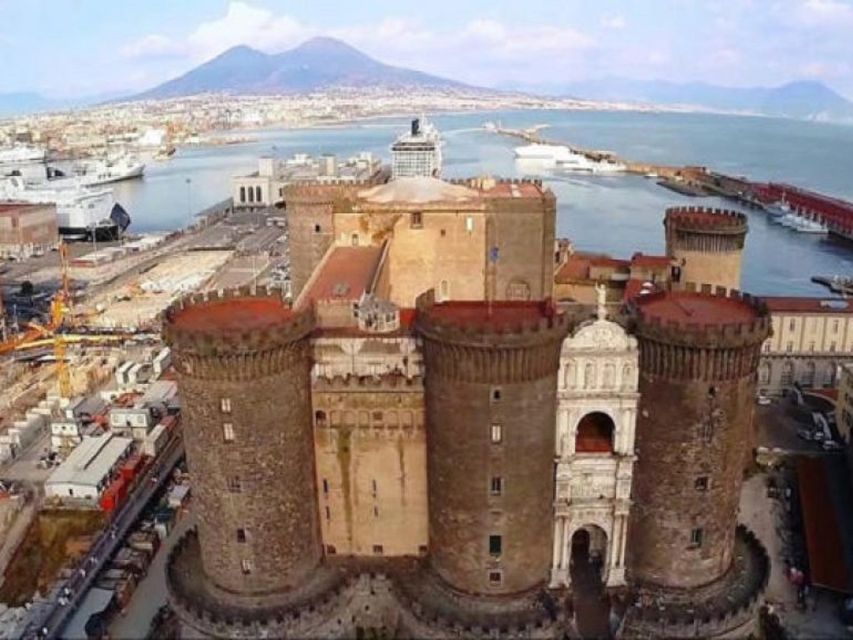
Then you move toward Piazza Municipio and Castel Nuovo, which gives you a medieval anchor. It’s a helpful reminder that Naples isn’t one era. It’s multiple centuries layered on top of each other, and this quick sequence helps your brain separate eras quickly.
The practical downside is that you don’t have the time to linger. Plan for a “see it, appreciate it, move on” rhythm.
Sfogliatella break: the taste stop that keeps the day human
One of the most enjoyable parts of the experience is food. Before the return trip, you’ll taste an authentic sfogliatella at a local bakery.
This matters for two reasons. First, it gives your energy a reset while you’re still in motion. Second, it’s a Naples specialty that feels tied to local life, not a generic souvenir stop.
Even if you’re picky about pastries, sfogliatella is one of those foods you can judge fast. If it’s hot, flaky, and not overly sweet, you’ll likely feel like this day trip delivered something memorable beyond photos.
Transportation, time control, and what to watch for on return
Transportation is included, and you’ll be picked up and dropped off. Still, one review flagged a real-world issue: an older van and a later-day plan that left the group walking to their hotel after 5 pm, despite booking drop-off.
That’s not guaranteed for every day, but it’s a good thing to pay attention to. With road traffic, delays happen. If your hotel is far from a drop point within your neighborhood, ask the operator how the return drop works late in the day—especially if you’re inside the Aurelian Walls but not right on a main access road.
Also, the Naples time can be limited. One experience described having only about two hours in Naples, with a quick photo/gelato-style break and then returning to the meeting point. If you want hours to shop or sit, build your expectations around quick monument viewing, not deep wandering.
My advice: treat Naples here like a highlights tour. Plan a longer Naples stay if you want neighborhoods, museums, or a full food crawl.
Is $292.28 per person good value? Here’s where you’re paying and what you get
The price is $292.28 per person for a 10-hour outing. On paper, it looks like a lot. In practice, it can make sense because the cost covers several items that add up when you plan independently:
- Hotel pickup and drop-off within the Aurelian Walls
- Transportation for a full day round-trip
- Pompeii entrance fees
- Official guide at Pompeii
- Skip-the-ticket line
The big value driver is the official guide in Pompeii. Pompeii isn’t like many museums where you can wander and read placards at your own pace. The official guidance helps you connect buildings to daily life quickly, which is exactly what time-limited day trips need.
Where the value becomes more “it depends” is Naples. There is no expert guide in Naples included, and your time there is a quick sweep of key monuments. If Naples is your top priority, you may feel the cost is weighted heavily toward Pompeii.
If Pompeii is your number one, though, this kind of package can be efficient. You’re essentially buying a guided learning experience plus a curated city orientation in Naples.
Who should book this Pompeii and Naples day trip
This tour is a strong match if:
- You want Pompeii with guidance, not just a self-guided stroll
- You like a structured highlights day and can handle walking and stairs
- You want a taste of Naples’ center—piazzas, churches, and major monuments
- You enjoy quick food moments like sfogliatella without turning it into a whole day of eating
It may be a poor match if:
- You need wheelchair access (it’s not wheelchair accessible)
- You want deep time in Naples neighborhoods or museums
- You dislike tight timing and prefer long, unbroken sightseeing blocks
Also, wear comfortable shoes. Pompeii involves uneven ground and lots of walking, and Naples adds more steps on top.
Should you book Pompeii and Naples from Rome?
I’d book this if your priority is Pompeii with real explanation and you like the idea of using Naples as a fast, memorable add-on. The official guided time at Pompeii, the skip-the-ticket-line benefit, and the coastal Amalfi-area view make it feel like more than a basic transport service.
I’d think twice if Naples is where you want to spend most of your energy. This tour gives you key sights—Via San Gregorio Armeno, Piazza del Gesù, Piazza Plebiscito, Galleria Umberto I, Castel Nuovo—and an sfogliatella stop, but you’re not getting Naples at leisure.
Bottom line: if you want an efficient Rome-to-Pompeii-to-Naples day with a guided Pompeii anchor, this is a reasonable way to do it. If you’re the type who plans Naples for weeks, book something longer and stay in the city.
FAQ
How long is the Pompeii and Naples day trip from Rome?
The duration is listed as 10 hours.
Does the tour include hotel pickup?
Yes, pickup is included if your hotel is located within the Aurelian Walls in Rome.
Is lunch included?
No. Lunch is not included.
Is Pompeii guided by an expert?
Yes. The tour includes an official guide at Pompeii.
What languages is the tour guide available in?
The live tour guide is available in English and Italian.
Is this tour wheelchair accessible?
No. It is not wheelchair accessible.