REVIEW · ROME
Private Vatican Tour with the option to visit St. Peter’s
Book on GetYourGuide →Operated by Gaudium Travel · Bookable on GetYourGuide
Rome gives you two kinds of Vatican lines. This private tour helps you avoid the worst queues at the Vatican Museums and Sistine Chapel, then keeps things moving with an English guide and headsets. I like that the focus stays on art and meaning, not milling around.
The second thing I love is the museum route. I like how you’re guided through major stops like the Pinecone and Octagonal courtyards, then into rooms such as the Room of the Muses and the Greek Cross Room, where the Constantine family sarcophagi are waiting. And I really appreciate the headsets, because the Vatican is loud when you’re trying to hear.
One big consideration: St. Peter’s Basilica is not guaranteed. Access depends on priority-entry availability, whether the passage is open, and on very short-notice closures for religious events. So if the Basilica is the make-or-break part of your trip, plan with that in mind.
In This Review
- Key things that make this tour worth your time
- A queue-free Vatican day starts with the right kind of entry
- First meeting and the sprint into the Vatican Museums
- Pinecone courtyard to the Greek Cross Room: the museum route that makes sense
- Sistine Chapel timing: seeing the frescoes with a story, not just silence
- St. Peter’s Basilica: optional priority entry with real-world limits
- Guide, headsets, and how a private tour keeps you in control
- Dress code and no-photo rules: the small stuff that can ruin your morning
- Who this Vatican tour fits best (and who should rethink it)
- Price and value: is $368.18 per person a smart spend?
- Should you book this private Vatican tour with St. Peter’s option?
- FAQ
- How long is the private Vatican tour?
- Does the tour skip the lines at the Vatican Museums and Sistine Chapel?
- Is St. Peter’s Basilica included?
- What should I wear for entry?
- Can I take photos in the Sistine Chapel?
- Is the tour wheelchair accessible?
Key things that make this tour worth your time
- Skip-the-line entry for the Vatican Museums and Sistine Chapel
- English guide + headsets so you can actually follow the story
- Top museum highlights like the Pinecone/Octagonal courtyards and the Pope Gregory XIII cartography collection
- Sistine Chapel context including what Michelangelo dealt with on scaffolding
- St. Peter’s option with limits due to priority entry rules and possible closures
A queue-free Vatican day starts with the right kind of entry
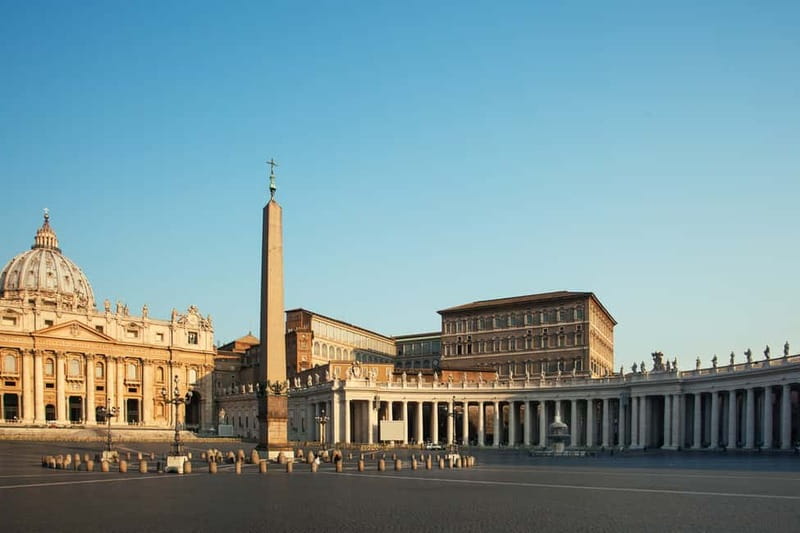
The Vatican is famous for being overwhelming. It’s not just the sights; it’s the logistics. A normal visit means lines at multiple choke points—entry, security, and then your walk through crowds that slow everything down.
This tour is designed to cut that friction. You’re set up to enter the Vatican avoiding the general entrance lines, and the plan is timed so you can reach the big rooms without losing your whole morning to standing still. If you only have a day in Rome and you don’t want the Vatican to eat it alive, this format helps.
Also, the tour is private for your group. That matters here, because you can ask questions, pause when you need a quick breather, and keep pace with your guide instead of getting shoved along with the crowd.
You can also read our reviews of more private tours in Rome
First meeting and the sprint into the Vatican Museums
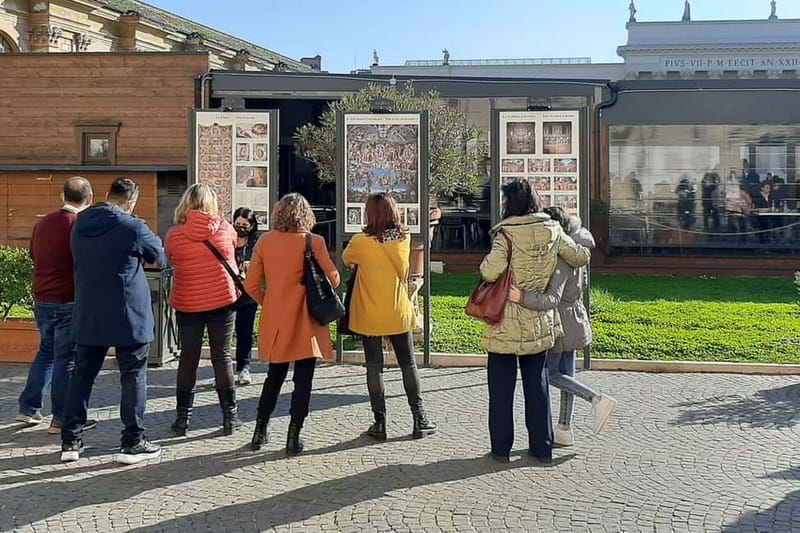
Your start time varies, but the tour runs about 2.5 hours total, and it includes Vatican Museums and the Sistine Chapel, with St. Peter’s Basilica as an optional add-on when access is possible.
Because meeting points can vary based on what you book, I recommend you give yourself extra time to find the exact pickup spot on the day. The Vatican area is busy and easy to mis-time if you’re relying on guesswork.
Once you’re inside the Museums route, the tour does something smart: it doesn’t try to make you “see everything.” It picks a high-impact path. That’s the only sane way to do the Vatican Museums, given how enormous they are and how many rooms there are to get lost in.
Pinecone courtyard to the Greek Cross Room: the museum route that makes sense
Here’s what makes the Vatican Museums stop feel more useful than a random wander: you’re led through specific spaces that connect themes, not just artwork “boxes.”
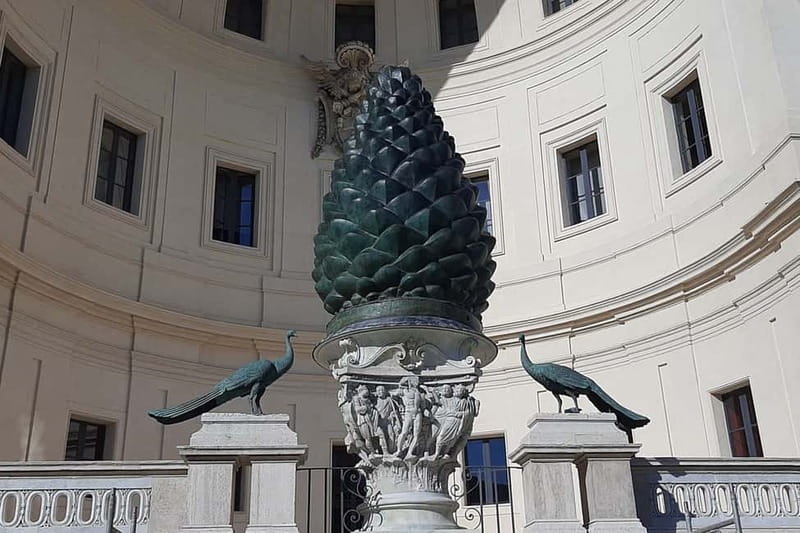
You’ll start with courtyards, including the Pinecone and Octagonal courtyards. Courtyards are a great early step because they help you orient your eyes and your brain. They also set the tone: this isn’t a single hallway museum. It’s a complex of linked spaces.
From there, you move into rooms like:
- The Room of the Muses and the Round Room, where the guide can help you read the program instead of staring at details with no context.
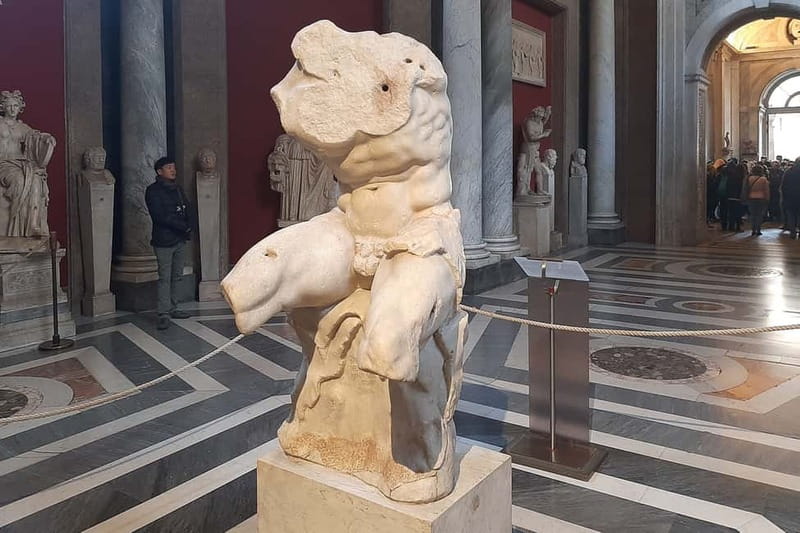
- The Greek Cross Room, where you’ll see the two sarcophagi of the Constantine family. This is the kind of stop that turns “wow” into understanding. You get a reason for why something is here and what it’s meant to communicate.
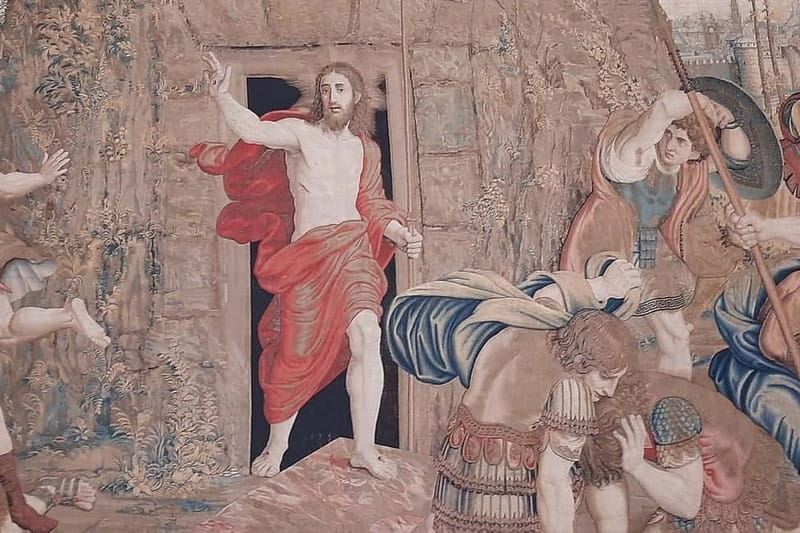
Then you’ll walk through the Candelabra and Tapestries galleries. These spaces are visually dramatic, but the point of having a guide is that you don’t just admire them—you learn what they represent and how they fit into the Vatican’s collecting habits.
One standout you’ll get to appreciate is Pope Gregory XIII’s private collection of Italian cartography. If you think the Vatican is only about paintings, this is a reminder that the Vatican collected knowledge too. Maps may not sound like a highlight, but when you see Italian cartography up close (and you understand what you’re looking at), it clicks.
The drawback? The museum route is packed. This isn’t a slow museum stroll. It’s a “hit the best parts without wasting time” strategy. If you want long, quiet time alone, you may feel a little rushed depending on your group and pacing.
Sistine Chapel timing: seeing the frescoes with a story, not just silence
The Sistine Chapel is where most people’s expectations go to die—or be reborn. It’s crowded, it’s strict, and once you’re in, you want your brain focused.
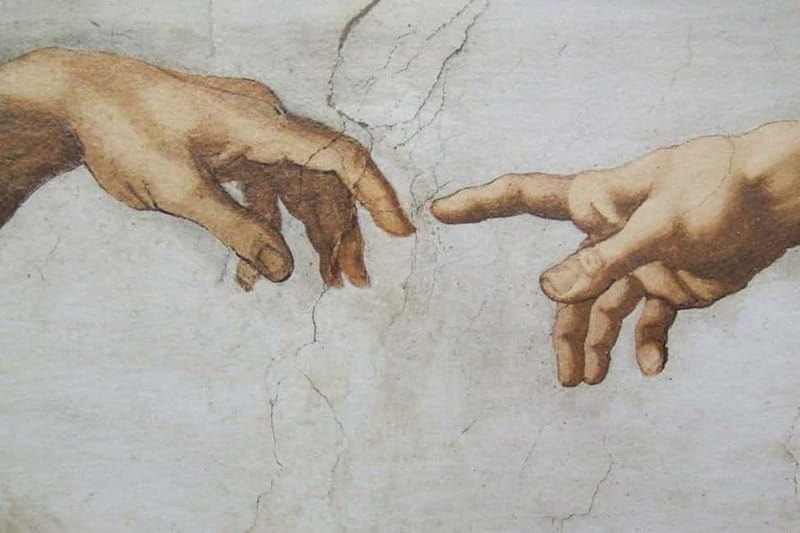
This tour includes a guided Sistine Chapel visit. You’ll learn about the challenges Michelangelo faced while working for countless hours on scaffolding. That kind of detail changes how you look. Instead of seeing finished scenes only, you start thinking about labor, tools, and the reality of making art at that scale.
Also, the Sistine Chapel matters beyond art. It’s the setting where eligible cardinals convene to elect new popes. A guide talking through that helps you understand why the space carries such emotional and institutional weight.
Practical rule to know: no photography or filming is permitted in the Sistine Chapel. So leave your phone habits at the gate. If you like taking photos as souvenirs, decide in advance what you’ll do instead—sketch, jot notes, or just use your memory.
St. Peter’s Basilica: optional priority entry with real-world limits
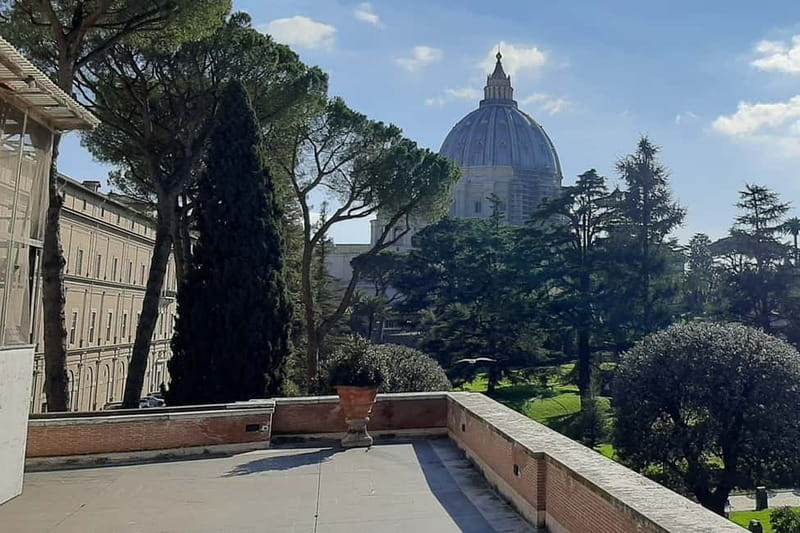
St. Peter’s Basilica is the big question mark on this tour. The experience includes an option to visit the Basilica, but access is governed by priority-entry rules and opening conditions.
Here’s what you need to know, plain and simple:
- Starting March 1, 2025, St. Peter’s Basilica has priority entrance tickets available.
- Those tickets are nominal and non-refundable.
- They can be bought up to 48 hours prior, depending on availability.
- Even with priority tickets, entry is not guaranteed.
- During Jubilee Year 2025, the Basilica may close on a case-by-case basis due to religious events, sometimes without notice.
- Priority access works only when the passage between the Sistine Chapel and St. Peter’s Basilica is open.
- On Wednesday morning tours starting at 9:30am, and during religious holidays, the Basilica won’t be included.
If the Basilica can’t happen, the tour is still set up so you’re compensated for the time spent—so the day doesn’t collapse. But that compensation depends on what’s possible operationally.
When you do get into St. Peter’s Basilica, the visit focuses on the Papal Tombs and the ground floor of the Basilica. That’s a satisfying “core experience” if you want the essentials without trying to force a full self-guided marathon.
If Basilica is your top priority, I suggest you treat it as likely, not guaranteed—and keep your expectations flexible.


Guide, headsets, and how a private tour keeps you in control
This is a private guided tour with an English-speaking guide and headsets, which is a huge deal in the Vatican. In crowded rooms, your voice and your attention get swallowed fast. With headsets, you can keep your eyes on the art while still catching the guide’s explanations.
One more thing I appreciate about a private setup: the guide can adjust pacing. If your group needs a break, you can slow down for a minute. If you’re the type who asks questions and wants details, a private format is usually more comfortable than joining a large herd.
From the guide style credited in past experiences, the best matches tend to be those who can make the art readable and the facts stick. Names like Janette, Debra, and Lara show up in the kind of feedback that points to humor, clarity, and keeping multiple ages engaged. If that’s your style too, you’ll probably enjoy this tour’s delivery.
Dress code and no-photo rules: the small stuff that can ruin your morning
The Vatican is strict here, and strict is not the same as optional.
You’ll need to dress appropriately:
- No hats
- No shorts, no short skirts, and no sleeveless shirts
- Shoulders and knees must be covered
In the Sistine Chapel: no photography or filming.
There’s also a cloakroom rule you should plan for. You must deposit suitcases, large backpacks, and umbrellas in the cloakroom. I recommend traveling light so you’re not fighting bags and timing.
One more “know before you go” note: the tour is not suitable for wheelchair users. If mobility access is a concern, you’ll want to look for an alternative format.
Who this Vatican tour fits best (and who should rethink it)
This is a strong match if:
- You want maximum sightseeing with minimum waiting
- You like structured storytelling in big museums
- Your group values a guide who keeps the pace moving
- You’re visiting with teens or adults who can handle art and context without needing lots of downtime
It’s less ideal if:
- You’re bringing very young kids who get overwhelmed by dense explanations and rules
- You want lots of freedom to wander without any structure (this tour is designed to manage time)
- You need wheelchair access
Also, if you’re the type who loves going slow in museums, you might feel this is “too efficient.” It’s efficient on purpose. That’s the trade.
Price and value: is $368.18 per person a smart spend?
At $368.18 per person for about 2.5 hours, this isn’t a budget tour. You’re paying for three things:
1) Skip-the-line tickets for the Vatican Museums and Sistine Chapel
2) A private guided experience with headsets
3) A route that targets major rooms so you don’t waste time deciding where to go
The value is best when you’d otherwise lose time in lines or when you’d feel lost in the Museums without a guide. In a place as huge as the Vatican Museums, “saving money” by self-guiding can cost you hours—and hours are the real currency in Rome.
Where the price can feel harder to justify is if St. Peter’s Basilica is crucial and ends up not being included. Since Basilica entry can depend on passage access and short-notice closures, you’ll want to be comfortable with the idea that you might leave with Museums and Sistine as the core win.
So my take: it’s worth it when you want a plan, not a guess. If you’re flexible and you’re okay with “Basilica if possible,” it becomes a strong value.
Should you book this private Vatican tour with St. Peter’s option?
I’d book this tour if you want a high-success Vatican day: you get guided highlights at the Vatican Museums and Sistine Chapel while avoiding the general entrance chaos. The combination of private guiding plus headsets helps you keep your attention on what matters instead of fighting noise and crowd flow.
I’d think twice if you’re counting on St. Peter’s Basilica as your only must-see. The Basilica visit relies on priority access rules and can be canceled or swapped due to religious events and passage openings, sometimes without notice. If you can accept that uncertainty, this tour’s Museums-to-Sistine focus is still a very solid payoff.
If you do book, come dressed correctly, travel light (cloakroom planning), and pick a time that makes sense for your energy. And if Basilica is included, it’s one of those moments that makes the long lines of Rome worth it—just make sure you’re treating it like a bonus, not a guaranteed promise.
FAQ
How long is the private Vatican tour?
The duration is listed as 2.5 hours, though you’ll need to check availability for starting times.
Does the tour skip the lines at the Vatican Museums and Sistine Chapel?
Yes. The tour includes skip-the-line tickets for the Vatican Museums and the Sistine Chapel.
Is St. Peter’s Basilica included?
St. Peter’s Basilica is an optional stop. Priority entrance tickets may be available (starting March 1, 2025), but access is not guaranteed and depends on availability, passage access, and possible closures due to religious events.
What should I wear for entry?
You must follow the Vatican dress rules: shoulders and knees covered and no hats. Also, shorts, short skirts, and sleeveless shirts are not allowed.
Can I take photos in the Sistine Chapel?
No. Photography or filming is not permitted in the Sistine Chapel.
Is the tour wheelchair accessible?
No. It’s listed as not suitable for wheelchair users.