REVIEW · ROME
Rome: Ancient Ostia, Archeology and History, Half Day Tour
Book on GetYourGuide →Operated by Welcome Italy by Spare Tour S.r.l. · Bookable on GetYourGuide
Ostia feels like time travel with your shoes on. This half-day Rome experience takes you to Ostia Antica, the ancient harbor town often called the better-than-Pompeii stop because so many buildings look shockingly intact. You’ll walk key streets like Decumanus Maximus and get guided context for what you’re seeing, not just a wander through rocks.
I love the way the ruins are presented as a living town. The guide doesn’t treat it like a museum basement; you’re shown spaces tied to daily life—ancient taverns, baths, apartments, groceries, and theatres—so the place makes sense in your head. And I also like the small-group feel with a professional local guide working for about 3 hours, which keeps the pace human and the explanations clear.
One thing to consider: this is real walking on uneven ancient ground, and it’s not suitable for people with mobility impairments or wheelchair users. If you hate cold, hard steps and plan to do this without comfortable shoes, you’ll feel it.
In This Review
- Key points to know before you go
- Why Ostia Antica feels different than a typical ruin walk
- Getting there and back: minivan pickup within Rome’s Aurelian Walls
- What the 3-hour guided tour really does for you
- The Decumanus Maximus walk: street life, direction, and scale
- Baths of Neptune and the mosaic detail you won’t forget
- Reading the site as a Roman neighborhood, not a checklist
- Timing and pacing: a half day that doesn’t waste daylight
- Price and value: what $258.29 per person is buying
- Who should book this Ostia half-day tour
- Should you book this tour?
- FAQ
- How long is the Rome: Ancient Ostia half-day tour?
- Where does pickup happen?
- When should I be ready for pickup?
- Is transportation included?
- How much time do we spend at Ostia Antica?
- Is the entrance fee included?
- Can I skip the ticket line?
- What languages are offered for the live guide?
- What should I bring?
- Is this tour refundable if plans change?
Key points to know before you go
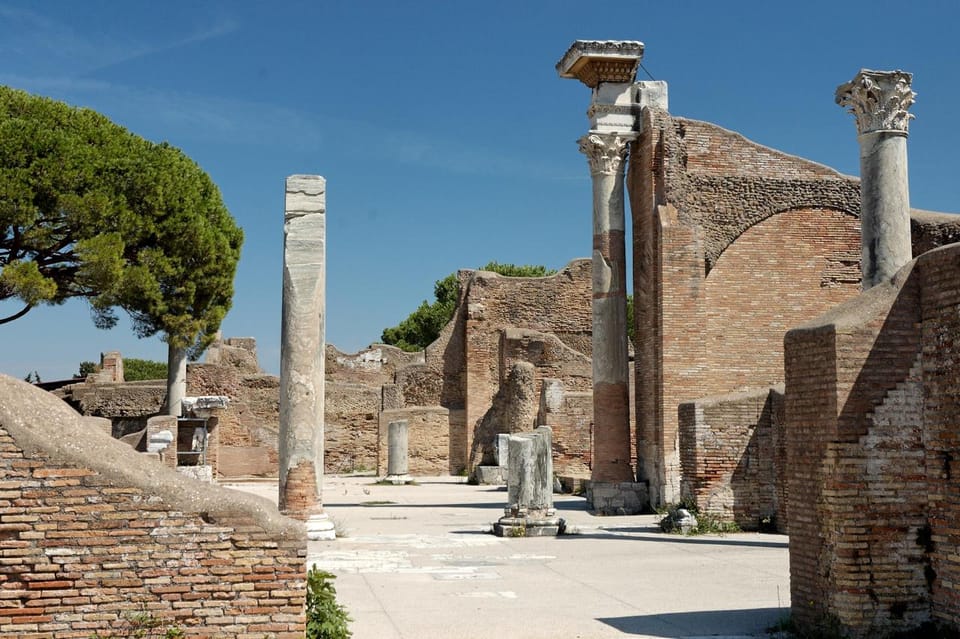
- Ostia Antica is a preserved Roman harbor town: it’s often described as better preserved than the Roman Forum and compared directly with Pompeii.
- You get about 3 hours of guided time on site: the walking has a storyline, not just random stops.
- Skip-the-ticket-line plus entrance included: fewer delays means more time in the archaeological area.
- Air-conditioned round-trip transport from Rome: a minivan handles the commute so you’re not stressed about timing.
- It’s a small group or private tour: choose the format that fits your travel style.
- Stunning visual details anchor the history: think mosaics and statues lining the walkways.
Why Ostia Antica feels different than a typical ruin walk
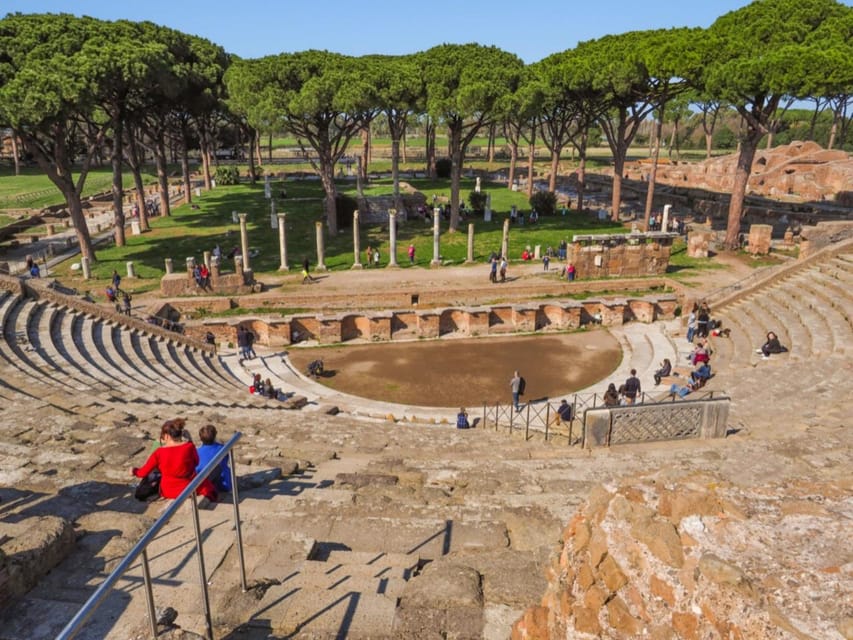
Ostia Antica sits just outside Rome and worked as the city’s harbor—so you’re not only looking at temples and big monuments. You’re seeing a place built for shipping, trade, dining, living, and recreation. The tour frames it as a Roman daily-life snapshot, founded in the 4th century BC, which matters because the site reads differently when you understand its purpose.
The big selling point is preservation. You’ll hear (and you’ll feel) why this is so often compared to Pompeii: buildings and street details look unusually well kept, enough that you can picture how the town functioned. The walk is designed to get you from one “what you’re looking at” moment to the next, and that makes the ruins feel less like scenery and more like evidence.
The guide also points out that the condition you see can feel closer to what you’d expect in a maintained city than what you might get from more fragmented sites. It’s not about pretending it’s whole; it’s about seeing why the archaeological remains are so legible. When you notice statuary lining walkways in such good shape, you start to connect the street layout and architectural purpose with what’s still there.
You can also read our reviews of more historical tours in Rome


Getting there and back: minivan pickup within Rome’s Aurelian Walls
The smooth part of this tour starts before you reach the ruins. You get pick-up and drop-off at your hotel, but only if you’re staying within the Aurelian Walls area. You’ll wait in the lobby or just outside your accommodation about 10 minutes before your scheduled pickup time.
Why that matters: in Rome, getting to anything outside the center can eat your half day. Here, the transportation is built into the plan using an air-conditioned minivan for the round trip. It’s one less thing to coordinate, and it keeps the day focused on the site instead of on logistics.
Because your time on the ground is limited by design, the ride matters for how you experience the day. You’re not spending your best daylight moments figuring out buses or parking. You’re arriving ready to walk, take photos, and listen.
One practical note: the tour duration is listed as 4 hours total, but the guided time at Ostia is around 3 hours. That means the schedule is tight enough that you’ll want to be ready at pickup, and you should plan to stay with the group once you’re there.
What the 3-hour guided tour really does for you
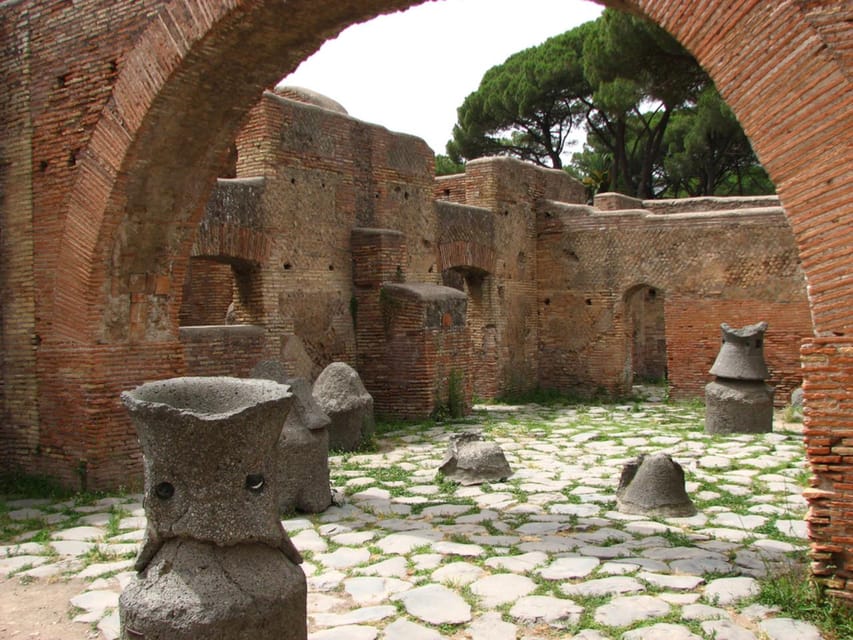
This isn’t a “stand here and listen for five minutes” setup. The visit includes photo stops, a guided walk, and time to move through the historic layout. Your guide uses the main street—Decumanus Maximus—as the backbone of the story, so you’re not lost in the site’s size.
As you walk, you’ll get practical interpretations of Roman architecture: how spaces were built, how public and private areas differed, and why the town’s layout mattered. The tour emphasizes that many of the ruins still show enough structure to make sense. So you’re not just hearing random facts; you’re learning to read what’s in front of you.
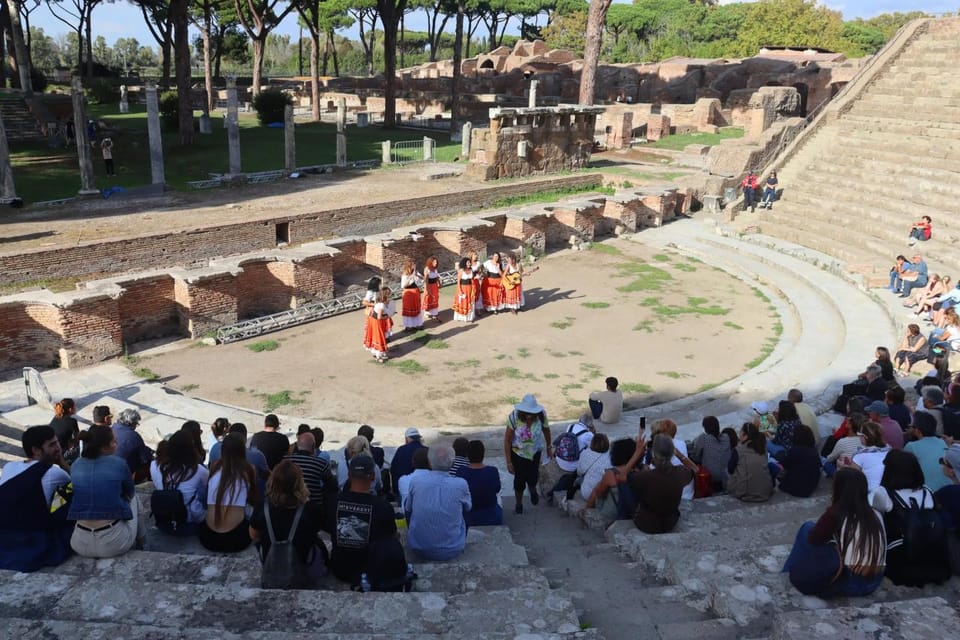
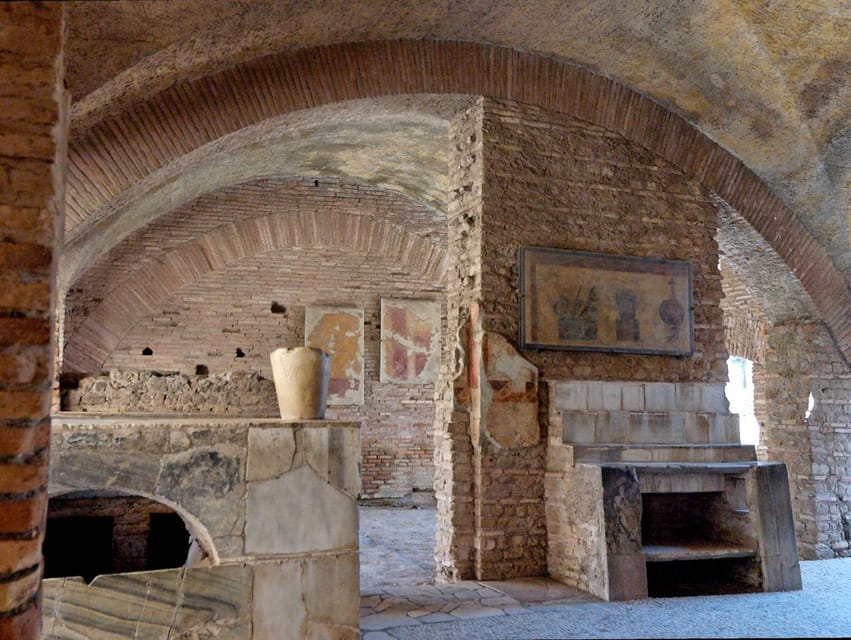
You’ll also be guided to areas representing everyday functions, from taverns to baths and apartment-like spaces. That’s the moment when Ostia turns from “ancient city ruins” into a place you can mentally navigate. Even if you’re not an archaeology person, the explanation style aims to be straightforward and visual.
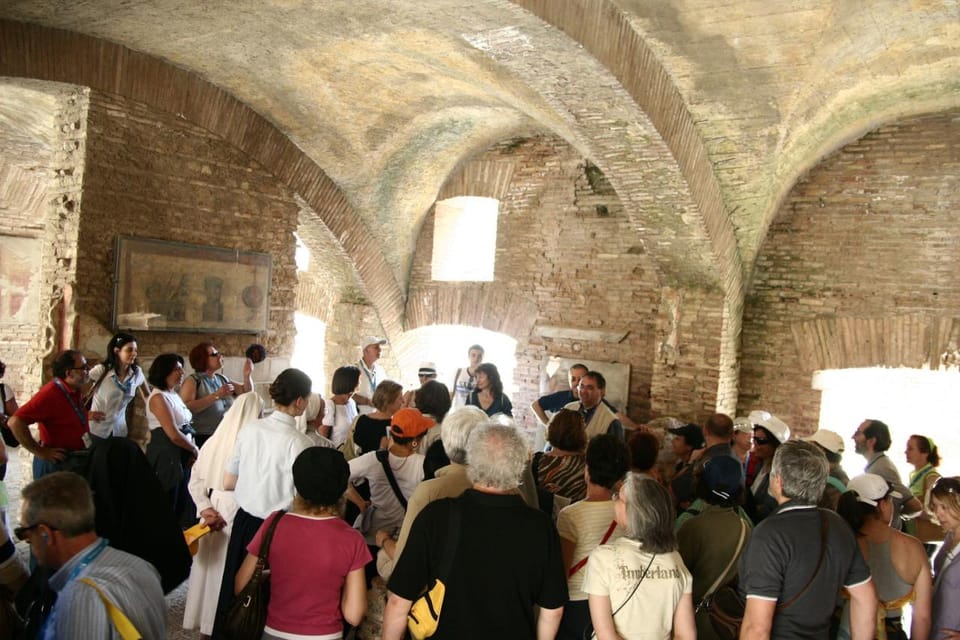
And because the format is a small group—or private if you choose it—you usually get more than just a generic script. A local guide with experience at the site can adjust to questions and the flow of the walk, which helps you absorb what you’re seeing within that single half-day block.
The Decumanus Maximus walk: street life, direction, and scale
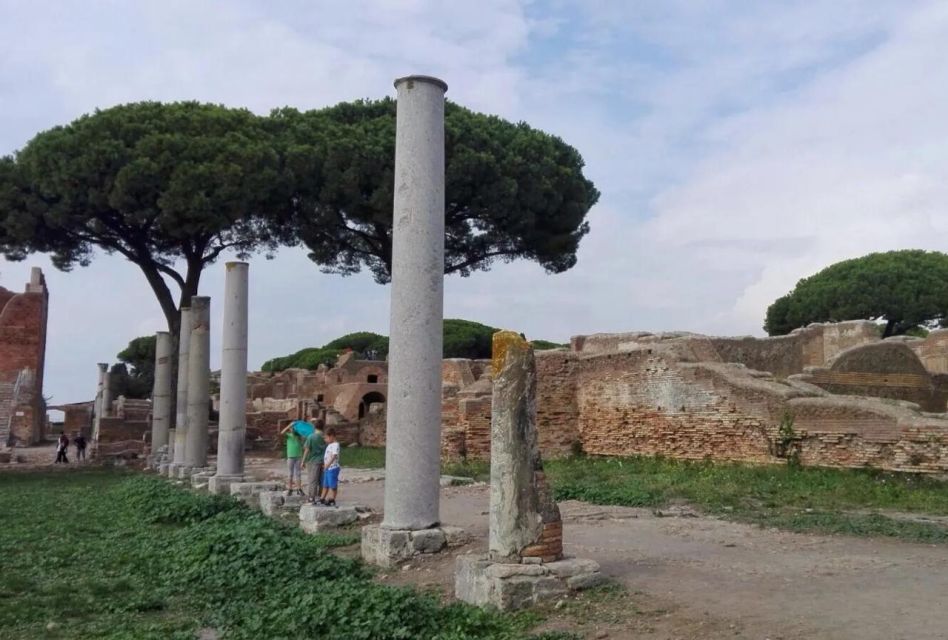
The Decumanus Maximus is the kind of feature that makes or breaks a ruin tour. It’s the main street, and it gives you direction. Instead of bouncing between scattered ruins, your route has momentum, which helps your brain connect buildings to street activity.
As you stroll, the guide ties the street to stories from Roman life. You’ll pass the kind of architectural remains that look like they belonged to a neighborhood with routines—places where people ate, shopped, went to public baths, and spent time in entertainment spaces. The more you understand that this was a harbor town, the more those everyday categories click.
This is also where those well-preserved visual elements do their job. Statues lining walkways, still in striking condition, act like reference points. When you see those, you stop thinking of the site as empty. It starts feeling like a town where street decoration and public art were part of the environment, not an afterthought.
If you like the moment when a place becomes readable, you’ll appreciate how the tour uses the street as a guided “spine” for the rest of the visit.
Baths of Neptune and the mosaic detail you won’t forget
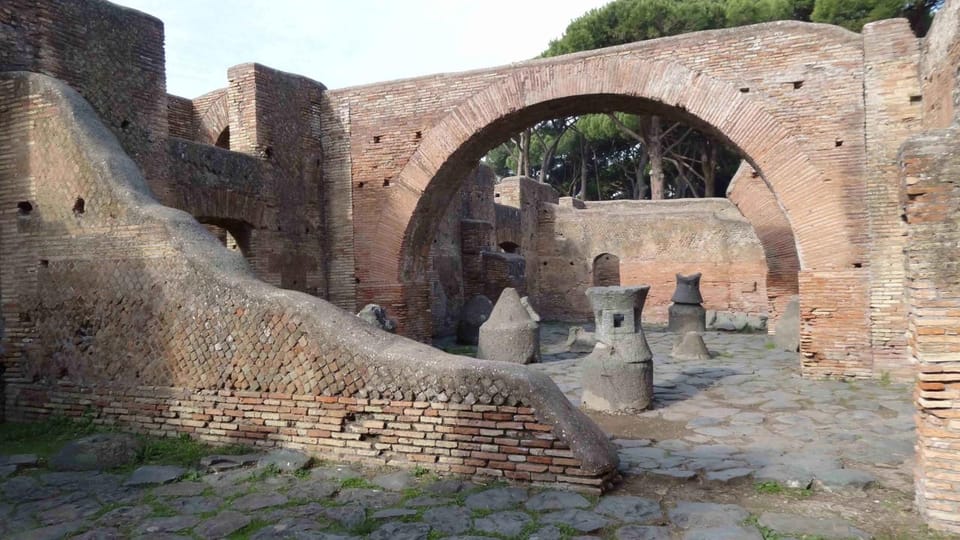
One of the most memorable parts is the Baths of Neptune area, especially the mosaic connected to the Sea God. The description you’ll get highlights an impressively intact mosaic showing the Sea God in a chariot drawn by sea horses.
Even if you’re not big on art history, a mosaic like that changes the tone of a day. It’s not only stone walls and foundations anymore. You’re seeing color, iconography, and storytelling—Roman people using art to frame their relationship with water and the sea.
The tour also notes the Baths of Neptune area in a way that pulls you into imagining how it felt to be there. You might be enticed to take a dip, at least in your imagination; the real value is that the guide encourages you to slow down and look closely at what’s left, because the mosaic is one of the best “close your eyes and picture the ancient moment” cues on the route.
This is the kind of stop that works well for photos too. The mosaic gives you a focal point, and because it’s described as impressively intact, it’s not one of those “can you spot it?” archaeology situations.





Reading the site as a Roman neighborhood, not a checklist
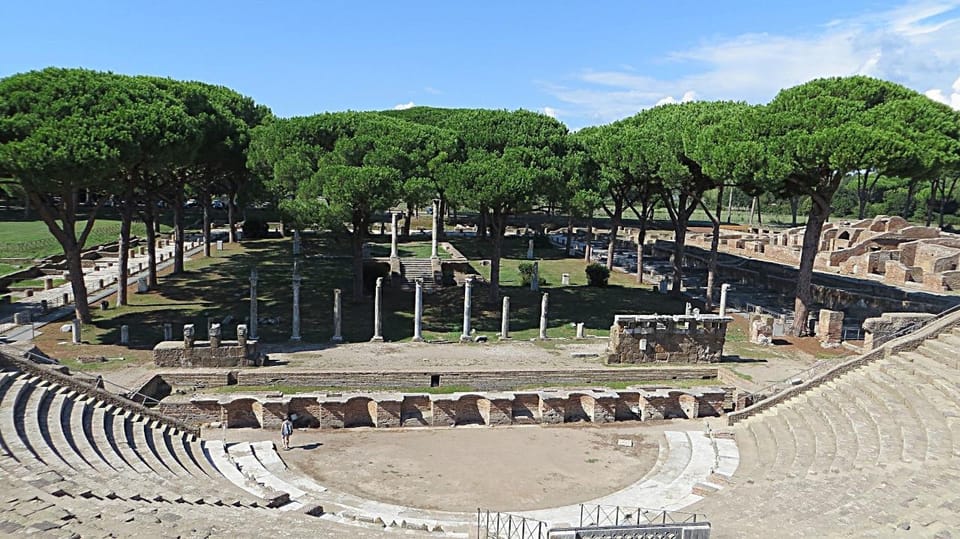
A lot of archaeology tours accidentally turn into a bullet-point checklist. This one tries to avoid that. You’ll walk through a sequence of spaces that stand for how Roman towns functioned: taverns, baths, apartments, groceries, and theatres.
Here’s the practical takeaway: when you can connect each category to a building type and a purpose, the site stops being intimidating. It becomes a series of understandable pieces. That’s why the tour says the condition can feel more striking than what you might expect at the Roman Forum. At Ostia, the remains are easier to map to daily routines.
Also, the descriptions are meant to help you notice architectural cues as you move. The guide focuses on Roman architecture, so you’re not just hearing that a room existed—you’re being taught how to recognize what it was used for. That’s the difference between seeing ruins and learning to interpret them.
If you’ve visited other major Roman sites and felt like everything was too separated, this tour’s approach is a smart change of pace. It’s one place, viewed through many layers of everyday life.
Timing and pacing: a half day that doesn’t waste daylight
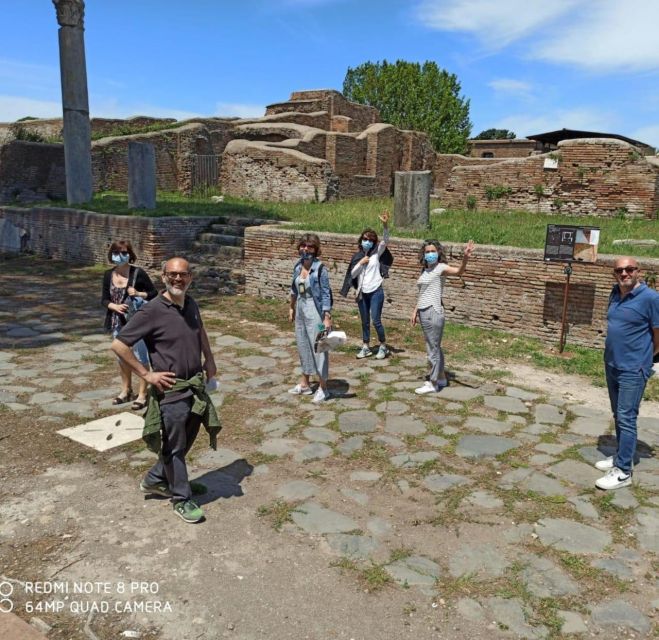
Your total outing is 4 hours. That’s perfect if you want an archaeology hit without giving up an entire day in Rome. It also means you need to keep expectations realistic: you’re not touring Ostia Antica at leisure for hours and hours. You’re getting a guided route with enough time to see major highlights and still come away with a clear sense of what the site was.
Because the guided visit is around 3 hours, you’ll likely spend most of that block walking, listening, and stopping for photos. The remaining time is transportation to and from Rome.
So plan your day around this: treat it as the main activity, and avoid stacking another timed tour immediately afterward unless you know your schedule is flexible. You’ll be glad to have the rhythm of pick-up, guided walking, then back to Rome.
Price and value: what $258.29 per person is buying
At $258.29 per person, this is not a cheap outing. But for many visitors, it’s the kind of price that makes sense because you’re buying three things at once: guide time, admission, and convenient transport.
Here’s the value equation I see:
- You’re paying for about 3 hours of professional guidance at the site, which is the biggest driver of what you’ll remember later.
- The Ostia Antica entrance fee is included, so you’re not juggling separate tickets during a time-sensitive half day.
- Transportation is included in an air-conditioned minivan with round-trip pick-up and drop-off inside the Aurelian Walls. That convenience is real, especially in Rome.
If you were to DIY it, you’d still spend time figuring out transit and ticketing. When the tour format removes those frictions and gives you a coherent route with explanations, the price starts to look more like “time saved plus learning gained” than just “a ride to ruins.”
This is also a small-group or private option, which can increase value if you prefer a more personal pace over a large bus crowd. The tour’s overall setup is built for comfort and clarity within a short time window.
Who should book this Ostia half-day tour
This is a strong choice if you:
- Want a Roman archaeology experience that focuses on everyday life, not only monuments
- Like guided walking routes that help you understand layout and architecture
- Have limited time and want a 4-hour plan that still feels substantial
- Prefer small group or private formats and multilingual guiding in French, Spanish, or English
It may not fit if you:
- Need wheelchair access or have mobility impairments, since it’s explicitly not suitable for those situations
- Don’t do well with walking outdoors on uneven ancient surfaces
- Expect a totally free-form visit where you roam at your own pace
Should you book this tour?
If you want a half day in Rome that gives you a real sense of what ancient Roman life looked like in a harbor town, I’d book it. The key reason is the guided structure: you’re not just looking at ruins, you’re walking a readable route like Decumanus Maximus, with stops that highlight what’s left—especially the Baths of Neptune mosaic with the Sea God imagery.
The price is steep, but you’re paying for a professional local guide, admission, and air-conditioned round-trip transport from within the Aurelian Walls. For many travelers, that combination is what turns Ostia from a “nice idea” into a memorable, understandable experience.
If your priority is total independence or you can’t handle uneven walking, then skip it and look for a different format that matches your pace. Otherwise, this is a smart use of a limited day—one that should leave you feeling like you actually learned something about the Romans, not just photographed stone.
FAQ
How long is the Rome: Ancient Ostia half-day tour?
The tour lasts about 4 hours total, with a 3-hour guided visit and walk at Ostia Antica.
Where does pickup happen?
Pickup is included at your hotel as long as you’re staying inside the Aurelian Walls area.
When should I be ready for pickup?
You should wait in your hotel lobby or outside your accommodation about 10 minutes before your scheduled pickup time.
Is transportation included?
Yes. You’ll travel in an air-conditioned minivan with round-trip transportation between Rome and Ostia Antica.
How much time do we spend at Ostia Antica?
The tour includes around 3 hours at Ostia Antica, including guided time, walking, and a photo stop.
Is the entrance fee included?
Yes. The Ostia Antica entrance fee is included in the tour.
Can I skip the ticket line?
Yes. The tour includes skipping the ticket line.
What languages are offered for the live guide?
The live guide is available in French, Spanish, and English.
What should I bring?
Bring comfortable shoes, sunglasses, and a camera.
Is this tour refundable if plans change?
You have free cancellation up to 24 hours in advance for a full refund.