REVIEW · ROME
Rome: Caravaggio Guided Walking Tour
Book on GetYourGuide →Operated by The Voyager · Bookable on GetYourGuide
Caravaggio’s Rome feels close, not distant. This 2.5-hour walking tour traces the places tied to his life and work, starting in Piazza del Popolo and ending with a major finale in the Contarelli Chapel. I especially like how the route links the art to real addresses and streets you can picture, and I also like that the guide (many are specialists, including Patricia) brings the paintings to life with stories and hands-on-looking details rather than lecture mode.
One thing to plan for: you’ll do moderate walking and you must follow a church dress code. Think shoulders and knees covered, no shorts, no sleeveless tops, and skip large bags.
In This Review
- Key things you’ll notice on this Caravaggio walk
- Piazza del Popolo: where the route starts and how you’ll find the group
- Santa Maria del Popolo: The Crucifixion and The Conversion in one visit
- Palazzo Madama and Giustiniani Palace: seeing the neighborhoods behind the paintings
- Church St. Augustine: The Madonna of the Pilgrims and a change of mood
- St. Louis of France and the Contarelli Chapel: the final masterpiece
- The practical stuff: walking pace, dress code, and what’s actually included
- Price and value: is $71 worth it?
- Should you book the Rome: Caravaggio Guided Walking Tour?
- FAQ
- What is the duration of the Rome: Caravaggio Guided Walking Tour?
- Where does the tour start, and how do I find the guide?
- Which Caravaggio artworks and churches are included?
- Is the tour only in English?
- What should I wear or bring for the churches?
- Is this tour suitable for mobility impairments?
Key things you’ll notice on this Caravaggio walk
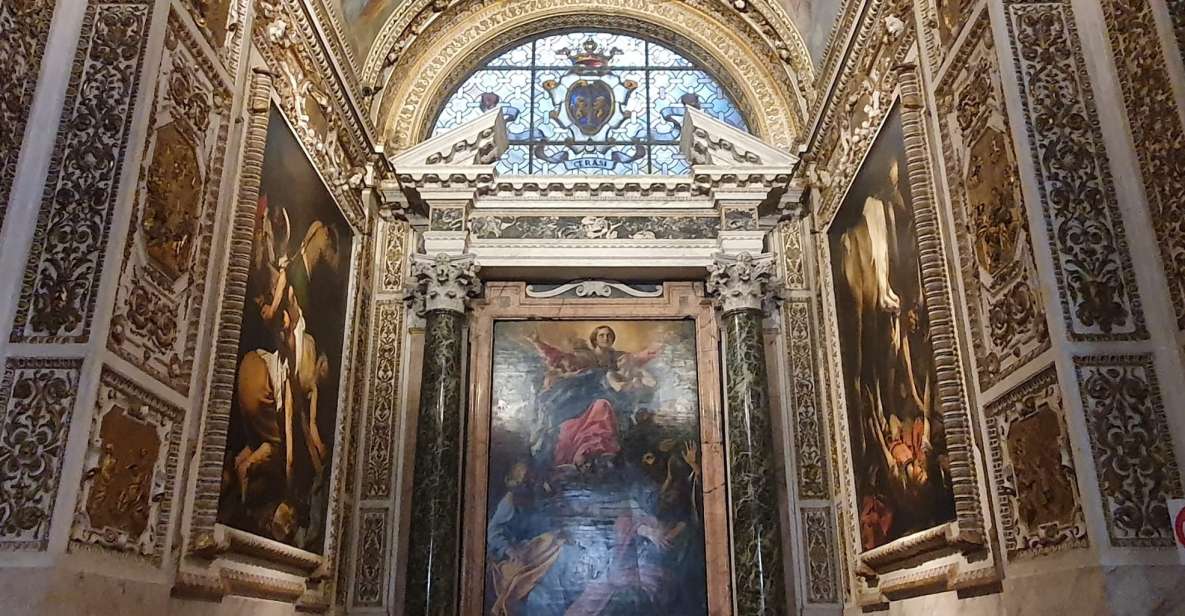
- Start at Piazza del Popolo, then move through the historic center on foot
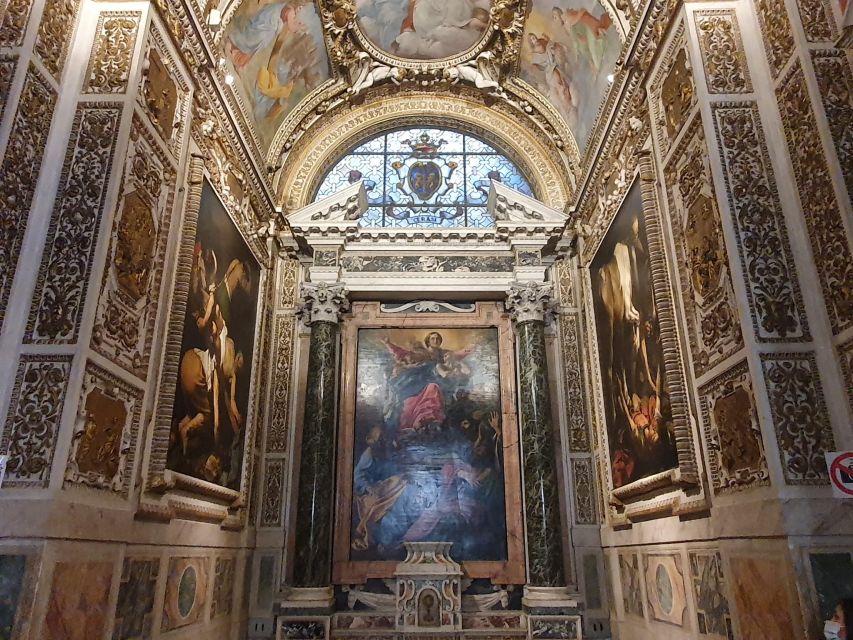
- Santa Maria del Popolo includes two standout works: The Crucifixion of St. Peter and The Conversion of St. Paul
- You’ll pass by Palazzo Madama and Giustiniani Palace, identified as Caravaggio residences
- Church St. Augustine is where you see The Madonna of the Pilgrims
- The tour finishes with The Life of St. Matthew in the Contarelli Chapel (St. Louis of France)
Piazza del Popolo: where the route starts and how you’ll find the group
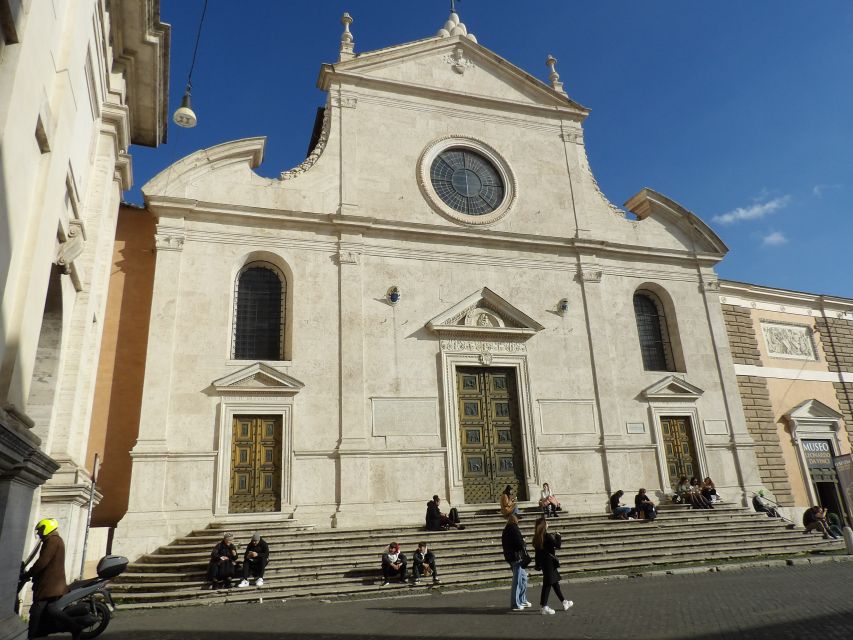
The tour kicks off at Piazza del Popolo, one of Rome’s biggest public squares and a practical launch point for a walking route. Your guide will carry a flag with the The Voyager logo, so take a quick second to spot it before you drift off to look at the sights on your own.
This start matters more than it seems. When you only have 2.5 hours, you want your head in the right place right away. You’re not just hopping between churches. You’re walking a connected line through the district that shaped Caravaggio’s daily life and work, with your guide filling in the why behind each location.
You’ll also be given headsets, which helps when you’re moving through crowded streets. It’s a simple inclusion, but it makes the experience smoother, especially in churches where sound can bounce around.
From there, the tour keeps a steady pace: short stretches outdoors, then time inside to actually look at the paintings. That mix is the whole point. You get the Roman street-world first, then the art lands with more meaning.
You can also read our reviews of more walking tours in Rome

Santa Maria del Popolo: The Crucifixion and The Conversion in one visit
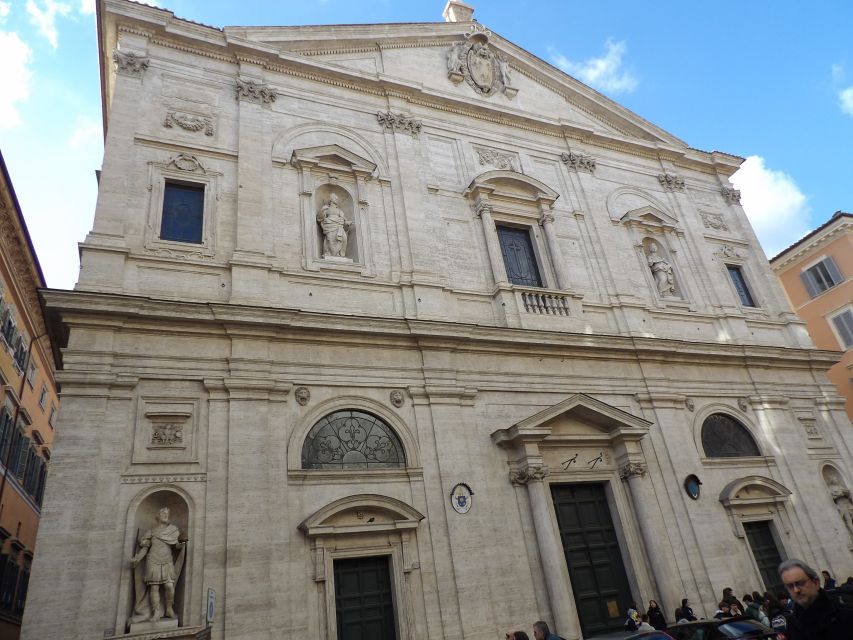
Your first major stop is Basilica of Santa Maria del Popolo, where you’ll see two Caravaggio works: The Crucifixion of St. Peter and The Conversion of St. Paul.
I like this pairing because it gives you a quick sense of range within one setting. You’re not only learning what the paintings look like. You’re also learning how Caravaggio’s subjects connect to the religious world of the churches that house them. With a live guide, you’ll get context about Caravaggio’s lifestyle and his approach to art, then you’ll link that back to the specific artwork in front of you.
Inside, you’ll also have time to slow down. This isn’t a rushed photo stop. The guide is there to help you notice what makes the works stand out in a practical way—how the figures and storytelling land within the space.
One practical note: this is a church. You’ll need to be dressed correctly to enter. If you’re arriving in the wrong outfit, you may have to wait outside until you can fix the issue. So I’d treat your clothing like part of your itinerary, not an afterthought.
Also, plan for a steady indoor-outdoor rhythm. It’s an efficient route, but it’s still real walking.
Palazzo Madama and Giustiniani Palace: seeing the neighborhoods behind the paintings
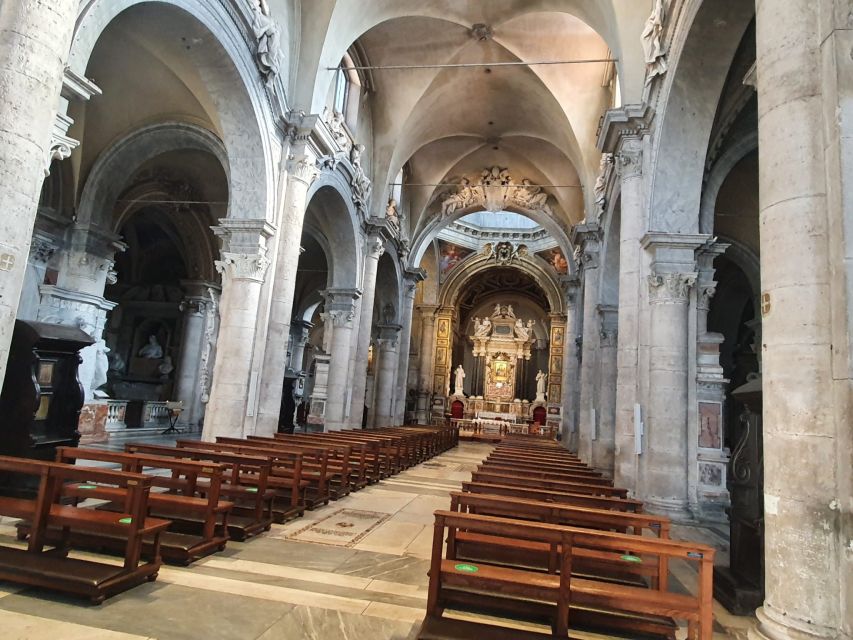
Between churches, the tour turns into something more like a guided walk through Caravaggio’s Rome—streets and corners, not just museum rooms. Two key stops here are passing by Palazzo Madama and Giustiniani Palace, described as Caravaggio residences.
These “pass-by” moments are easy to underestimate. But when you’re on foot, seeing a building’s street presence helps your brain do the linking work. You can imagine where daily life might have unfolded. You start to understand the difference between seeing a painting in isolation and seeing it as something tied to a real working life.
Your guide also shares insight into Caravaggio’s lifestyle and outstanding technical skills. Even if you’re not an art expert, that sort of explanation helps you look smarter, faster. Instead of asking what am I supposed to notice, you get a few focused directions: what to pay attention to, and how the artist’s approach ties back to the setting.
And because the walking happens through historic central Rome, you’ll likely get those little “wait, look at that” moments—Roman alleys that feel like they belong in the story rather than the roadmap.
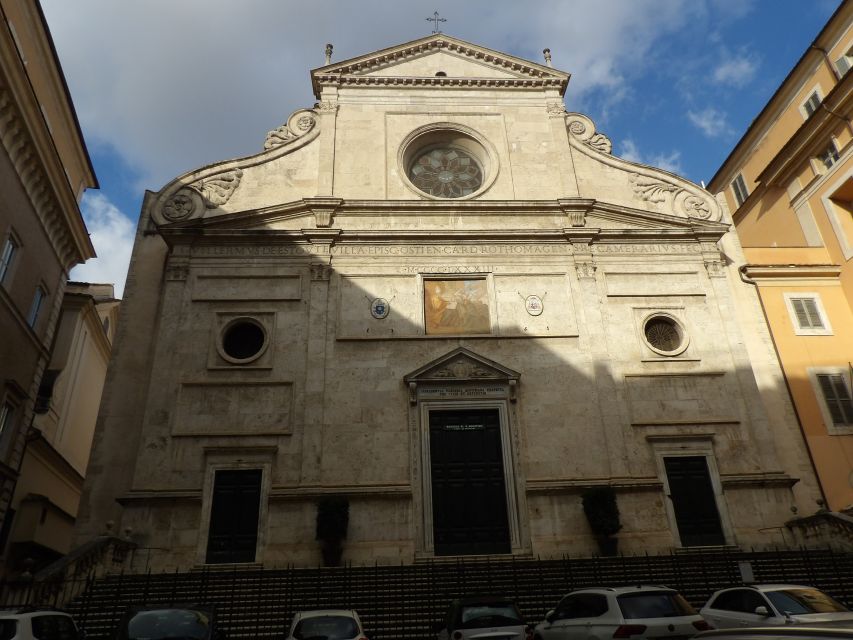
Church St. Augustine: The Madonna of the Pilgrims and a change of mood
Next up is Church St. Augustine, where you’ll see The Madonna of the Pilgrims.
This stop works well because it shifts your pace. By now you’ve built context through the first basilica visit and the residence-related walk. The guide has also been setting up Caravaggio’s life and work as a whole. When you reach St. Augustine, the painting becomes the focus again, and you can connect the church setting to the artwork’s themes.
I also like how the tour is structured to keep the experience from turning into one long lecture. You get a clear “place” for each artwork. Inside St. Augustine, you’ll be able to focus on the painting in a way that’s hard to do when you’re speed-walking from one photo point to another.
Dress code matters even more at this stage, because by now you’ll be tempted to rush. Don’t. Churches can be strict, and you’ll feel a lot happier if you already have your shoulders and knees covered before you arrive.
If you’re someone who likes your art history with a little street sense, this church stop is a good payoff.
St. Louis of France and the Contarelli Chapel: the final masterpiece
The last artwork on the route is The Life of St. Matthew in the Contarelli Chapel, inside St. Louis of France.
Finishing at the Contarelli Chapel gives your tour a satisfying arc. The day starts in a major Roman square, moves through two other church spaces, includes residence-related neighborhood context, and then lands on a final “this is the moment” masterpiece.
In practice, that ending matters. You’re more alert by the final stop, and your brain has already been trained by the guide to look for story, setting, and how the paintings connect to where they were made for. That makes the final artwork feel less like a random last stop and more like a planned conclusion.
The route is described as intensive, and it is. So when you reach the chapel, treat it like your big moment. Pause longer than you think you need to. Let your guide’s explanation land, then look again once you understand what to watch for.
You can also read our reviews of more guided tours in Rome
The practical stuff: walking pace, dress code, and what’s actually included
This tour is built around walking. The duration is 2.5 hours, and the itinerary takes you through three churches plus the streets between them. If you’re used to Rome’s uneven sidewalks, you’ll be fine. If you’re not, you’ll still be okay, but bring comfortable shoes and pace yourself.
Dress code is serious because you’re entering places of worship. Plan for this:
- No shorts
- No sleeveless shirts
- Both men and women must have shoulders and knees covered
- Avoid short skirts
Also, keep your bag situation simple. Luggage or large bags are not allowed. That’s worth knowing if you’re traveling light-or-not. If you arrive with bulky bags, you may need to store them elsewhere before you can join.
Good news: the essentials are covered.
- Live guide
- Headsets (so you can hear clearly while walking and inside)
- Audio guide support in English and Italian
And you’ll want a passport or ID card on you.
One last practical tip from the real world: if you ever worry about meeting up, don’t. The guide uses a flag with The Voyager logo. Show up early enough to find it fast, then get settled. There’s a rare risk that a delayed arrival can cause you to miss the first painting moment in a church—so be on time, not five minutes late.
Price and value: is $71 worth it?
At $71 per person for 2.5 hours, this isn’t a “pay for a slow stroll” price. You’re paying for a guided art route with structure: multiple sites, live commentary, and headsets so the guide’s explanation stays with you.
Here’s what makes the value strong:
- You get live guidance plus headsets, which improves the quality of the experience
- The route is focused: multiple major artworks across three churches
- You get both art viewing and life/work context, so you’re not just reading labels
Where value can feel uneven is if you’re expecting an ultra-academic seminar. The best descriptions of the tour lean toward an enthusiastic, story-driven walk with someone who enjoys the art and knows how to explain it. If you want only formal art-world terminology, you might want a different type of guided experience.
Still, if you like connecting paintings to place—especially in Rome—this is a solid way to spend your limited time.
Should you book the Rome: Caravaggio Guided Walking Tour?
Book it if you want a story-forward art walk that links Caravaggio’s paintings to the churches and residences tied to his working life. This tour is a great fit when you like practical guidance: where to stand, what to notice, and how the art connects to the city around it.
Skip it if:
- You can’t manage moderate walking
- You’re not ready for church rules (covered shoulders and knees)
- You prefer free-flow museum wandering instead of an organized path with set stops
If you’re on board with the plan—and you dress for it—you’ll likely come away with a clearer picture of Caravaggio in Rome, not just a checklist of famous titles.
FAQ
What is the duration of the Rome: Caravaggio Guided Walking Tour?
The tour lasts 2.5 hours.
Where does the tour start, and how do I find the guide?
You’ll start at Piazza del Popolo. The guide will have a flag with the The Voyager logo.
Which Caravaggio artworks and churches are included?
You’ll visit Basilica of Santa Maria del Popolo (The Crucifixion of St. Peter and The Conversion of St. Paul), Church St. Augustine (The Madonna of the Pilgrims), and St. Louis of France to see The Life of St. Matthew in the Contarelli Chapel.
Is the tour only in English?
No. The live tour guide is available in English and Italian, and audio guide support is also in English and Italian.
What should I wear or bring for the churches?
Bring comfortable shoes and comfortable clothes, plus a passport or ID card. You must cover shoulders and knees. Shorts, sleeveless shirts, and short skirts are not allowed.
Is this tour suitable for mobility impairments?
No. It’s not suitable for people with mobility impairments.