REVIEW · ROME
Rome: Guided Group Colosseum & Ancient City Tour
Book on GetYourGuide →Operated by Carpe Diem Tours · Bookable on GetYourGuide
Rome’s ruins feel alive when someone narrates. This 3-hour, guided group tour strings together the Colosseum, Palatine Hill, and the Roman Forum with faster entry where possible, so you spend more time seeing and less time waiting. The story-led pacing is built for real comprehension, not just photo stops.
I like the priority access through the big-ticket areas, and I really appreciate how the guide helps you picture what you’re looking at—everything from gladiators to imperial palaces to daily politics in the Forum. I’ve also seen guides on this route earn strong praise for making the sites click for both history nerds and kids (Paolo Sanna’s gladiator play and Selena’s architectural explanations are good examples).
One thing to plan for: start times and entry flow can vary, and on the first Sunday of the month the Colosseum can be free but lines can still be long. If you want the smoothest experience, avoid that day when you can—and if you can’t, start the day with patience.
In This Review
- Key things to know before you go
- Starting at the Arch of Constantine: how the tour gets you oriented
- Entering the Colosseum with faster entry (and views most people miss)
- The Colosseum reality check
- Palatine Hill: Rome’s birthplace and the power-play of emperors
- What you should watch for
- Via Sacra and the Roman Forum: the loud heart of public life
- A tip that changes everything
- Arena floor access: the extra you might actually want
- Group tour pacing: what 3 hours feels like on your feet
- Photo and question strategy
- Price and value at about $93 for Colosseum + Forum + Palatine Hill
- Should you book this Colosseum, Palatine Hill & Forum tour?
- FAQ
- How long is the Rome: Guided Group Colosseum & Ancient City Tour?
- Where do I meet the guide?
- Does the tour always start at the Colosseum?
- What sites are included in the tour?
- Is access to the arena floor included?
- What do I need to bring?
Key things to know before you go
- Priority entry helps you get into three major sites faster than standard entry lines.
- Your start point may change: some departures begin at the Colosseum, others begin with the Roman Forum and Palatine Hill depending on ticket timing.
- You’ll finish in the Roman Forum, which is great because it’s the easiest place to keep exploring on your own after the tour.
- Arena floor access is optional (extra cost if you select it). If you don’t, you’ll still see a lot from within the Colosseum area.
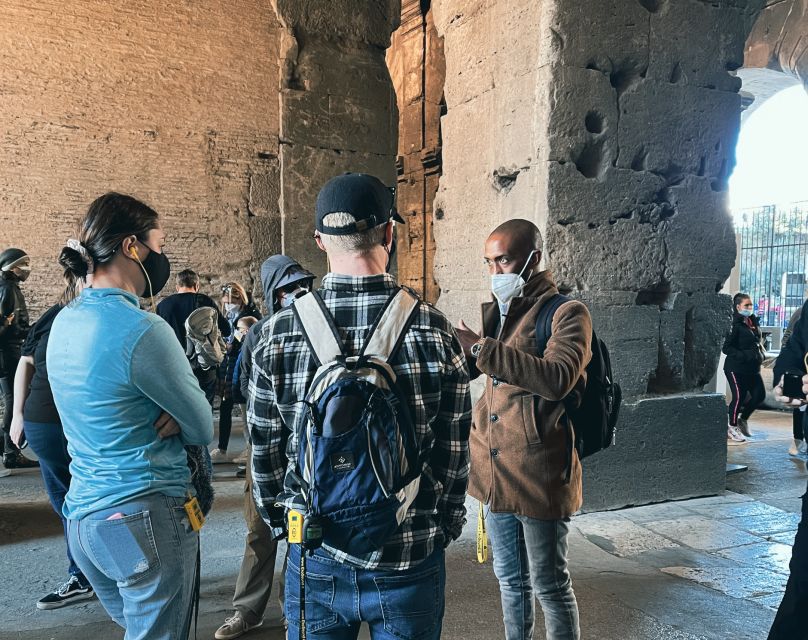
- Group size tends to be manageable, and one group was noted as small (around 13), which usually means better question time.
- Bring ID (passport or ID card) and don’t be late—late arrivals aren’t eligible for refunds.
Starting at the Arch of Constantine: how the tour gets you oriented
Your day begins at a landmark that’s hard to miss: the Arch of Constantine, with the guide holding a yellow Carpe Diem Tours flag. This matters more than you might think. The Arch sits at a natural crossroads of your route, so you’re not just meeting a tour—you’re getting placed correctly before the crowds swallow the streets.
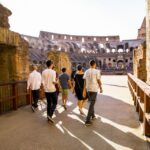
You’ll also see quickly how the tour is designed for momentum. The group moves with purpose, and the guide uses that walking time to set the stage: how the Colosseum fits into Roman power, how the Forum functioned as the city’s public square, and why Palatine Hill was where the emperors put their living rooms.
Practical tip: take one minute to look around at the streets and walls before you step into the ticketed areas. It makes the later “this was once a city” feeling click faster.
You can also read our reviews of more guided tours in Rome
Entering the Colosseum with faster entry (and views most people miss)
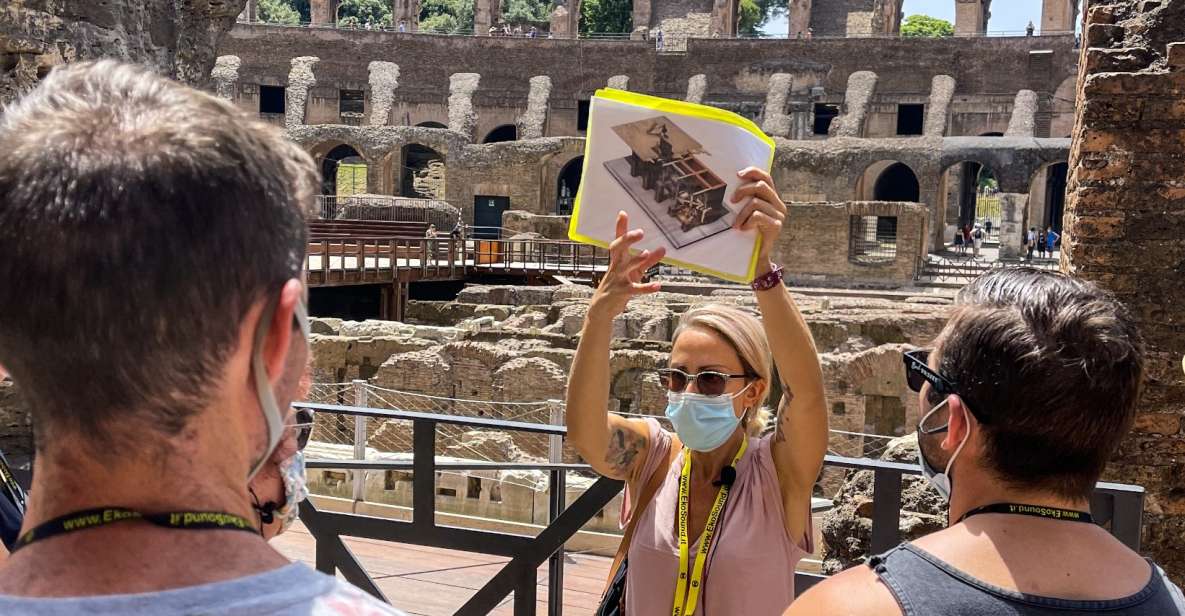
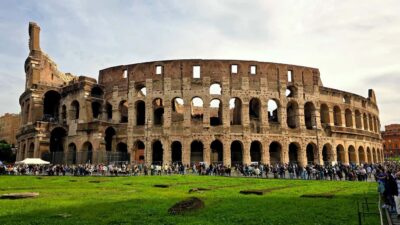
The Colosseum is the obvious headline. What’s less obvious is what you gain from a guided group route with speedier entry into the Colosseum and then onward to Palatine Hill and the Forum.
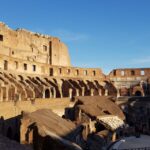
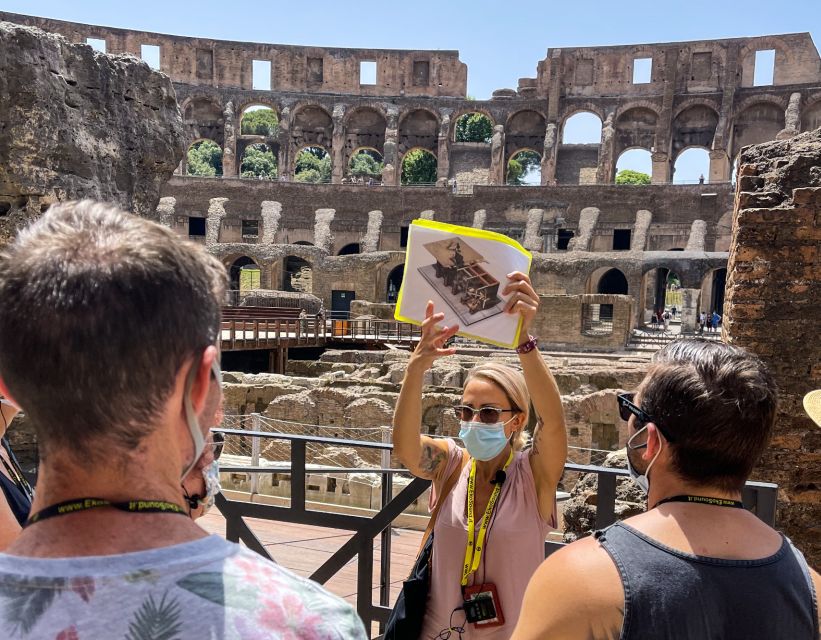
Inside, you’re not stuck reading plaques. The guide narrates key stories tied to what you’re seeing: gladiator culture, emperors, and the engineering that made the amphitheater work. Several guides on this route are praised for explaining architecture in a way that turns ruins into something you can mentally reconstruct. That’s the difference between seeing stones and understanding a system.
A real highlight is the promise of unique views from above the arena—vantage points that many visitors miss when they only focus on the floor-level areas. You get to look back across the space, which helps you grasp scale and layout. Even if you’ve seen photos before, standing in the right spot changes your mental picture fast.
The Colosseum reality check
The Colosseum can feel busy and physical—standing, moving, and looking up a lot. A guided pace helps, but you’ll still want comfortable shoes and a little stamina. If you’re prone to rushing, slow down anyway. The best “aha” moments often come when you pause and let the guide explain what you’re actually looking at.
Also, if you’re aiming for a specific shot (family groups, perfect symmetry, crowd-free moments), build in time. The tour keeps you on track, but Rome’s main attractions don’t give you total control over crowds.
Palatine Hill: Rome’s birthplace and the power-play of emperors
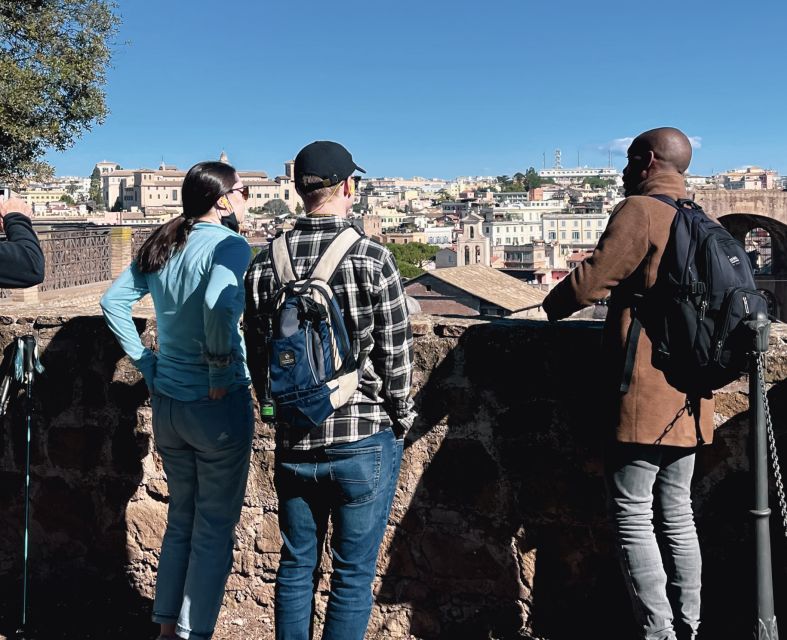
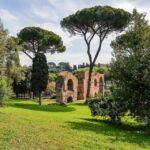
After the Colosseum, you head to Palatine Hill, often the second big anchor of the tour (though the day’s ticket timing can swap the order). Palatine isn’t just pretty ruins. It’s the legendary birthplace of Rome and the site associated with lavish imperial palaces.
This stop is valuable because it shifts you from “entertainment Rome” to “ruling Rome.” In the Colosseum you learn how Romans staged spectacle. On Palatine Hill you see why elites wanted to be close to the symbols of origin and authority.
Guides are frequently praised for storytelling that keeps everyone following. For example, one guide with an anthropologist background reportedly made the site land as more than monuments—like a lesson you could remember after you left. Another guide was called out for engaging younger visitors (role play and humor can matter on Palatine, where it’s easy to tune out if you only want action).
What you should watch for
Palatine Hill can blur together if you treat it like a random set of ruins. Instead, pay attention to:
- how views open up toward the city,
- how spaces connect logically (what feels “near” and what feels “separate”),
- and how the guide links what you see to who lived there and why.
When you understand that, Palatine Hill stops being background scenery and becomes part of the political story.
You can also read our reviews of more city tours in Rome




Via Sacra and the Roman Forum: the loud heart of public life
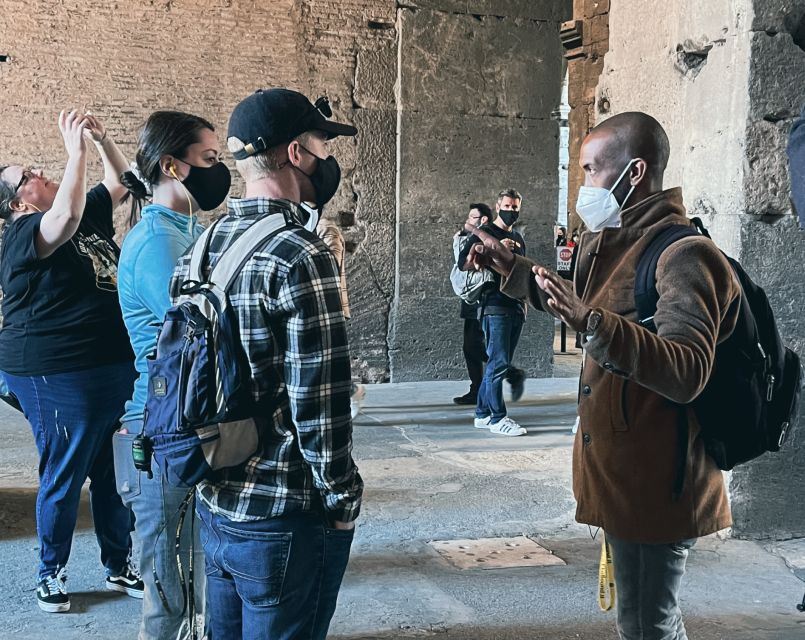
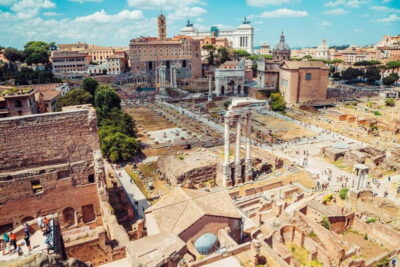
Next comes one of the most satisfying sections of the day: Via Sacra and the Roman Forum. This is the part that explains how Rome ran on politics, religion, and public business.
Via Sacra is the approach route that you’d recognize if you’ve ever seen it described in history books, because it’s tied to processions and movement through the center of power. It’s also a quick moment to shift gears. One minute you’re climbing around imperial residences; the next you’re stepping into the physical “main street” of Roman public life.
Then you enter the Roman Forum, and this is where a good guide earns their fee. The Forum isn’t one building you can understand at a glance. It’s a set of spaces that worked together, and you need someone to draw the map in your head. Several guides are praised specifically for making the Forum feel real—helping you visualize how it functioned and what the symbols meant.
A tip that changes everything
Right after the guided portion ends (and even within the tour if your guide gives a moment), take 5–10 minutes without rushing. Look around first. Then go back to any spot that caught your attention. This is how you start noticing details like the way sightlines work and how the ruins still show patterns of use.
That’s also why the tour’s finish point in the Roman Forum is a smart choice. You’re not forced to leave the most flexible area right away. You can keep exploring at your own pace.
Arena floor access: the extra you might actually want
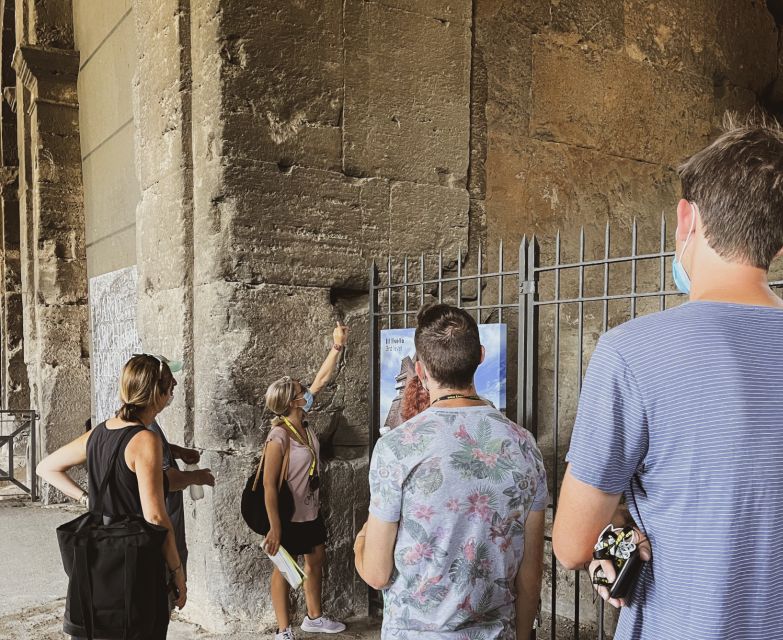
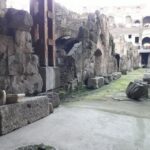
This tour includes the Colosseum entrance ticket, and it can also include Arena Floor access if you select that option (additional fee). If you don’t choose the arena option, you should treat the default experience like a “Colosseum inside + vantage views” day, not an “under the arena” day.
Why does that matter? Because the arena-floor ticket changes what “up close” means. If your priority is stepping onto the same dramatic space where events took place, then paying extra can be worth it. If your priority is story + big-picture understanding across three sites, the base tour still delivers a lot.
A clear heads-up from the tour details: arena floor access is not included unless you select the option. So don’t assume you’ll automatically be able to go down.
Group tour pacing: what 3 hours feels like on your feet
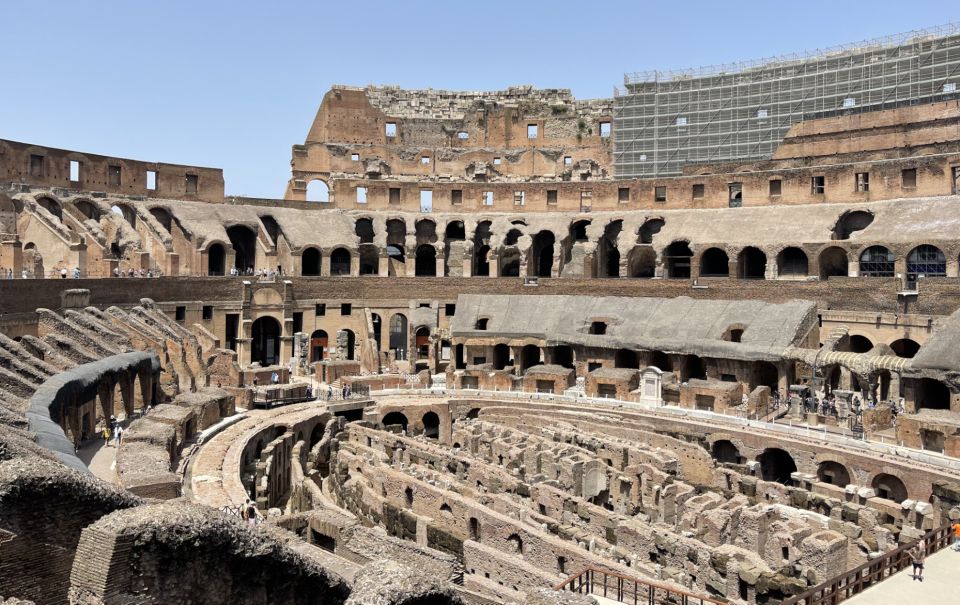
The duration is 3 hours, which is a tight window for three major locations. The upside is focus. You’re not bouncing randomly. The guide keeps the group moving and uses each segment to stack understanding: spectacle → power → public life.
The downside is that this is still a Rome walking day. Even if your group is small, you’ll cover ground and spend time looking up, down, and across uneven areas. Plan for a few hours of “active sightseeing,” not a slow museum crawl.
One review noted a small group of about 13, which is the sweet spot for questions without losing the pace. Your group may vary, but the tour is positioned as a comfortable group experience, not a huge bus crowd experience.
Photo and question strategy
- If you want photos, ask the guide where to stand before you raise your camera.
- If you want context, save your best questions for when the group pauses. Guides can’t fully stop crowds, but they can help you interpret what you’re seeing while you’re there.
Price and value at about $93 for Colosseum + Forum + Palatine Hill
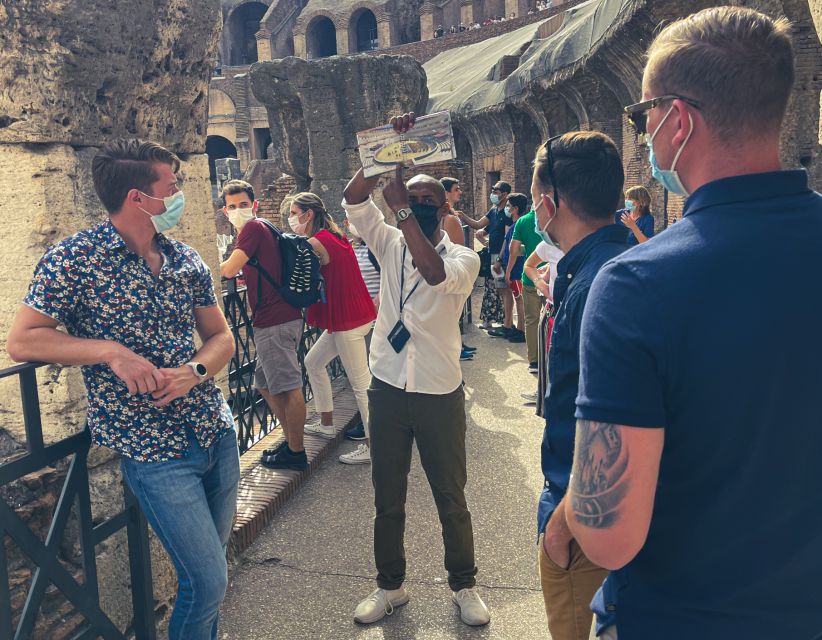
At $93 per person for about 3 hours, you’re paying for two things:
- Entry that’s handled for you with priority flow at the big sites.
- A licensed guide who turns ruins into a connected story.
The value argument gets stronger because the tour includes Colosseum entrance and priority entry into three top locations (Colosseum, Palatine Hill, Roman Forum). The base ticketing piece alone is meaningful: Colosseum admission is described as valued at €18 per person, and it’s €24 when arena access is included.
Now the careful part: the only major “maybe” is timing. On the first Sunday of the month, Colosseum admission is free and tours are discounted, but that can mean longer queues and less “skip the line” magic. If you’re traveling on that specific day, the tour may still be worth it, but you should bring realistic expectations.
Should you book this Colosseum, Palatine Hill & Forum tour?
I’d book it if you want a guided route that hits the core Ancient Rome sites in a short time and helps you understand what you’re seeing. It’s especially a good fit if:
- you’re visiting for the first time and want the big connections explained fast,
- you enjoy narrative guides with humor (several guides on this route are noted for energy and fun),
- you want a plan that ends in the Roman Forum so you can continue exploring.
I would think twice if:
- you hate crowds and you’re traveling on the first Sunday of the month,
- you specifically want under-the-arena access and haven’t selected the arena floor option,
- you’re sensitive to long standing/walking in hot or crowded conditions.
FAQ
How long is the Rome: Guided Group Colosseum & Ancient City Tour?
It lasts about 3 hours.
Where do I meet the guide?
Meet the guide in front of the Arch of Constantine. The guide will be holding a yellow Carpe Diem Tours flag.
Does the tour always start at the Colosseum?
Not always. The tour may start at the Colosseum or at the Roman Forum/Palatine Hill depending on the time of the tickets the guide can purchase.
What sites are included in the tour?
You’ll visit the Colosseum, Palatine Hill, and the Roman Forum, with time passing by Via Sacra during the route.
Is access to the arena floor included?
Arena floor access is not automatically included unless you select that option. If it’s selected, it’s an additional fee.
What do I need to bring?
Bring a passport or ID card. Late arrivals are not eligible for refunds.