REVIEW · ROME
Rome: Domus Aurea, Nero’s Golden House guide tour
Book on GetYourGuide →Operated by Onceuponatimerometours · Bookable on GetYourGuide
Nero’s Golden House works like a time machine. This Domus Aurea tour pairs a guided walk through the restored underground with VR Oculus and video narration, so the site feels way less like ruins and way more like a story in motion.
I especially loved two things: the restoration quality (it’s surprisingly refined and respectful to the original art and structure) and the guide-led narration that helps you understand what you’re seeing as you move. Guides such as Claudia and Simone have been praised for hitting the right balance of clear explanations and lively delivery.
One key consideration: it’s cold down there, around 10°C, so plan warm layers and comfortable shoes for a slow, careful visit in enclosed spaces.
In This Review
- Key highlights you’ll feel right away
- Nero’s Golden House, Rebuilt for Your Eyes
- The 1.5-Hour Tour Flow: From Express Security to VR Time Travel
- What You’ll See in the Domus Aurea Restoration
- VR Oculus and Video Narration: How 2,000 Years Click
- Cold Underground Reality: What to Wear and Bring
- Price and Value at $59: What You’re Really Paying For
- Language Choices and Group Dynamics (So You Don’t Miss the Point)
- Who This Tour Suits Best
- Should You Book This Domus Aurea + VR Oculus Tour?
- FAQ
- How long is the Domus Aurea Nero’s Golden House guide tour with VR?
- How much does the tour cost?
- What’s included with the ticket?
- Does the tour include VR Oculus?
- What languages are available for the live guide?
- How cold is it inside Domus Aurea, and what should I wear?
- What items are not allowed during the tour?
- Is the tour suitable for wheelchair users or people with mobility impairments?
Key highlights you’ll feel right away
- VR Oculus + video narration that reconstructs Nero’s palace in a way your brain can actually picture
- Top-notch restoration where modern elements look intentionally detailed, not slapped on
- Expert guide storytelling with names like Claudia and Simone mentioned for pacing and clarity
- Express security check, so you spend more time inside the Domus Aurea and less time waiting
- Cold underground rooms that make what you wear matter more than you’d expect
Nero’s Golden House, Rebuilt for Your Eyes
The Domus Aurea is one of those Rome stops that can feel like a technical exhibit if you show up cold and rushed. This tour turns it into something you can process. You start with a real guide, then layer on VR and video so the space starts making sense as an environment, not just a set of fragments.
I like that the emphasis isn’t only on facts. You’re guided through what the restoration lets you see today, then shown what the palace may have looked like back in Nero’s era. That combination helps you mentally reconstruct rooms, surfaces, and scale in a way that photos can’t do.
You can also read our reviews of more guided tours in Rome


The 1.5-Hour Tour Flow: From Express Security to VR Time Travel
You’re on the clock for about 1.5 hours, which is perfect for people who want a big impact without losing the whole day. The tour includes an entrance ticket to Domus Aurea, a professional guide, and VR devices. You also get an express security check, which matters in Rome where lines can swallow your time.
The structure generally feels like: meet your group, get checked in, walk through the archaeological site with the guide’s narration, then hit the VR portion supported by video storytelling. Reviews and on-site feedback point to the VR as a standout, especially for how quickly it helps you understand what those underground spaces once were.
If you’re the type who likes to ask your own mental questions—Why was this here? What was the room used for?—you’ll probably enjoy the flow. It keeps moving, but it’s not a sprint.
What You’ll See in the Domus Aurea Restoration
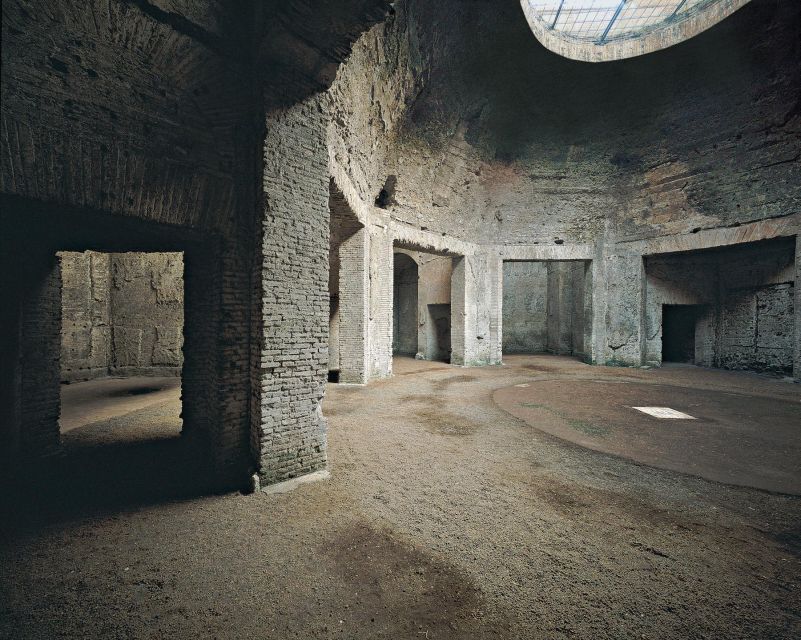
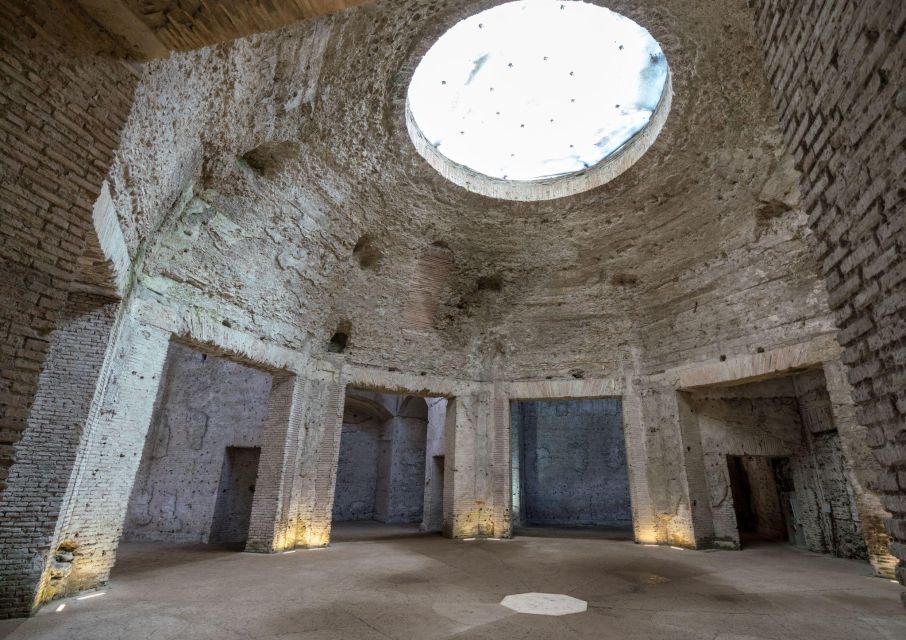
What makes the Domus Aurea special is the tension between ruin and intention. Even though it’s an archaeological site, the restoration work makes the scale and design patterns easier to grasp as a palace complex, not a collapsed building.
The restoration effort has been described as highly sensitive to the original structure and artwork. That’s exactly what you want: modern additions should help you read the past, not steal focus from it. One detail worth knowing is that the modern elements are done with care down to the smaller fixtures like doors and window details, which tells you the designers weren’t treating the site like a generic display.
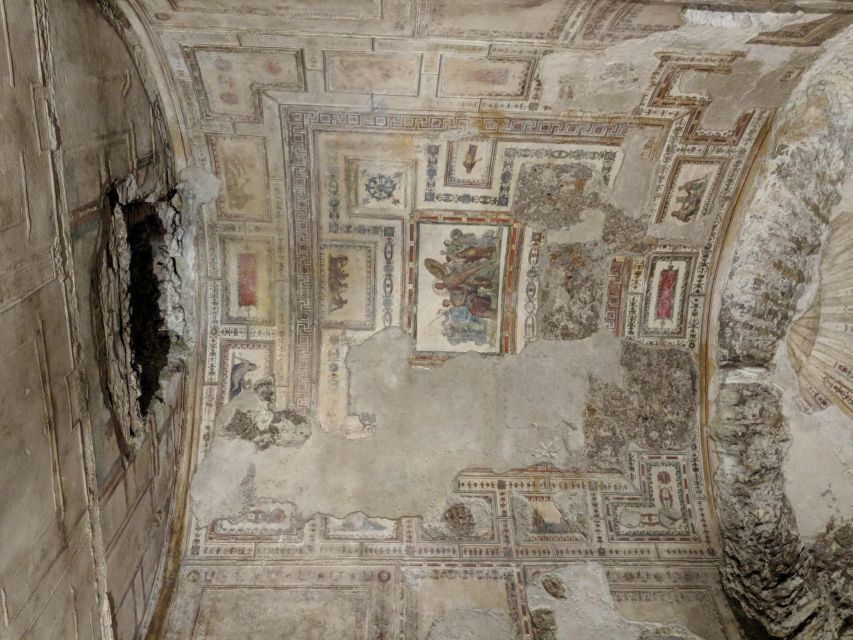
As you walk, expect to see how rooms and decorative surfaces survive in fragments. The guide’s job is to translate those fragments into something coherent. If you’ve ever felt lost in Roman ruins—where everything looks like “cool stones”—this kind of narration can fix that quickly.
VR Oculus and Video Narration: How 2,000 Years Click
The VR portion is the heart of this experience. You’ll use VR Oculus devices, and the tour also includes video narration support. The goal isn’t flashy special effects. It’s to help you understand the palace as it may have existed roughly 2,000 years ago.
Here’s why this matters for your brain: when you can see a reconstructed layout or ceiling effect while standing in (or very near) the real space, you stop thinking in abstract terms. Instead, you connect the reconstruction to real dimensions and real sightlines. That is when Domus Aurea stops being a name and becomes a place.
One caution based on real visitor experience: audio can be a limiting factor if the guide’s volume or accent doesn’t land cleanly for you, especially when the headset is involved. If you’re sensitive to sound quality, choose a spot close to the guide during the explanation segments. Keep your expectations realistic: VR helps you visualize, but it won’t replace good listening.
Cold Underground Reality: What to Wear and Bring
The Domus Aurea is chilly. Inside, temperatures are around 10 degrees. That’s not a vague suggestion; it’s the kind of cold that makes you feel it in your hands and feet if you show up underdressed.
Bring a jacket, wear comfortable shoes, and plan for slower movement. I also recommend thinking in layers. One visitor advice that makes sense here is to come prepared like it’s winter, not like it’s a mild museum stop—warm head and gloves can help if you run cold.
Also note what you can’t bring. Food and drinks aren’t allowed, and you can’t bring luggage or large bags. If you’re traveling with backpacks, you’ll want to travel light or use your hotel storage so you’re not stuck dealing with bags during check-in.



Price and Value at $59: What You’re Really Paying For
At $59 per person for a 1.5-hour guided visit, you’re not just paying for entry. You’re paying for three things that combine into value:
- Entrance to the Domus Aurea site
- A professional guide who helps you read the restoration and context
- VR devices and video narration support
- Plus an express security check that can save you time and stress
Is it worth it? If you love Roman history but don’t want to spend hours piecing things together from signage, yes. The guide plus VR is doing the heavy lifting. If you’re the type who prefers reading quietly on your own and you’re allergic to headsets, you might feel constrained by the tour format and group pace.
In other words: this is a premium-style experience, and the premium is the combination of storytelling and visualization.
Language Choices and Group Dynamics (So You Don’t Miss the Point)
The live guide is available in Spanish, Italian, English, and French. That’s great because you can match your comfort level. Still, language quality is personal. Some visitors reported that understanding the guide could be harder at times depending on audio clarity and accent, so choose the language you’re most confident following in.
Group size can also shape your experience. One visitor noted their group felt larger than they expected, which can affect how clearly you hear explanations and how well you can line up for VR moments. If you want maximum comfort, go in with a flexible mindset and aim for a spot where you can see and hear without craning.
Who This Tour Suits Best
This one fits best if you want a guided, high-impact Roman history stop with modern tech support. It’s ideal for history buffs, art-curious travelers, and people who like to understand not just what survived, but what it was meant to be.
It’s also a good choice if you’re connecting Domus Aurea to later art and decoration traditions. Several visitors describe the experience as emotionally moving and helpful for making sense of why certain ceiling and fresco ideas echoed forward into later periods. Even if you’re not a scholar, the tour’s reconstructions help you see those connections faster.
Two groups should think twice. First, it’s not suitable for people with mobility impairments or wheelchair users. Second, it’s not marketed as a kid-focused activity, largely because it’s cold, slow, and focused on interpretation rather than play.
Should You Book This Domus Aurea + VR Oculus Tour?
Book it if you want the quickest path to understanding Nero’s Golden House as a living environment. The restoration is strong, the guide narration is a big part of the value, and the VR Oculus experience is the element most likely to turn confusion into clarity.
Skip it or adjust expectations if you hate headsets, get uncomfortable in cold spaces, or want a purely self-paced ruin walk. With a little planning—warm layers, good shoes, and paying attention close to the guide—you’ll get a lot out of your 1.5 hours.
FAQ
How long is the Domus Aurea Nero’s Golden House guide tour with VR?
The tour lasts about 1.5 hours. Check availability for specific starting times.
How much does the tour cost?
The price is $59 per person.
What’s included with the ticket?
Your ticket includes the entrance to Domus Aurea, a professional guide, VR devices, and all fees and taxes. You also get an express security check.
Does the tour include VR Oculus?
Yes. VR Oculus devices are included as part of the experience, along with video narration support.
What languages are available for the live guide?
The live guide is available in Spanish, Italian, English, and French.
How cold is it inside Domus Aurea, and what should I wear?
Inside the Domus, the temperature is around 10°C. Bring a jacket and wear comfortable shoes.
What items are not allowed during the tour?
Food and drinks are not allowed. You also can’t bring luggage or large bags.
Is the tour suitable for wheelchair users or people with mobility impairments?
No. The tour is not suitable for people with mobility impairments or wheelchair users.