REVIEW · ROME
Rome: Angels and Demons, the illuminati path
Book on GetYourGuide →Operated by Happy walks · Bookable on GetYourGuide
Rome has a way of mixing faith, art, and power fast. This 2-hour Angels and Demons route turns big-name landmarks into a story walk, with stop-by-stop explanations of symbols and real-world history. I especially like how the tour pairs the book’s drama with what you can actually see in Rome, and I also like the small-group pace that keeps questions from getting lost. The main drawback to plan around: it’s short, so if you want very deep explanations at every stop, you might find the time feels tight.
You’ll start where the story’s mood is loud—St. Peter’s Square—then keep moving through Rome’s most recognizable spaces: Castel Sant’Angelo, Piazza Navona, the Pantheon, and a classic Baroque finale at Santa Maria della Vittoria. One more thing I like: the tour seems to shine when the guide is good at guiding, like Felice (the name that shows up with praise), who’s described as calm and patient and willing to answer lots of questions. Just consider that the experience depends heavily on timing and guide quality, and English may vary by guide, since this is offered in both English and Italian.
In This Review
- Key things that make this tour worth your time
- Entering St. Peter’s Square and Bernini’s stage set
- Castel Sant’Angelo: the fortress stop that fits the story
- Piazza Navona and the Four Rivers Fountain in quick, memorable steps
- Pantheon’s dome and Agrippa details that make Rome feel ancient
- Santa Maria della Vittoria: the Baroque finale at Bernini’s Ecstasy
- Price and value: what $66 buys in 2 hours
- Timing, walking, and the meeting point you should not miss
- Language and guide quality: why your experience can swing
- Who should book this Angels and Demons walk?
- Should you book this tour or choose a different one?
- FAQ
- How long is the Rome Angels and Demons tour?
- Where do you meet for the tour?
- What is the tour price?
- How big is the group?
- What sights are included in the route?
- What is included in the price?
- Is transport included in the tour price?
- Is food included?
- Is the tour suitable for wheelchair users?
- What languages are available for the live guide?
Key things that make this tour worth your time
- Small group (up to 10): you get more back-and-forth than the huge bus tours
- Iconic sequence of sights: St. Peter’s Square to Castel Sant’Angelo to Pantheon to Baroque church finale
- Short, focused visits: photo stops plus guided time keeps it moving in 2 hours
- Book-to-city symbolism: the explanations are built around the story’s symbols and how they connect to real places
- Guide support for questions: some guides (like Felice) are described as very patient and question-friendly
Entering St. Peter’s Square and Bernini’s stage set
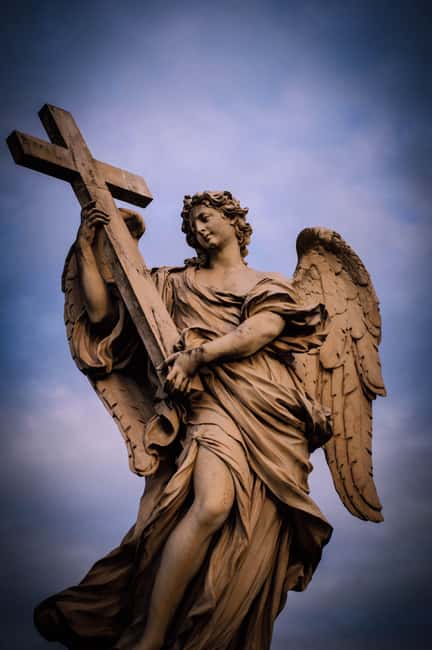
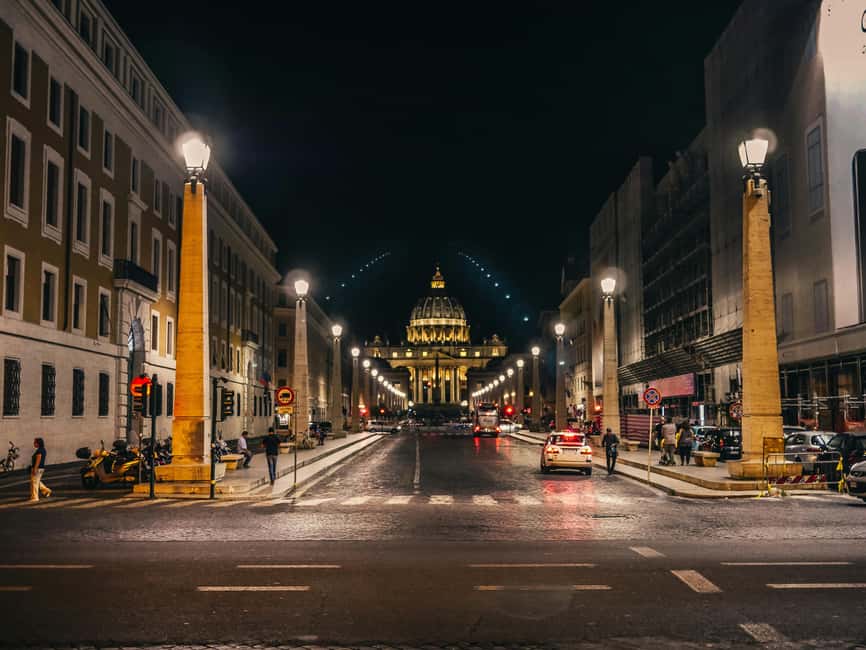
St. Peter’s Square is where Rome goes from beautiful to dramatic. You meet at the Obelisco in Piazza San Pietro, which is a smart start point because it anchors you immediately: you can look around and know you’re in the center of the Vatican’s gravitational pull. From there, the tour focuses on the square’s layout and the Basilica of St. Peter’s, with a guide-led explanation of why this place matters beyond the novel.
What I like about starting here is that it resets your brain. Before you march into the rest of the route, you’re given context for the “holy / political / secret” themes that Dan Brown fans love. Even if you’re not obsessed with the book, the architecture and the scale do the storytelling for you.
One practical note: St. Peter’s Square can be busy, and the tour is only 2 hours total. So expect quick, high-impact stop time, not a slow art-history lecture.
You can also read our reviews of more tours and experiences in Rome.
Castel Sant’Angelo: the fortress stop that fits the story
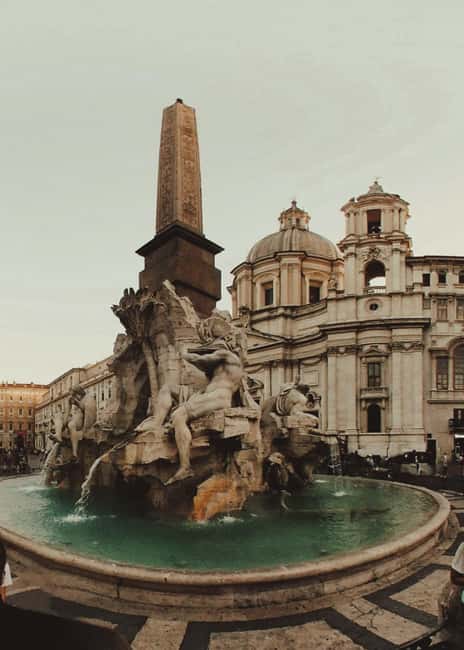
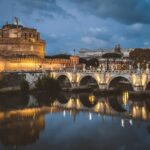
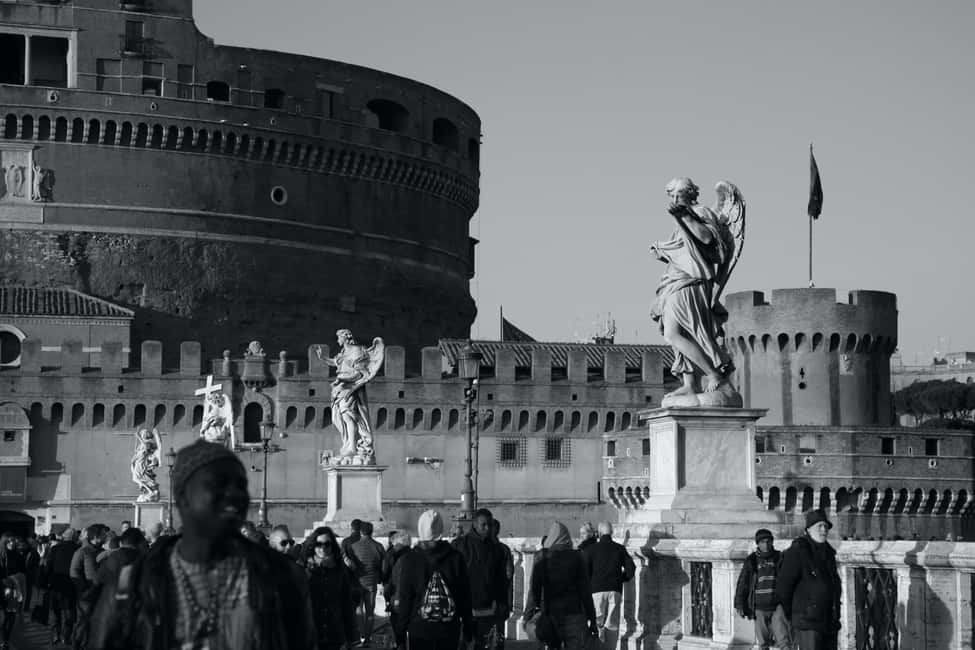
After St. Peter’s Square, you head toward Castel Sant’Angelo, a heavy-looking fortress above the Tiber. The stop is built for photos first, then guided explanation for about 15 minutes. This is the moment when the tour’s “plot logic” clicks, because the site naturally reads as a safe place, an escape route, and a power symbol—exactly the kind of setting that plays well with the novel’s tension.
If you’re trying to picture scenes in your head, this stop helps. The building’s position gives you that “Roman chessboard” feeling: you’re not looking at a museum object, you’re standing in a real landscape that once mattered for defense and control.
The main drawback here is the same reality as the rest of the itinerary: it’s quick. If you want deep interior time or a long view walk, this tour won’t be that. It’s designed as an efficient story circuit.
Piazza Navona and the Four Rivers Fountain in quick, memorable steps
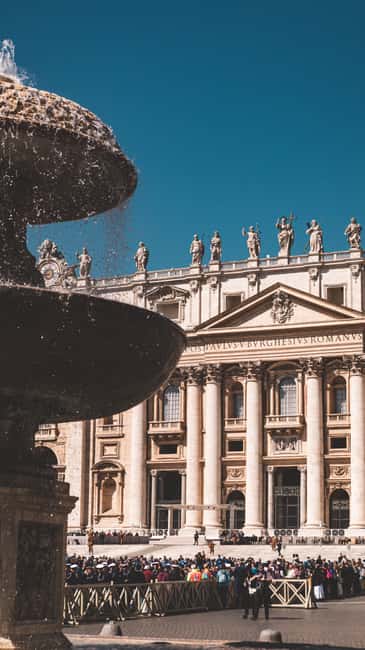
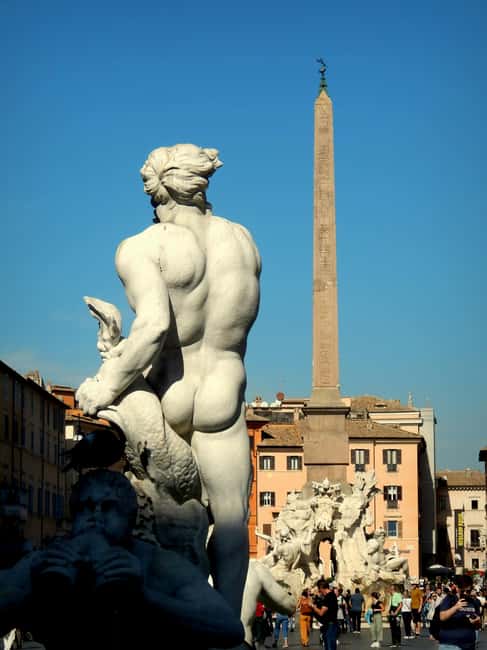
Next comes Piazza Navona, one of Rome’s most recognizable squares. The tour gives you a short 10-minute stop for photo and guided orientation, then follows up with dedicated time at the Fountain of the Four Rivers (about 15 minutes).
This is one of the best parts of the route if you like seeing how artists “talk” without words. The Fountain of the Four Rivers by Gian Lorenzo Bernini is a classic example: big forms, dramatic composition, and symbols that viewers can interpret once someone points them out. And because you’re in the square in real time, you can connect the explanation to what you see—angles, figures, and the way the fountain dominates the space.
A tip for you: take your photos from more than one spot. The fountain looks different depending on where you stand, and the tour’s short timing means you’ll get more mileage if you don’t assume one photo angle is enough.
Pantheon’s dome and Agrippa details that make Rome feel ancient
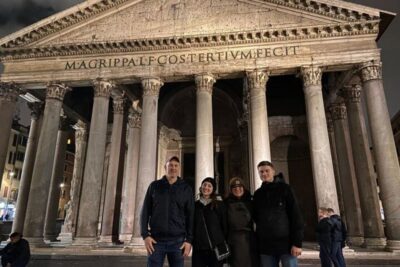
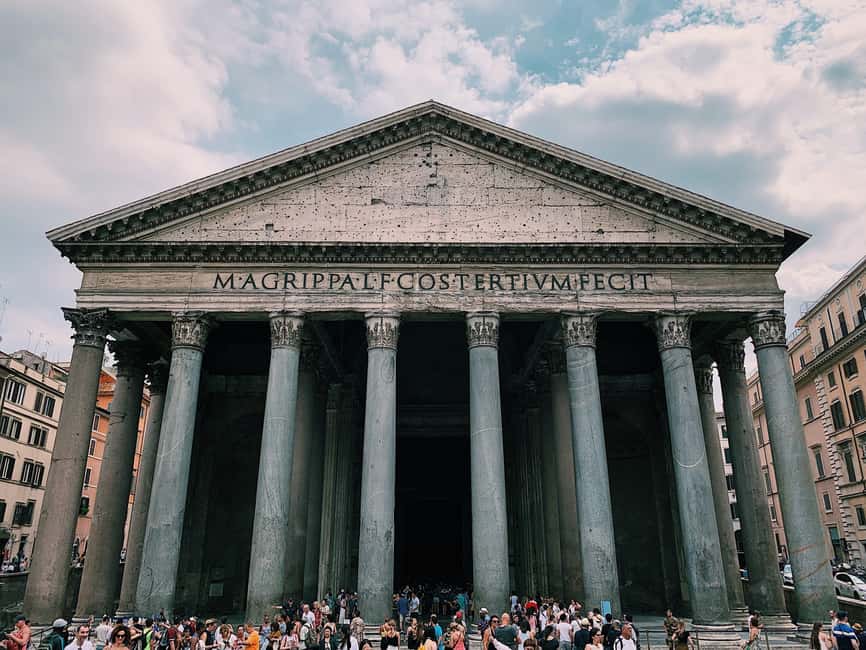
From Piazza Navona, the route moves to the Pantheon, with 15 minutes of photo stop plus guided visit. The Pantheon is one of those sites where, even without any story connection, your brain immediately recognizes why it’s still famous: it’s huge, cleanly built, and visually confident.
This stop is also where the tour leans into legend and identification—mentioning the Temple of Agrippa and the associated stories. Whether you’re a mythology person or not, the guided framing helps you see the Pantheon as more than a pretty stop. It becomes part of Rome’s long chain of power, belief, and engineering that later artists and writers borrowed from.
Keep expectations realistic: you won’t get hours here. But for a 2-hour walk, the Pantheon is a smart inclusion because it gives you a major ancient anchor point before the tour shifts back to Baroque drama.
Santa Maria della Vittoria: the Baroque finale at Bernini’s Ecstasy
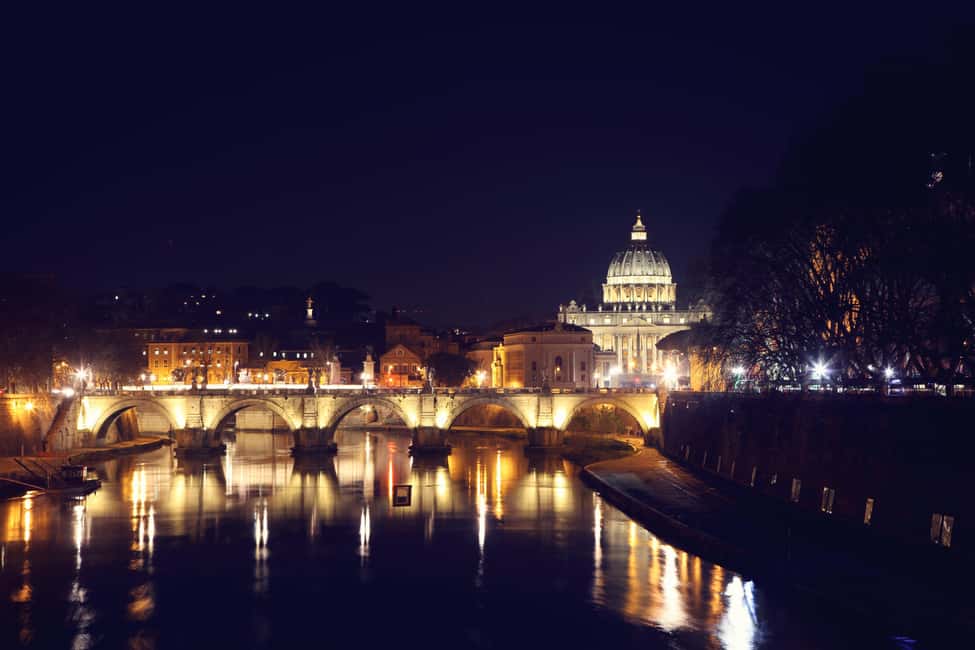
The last major landmark is Santa Maria della Vittoria, with about 20 minutes for photo and guided visit. This is a great ending choice because it changes the emotional temperature. After ancient scale and grand squares, you get a Baroque church with intense artistic energy.
The highlight is Bernini’s Ecstasy of Saint Teresa. Even if you’ve seen images before, the physical presence in a church space hits differently. This stop also fits the tour’s story theme well: the novel plays with big ideas and big mysteries, and Baroque art is basically made for that kind of high-stakes mood.
One thing to watch: church interiors can feel less forgiving for quick photo moments. You may need to respect slower movement and keep your eyes open rather than only hunting for shots. If you go in treating it like a gallery pause (short, focused), you’ll probably enjoy it more.
The tour finishes in the Repubblica area, so you’ll likely be able to keep exploring on foot afterward without feeling “cut off” at a dead end.


Price and value: what $66 buys in 2 hours
At $66 per person for a 2-hour small-group experience (up to 10 people), you’re paying for two things: access to guidance and a tight route that hits several top-tier landmarks. What’s included is a bottle of water and exterior visits.
That exterior-visit detail matters. It means you should mentally categorize this tour as a walking route with guided stops, not a full museum-style day with prolonged time at each site. You’re also not paying for food or transport, so you’ll want to plan your meal separately and handle getting to the meeting point yourself.
When the guide is strong, this kind of tour is great value because the storytelling gives meaning to what you’d otherwise skim past in crowded Rome. When the guide is weaker or communication is uneven, the value can drop, because you only have limited time to rely on narration.
A practical money-saver: if you’re short on time and you want a “best-of” story walk, this is a reasonable way to compress a lot of Rome into one outing.
Timing, walking, and the meeting point you should not miss
The meeting point is in front of the Obelisco in Piazza San Pietro. Show up early enough to find your group and settle in. There’s no pickup listed, so you’ll be working your own way to the Vatican area.
The route is built like a sprint: photo stops paired with guided minutes at each key location. That’s efficient, but it also means you’ll feel the schedule. If you’re the type who wants to linger in each place, this may feel a little rushed, especially around busy times.
Also, since it’s described as not suitable for wheelchair users, you should think carefully about cobblestones and walking pace before booking if mobility is an issue.
Language and guide quality: why your experience can swing
This tour runs with live guides in English and Italian. In a short tour, the guide’s rhythm really matters. When explanations are crisp and connected to what you see, the story elements start clicking into place, and your tour stops feel like they belong together. When communication is less clear, the same route can feel like more walking and less meaning.
One guide name that has stood out in the provided feedback is Felice. The praise centers on being calm, patient, and willing to answer lots of questions—including questions from a child. If you’re traveling as a family or you like to ask detailed questions, that sort of guide style is exactly what you want in a short, busy itinerary.
Who should book this Angels and Demons walk?
This is a good fit if:
- you’re a Dan Brown fan and want a story-driven route through Rome’s landmark hits
- you prefer a 2-hour overview rather than a full-day deep dive
- you want your time outdoors to come with guidance and interpretation, not just sightseeing
It may not be the best fit if:
- you want lots of time inside major sites or long guided discussions at each stop
- you’re depending on a very specific language experience and are very sensitive to accents or pacing
- mobility is limited, since it’s listed as not wheelchair-friendly
Should you book this tour or choose a different one?
Book this if you want a tight, landmark-heavy Rome walk that connects the mood of Angels and Demons to places you can actually see. The schedule is short, the price is reasonable for the number of major sites included, and when the guide is on form, the story symbolism turns into something you can spot for yourself—especially at places like the Four Rivers Fountain and Bernini’s Ecstasy.
Skip it or look for another option if you’re seeking long stays, lots of interior access, or very heavy explanation time at every stop. In a 2-hour format, the difference between a great guide and an average one is noticeable.
If you do book, I’d treat it like a guided highlight reel. Bring comfortable shoes, arrive at the Obelisco a few minutes early, and use the guided minutes as your “decoder ring” for what you’re looking at.
FAQ
How long is the Rome Angels and Demons tour?
It lasts 2 hours.
Where do you meet for the tour?
You meet in front of the Obelisco in Piazza San Pietro.
What is the tour price?
It’s $66 per person.
How big is the group?
The group is limited to 10 participants.
What sights are included in the route?
You visit St. Peter’s Square, Castel Sant’Angelo (photo stop and guided visit), Piazza Navona (photo stop and guided visit), the Fountain of the Four Rivers (photo stop and guided visit), the Pantheon (photo stop and guided visit), and Santa Maria della Vittoria (photo stop and guided visit). The tour finishes at Repubblica.
What is included in the price?
A bottle of water and exterior visits are included.
Is transport included in the tour price?
No. Transport is not included.
Is food included?
No. Food is not included.
Is the tour suitable for wheelchair users?
No, it is not suitable for wheelchair users.
What languages are available for the live guide?
The tour is offered with live guides in English and Italian.