REVIEW · ROME
Rome: Angels, Demons, & Dark Legacy of True Crimes Tour
Book on GetYourGuide →Operated by REAL BARCELONA TOURS, S.L · Bookable on GetYourGuide
Rome has teeth after dark. This 2-hour night tour strings together Rome’s darkest legends and true crimes into a tight walk you can do without planning a thing. You start near Castel Sant’Angelo and follow the trail through famous bridges, gruesome street stories, and “wait, what?” moments that make the city feel brand new.
I especially love the tight, story-led route that connects real places to grim events, from the poisoner’s area to the Brotherhood of Mercy. I also like the tour’s interactive spooky touch: using dowsing rods at a haunted hotspot adds a fun, hands-on moment rather than just more talking.
One consideration: this is a walking night tour with uneven streets and some heavier themes, and it’s not recommended for back problems, pregnancy, or heart conditions (and it’s not wheelchair friendly). If you want easy flat sightseeing, you may want a different plan.
In This Review
- Key highlights at a glance
- Entering the night scene: Castel Sant’Angelo to the bridge
- The Ponte Sant’Angelo crossing: poisoner-era rumors and prisons
- Giulia Street and the Brotherhood of Mercy church stop
- The John Paul Getty III kidnapping: modern crime meets old streets
- Campo De’Fiori: bloody public history and a hands-on haunting
- A chapel of bones and the legend of the disguised female Pope
- How long it really feels: 2 hours of nighttime walking
- Price and value: what $36 buys you for Rome at night
- Guides make or break it: story rhythm and group energy
- Practical prep: what to bring, what not to do
- Should you book this Rome night-crime tour?
- FAQ
- Where is the meeting point for the tour?
- How long is the tour?
- What’s the price per person?
- Are hotel pickup and drop-off included?
- Are entrance tickets included for attractions?
- Is food or drinks included?
- What languages do the guides speak?
- Is alcohol allowed during the tour?
- Is the tour suitable for wheelchair users?
- Is there any guidance on health or mobility limitations?
Key highlights at a glance
- Castel Sant’Angelo and Ponte Sant’Angelo kick things off in the right mood
- Giulia Street connects executions and public punishments to the city’s layout
- True-crime stops include the area tied to the John Paul Getty III kidnapping
- Campo De’Fiori includes the bloody-history vibe and a dowsing-rod activity
- A chapel with human bones plus a legend about a disguised female Pope
- Professional multi-language guides in Italian, Spanish, English, and French
Entering the night scene: Castel Sant’Angelo to the bridge
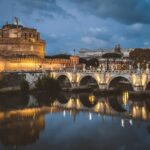
The tour starts at the end of the bridge in front of Castel Sant’Angelo, where the guide holds a company flag. That meeting point matters because it puts you right at one of Rome’s best “cinema scenes” for night walking. Even before the stories start, the fortress-and-river setting makes the whole mood click into place.
You’ll also want to keep your shoes practical. This is a night route through Rome’s backstreets, and the experience is built around foot travel, not quick rides. Comfortable clothes help too because you’ll be outside for the full duration.
You can also read our reviews of more tours and experiences in Rome.
The Ponte Sant’Angelo crossing: poisoner-era rumors and prisons
Right away, you’ll cross Ponte Sant’Angelo Bridge and hear stories tied to the surrounding area. The tour frames this bridge as more than a postcard photo spot. You’re pointed toward darker local lore, including a reference to a poisoner’s home nearby and a grim prison for women.
That’s one of the reasons this tour can work even if you already know Rome’s main sights. The bridge becomes a map—less about architecture trivia, more about how people lived, feared, and punished each other. You start looking at the city like a storybook with missing pages.
Giulia Street and the Brotherhood of Mercy church stop
Next comes Giulia Street, where the tour leans into the idea that Rome’s street plan carried punishment into everyday life. You’ll walk down the road as the guide explains what happened at and around the Brotherhood of Mercy’s macabre church, including that public executions took place there.
This is where the tour’s tone gets intentionally heavier. It’s not just “spooky for spooks’ sake.” The guide connects the physical location to the social reality of the time—people watching, people being watched, and the city acting like a stage.
If you’re the kind of person who likes understanding why something is scary, not just that it is, this stop is a strong one. You’ll come away noticing details you’d normally walk past.
The John Paul Getty III kidnapping: modern crime meets old streets
The tour also points out the spot connected to the John Paul Getty III kidnapping. That’s a smart move, because it jumps from old-world punishments to a modern headline that still feels like it belongs in Rome’s maze.
You don’t need prior knowledge here. The value is in the placement—how the story is anchored to a location you can actually stand near. It also helps you see how a city can keep generating crime narratives across centuries, even when the details change.
Campo De’Fiori: bloody public history and a hands-on haunting
Campo De’Fiori is famous in daylight, but at night it turns into something else. The tour brings you there for the area’s “bloody history” associations—one of those places where the name is known, but the darker side feels newly real when you hear it tied to events.
Then you’ll do something unusual: you use dowsing rods to sense lingering spirits in haunted hotspots. I appreciate this kind of moment because it gives you a break from listening. It also turns the group into participants for a few minutes, not just spectators.
Now, keep expectations reasonable. Dowsing is part ritual, part theater. You’re not expected to have proof. You’re expected to enjoy the experience and follow along with the guide’s explanation of the spots they selected.


A chapel of bones and the legend of the disguised female Pope
The tour continues to a chapel adorned with human bones and includes a bridge with a spectral legend about a disguised female Pope. This is where the night-tour formula really pays off: Rome provides the visuals, and the guide supplies the story logic that makes those visuals feel eerie instead of merely odd.
If you like the mix of true crime and legends, this is your payoff moment. The bones stop leans into the macabre, while the disguised-Pope legend gives you something more folklore-shaped. Together, they keep the tour from becoming one-note.
Also note the tour states that attractions requiring entrance tickets are visited from outside. So don’t plan this as a timed museum entry. Think of it as a guided storytelling walk where you see key sites in their setting.
How long it really feels: 2 hours of nighttime walking
It’s scheduled for 2 hours, and it’s built as a walking experience rather than a sit-down show. That matters for pacing. Even if the route doesn’t sound long on paper, you’ll spend that time moving between sites, taking in the stories, and pausing when the guide wants the group to absorb a location.
The tour doesn’t include food or drinks, even though the marketing highlights a restaurant experience at an old establishment. So if you’re hoping for a meal, plan to pay separately if the group stop happens, or bring a snack idea for earlier in your day. Either way, don’t assume lunch or dinner is part of the ticket.
And because it’s night, you’ll feel the pace more than you would in the morning. You’ll be glad you wore shoes with grip.
Price and value: what $36 buys you for Rome at night
At $36 per person for a 2-hour guided walk, this isn’t a budget bargain—but it also isn’t priced like a premium private tour. The value comes from three things you’re hard to replicate on your own without major pre-research: a guided story flow, a sequence of specific locations, and an on-the-spot explanation of why each stop matters.
The “visited from outside” approach also helps value. You’re not paying for a pile of entrance tickets, since entrance fees aren’t included. That means you’re paying mainly for the guide and the experience design, which is exactly what a night walking tour should sell.
Where value can dip is if you strongly prefer daytime sightseeing or you dislike true-crime and execution-themed stories. In that case, you might feel like you paid for a vibe you didn’t want.
Guides make or break it: story rhythm and group energy
This tour is driven by the guide’s storytelling style. One thing I took from the info provided is that guides run in multiple languages—Italian, Spanish, English, and French—so you won’t be stuck with a single-language experience.
It also looks like the guides can be both engaging and professional. For example, Fabiana is described as a great storyteller who kept people feeling immersed. Furio is also mentioned as excellent and funny, with a tour that felt thrilling and super interesting. That’s the kind of mix you want in a night tour: facts plus pacing plus enough humor to keep the mood from becoming heavy all the way through.
Still, one practical note: the schedule can shift and late arrivals aren’t refunded, and meeting time can change with a call or message. If you want things to go smoothly, arrive early and make sure your phone number is accurate when you book.
Practical prep: what to bring, what not to do
Bring comfortable shoes and comfortable clothes. That’s the core advice because the tour lives on walking and standing at stops. If you’re heat-sensitive, dress for Rome’s nighttime temps rather than daytime warmth.
Alcohol and drugs aren’t allowed. Simple rule, but it’s important for the tone and for safety on foot at night.
If you’re traveling with health limitations, pay attention to the tour’s caution around back problems, pregnancy, heart conditions, and serious medical issues. The experience isn’t designed for you to take breaks frequently.
And if accessibility matters: it’s not suitable for wheelchair users based on the tour info.
Should you book this Rome night-crime tour?
Book it if you want Rome with an edge—an organized nighttime walk that connects Castel Sant’Angelo, bridges, execution-related sites, true-crime references like the John Paul Getty III kidnapping, and macabre legends (bones chapel and the disguised female Pope) into one story thread. At $36 for about 2 hours, it’s priced like a guided experience, not like a museum day.
Skip it if you need a light mood, can’t handle darker themes, or have mobility/health constraints that would make nighttime walking uncomfortable. Also skip it if you expect a lot of indoor ticketed attractions; this one is mainly outside, focused on what you can see from the street.
If you’re on the fence, a good rule is simple: if you love learning why places feel the way they do, and you enjoy true crime plus folklore at night, this should be a memorable Rome evening.
FAQ
Where is the meeting point for the tour?
You meet at the end of the bridge in front of Castel Sant’Angelo. The guide will be holding a company branded flag.
How long is the tour?
The tour duration is 2 hours.
What’s the price per person?
The price is $36 per person.
Are hotel pickup and drop-off included?
No. Hotel pickup and drop-off are not included.
Are entrance tickets included for attractions?
No. Entrance fees are not included. The tour notes that attractions that require tickets are visited from outside.
Is food or drinks included?
Food and drinks are not included.
What languages do the guides speak?
The live guide is available in Italian, Spanish, English, and French.
Is alcohol allowed during the tour?
No. Alcohol is not allowed.
Is the tour suitable for wheelchair users?
No. The tour is not suitable for wheelchair users.
Is there any guidance on health or mobility limitations?
It’s not recommended for travelers with back problems, pregnant travelers, or travelers with heart problems or other serious medical conditions.