REVIEW · ROME
Rome: Appian Way Guided Tour on E-Bike with italian Aperitif
Book on GetYourGuide →Operated by la regina srls · Bookable on GetYourGuide
Some roads make you slow down. The Appian Way by e-bike turns Rome’s ancient paving into something you can actually enjoy for four hours, and I love the mix of park walking plus long, scenic stretches on the bike. You’ll also get a real break from city traffic while a guide connects monuments—like aqueducts and tomb sites—to the bigger story. The main drawback to consider is that you’re covering a lot of ground (and you’ll walk too), so comfy shoes really matter.
I also like that the tour keeps things human-sized: small group, mountain e-bikes, and guides who focus on safety and smooth handling—especially if you’re new to e-bikes. On my radar are guides such as Costanza, Georgia, and Masse, all known for staying attentive and keeping the ride feeling controlled.
Plan for a bit of early-morning logistics: you meet at a bike rental spot (Viale della Piramide Cestia area), and if you arrive rushed you’ll feel it. Also, luggage or large bags aren’t allowed, so travel light and keep your daypack minimal.
In This Review
- Key things to know before you go
- Why the Appian Way by e-bike feels different from a bus tour
- Getting rolling: meeting at Viale della Piramide Cestia and bike basics
- Baths of Caracalla and Porta San Sebastiano: a strong warm-up
- Villa di Massenzio and Cecilia Metella: where the road starts telling stories
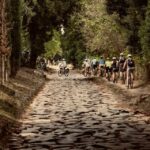
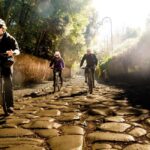
- Appia Antica Archaeological Park: the big chunk of ancient paving
- Villa dei Quintili and Torre Fiscale Park: Roman sites plus breathing room
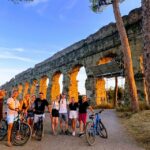
- Parco degli Acquedotti: walking near the aqueducts
- Caffarella Park, Domine Quo Vadis, and the Aurelian Walls: Rome’s edge in one loop
- Pyramid of Cestius: the quick closer that ties the day together
- The farmhouse aperitif: local products and wine without the tourist trap vibe
- Price and value: why $81 can make sense for a 4-hour guided e-bike day
- E-bike comfort and safety: what you should bring (and what to expect)
- Who should book this Appian Way e-bike tour?
- Should you book?
- FAQ
- Where does the tour start?
- How long is the Appian Way e-bike tour?
- How many people are in the group?
- What languages are the guided tours offered in?
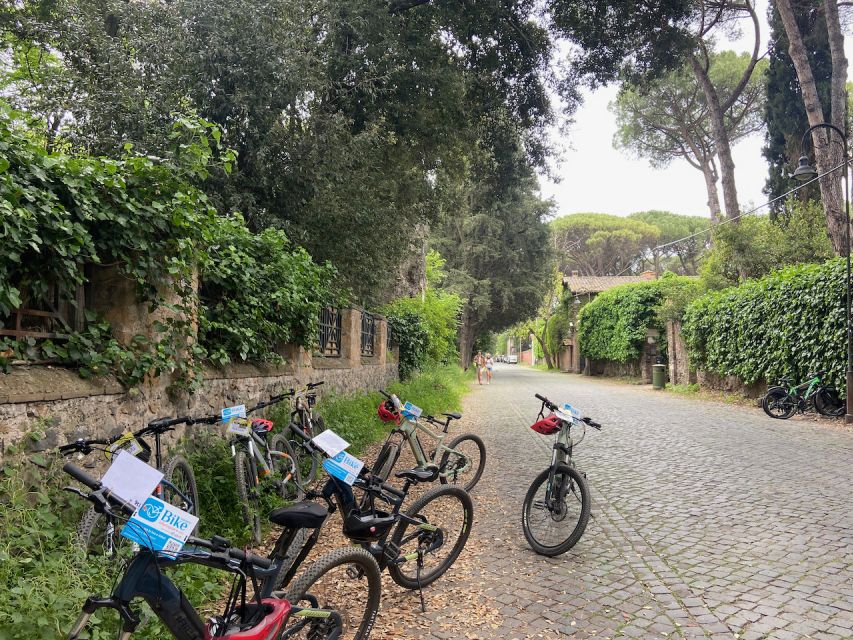
- Are e-bikes included, and what kind are they?
- Is a child seat available?
- What food and drink are included?
- What should I bring?
- Is luggage allowed?
- What is the cancellation policy?
Key things to know before you go
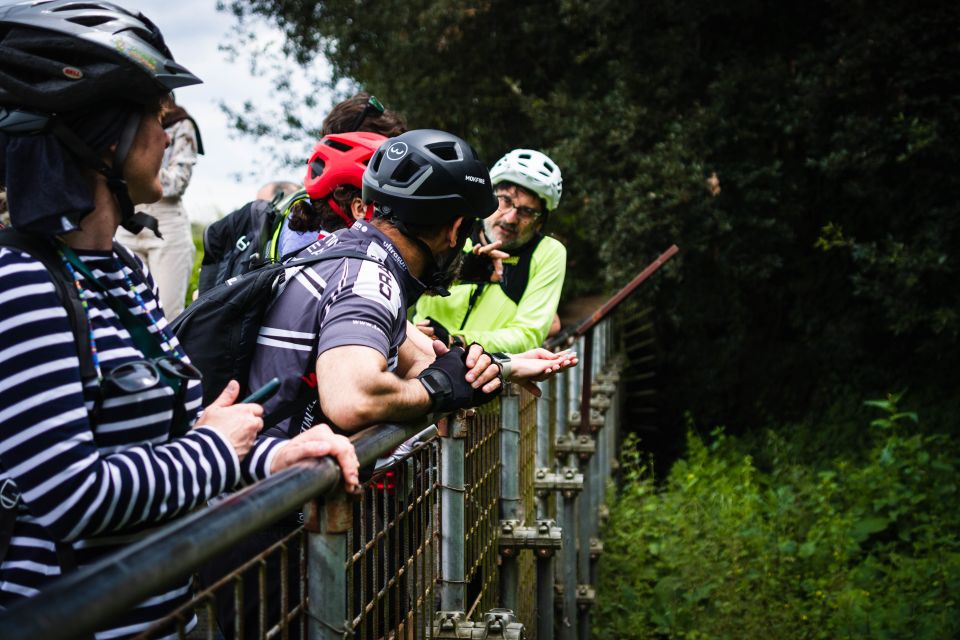
- Mountain e-bike setup: designed for real roads and park paths, not just flat city cruising
- Three park areas on foot and by bike: Caffarella Park plus the Appian Way aqueduct parks
- Plenty of short stops: you get many monuments without the all-day slog
- Farmhouse aperitif included: local products and wine at the end of the ride
- Limited to 10 people: easier questions for your guide and less crowd pressure
Why the Appian Way by e-bike feels different from a bus tour
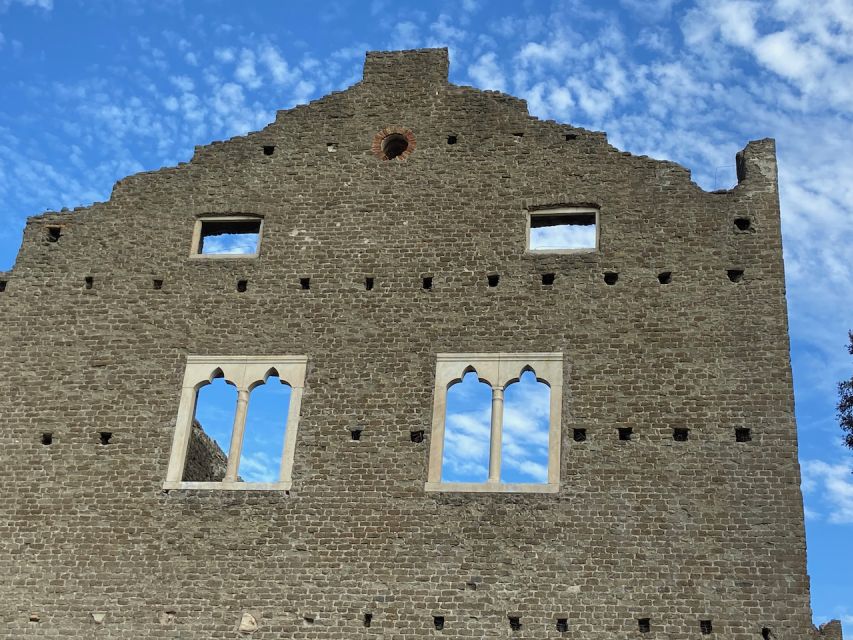
If you only see Rome’s big sights, you miss the way the city spills outward. This ride gives you the opposite angle: Rome as an expanding ancient road network, moving through parks and ruins rather than just standing in one queue.
The e-bike part matters. You still feel like you’re traveling, but you’re not wiped out after the first hour. That means you can actually enjoy the stop-and-look rhythm: short walks, photo pauses, and the guide pointing out details you’d otherwise miss from a distance.
And then there’s the setting. Even within a short ride from the center, you’re swapping busy streets for quieter lanes, stone paths, and the open air around aqueducts. It’s a very practical way to see more of the Appian Way without turning your day into a fitness test.
You can also read our reviews of more cycling tours in Rome
Getting rolling: meeting at Viale della Piramide Cestia and bike basics
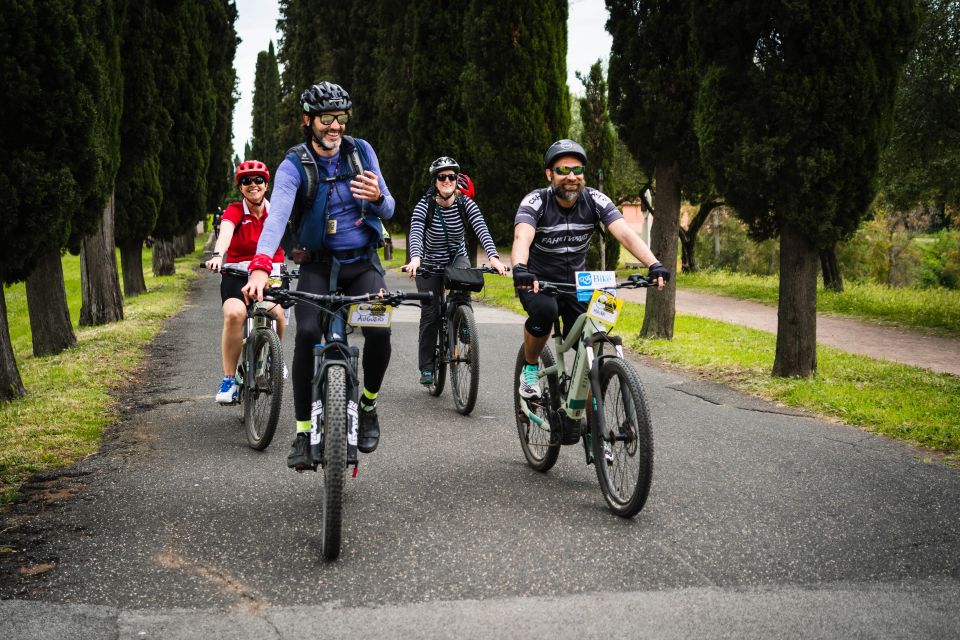
You’ll meet at Bikesquare Roma bike Rental, in the Viale della Piramide Cestia area. From there, the group moves out toward the southern route that connects key Roman sites.
Because this is a guided e-bike tour, the first minutes matter. You should expect a safety-and-basics moment on the bike before the route gets more interesting. If you’ve never ridden an e-bike, this is the time to ask quick questions—getting comfortable early makes the rest of the day feel relaxed.
Also note the practical rules: there’s no luggage or large bags allowed. That’s not just a nuisance—big bags are awkward on a bike and during stops. Bring a small daypack you can keep with you.
Baths of Caracalla and Porta San Sebastiano: a strong warm-up
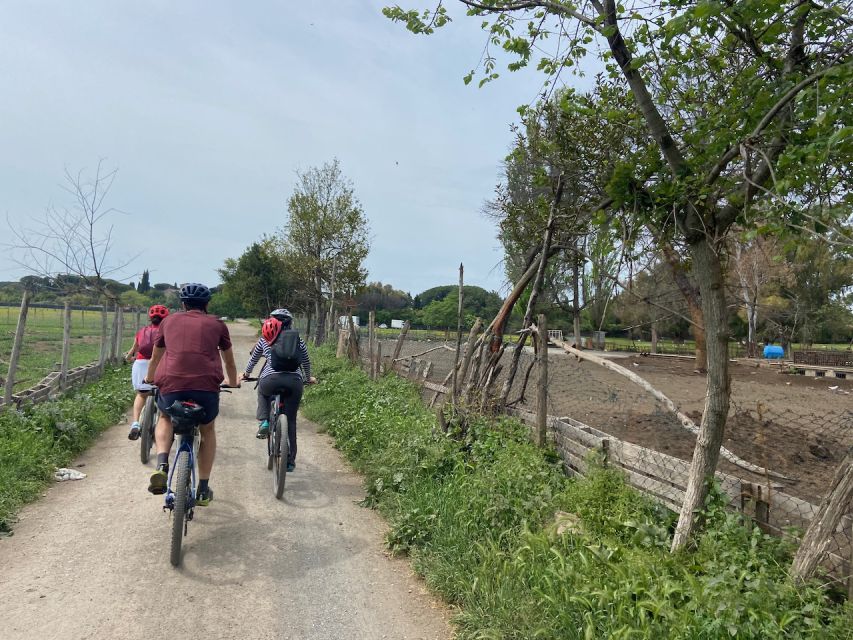
The tour starts with a quick hit at the Baths of Caracalla, then moves to Porta San Sebastiano. These are ideal starters because they set the tone: Rome’s scale in stone, plus the sense of how the city’s edges functioned.
The stop length is short (about 10 minutes each), so you won’t linger like you’re on a museum binge. Instead, you get a guided orientation—what to look for, what to connect later, and where the route is heading.
This stage is also useful for bike nerves. Early stops are less stressful, and the guide can watch the group’s pace. If you’re worried about feeling awkward on the saddle, this is your stress-test phase—and it’s manageable.
Villa di Massenzio and Cecilia Metella: where the road starts telling stories
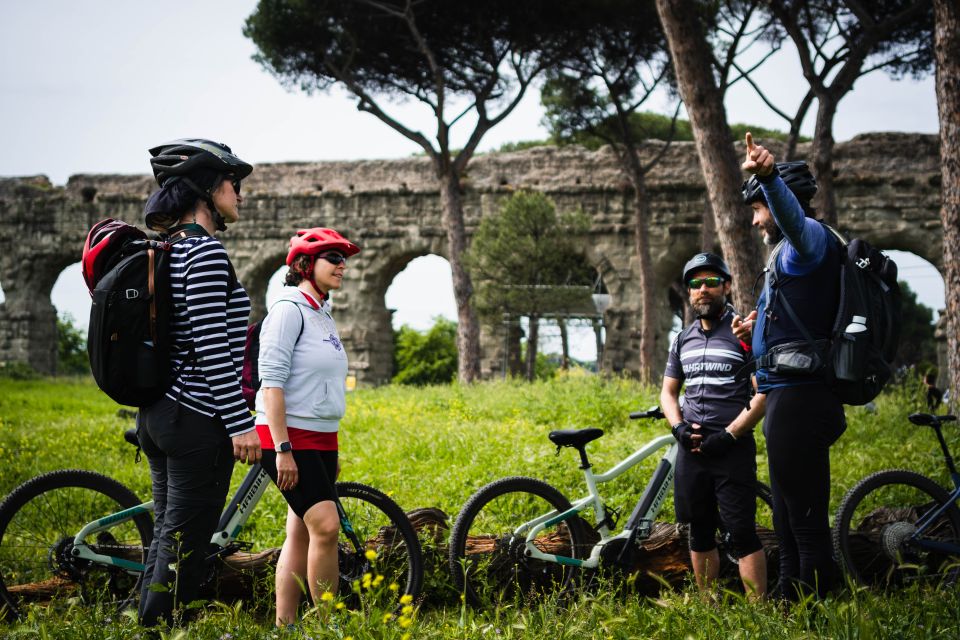
Next you’ll pass Villa di Massenzio (around 15 minutes) and reach the Tomb of Cecilia Metella (about 20 minutes). These stops feel like story chapters rather than sightseeing checkpoints.
Why it works: the guide links what you see now to the broader meaning of the Regina Viarum—the historic route. The pacing is brisk enough to keep energy up, but long enough to take in the monument shape and the setting around it.
A possible consideration here: if you want slow wandering time, this tour is not built for that. You get focus and context, then you move on. If that sounds like your style, great. If you hate being on a clock, you may find yourself wishing for a longer stop.
Appia Antica Archaeological Park: the big chunk of ancient paving
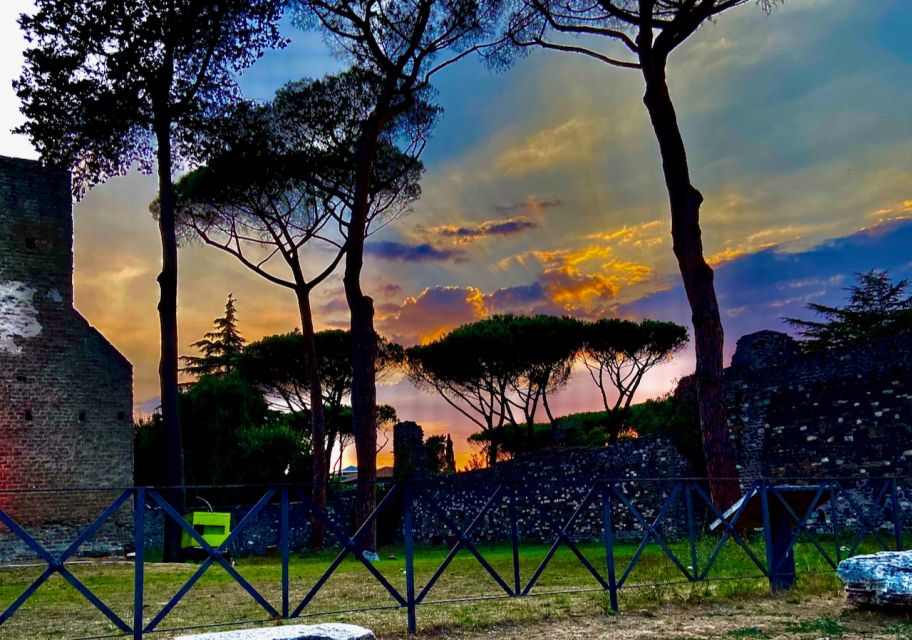
This is one of the core segments: Appia Antica Archaeological Park, with a longer stop (around 30 minutes). This is where the road itself becomes the star—walking along old stone paving and learning what the route meant in Roman life.
The value here is the combination: you’re not just looking at monuments; you’re experiencing the route that connected them. Walking segments help your brain match scale and spacing—how far things really are, and why the Appian Way mattered.
It’s also a good time for photos, because the views are framed by the architecture and the surrounding park paths. Just keep your timing tight: the group needs to stay together, and rushing your photos is how you trip into a minor heart-stopping moment.
You can also read our reviews of more guided tours in Rome
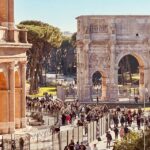
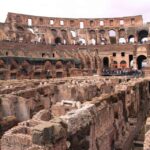
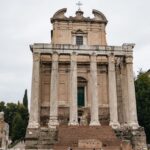
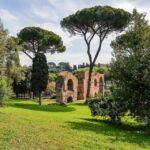
Villa dei Quintili and Torre Fiscale Park: Roman sites plus breathing room
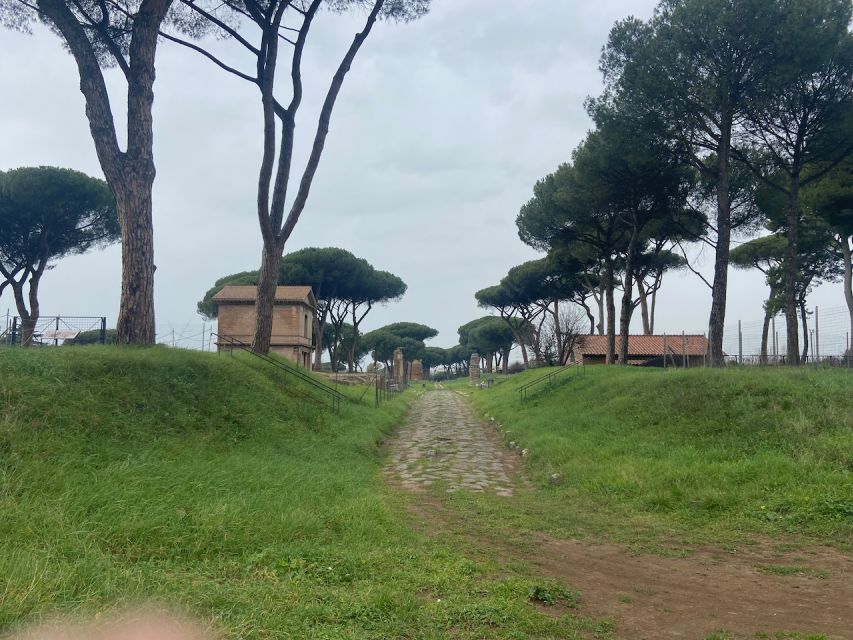
After Appia Antica, you’ll move to Villa dei Quintili (about 10 minutes). Then comes Torre Fiscale Park (around 20 minutes). These are shorter stops, but they add variety—different monument types and different park vibes.
The route keeps you from getting “stop fatigue.” Instead of spending all your attention on one giant site, you get repeated moments where the guide can adjust the story and point out new details.
This part is also a breather. Even though you’re still moving, you’re not constantly sprinting between places. If you like the idea of a guided day where you can breathe, this section helps.
Parco degli Acquedotti: walking near the aqueducts
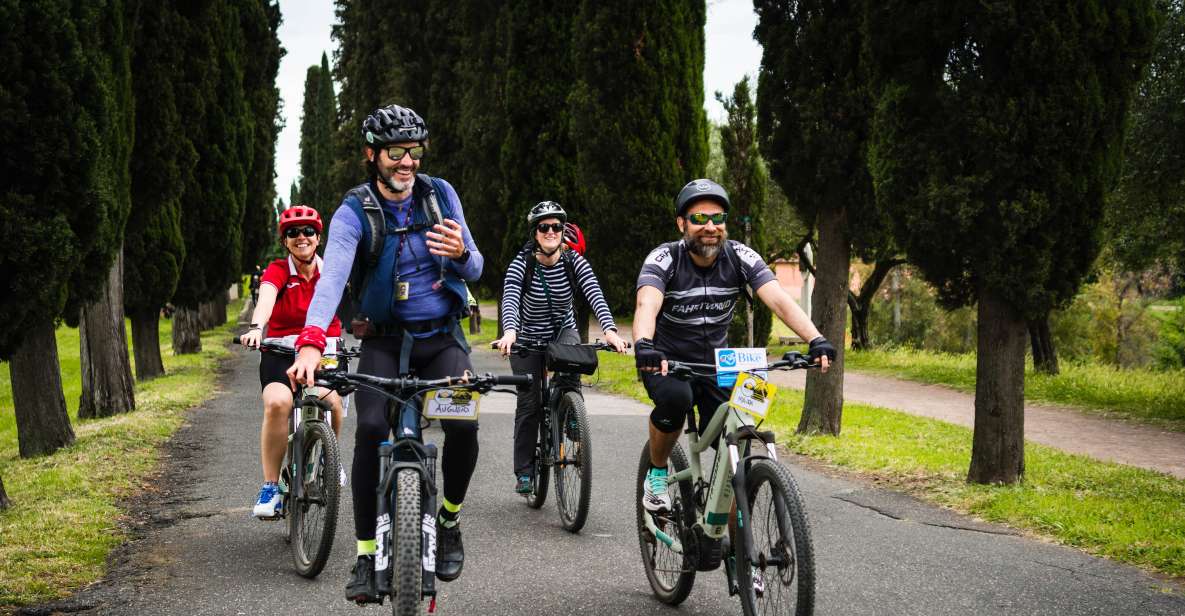
If I had to pick the most atmospheric zone, it’s the Parco degli Acquedotti segment (about 30 minutes). Aqueduct areas have a special kind of drama: towering stone structures, quiet paths, and a sense of engineering built to last.
The pacing works because you get both movement and time on foot. You’re cycling in the open air, then stepping off the bike to take in what the aqueducts do visually and how they shape the route through the parks.
Practical tip: bring sunglasses and expect some glare. Even if the day is mild, bright stone and open sky can make you squint at monuments and miss the guide’s points.
Caffarella Park, Domine Quo Vadis, and the Aurelian Walls: Rome’s edge in one loop
Next comes Caffarella Park (about 25 minutes). This area gives you that “Rome has a pulse beyond the center” feeling. It’s also a change in scenery—more greenery, more walking sense, and a calmer tempo between photo stops.
Then you’ll visit the Church of Domine Quo Vadis (about 15 minutes) and spend time near the Aurelian Walls (around 20 minutes). These stops shift the story from road and ruins to Rome’s protective boundaries and the way sacred sites get woven into the landscape.
Why this matters for value: by the time you reach the walls, the day stops feeling like disconnected sightseeing. You start seeing the city as a system—roads, water, tombs, borders—rather than random “top ten” attractions.
Pyramid of Cestius: the quick closer that ties the day together
You’ll end with the Pyramid of Cestius (about 5 minutes) and return to your starting point at Viale della Piramide Cestia, 33.
That short final stop works because you’ve spent the full afternoon moving along the same ancient axis. The pyramid becomes a small but satisfying button on a longer story: a reminder that Rome’s landmarks aren’t just in the center, they keep showing up along the routes that shaped settlement and power.
The farmhouse aperitif: local products and wine without the tourist trap vibe
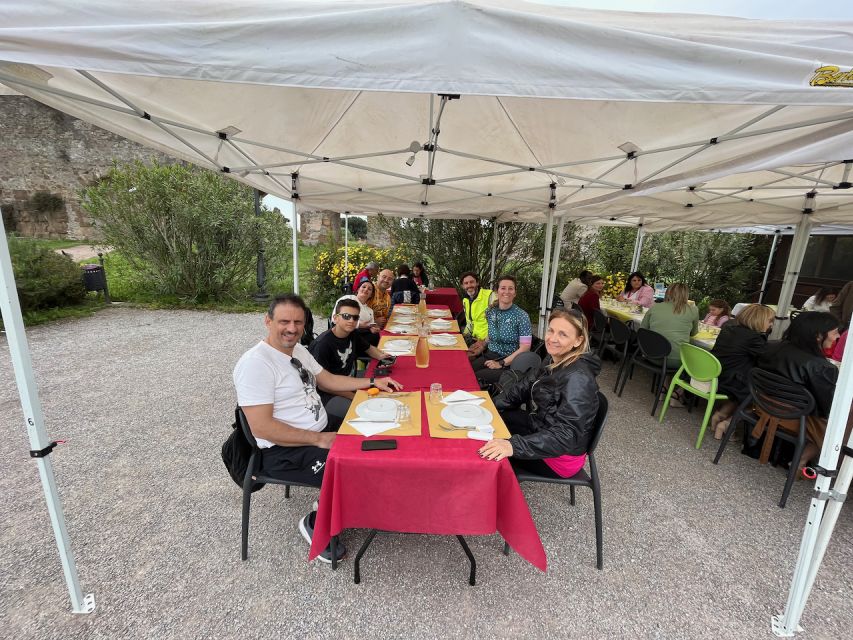
The tour includes an aperitif at a local restaurant/farmhouse for about 30 minutes. Expect local products and wine—the kind of food break that feels like part of the day rather than an awkward add-on.
This is where the e-bike tour earns its keep. You’re not just sightseeing; you’re cycling, walking, learning, then tasting something local at the end. It helps you reset and reflect instead of heading straight back to Rome hungry and drained.
A small caution: this is an aperitif, not lunch. If you’re the kind of person who gets very hungry, plan to eat before or after with your own timing. The tour doesn’t include lunch or dinner.
Price and value: why $81 can make sense for a 4-hour guided e-bike day
At $81 per person for a 4-hour experience, you’re paying for three big things: a quality e-bike (mountain style), a guide, and the included aperitif with local tastings.
Here’s the value math that usually matters on a day like this:
- The route is structured, so you’re not paying only for transportation; you’re paying for interpretation and pacing.
- A small group (up to 10) often means less waiting and more time actually looking at monuments with context.
- The included farmhouse stop reduces the chance you’ll spend your budget on a last-minute meal that isn’t that great.
If you already love DIY sightseeing by bike, you could technically piece together parts on your own. But if you want the story connected—aqueducts, tomb sites, parks, and the road itself—this kind of guided structure is exactly what you’re paying for.
E-bike comfort and safety: what you should bring (and what to expect)
This tour is built for a relaxed cycling day, but it still includes walking segments. Bring comfortable shoes, sunglasses, and comfortable clothes.
Also, keep your expectations realistic about pacing. Some stops are quick by design. The guide is making sure the group moves efficiently through the ancient zones and park crossings.
The good news is that the tour emphasizes safety and smooth handling. If you haven’t ridden e-bikes before, the ride is still very doable, and the guide can help you get comfortable before you settle in.
Who should book this Appian Way e-bike tour?
This is a strong match if you:
- Want a guided way to see the Appian Way and aqueduct parks without turning your day into long solo navigation
- Like a small-group feel and clear guidance at stops
- Prefer doing photos and history while moving, instead of only standing in one spot
- Want an actual break from central Rome’s intensity
It’s less ideal if you:
- Need lots of solo wandering time at every stop
- Have limited walking ability (since you’ll walk along ancient paving and in parks)
- Carry bulky luggage (since large bags aren’t allowed)
Should you book?
Yes, if you want the Appian Way as a journey, not a checklist. The blend of e-bike riding, park walking, and a farmhouse aperitif hits the sweet spot: active enough to feel like an experience, structured enough that you won’t miss the meaning behind what you’re seeing.
If you’re on the fence, pick this tour over a generic city cycling option. This route is specifically built around Rome’s ancient corridors—roads, water, walls, and tomb sites—so every stop feels like it connects.
FAQ
Where does the tour start?
The meeting point is Bikesquare Roma bike Rental, located at Viale della Piramide Cestia, 33.
How long is the Appian Way e-bike tour?
The tour lasts 4 hours.
How many people are in the group?
It’s a small group, limited to 10 participants.
What languages are the guided tours offered in?
The live tour guide is available in English and Italian.
Are e-bikes included, and what kind are they?
Yes. The tour includes a mountain e-bike, plus the guide.
Is a child seat available?
Yes. A child’s seat is available upon request.
What food and drink are included?
The tour includes an aperitif at the end, with wine and local products.
What should I bring?
Bring comfortable shoes, sunglasses, and comfortable clothes.
Is luggage allowed?
Luggage or large bags are not allowed.
What is the cancellation policy?
There is free cancellation up to 24 hours in advance for a full refund.