REVIEW · ROME
Rome: Castel Sant’Angelo Reserved Entry
Book on GetYourGuide →Operated by Flavio's Journeys · Bookable on GetYourGuide
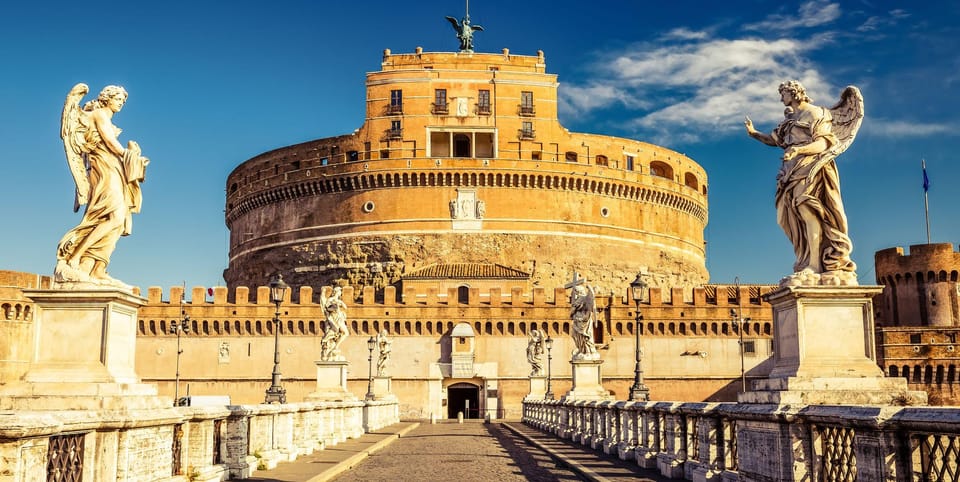
Castel Sant’Angelo feels like three eras crammed into one stone spine. With priority entry and a truly self-guided pace, you can roam through five floors—from Hadrian’s original vision to the Papal fortress era—without waiting in line. The main thing to watch is logistics: if you miss the meeting point timing or the handoff is unclear, you may lose time getting your entry sorted.
What I like most is that you’re not rushed. You get to pace yourself through weapons displays, Renaissance frescoes, and the darker side of the fortress, including stories of prisoners held inside its walls. You’ll also get a standout payoff at the end: the papal baths of Leo X and Clement VII and the panoramic terrace views over Rome.
The one drawback is value depends on smooth handoff. The ticket includes reserved entry, but a couple of recent bookings reported delays when the greeter didn’t show and they had to sort it by phone, so you’ll want to follow the meeting instructions carefully.
In This Review
- Key points to know before you go
- First Look: Castel Sant’Angelo in One Sentence
- Priority Entry and Self-Guided Freedom (The Real Point of Reserved Entry)
- Meeting Point Timing: Don’t Lose Your Spot Before You Enter
- Hadrian’s Mausoleum: The Starting Point You’ll Feel Immediately
- Papal Fortress Transformation: Where the Tone Turns
- Weapons Displays and Renaissance Frescoes: What to Look For as You Walk
- The Darker Side: Prisoners and Tragic Stories Inside the Walls
- Papal Baths of Leo X and Clement VII (A Strong Reason to Stay Until the End)
- Terrace Views Over Rome: Your Finale
- Practicalities: Rules, Restrictions, and How to Plan Your Visit
- Price and Value: What You’re Paying For
- Who This Works Best For (And Who Might Want to Skip)
- Should You Book This Reserved Entry?
- FAQ
- Is this a guided tour?
- What does the reserved entry include?
- Where do I meet the host?
- How early should I arrive?
- How long is the experience?
- What can I see inside Castel Sant’Angelo?
- Are there restrictions on bags or pets?
- Is it suitable for wheelchair users?
- Is there free cancellation?
Key points to know before you go
- Fast-track entry via a separate entrance so you skip the main queue
- Five floors of content, starting with Hadrian’s mausoleum built in 135–139 AD
- A clear story shift from Emperor Hadrian to Papal-state defense and pope sanctuary use
- Worth the time for the papal baths painted for Leo X and Clement VII
- Terrace panoramic views that feel like the reward at the end of a long climb
First Look: Castel Sant’Angelo in One Sentence
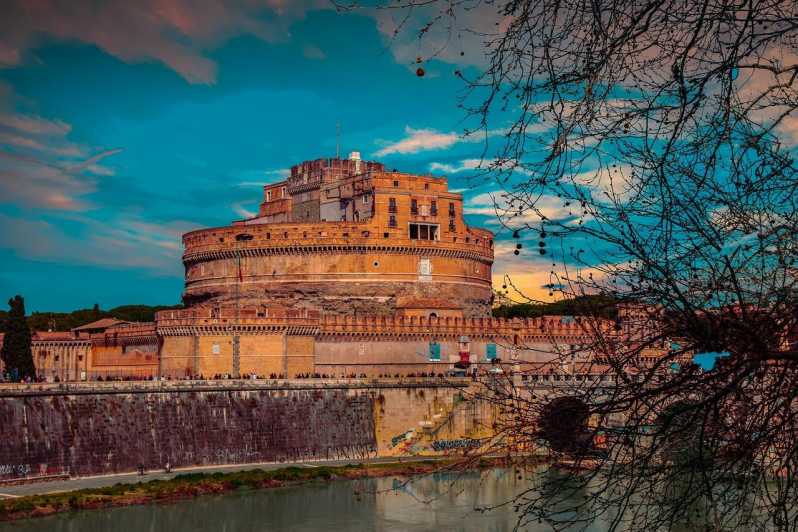
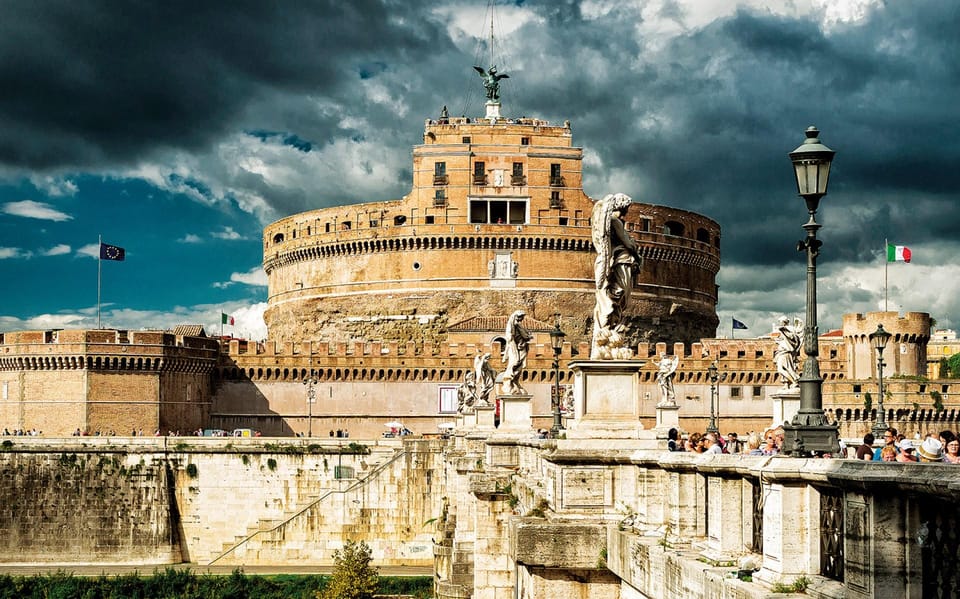
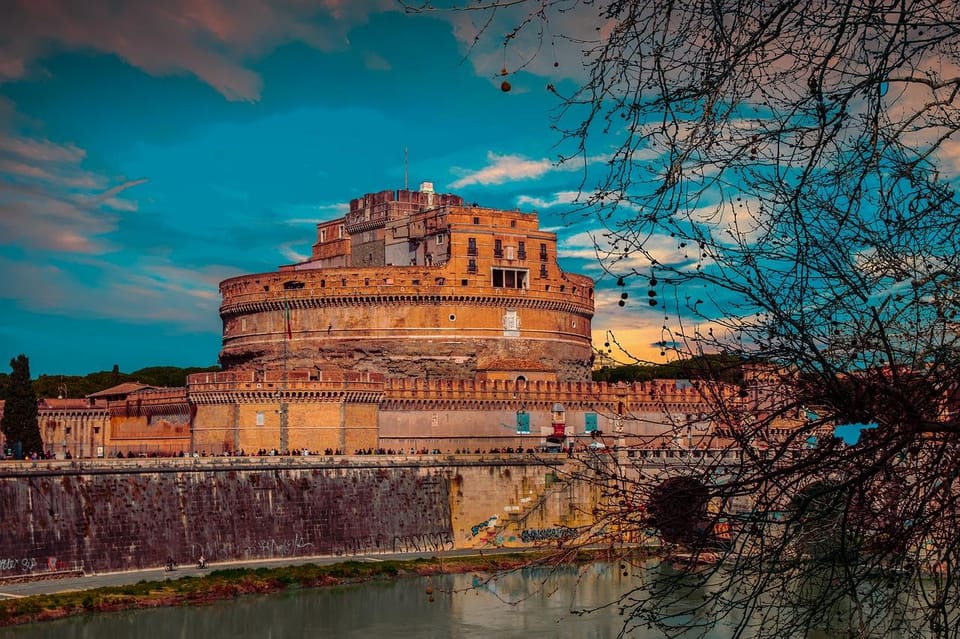
Castel Sant’Angelo is also known as the Mausoleum of Hadrian—and inside, you’ll see how one monument became a fortress, then a Papal stronghold. The building’s layout gives you the feeling of moving through time as you climb and turn.
You’re looking at a Roman landmark that can handle both modes at once: history rooms up close, and then open-air views that let you breathe.
You can also read our reviews of more tours and experiences in Rome.

Priority Entry and Self-Guided Freedom (The Real Point of Reserved Entry)
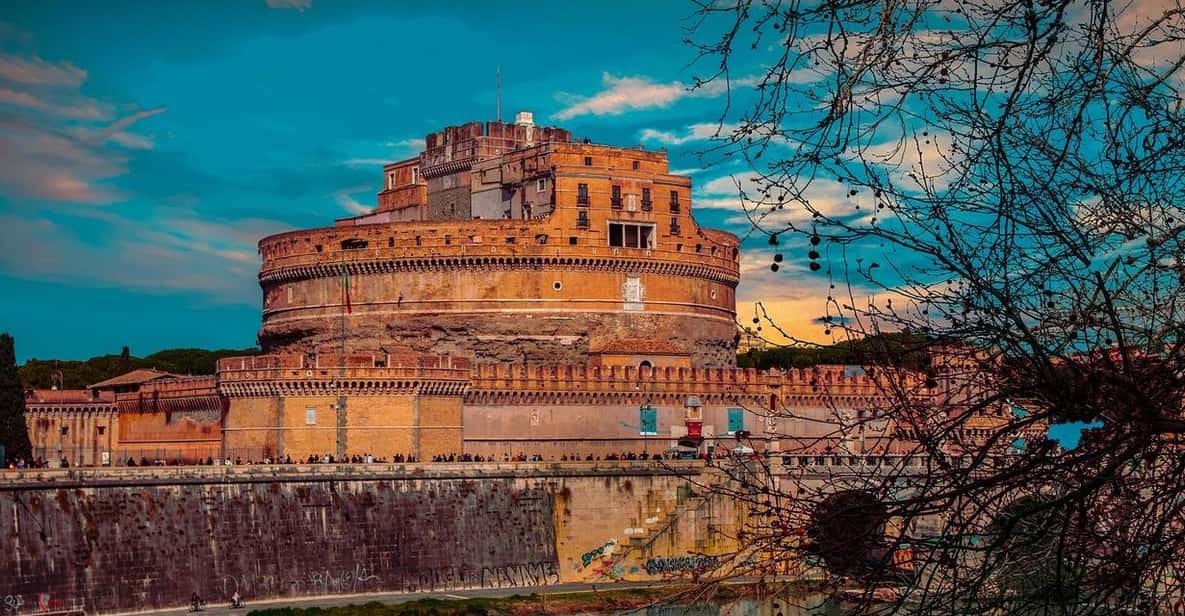
This is a self-guided experience. That matters because Castel Sant’Angelo works best when you’re allowed to linger—especially in the rooms with displays and wall art.
Your ticket includes fast-track entry plus the reservation and administrative charges. Translation: you’re paying for a smoother entry moment rather than a guided script.
You meet a host holding an RVG sign, then you go in on your own. Staff languages include English, Italian, Spanish, and Portuguese, which helps if you need quick clarification at the start.
One practical note from recent booking experiences: several people praised an easy ticket handoff, including confirmation and delivery of entry details via WhatsApp. But a few bookings also reported a greeter not meeting them at the point, forcing a phone/WhatsApp workaround. So I’d plan to arrive on time and keep your contact info ready.
Meeting Point Timing: Don’t Lose Your Spot Before You Enter
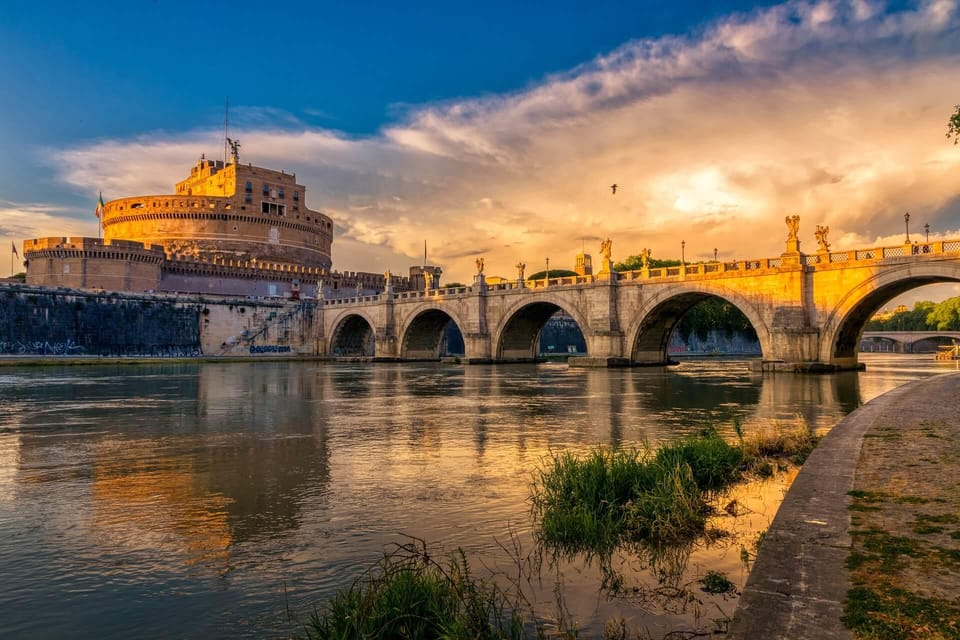
Meet in front of the main entrance of the Lungotevere Castello. The host will be holding an RVG flag.
Arrive 15 minutes before the activity starts. Late arrivals or no-shows won’t be accommodated, so treat that 15 minutes as a hard deadline, not a suggestion.
If you’re coming from nearby sights, build in buffer time for walking, stairs, and finding the exact entrance area. Castel Sant’Angelo is easy to spot, but the meeting point needs to match what your ticket instructions expect.
Hadrian’s Mausoleum: The Starting Point You’ll Feel Immediately
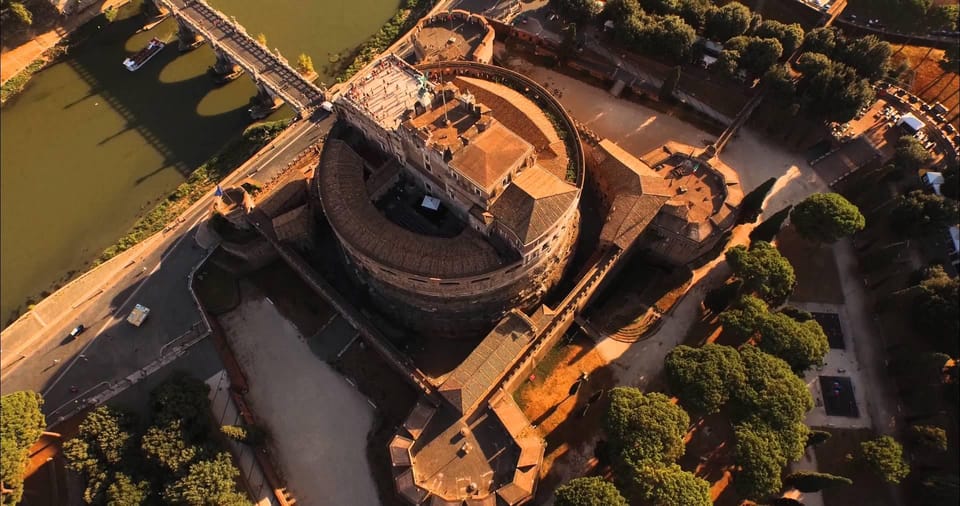
Your visit starts with the building’s origin story: it was commissioned by Emperor Hadrian and constructed between 135 and 139 AD. Even if you don’t read every label, you’ll feel the original intent in the structure itself.
This section is your “anchor.” It explains why the building exists at all, before it becomes something tougher and more political. If you only have energy for a short portion, I’d still prioritize the beginning layers because the rest of the building makes more sense after you understand the origin.
Think of it like this: the mausoleum phase is the why; the fortress phase is the how and the consequences.
Papal Fortress Transformation: Where the Tone Turns
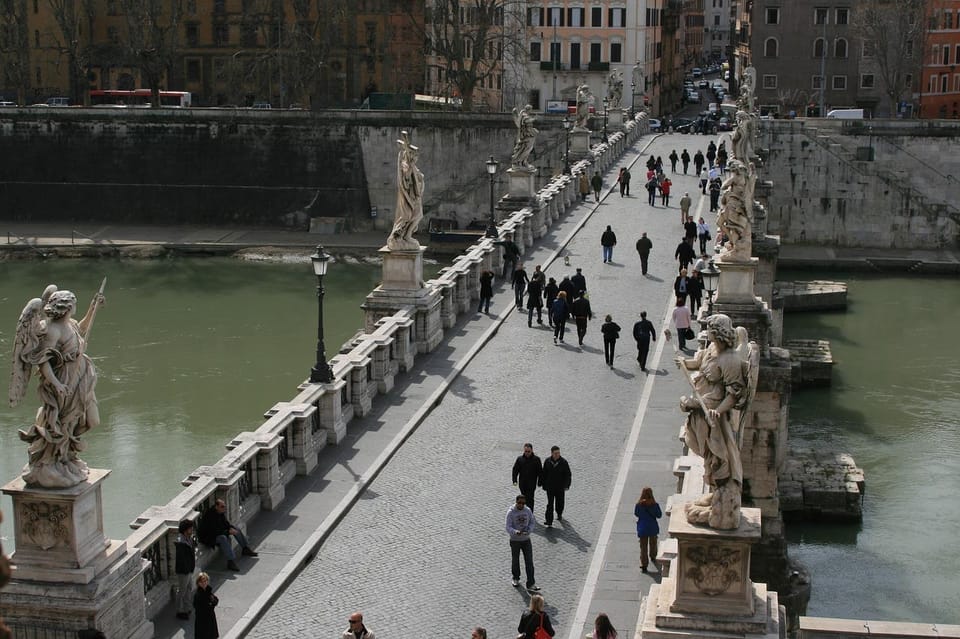
After Hadrian, the tone changes. Castel Sant’Angelo became a defensive structure for the Papal state, and from the 14th century onward it served as a sanctuary for popes.
That “sanctuary” detail matters. It tells you that this wasn’t just a prison-like building. It’s a place where power sought protection, and where the Papal state turned existing structure into security.
You’ll also see the idea of defense reflected in the rooms and displays. The fortress evolution is part of what makes Castel Sant’Angelo more than a pretty monument. It’s architecture designed to survive conflict and control access.




Weapons Displays and Renaissance Frescoes: What to Look For as You Walk
Inside, you’ll find weapons and Renaissance frescoes spread across the floors. This combination is one of the reasons self-guided works well: you can pause on what you care about.
If you like tangible history, focus on the weapons area. It gives a physical sense of what “fortress” meant beyond storytelling.
If you prefer art, spend time with the frescoes. Renaissance painting in this kind of setting feels like a deliberate contrast—beauty and propaganda living inside a structure built for protection.
This is also where the building’s five-floor structure becomes useful. You’re not stuck in one atmosphere the whole time. As you move up and around, you get multiple “views” of what the place was used for.
The Darker Side: Prisoners and Tragic Stories Inside the Walls
Castel Sant’Angelo isn’t only about emperors and popes. It also holds stories of prisoners, with tragic fates connected to people confined within its walls.
You don’t need to seek this out aggressively, but don’t blow past it either. The prisoner stories are the emotional bridge between the “defense” concept and real human outcomes.
In a place like this, the tragedy doesn’t feel like a separate exhibit. It fits the building. Even when you’re tired and ready to rush, give this part a little attention because it changes how you interpret everything else you’ve seen.
Papal Baths of Leo X and Clement VII (A Strong Reason to Stay Until the End)
One of the standout features is the papal baths painted for Leo X and Clement VII. This is one of those stops that makes the building feel almost private—like you’re glimpsing leisure and status inside a hard fortress.
You’ll also get a sense of the Papal court’s taste and power. Baths are intimate spaces, and in a fortress setting, that contrast becomes the point.
Plan your energy for this segment. It’s the kind of room where you’ll appreciate taking your time, even if you’re tempted to keep marching toward the terrace.
Terrace Views Over Rome: Your Finale
Castel Sant’Angelo ends with payoff. The terrace offers panoramic views of Rome, and it’s a fitting reward after climbing through a building that’s basically a vertical timeline.
Use the terrace like a reset button. Look out first without stopping to read anything. Then, if you want, match what you’re seeing with what you learned inside.
Even if you’ve seen Rome from other viewpoints, this one hits differently because it sits on a fortress that once controlled movement and security. The views feel earned in a very literal way.
Practicalities: Rules, Restrictions, and How to Plan Your Visit
A few entry rules can matter more than you’d think:
- Pets are not allowed.
- No luggage or large bags.
- Mobility scooters and electric wheelchairs are not allowed.
- It’s not suitable for people with mobility impairments and is not suitable for wheelchair users.
So if you have any mobility constraints, take this seriously before booking. The building spans five floors, and the experience assumes you can move through it comfortably.
Also, the experience runs at your pace for 1 day, but you still need to coordinate with your entry time slot. Open daily, so it’s easier to fit into a schedule than some museums that close on certain days.
Price and Value: What You’re Paying For
At $38 per person, the ticket isn’t cheap, but it’s also not trying to be a full-day tour. You’re paying for reserved priority entry plus reservation and administrative charges.
Here’s how to think about the value:
- If you hate lines, the separate entrance can be worth a lot, especially in busy periods.
- If you’re a self-guided visitor who likes to read slowly and choose what to focus on, you’ll get more out of the ticket than someone who only wants a quick checklist.
- If your handoff at the meeting point goes smoothly, you should feel like you’re paying for convenience.
There’s a caution flag too. Some recent bookings complained the guide/host didn’t show up, and they had to get tickets via WhatsApp or by contacting the number they received by email. Those situations can make the purchase feel overpriced because you lose the convenience you were paying for.
My advice: confirm the meeting point details the day before, and keep your phone ready in case you need contact support for the ticket transfer.
Who This Works Best For (And Who Might Want to Skip)
This is a good fit if:
- you want a self-guided visit with your own pace
- you like fortress history and want to understand how the place changed roles over centuries
- you care about seeing both the art (Renaissance frescoes) and the court life moments (papal baths)
- you want Rome views without adding a separate guided tour to your itinerary
You might skip it if:
- you need a fully accessible route (the restrictions are strict)
- you prefer a live guide to explain details as you go
- you know you’ll struggle with meeting point timing or ticket handoffs
If you’re the type who likes to ask questions and build context on the spot, you may find a guided option better for you. But if you’re comfortable wandering, this set-up is a strong way to experience the building on your terms.
Should You Book This Reserved Entry?
Book it if you want to walk into Castel Sant’Angelo efficiently and spend your time where you want: Hadrian’s origins, the Papal fortress transformation, the baths, and that Rome terrace moment.
Skip or reconsider if smooth handoff at the meeting point is a concern for you. A few bookings had problems when a greeter didn’t meet them as expected, and the “support by contact” approach can turn what should be a simple start into an annoying delay.
If you’re organized—arrive on time at Lungotevere Castello, keep your ticket/entry details accessible, and plan for the climb—this is a practical way to get the most from one of Rome’s most layered landmarks.
FAQ
Is this a guided tour?
No. It’s self-guided, so you explore Castel Sant’Angelo at your own pace.
What does the reserved entry include?
It includes fast-track entry plus reservation and administrative charges.
Where do I meet the host?
Meet in front of the main entrance of the Lungotevere Castello, and the host will be holding an RVG flag.
How early should I arrive?
Arrive 15 minutes before the activity starts.
How long is the experience?
The activity is listed as lasting 1 day.
What can I see inside Castel Sant’Angelo?
You can see the origins under Emperor Hadrian (built between 135 and 139 AD), the transformation into a defensive structure by the Papal state, weapons and Renaissance frescoes, papal baths of Leo X and Clement VII, and panoramic views from the terrace.
Are there restrictions on bags or pets?
Yes. Pets are not allowed, and no luggage or large bags are allowed.
Is it suitable for wheelchair users?
No. It’s not suitable for wheelchair users and not suitable for people with mobility impairments.
Is there free cancellation?
Yes. You can cancel up to 24 hours in advance for a full refund.