REVIEW · ROME
Rome: Castle Sant’Angelo Ticket w/ audioguide option
Book on GetYourGuide →Operated by REAL BARCELONA TOURS, S.L · Bookable on GetYourGuide
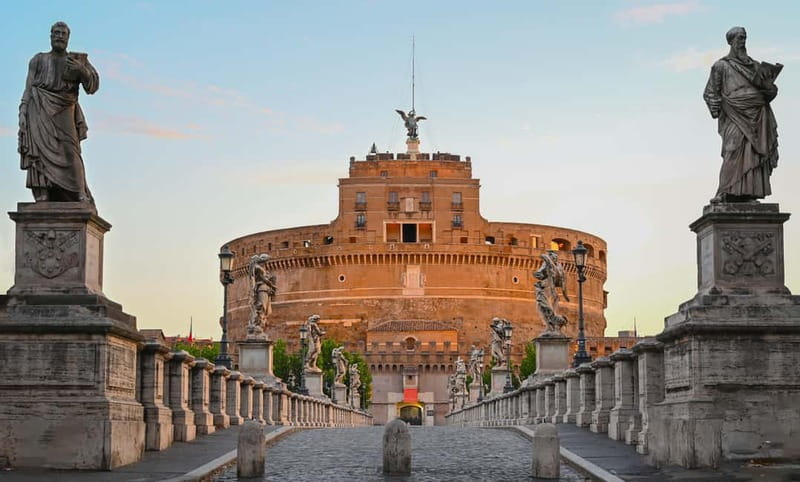
Castel Sant’Angelo turns history into a walk. You start in a monument that began as Hadrian’s tomb, then later became a papal fortress and prison with famous captives. It’s the kind of place where the layout tells the story, and the payoff is real when you reach the terrace views over the Tiber and St. Peter’s Dome.
Two things I really like about this ticket: the skip-the-line entrance (so you lose less time waiting), and the rooftop stop for panoramic city views. The main drawback is simple: this is mostly self-guided. A live guide and a standard audioguide aren’t included, and the visit isn’t suitable for wheelchair users or people with mobility impairments.
In This Review
- Key points at a glance
- Castel Sant’Angelo in plain terms: what you’re stepping into
- Skip-the-line entry near the Angel Statue
- Your self-paced route: Papal Rooms, the spiral staircase, and Hadrian’s ashes
- The prison era: Cellini and Cagliostro’s ghosts in the corridors
- Rooftop terrace views over Rome, the Tiber, and St. Peter’s Dome
- Optional audioguide: whether it’s worth your money
- Price and value for a timed, 1-hour visit
- Who this ticket suits best
- Practical do’s and don’ts so you don’t waste your hour
- Should you book this ticket?
- FAQ
- How long is the Castel Sant’Angelo visit with this ticket?
- Does this ticket include skipping the line?
- What’s included, and what’s not included?
- Where do I meet the team?
- Is an audioguide available?
- What should I bring and how do I prepare for security?
- Is this experience suitable for wheelchair users or mobility impairments?
Key points at a glance
- Skip-the-line entry through a separate entrance, so your visit starts faster
- Self-paced route with room-by-room exploration at your speed
- Hadrian’s ashes room + Papal Rooms for the “tomb to fortress” transformation
- Famous prison stories tied to Benvenuto Cellini and Cagliostro
- Rooftop terrace with views of Rome, the Tiber, and St. Peter’s Dome
- Optional audioguide available in multiple languages
Castel Sant’Angelo in plain terms: what you’re stepping into
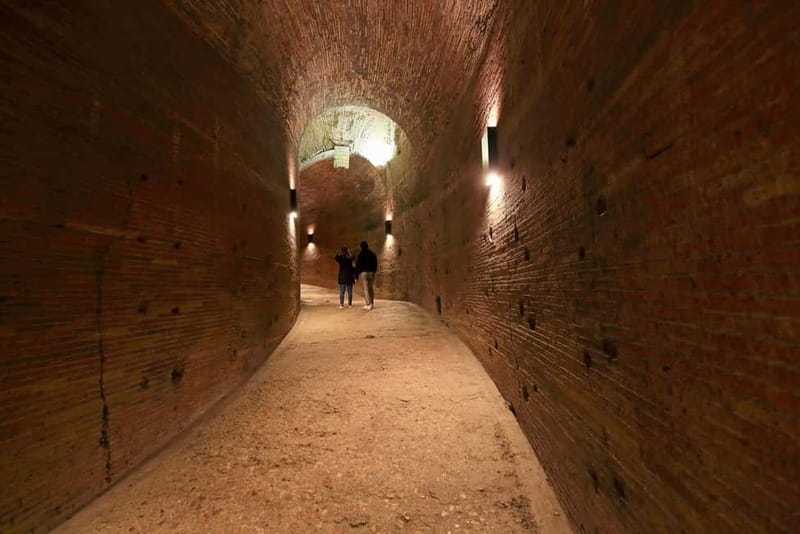
Castel Sant’Angelo is one of Rome’s most unusual monuments because it has worn different hats over the centuries. It began in ancient Roman times as the tomb for Emperor Hadrian, with the ashes kept inside since the II A.D. Later, during the Early Renaissance, it became a papal fortress—then a prison and even an execution site.
That layered purpose matters because it shapes how you experience the building. You’re not just looking at walls and corridors; you’re moving through spaces that were designed for very different kinds of power and control. If you’re into places that feel like a timeline you can walk through, this one is easy to love.
You can also read our reviews of more tours and experiences in Rome


Skip-the-line entry near the Angel Statue
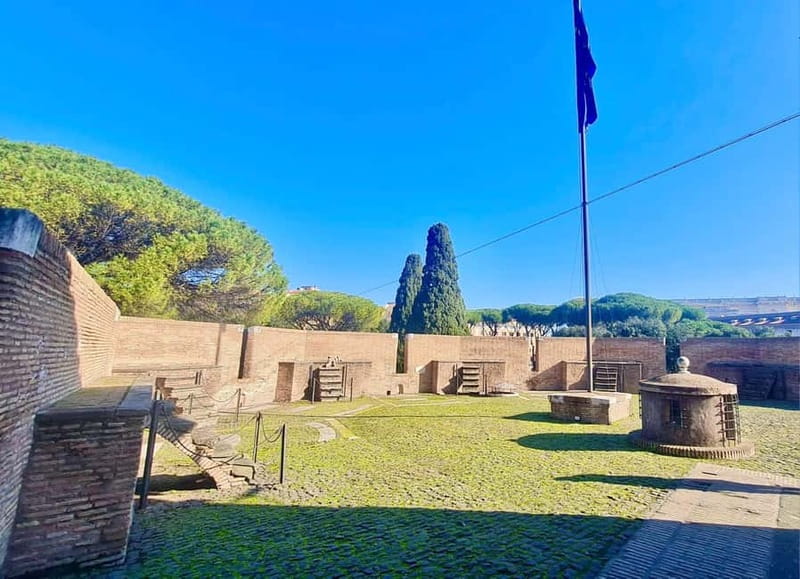
Your ticket is timed, and the visit is valid for 1 hour—so treat it like a focused visit, not an all-day wandering session. You’ll use a separate entrance to skip the lines, which is especially helpful in peak Rome hours.
The meeting point is right by the entrance: look for the team in light blue (jacket or t-shirt) near the Angel Statue. They’ll get you oriented, and then the rest is on you—no constant group herding.
Quick practical note from the rules: bring your passport or ID card. Avoid bringing weapons/sharp objects, baby strollers, and large bags or luggage. Pets aren’t allowed (assistance dogs are fine). These are the kinds of details that can slow you down at the door, so plan for them.
Your self-paced route: Papal Rooms, the spiral staircase, and Hadrian’s ashes
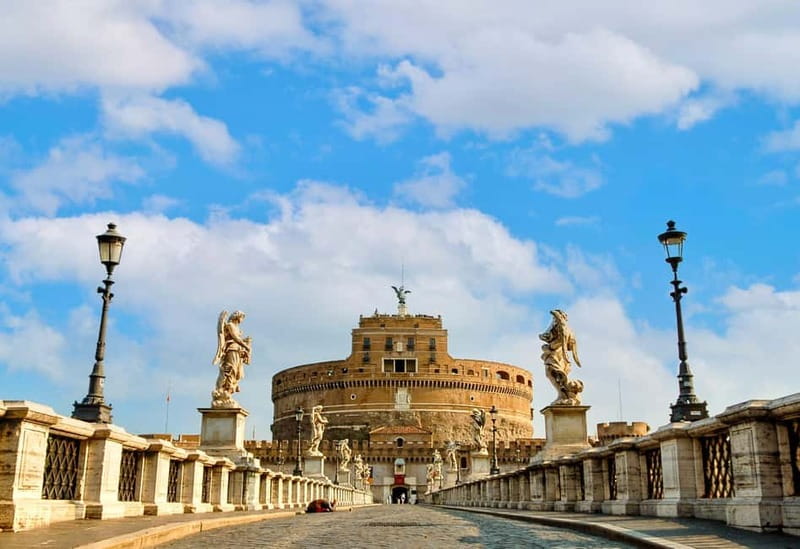
Once you’re inside, you’ll explore at your own pace. The route you’re pointed toward includes the Papal Rooms, the spiral staircase, and the Room of the ashes of Hadrian’s emperor. That combination is the heart of why people consider Castel Sant’Angelo a must-see monument.
Here’s what each part tends to feel like:
Papal Rooms
These rooms give you the fortress-and-authority layer. Even without a live guide narrating every doorway, you can usually pick up the shift from funerary grandeur to controlled, official space. Take a breath in the bigger rooms—visibility and perspective help you understand how the building was meant to function.
Spiral staircase
Expect a vertical rhythm. The spiral stair isn’t just a passage; it’s a pace setter. If you’re traveling with older relatives (or anyone who needs breaks), plan to move slowly here and regroup on landings.
Room of the ashes
This is the emotional anchor: the place tied directly to Hadrian’s tomb origins. The fact that the ashes are kept inside since the II A.D. is the kind of line that sounds dramatic, but in person it lands differently. It turns the monument from an impressive building into something more personal—an imperial resting place you can stand near.
You’ll also have the rooftop to look forward to later, so don’t feel like you need to rush through the interior just to get to the best views.
The prison era: Cellini and Cagliostro’s ghosts in the corridors
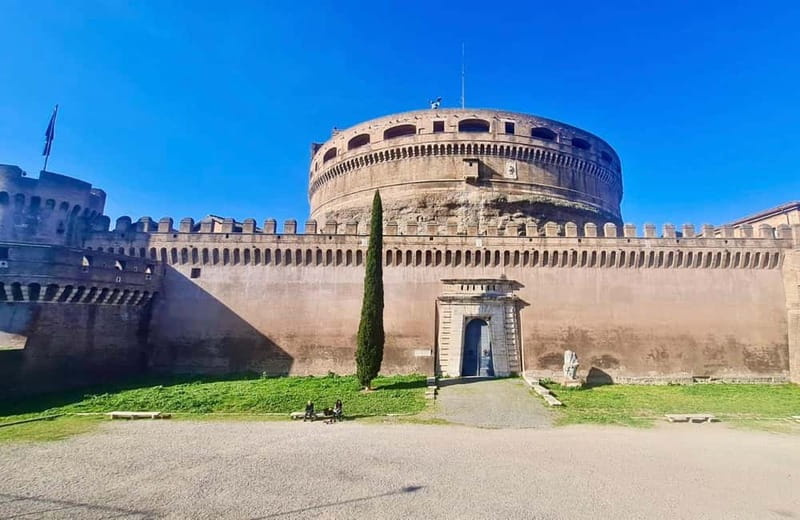
Castel Sant’Angelo isn’t only about emperors and popes. It has an uncomfortable middle chapter: prisons, plus a history of executions. The information you’ll see connects the site to famous names, including the goldsmith Benvenuto Cellini and the charlatan Cagliostro.
You don’t need a lecture to get something out of this. The prison layer helps you read the space differently. Instead of imagining it as a museum you wander, you can think of it as a place built for containment, movement control, and confinement.
Also pay attention to how the fortress is described in connection with the Vatican. The castle has a special secret walkway connected to the Vatican Palace. The route is also linked with the ideas behind Angels and Demons, where popes were said to use the passage when in danger. Even if you only know the story from the movie, the connection gives you a useful frame for understanding why these places were connected at all.
Rooftop terrace views over Rome, the Tiber, and St. Peter’s Dome
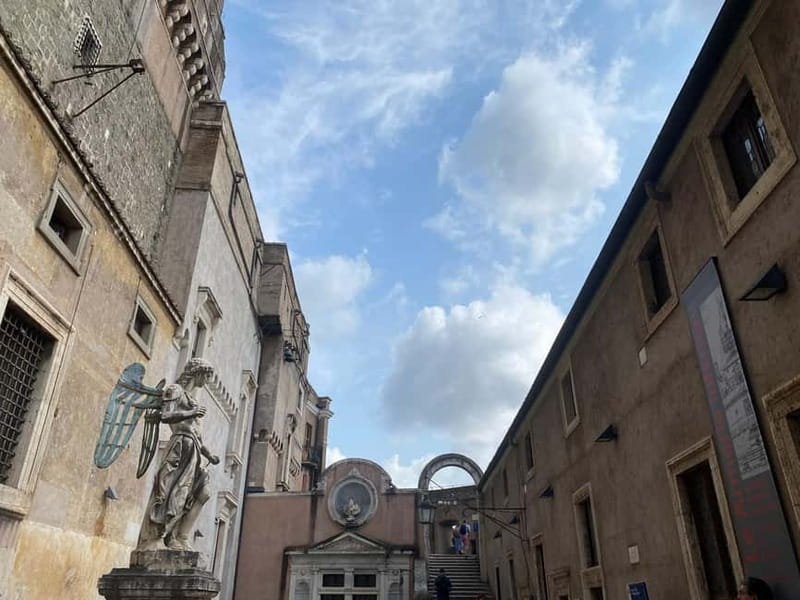
The rooftop terrace is the payoff moment. After the interior route, the building opens up into wide angles where you can see why Castel Sant’Angelo is such an effective vantage point.
You’ll get panoramic views of:
- Rome
- the Tiber
- St. Peter’s Dome
This is where the hour can feel short in the best way. If you’re a photo person, give yourself a few minutes to slow down and look, not just shoot. If you’re not a photo person, you’ll still want to stand still for a moment—this kind of view changes your sense of scale across the city.
Tip: since the visit is self-paced and timed for 1 hour, don’t leave the terrace until the very end. The interior route can take longer than you think, especially with stairs and photo stops.


Optional audioguide: whether it’s worth your money
This ticket setup includes skip-the-line entry, but not a live guide or audioguide by default. An optional audio guide is available in English, French, Italian, and Spanish.
If you like understanding what you’re seeing (dates, who’s who, what these rooms meant), the audio guide can make the visit feel more complete. If you’d rather move fast and spend your time on views and atmosphere, you can also skip it—because the building’s story is visible even without audio.
My practical advice: if you’re choosing the audioguide option, plan to use it on the parts that are most visually confusing, like corridors and stair segments. That’s where context saves time and keeps you from wondering what you’re looking at.
Price and value for a timed, 1-hour visit
At $30 per person, this ticket sits in the “worth it if you value time” category. The math is mostly about what you avoid: waiting. With skip-the-line entry through a separate entrance, you’re buying back the most frustrating part of Rome sightseeing—time lost in queues.
Is it a bargain compared with a fully guided, longer tour? Not really, because you’re not getting a live guide included. But you are getting a self-paced visit to a major monument, with the terrace view and the key interior stops built into the experience.
Think of it like this: you’re paying for entry efficiency plus access to the main route. If your goal is to hit Castel Sant’Angelo without turning it into an all-day project, the pricing makes sense.
Who this ticket suits best
I think this works best if you want independence. This is a solid pick if you:
- prefer a self-paced visit
- like monuments that mix different time periods in one structure
- want rooftop city views without adding a separate viewpoint tour
- are traveling with family members who might need slower pacing
One real-world detail that matters: the ticket handling process is designed to be organized. You can receive an email with your tickets, and you may also get a call about the scheduled time to confirm receipt. That kind of pre-visit clarity helps when your Rome days are packed.
It’s not a great fit for wheelchair users or people with mobility impairments because it’s not suitable for those needs. Also, since there’s no live guide included, you’ll want to be comfortable exploring on your own (or using the optional audio).
Practical do’s and don’ts so you don’t waste your hour
Since the visit is timed (valid 1 hour), do a little planning before you arrive:
- Bring your passport or ID card.
- Wear shoes you’re happy to walk in because you’ll be going up and down stairs.
- If you have health or mobility considerations, plan extra pauses early—don’t assume you’ll be able to rush later.
- Keep baggage minimal. Large bags and luggage aren’t allowed.
If you’re sensitive to crowds, go into this expecting security lines and occasional bottlenecks, even with skip-the-line entry. The ticket helps, but it doesn’t make the site empty.
Should you book this ticket?
Book it if you want the essentials of Castel Sant’Angelo—skip-the-line entry, the Papal Rooms, Hadrian’s ashes room, and that rooftop panorama—without paying for a full live guided package. The value is strongest when your schedule is tight and you’d rather spend your time inside and on the terrace than in a line.
Skip it if you need a wheelchair-accessible route or if you strongly prefer a live guide for every room. Also, if you don’t like self-guided experiences at all, you may feel shortchanged since the audio option is optional rather than included.
FAQ
How long is the Castel Sant’Angelo visit with this ticket?
The ticket is valid for 1 hour. Starting times depend on availability.
Does this ticket include skipping the line?
Yes. It includes skip-the-line entrance using a separate entrance.
What’s included, and what’s not included?
Included is the Castel Sant’Angelo skip-the-line entry ticket. Not included are a live guide, the audioguide, and transportation.
Where do I meet the team?
Meet near the entrance in front of the Angel Statue, where you’ll see a team member wearing a light blue jacket or t-shirt.
Is an audioguide available?
Yes, an optional audioguide is available in English, French, Italian, and Spanish.
What should I bring and how do I prepare for security?
Bring a passport or ID card. Avoid weapons or sharp objects, baby strollers, and large bags or luggage.
Is this experience suitable for wheelchair users or mobility impairments?
No. It’s not suitable for people with mobility impairments or for wheelchair users.