REVIEW · ROME
Rome: Colosseum Underground and Arena Tour
Book on GetYourGuide →Operated by ROME WITH SILVIA · Bookable on GetYourGuide
One word: the Colosseum goes underground. This VIP Hypogeum tour takes you into the narrow, echoing spaces where gladiators and animals waited, then lifts you up to the arena floor for up-close views you simply can’t get on a standard visit. Add the Roman Forum and Palatine Hill guided stops, and you get a full Arc of Ancient Rome, not just a photo run.
I like that the tour keeps things human-sized with a group limited to 8 and headsets so you don’t miss the details. I also like that you’re not stuck in a rushed line—your access includes VIP arena floor and VIP underground entry with a live English-speaking guide (examples from past groups include Paola, Italo, and Sara). The main drawback to plan around is that Colosseum access times and meeting points can shift on the day due to closures or events, so you’ll want a flexible schedule right after.
In This Review
- Key takeaways before you go
- Where the day starts: Largo della Salara Vecchia and the forum entrance
- Roman Forum and Palatine Hill: two guided sprints that make the Colosseum click
- Going under the Colosseum: the Hypogeum and the waiting rooms
- Standing on the arena floor: the sand platform and the view up
- Tiers one and two: panoramic terraces and the best photo angles
- Tying it together: why the Forum and Palatine stop matter here
- Small group, headsets, and how the pace really feels
- Price and value: is $94 worth VIP underground and arena access?
- Who should book this Colosseum Underground and Arena Tour
- Should you book? My decision guide
- FAQ
- How long is the Rome Colosseum Underground and Arena tour?
- Where do I meet the guide?
- What’s included in the VIP access?
- Do I need to bring my passport or ID?
- Is the tour wheelchair accessible?
- What language is the tour guide?
Key takeaways before you go
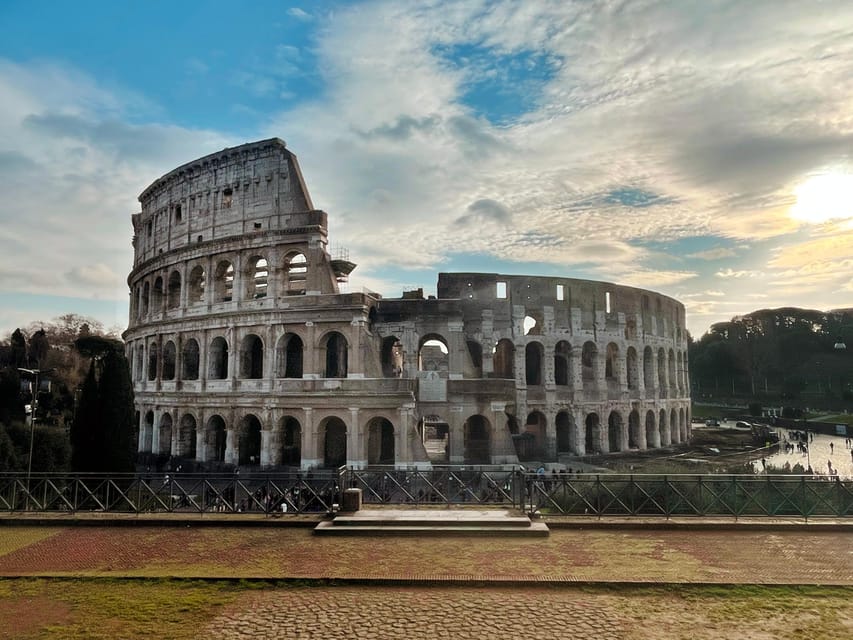
- Hypogeum in the dim light with travertine blocks, narrow corridors, and the gritty sense of what it meant to wait for the signal
- Arena floor VIP access to stand on the sand-centered fight platform location and look up at the machine of the building
- Roman Forum + Palatine Hill guided time to connect the Colosseum to the power center of the empire
- Small-group format (8 people) that makes questions easier and navigation smoother
- Headsets included so you hear your guide clearly without craning or crowding
- Panoramic terraces on tiers one and two for better photo angles than the ground level
Where the day starts: Largo della Salara Vecchia and the forum entrance
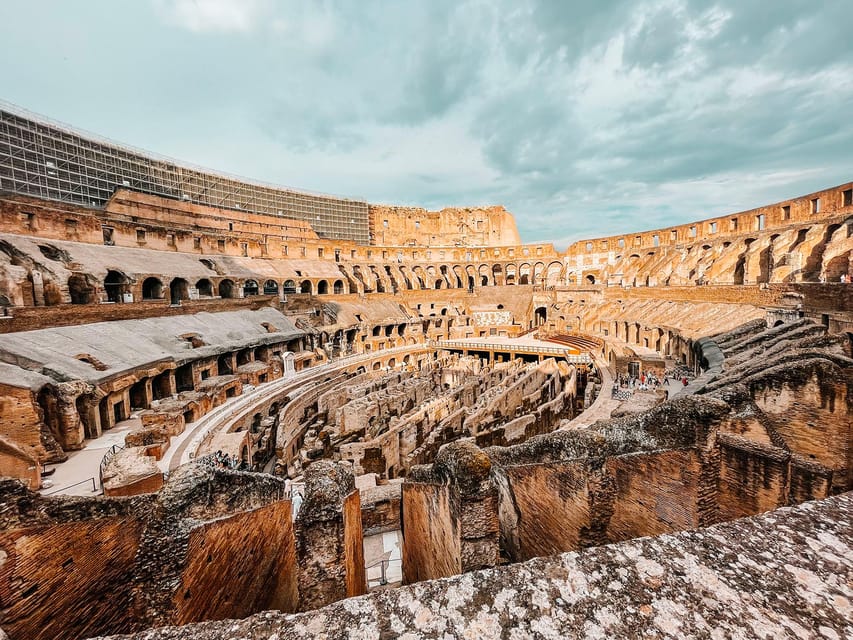
Meet at Largo della Salara Vecchia, which is the entrance area for the Roman Forum. The meeting spot is near the ticket counters on the left side, under a tree, and the guide carries the logo of GET YOUR GUIDE. If you’re arriving early, take a minute to orient yourself to the counters first—some people have struggled when they couldn’t spot the sign or the guide quickly.
Bring your passport or ID card, because the names on your booking have to match what’s on your document during security checks. It’s a small step that saves stress when lines suddenly form.
You can also read our reviews of more tours and experiences in Rome.

Roman Forum and Palatine Hill: two guided sprints that make the Colosseum click
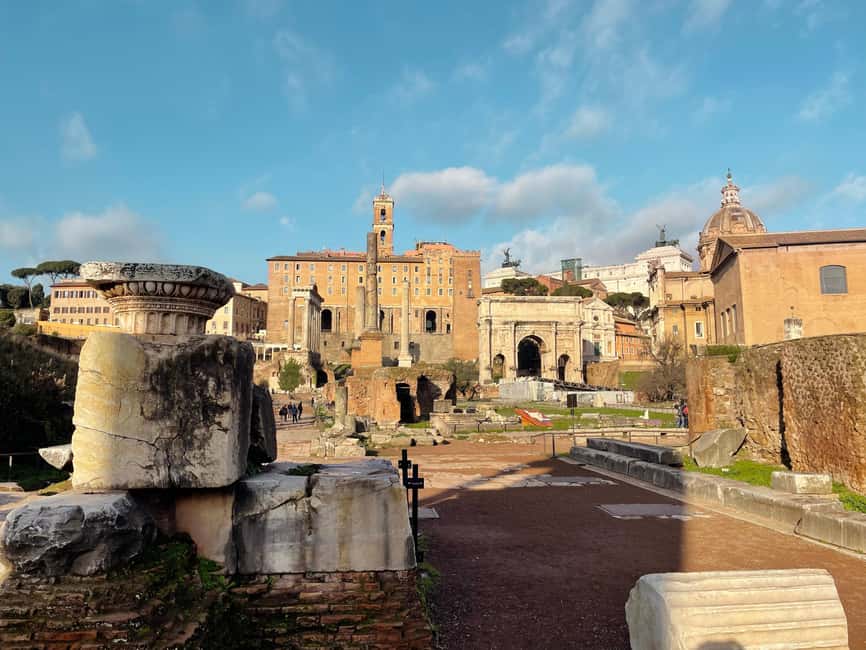
Right after meeting, you get a guided walk through the Roman Forum for about 30 minutes. This is not a slow museum stroll. You’ll get the key connections—how this area functioned as Rome’s political and social heart—so the Colosseum doesn’t feel like an isolated ruin.
Next comes Palatine Hill, also about 30 minutes with a guided component. Palatine Hill is where you start seeing how Rome’s rulers thought and built, which helps explain why games like the ones in the Colosseum mattered so much. After the guided time, you’ll have a 15-minute photo stop on Palatine Hill.
The trade-off is time. This is enough for orientation and great photo angles, but you won’t see every corner of the Forum/Palatine in depth during this 2.5-hour experience. If you love details, you’ll probably want a second pass later on your own.
Going under the Colosseum: the Hypogeum and the waiting rooms
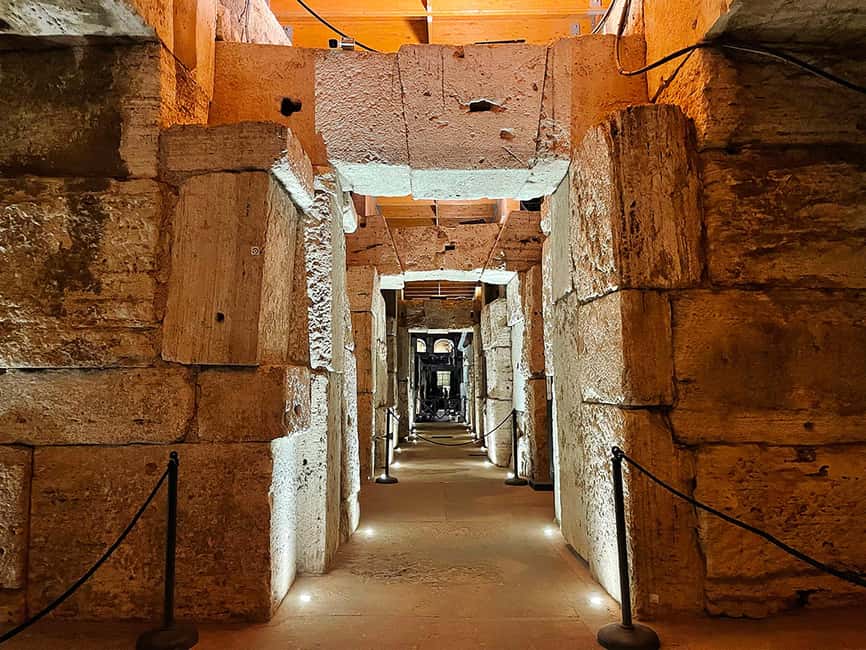
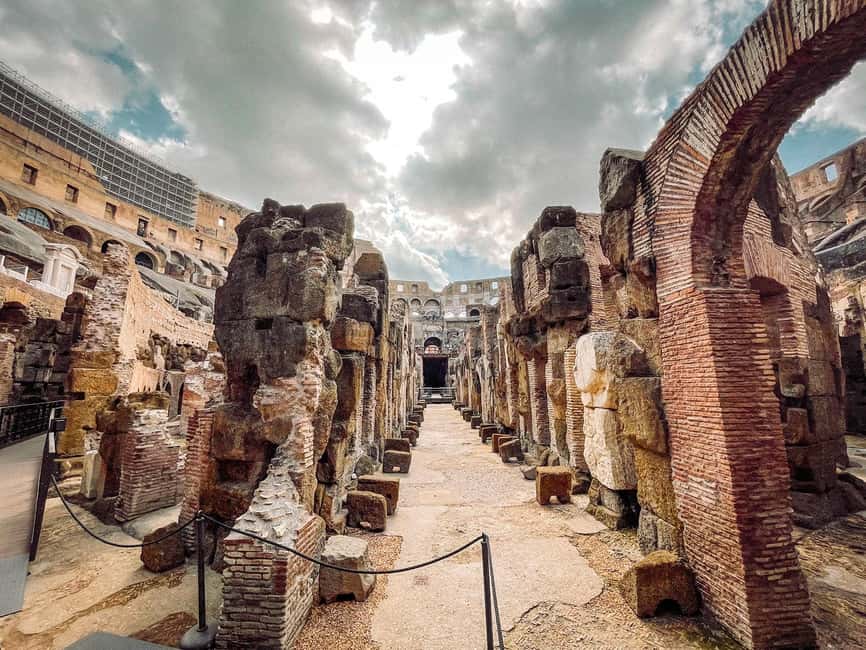
The tour’s emotional center is the Hypogeum. You start underground in tight corridors with big blocks of travertine, and the atmosphere is exactly the kind of place where you can picture nerves, boredom, and adrenaline all at once. Your guide will point out the spaces gladiators used while waiting, including the feeling of being close to the battle but not yet inside it.
Expect to see remnants and features that explain how the show worked. You’ll admire fragments of the original floor, an ancient drainage system, and rooms tied to the fight routine. There are also references to animal cages, which makes it clear these events were staged with logistics—not just spectacle.
One of the most striking parts is the guide’s explanation of a reconstructed elevator mechanism. It’s described as being anchored to a system of trapdoors above, connecting the underground world with the arena floor. That detail matters because it shows you how performers and props could be moved into position fast.
This portion is guided for about 20 minutes, and in the dim spaces you’ll hear the stories better than you’d expect. Headsets help a lot here, especially when the corridor walls make sound bounce around.
Standing on the arena floor: the sand platform and the view up
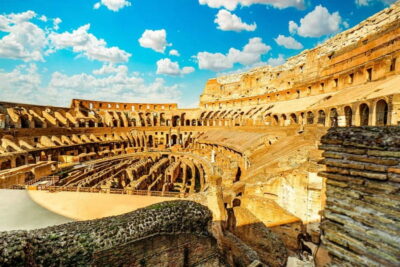
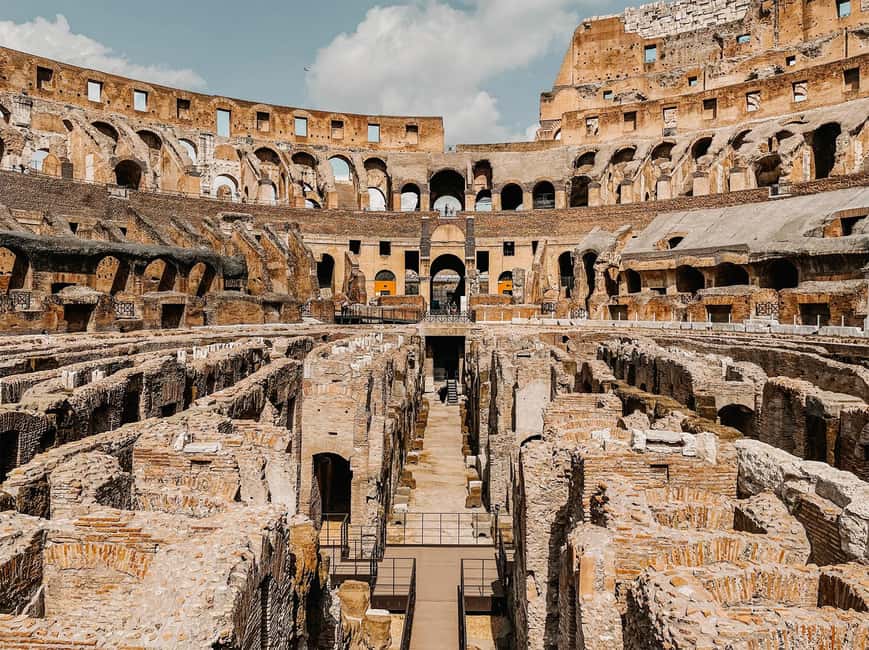
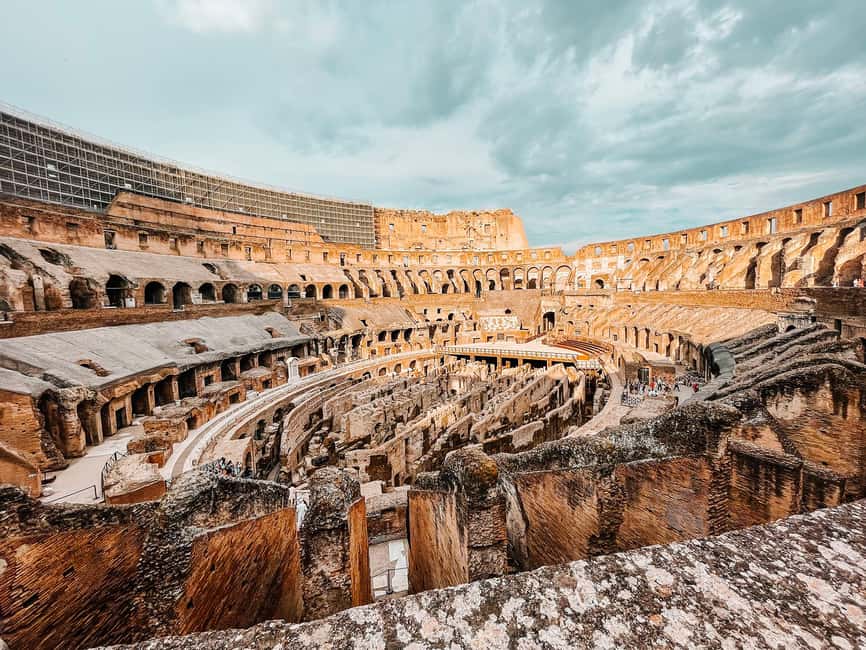
After the underground chamber time, the tour continues to the Colosseum arena floor for another guided 20 minutes. This is where the building stops being a shape and turns into a setup. You’ll visit the central area tied to the fight platform—described as a central sand-covered wooden platform, with the Latin connection between arena and sand.
From there, you get one of the most suggestive viewpoints in the whole complex. You’ll be able to look up at the massive structure with a more correct sense of scale, including how the crowd levels wrap the space. For photos, the arena-floor perspective is often better than standing at ground level because you’re closer to the original sightline geometry.
This is also where you may feel the pressure of time if the Colosseum’s schedule tightens. Some past groups have noted that when closing times shift, underground and arena time can feel a bit compressed. If you’re planning anything right after, leave breathing room.
Tiers one and two: panoramic terraces and the best photo angles
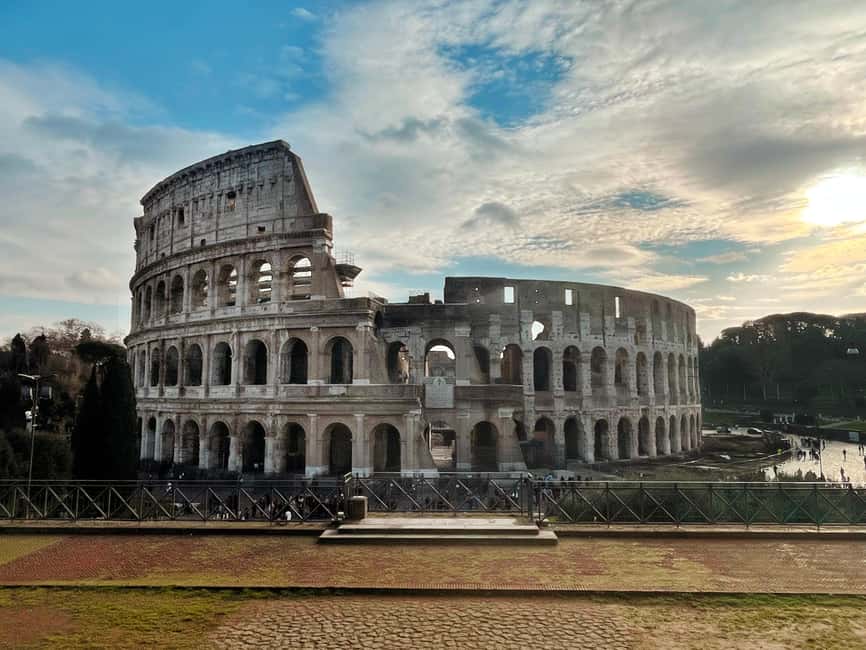
Once you’ve taken in the underground and the arena, the tour moves back toward the first and second tiers of the Colosseum. This part is your reward for surviving the underground. You’ll be in positions that let you admire the monument from a privileged height and capture better angles with less crowd interference.
Your guide will also share history, plus anecdotes and curiosities connected to the games. Even if you’ve read about the Colosseum before, these are the kinds of details that make it easier to understand what you’re seeing—because you can finally connect the lower-level mechanics to the seating levels and show flow.
This section isn’t about seeing everything. It’s about getting the Colosseum’s “big picture” before you move on, which is a smart way to spend limited time.



Tying it together: why the Forum and Palatine stop matter here
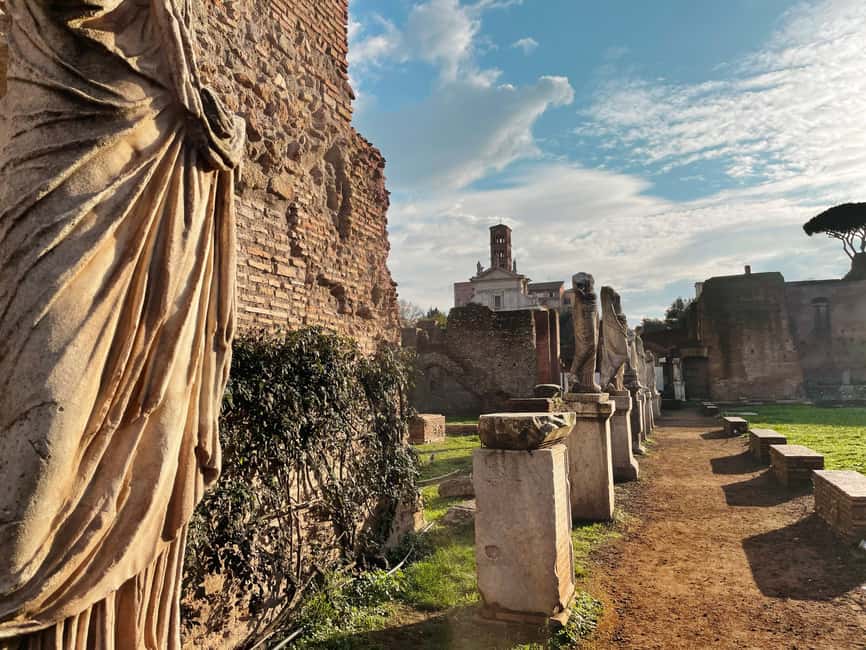
A Colosseum tour can become a one-stop photo mission. This one resists that. By starting with the Roman Forum and Palatine Hill, you get the political and social context that explains why Rome built games like these in the first place.
The Forum + Palatine stops also act like a warm-up. You learn how power and status worked, then you step into the Colosseum’s underworld logistics. That sequence helps you connect themes quickly: authority, spectacle, crowds, and control of space.
I especially like that you’re not just chasing one highlight. You’re building a mental map as you go.
Small group, headsets, and how the pace really feels
This experience runs about 2.5 hours, and the group is limited to 8 participants. That small size shows up in real ways: you can hear your guide, you can ask questions, and you spend less time doing crowd math.
Headsets are included, which is a big deal at the Colosseum where noise and echo can swallow casual conversation. It also means you can pay attention while other people are busy taking pictures.
Guides can make the pace feel either gentle or rushed. From past groups, I’ve seen lots of praise for guides like Virginia, Claudia, and Giorgio for clarity and for using visuals to help you picture how things worked. One practical tip: if you care about photos, watch where your guide moves next and time your shots quickly—don’t let camera focus eat the speaking portion of the tour.
Price and value: is $94 worth VIP underground and arena access?
At $94 per person, you’re paying for more than a guided walk in the sunlight. You’re buying three things that are hard to replicate on your own: VIP underground entry, VIP arena floor entry, and a guided route that also includes the Roman Forum and Palatine Hill.
You’re also paying for convenience. Booking the special underground access can be difficult on your own, and this format handles the process for you as part of the experience. For many people, reducing stress around tickets and timing is part of the value, not just a bonus.
If you’re the type who wants the full story—how the games were staged, not just what the Colosseum looks like—this price starts to make sense fast. If you only want a few photos and don’t care about the underground mechanics, you may be happier with a simpler, cheaper Colosseum visit.
Who should book this Colosseum Underground and Arena Tour
This tour is a great match if you want:
- The Hypogeum experience and arena floor access as the main event
- A guided version of the Colosseum that explains how the building operated
- Roman Forum and Palatine Hill in one tight, efficient block
It’s also a strong choice for families and mixed ages, since smaller groups and headset audio help keep everyone engaged. One review highlighted how a 10-year-old still enjoyed it, which tells me the guide work can keep attention moving.
The one clear mismatch is mobility needs: it’s not suitable for wheelchair users. If that’s your situation, look for a route designed with accessibility in mind.
Should you book? My decision guide
Book it if you want the Colosseum’s most dramatic layers: the underground Hypogeum waiting spaces, then the view from the arena floor, and you still want context from the Roman Forum and Palatine Hill. In my view, the value is in seeing how the show was staged, not just standing in front of a big landmark.
Skip it (or consider a different option) if you’re mainly interested in surface-level sightseeing or you hate structured time limits. Underground tours can feel a little rushed if the Colosseum changes timing on the day, so if your next plan is tight, build in buffer time.
If you can be flexible and you’re excited by the idea of standing where gladiators waited, this is the kind of Rome experience that sticks.
FAQ
How long is the Rome Colosseum Underground and Arena tour?
The tour duration is about 2.5 hours.
Where do I meet the guide?
The meeting point is Largo della Salara Vecchia, near the ticket counters on the left side under the tree. The guide will have the logo of GET YOUR GUIDE.
What’s included in the VIP access?
Your ticket includes VIP underground entry and VIP arena floor entry, plus a tour guide, guided stops at the Colosseum, the Roman Forum, and headsets.
Do I need to bring my passport or ID?
Yes. You should bring a passport or ID card, and the names on your booking must match the names on the document used at security.
Is the tour wheelchair accessible?
No, it is not suitable for wheelchair users.
What language is the tour guide?
The live tour guide is available in English.