REVIEW · ROME
Rome: Colosseum with Arena Floor, Forum & Palatine Hill Tour
Book on GetYourGuide →Operated by Through Eternity Tours · Bookable on GetYourGuide
Three hours in ancient Rome, with real access. I love the small group size and the guaranteed arena floor walkthrough, because it turns the Colosseum from a photo stop into a place you can actually picture. One possible drawback: you’ll cover big archaeological surfaces with steps and uneven ground, so you’ll want sturdier shoes than you think.
The balance here is smart. You get line-free entry plus guided time in the Roman Forum and Palatine Hill, then you’re back inside the Colosseum for the special parts. Just plan on being on your feet for the full stretch, bring water, and don’t bring big bags.
In This Review
- Key takeaways before you go
- Meeting at Angelino ai Fori and getting inside fast
- Roman Forum guided walk: Via Sacra, arches, and the political center
- Palatine Hill: Romulus legend and the emperor palaces
- Colosseum arena floor: walking where gladiators stood
- Colosseum attic floors 3–5: seeing the structure from above
- Price and logistics: what $112.15 buys you (and what it doesn’t)
- Who this tour is best for
- Quick tips that make the day smoother
- Should you book this Colosseum–Forum–Palatine tour?
Key takeaways before you go
- Arena floor access is limited daily, so this tour is built around a rare slot
- Skip-the-line tickets use a separate entrance, saving time for your actual sightseeing
- Roman Forum + Palatine Hill pair the political story with the imperial setting
- Colosseum attic (Floors 3–5) helps you see the structure and scale from above
- Small group of up to 10 keeps the pace personal, with headsets available for larger groups (6+)
- Guide quality matters here, and Palo is specifically called out for being caring, funny, and strong on facts
Meeting at Angelino ai Fori and getting inside fast
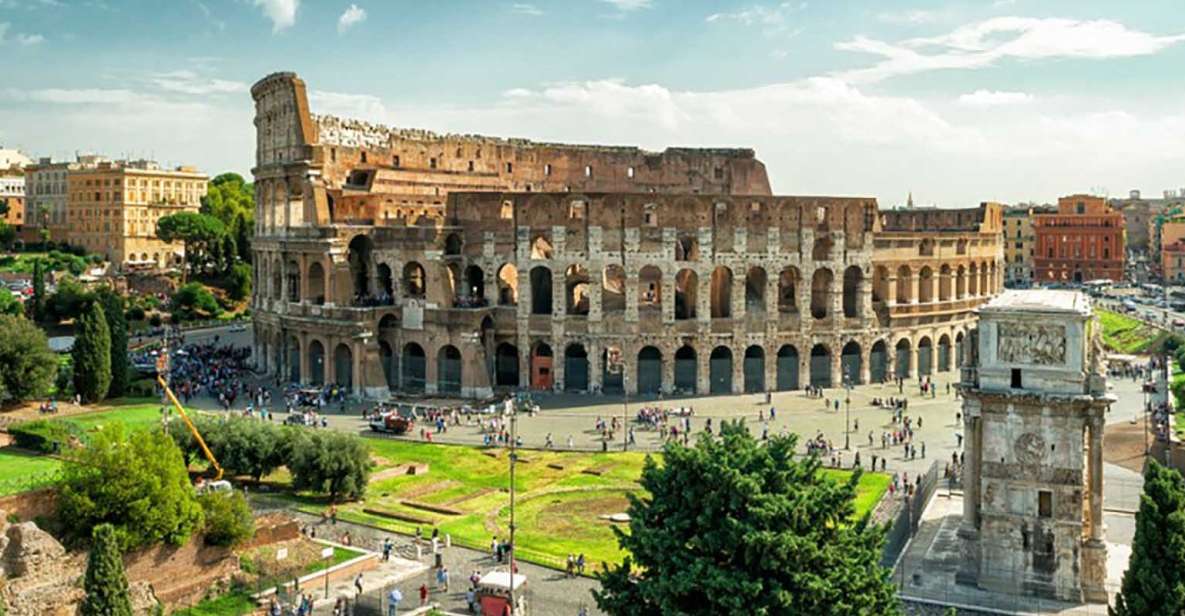
Your tour starts in a very practical spot: meet your guide outside Café/Restaurant Angelino ai Fori at Largo Corrado Ricci, 43a. The guide carries a Through Eternity sign or flag, which makes the first 5 minutes easier than it can be on some Rome tours.
This matters because time in Rome’s top sites is a real thing. The Colosseum can eat half a morning with queues, and this tour is designed to prevent that by buying tickets in advance and sending you through a separate entrance. If you’re trying to see more than one major sight in a day, this kind of planning is where the value shows up.
You’ll end back at the same meeting point too. That keeps your day simple: you’re not hunting for a new pickup zone after the final Colosseum segment. The catch is that the day is compact, so wear shoes you can trust for the walking and steps you’ll encounter.
You can also read our reviews of more tours and experiences in Rome.

Roman Forum guided walk: Via Sacra, arches, and the political center
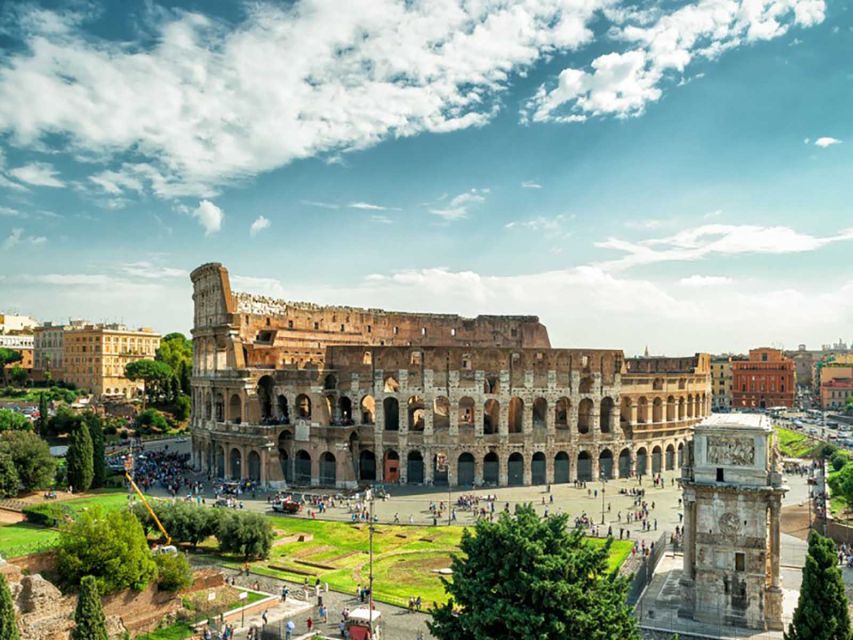
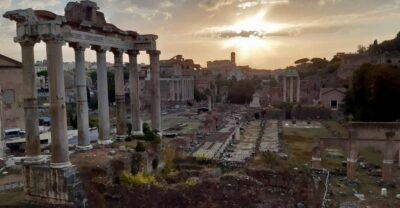
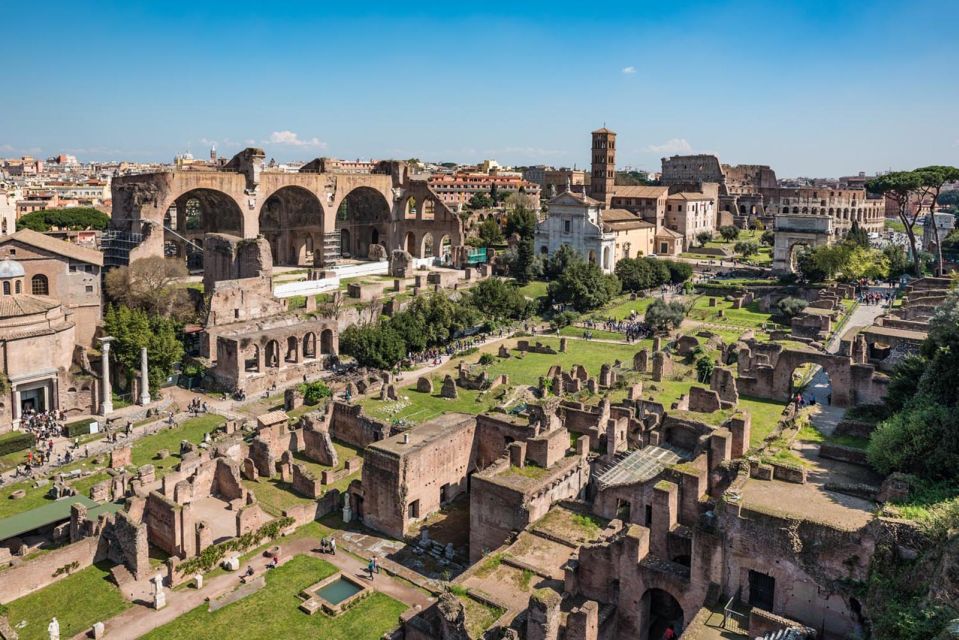
The Roman Forum is where Rome’s big ideas used to play out—laws, power, speeches, celebrations, and public life. On this tour you get a guided hour through key areas that help you understand what the ruins once did for the city.
You’ll follow the Via Sacra, the famous road many processions used. What hits you here is that the road isn’t just a name on a map: you can still see wheel-ruts, the carved marks from centuries of carts and carriages. It’s one of those details that quietly makes the past feel less abstract.
Your Forum time also includes some of the standout places and themes:
- the Senate area and surrounding gardens
- the House of the Vestal Virgins
- major basilicas such as Basilica Julia and Basilica of Maxentius
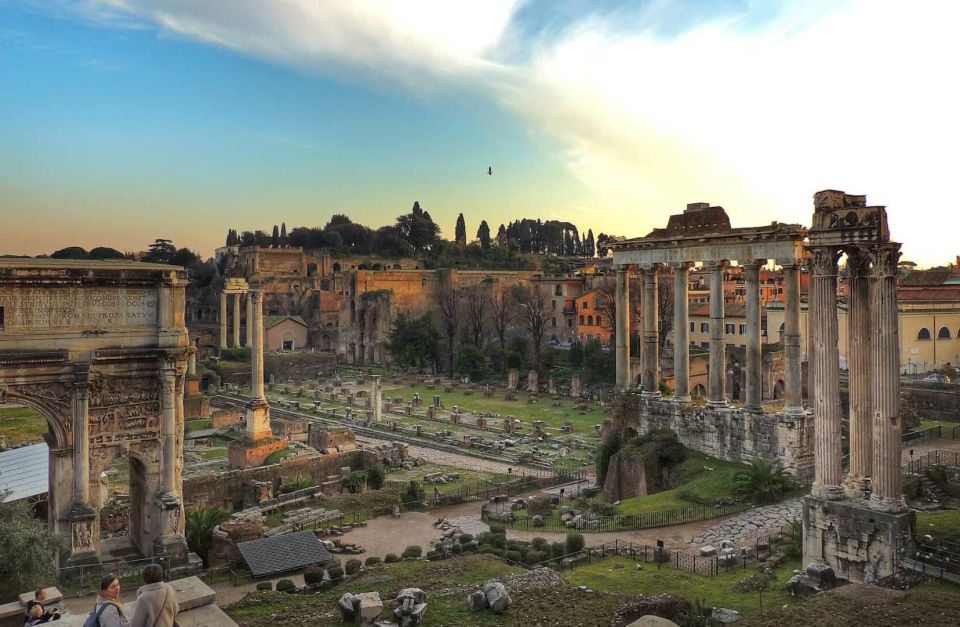
- temples including Saturn and Castor and Pollux
- the Temple of Antoninus and Faustina
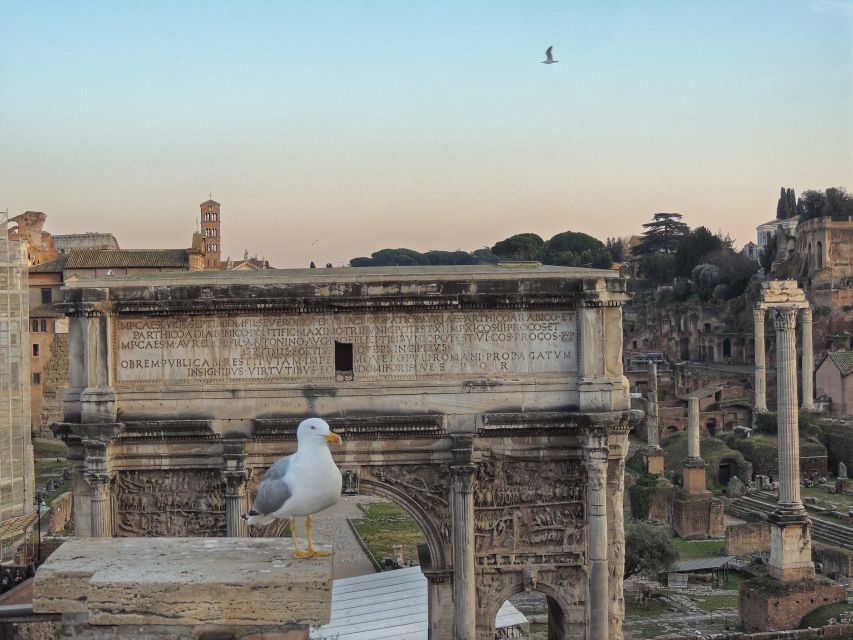
- and the triumphal arches, including the Arch of Titus and Arch of Septimius Severus
Here’s why I think this portion is worth doing with a guide instead of solo. Roman ruins can look like scattered stones until someone puts the story in your hands. You’ll get the sense that you’re walking through the “beating heart” of ancient Rome’s public life, not just passing landmarks.
A small practical note: the Forum is atmospheric, but it’s not a slow stroll. Expect a steady walking pace and moments where you stop to look, then move again. If you tend to get winded, you’ll want to take water sips early, not only after you’re tired.
Palatine Hill: Romulus legend and the emperor palaces
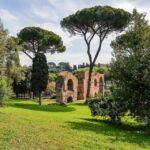
Palatine Hill is where the story changes from public life to personal power. You’ll spend an hour here on a guided route that focuses on what made Palatine so important, including the legend of Romulus and Remus and the imperial residential side of the hill.
The legend is part of the appeal: the area is tied to the story where the she-wolf supposedly found the infant twins. Even if you treat the legend as just that, the point is clear—this hill sits at the origin story layer of Rome’s identity.
What really turns Palatine into a must-see is the access to the mindset of the emperors. The tour emphasizes the opulent palaces that once lined the hill, so you’re not just looking at views—you’re connecting views to rule. From ground level, Palatine can feel like rolling ruins with great sightlines. With guidance, those sights become clues about who could watch, where power was displayed, and how elite Rome lived.
This is also a good rhythm break from the densest parts of the Forum. You still have ruins and walking, but the feel is more open. If you like your sightseeing to come with context, Palatine is one of the best places in Rome for that because it connects politics to architecture to status.
One consideration: Palatine Hill also means more uneven surfaces. If your idea of a “casual walk” is flat pavement, you’ll want to recalibrate before you start.
Colosseum arena floor: walking where gladiators stood
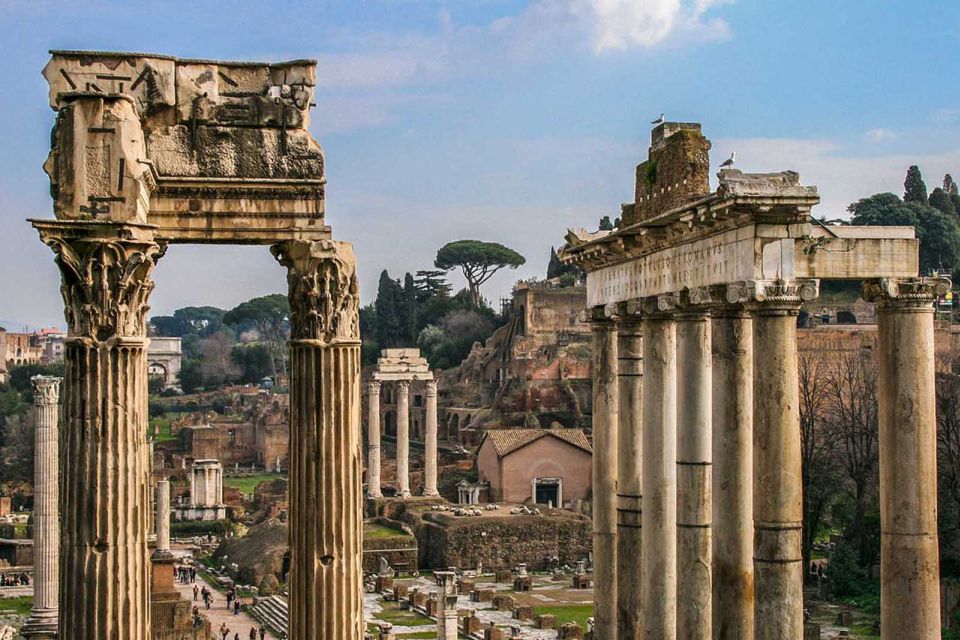
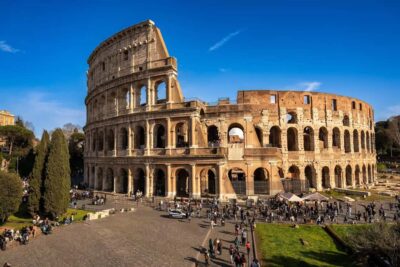
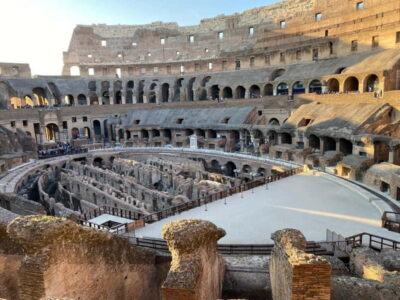
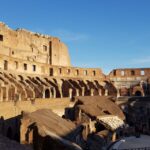
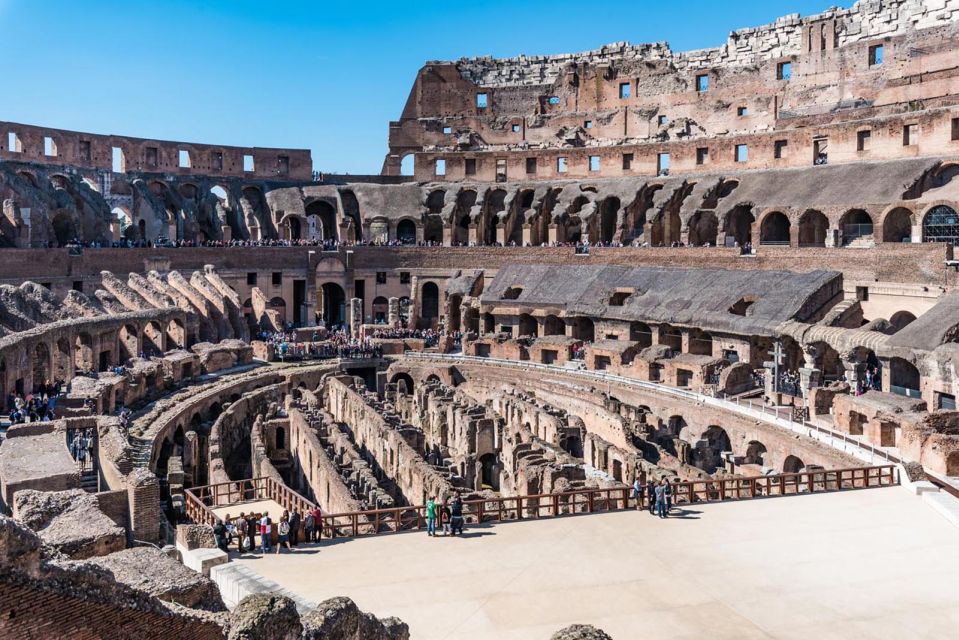
Then you reach the headline part: the arena floor visit. This access is special because arena-floor time is limited each day, and not every tour gets it. Here, you’re guided down to the area where you can walk in the same space that helped create Rome’s obsession with spectacle.
If the Colosseum is already on your bucket list, this is the part that justifies doing a guided tour instead of only buying general entry. Being on the floor gives you a direct sense of scale and sightlines—how the fighting space related to the seating, and how the performances were staged to land with maximum impact.
Your guide focuses on separating fact from fiction about gladiators and the arena. I like this approach because it keeps the Colosseum from turning into a costume party. The Colosseum’s shows were designed for entertainment, but they also served the emperor and the city’s social machinery. You’ll also see where the emperor watched from, via the imperial box concept, and get a clearer sense of why games mattered to Roman society.
Here’s something I’d call out for your expectations: even with arena access, this is still a controlled, time-limited experience. The value is not a long free-roam in the arena—it’s the expert framing plus the rare door into that space.
You’ll spend about half an hour on the arena-floor segment, which is enough time to look, listen, and take in what you’re standing on without dragging the day out. Bring your “slow attention” for this part. You’re not just ticking a box—you’re trying to picture a world that worked differently than ours.
Colosseum attic floors 3–5: seeing the structure from above
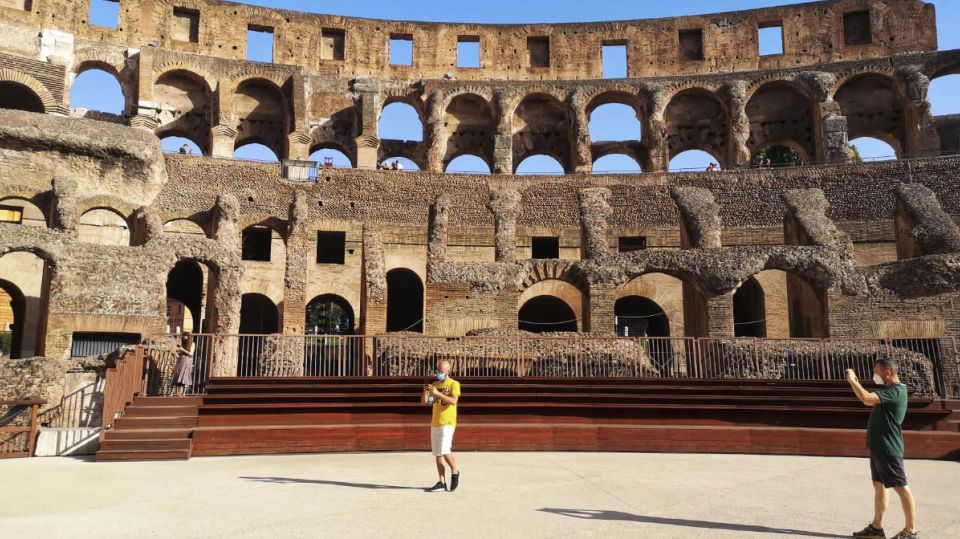
After the arena floor, you move upward to the Colosseum attic area, covering Floors 3–5 with guidance. This upper segment is where you start to see the building like an architect and a stage designer.
From above, you can better understand how the Colosseum’s structure supported spectacle. It also helps you connect the dots between what you saw below and how the whole machine worked. If you’ve ever looked at the Colosseum and wondered how everything lined up—walkways, seating layers, and the sense of movement—this portion usually answers those questions.
The tour keeps this part fairly compact (another guided half hour), but upper views do a lot of cognitive work. You leave with a stronger mental map than you arrived with, which is the biggest win from the Colosseum attic visit.
Also, since the Colosseum is famous, it can feel like background noise. Doing the arena floor first, then heading up, creates a clean before/after contrast. You see it as a system rather than a single dramatic wall.


Price and logistics: what $112.15 buys you (and what it doesn’t)
At $112.15 per person for about 3 hours, this sits in the “value if you care about the best parts” category. The biggest cost drivers here are the guided components and the exclusive arena floor access, plus the skip-the-line structure.
What you’re getting for the price:
- a live English guide
- skip-the-line entry through a separate entrance
- arena floor access
- guided time in the Forum and Palatine Hill
- headsets if your group is 6 or more
- all fees and taxes included
What you’re not getting:
- transportation to and from the meeting/end points
- food and drinks
That last point matters in Rome. A 3-hour tour can still make you hungry at the end, especially if you’re stacking it with other sights. Plan a snack or a plan for gelato nearby, but bring it only if the timing works for you. During the tour, stick with water.
Also note the rules: luggage or large bags aren’t allowed. If you’re traveling with a big backpack, you’ll want a storage plan before you come. Otherwise, you may lose time—or have to change plans.
And because access and schedules can be sensitive here, start times can shift. The tour asks you to provide a valid contact number upon booking so you receive updates if changes happen. That’s one of those small details that can save your day if the schedule shifts.
Finally, one more “Rome reality” point: due to the Jubilee, some monuments may be under restoration. The tour notes you should pay attention to any messages about possible changes. If one part is modified, it’s good to stay flexible.
Who this tour is best for
This tour is a strong match for you if you want more than the basics. If you like your sightseeing guided—especially for places where stories matter—this route gives you exactly that: Forum politics, Palatine power, and Colosseum spectacle.
It’s especially good if you’re the type who hates waiting in lines. You get the skip-the-line setup and a separate entrance, and you spend your paid time in the actual highlights rather than queue time.
It also fits solo travelers who want small-group energy. With a limit of 10 participants, you’re not swallowed by a huge crowd. You’ll hear the guide better, and headsets for groups of 6+ help if there’s any background noise.
If you’re traveling with mobility limitations, this is not suitable for wheelchair users. The tour specifically warns about steps and uneven surfaces across large archaeological sites.
Quick tips that make the day smoother
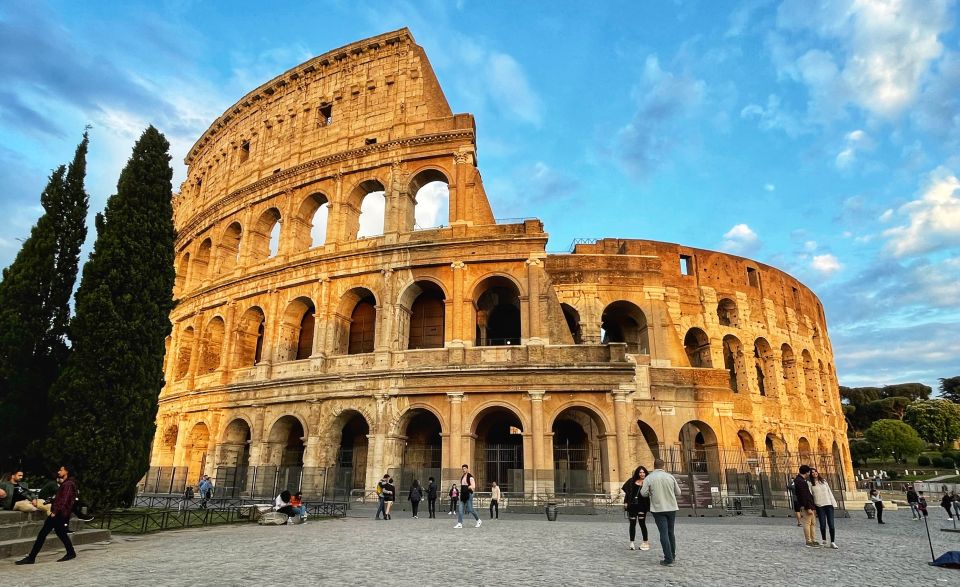
- Wear comfortable shoes you can handle on rough stone and steps.
- Bring a bottle of water and use it early—Rome walking adds up fast.
- Keep bags light. Luggage or large bags aren’t allowed.
- Arrive a few minutes early so you can find your guide sign and get oriented.
- If you get updates on timing changes, respond promptly so you don’t miss the tour.
If you’re lucky enough to get Palo as your guide, you’ll likely notice the difference right away. In past experiences, Palo has been praised for being caring, knowledgeable in the sense that the facts land clearly, and funny in a way that makes the stories easier to remember. A good guide can turn a “seen it before” monument into one you understand in new ways.
Should you book this Colosseum–Forum–Palatine tour?
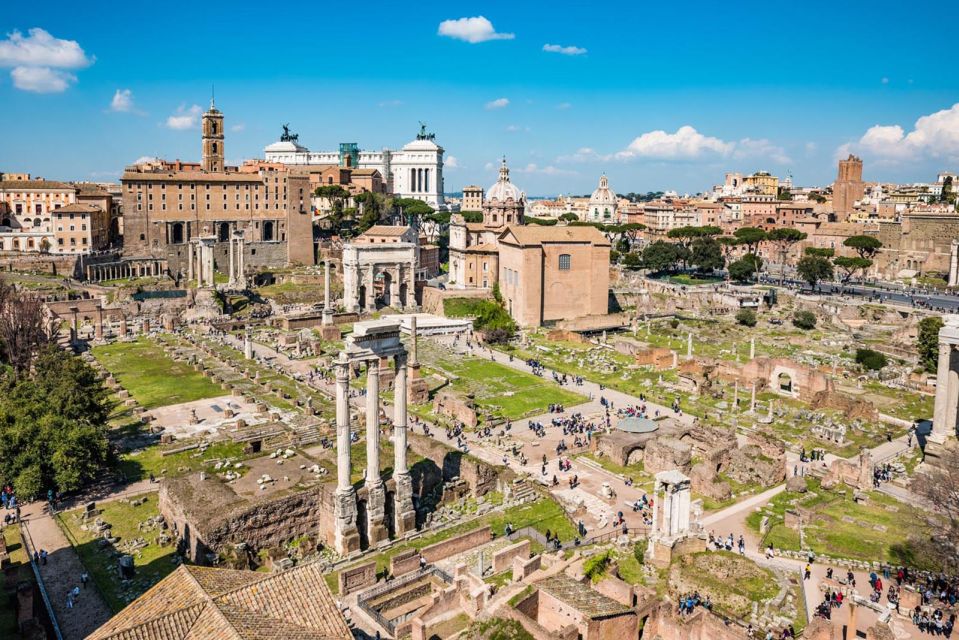
I’d book it if your priority is the full big-picture Roman experience in one compact outing. The combination of Roman Forum + Palatine Hill gives you context for the Colosseum, and the arena floor access is the part that most people can’t replicate on their own.
Skip it if you’re looking for an unhurried, purely visual day with lots of free time to wander. This is more of a guided route with structured stops, and the walking is real.
If you want the rare arena floor slot, the Forum’s major sights, and Palatine’s imperial setting—all tied together with a small-group guide—this is a solid way to spend 3 hours in Rome.