REVIEW · ROME
Rome: Cycling through Eternity
Book on GetYourGuide →Operated by Romes Ultimate · Bookable on GetYourGuide
Rome by bike feels like time travel, especially when you pedal past Via Appia Antica and the intact aqueduct views in Parco degli Acquedotti. I love how the route keeps Aurelian Walls and off-the-map green spaces in the same ride, with your guide Dimitri tying each stop into one story. One thing to plan for: it runs rain or shine unless conditions are extreme, and a short stretch of older pavement can feel a bit bumpy.
This tour works because it’s not just sightseeing. It’s pacing: short bike hops, quick explanations, and then rolling onward before crowds take over your mood. With a small group capped at 10 and an English-speaking live guide, you get real interaction without the crush.
It’s also not a casual stroll. You need basic bike comfort and a willingness to spend about 4.5 hours cycling, and it’s not suitable for people with mobility impairments, pregnant women, or children under 10.
In This Review
- Key things that make this ride special
- Entering Rome’s “Eternity” by bike (and not by bus)
- Starting point at Via dei Serpenti: the ride begins with orientation
- Colosseum viewpoint: a quick story that sets the map in your head
- Circus Maximus and the Baths of Caracalla: Rome at operating speed
- Museo delle Mura and the Aurelian Walls: seeing the city’s boundaries
- Catacombs and Via Appia Antica: the Queen of Roman Roads
- Appia Antica’s archaeological park stretch: more time on the old path
- Parco degli Acquedotti: aqueducts with room to breathe
- Parco della Caffarella and Torre Fiscale: where town meets open space
- Egeria and the water story: L’Acqua Santa di Roma
- Via Cristoforo Colombo finish: easing back toward the city’s edge
- Bikes, timing, and how to prep like a pro
- Value check: $100 for a guided ride that covers real variety
- Who should book this cycling tour, and who should skip it
- Should you book Rome: Cycling through Eternity?
- FAQ
- Where does the tour start?
- How long is the tour, and how big is the group?
- What’s included in the price?
- What should I bring?
- Does the tour run in bad weather?
- Who is the tour not suitable for?
Key things that make this ride special
- First paved-road feel: you cycle along Via Appia Antica, often described as the first paved road in the world
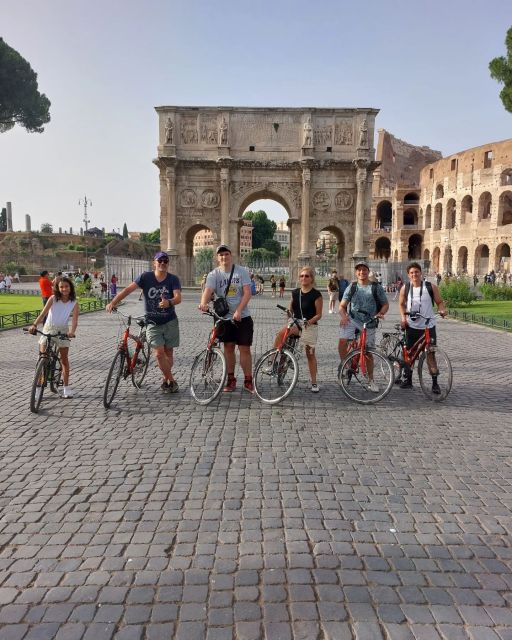
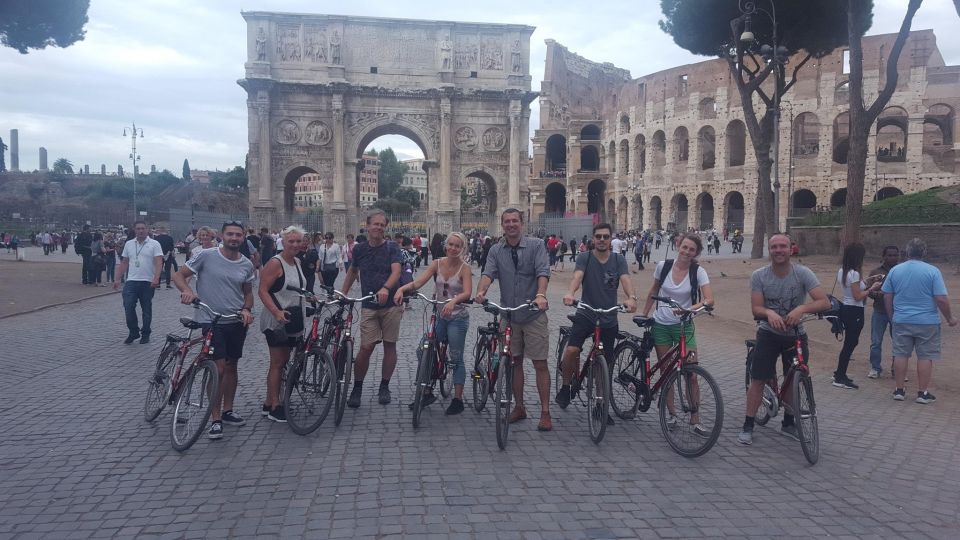
- Colosseum without the full maze: you get a view and a brief, well-aimed orientation story early on
- Big Roman infrastructure, explained on the move: Circus Maximus and the Baths of Caracalla show how Rome ran on scale
- Aurelian Walls in context: you stop at Museo delle Mura and then see what the walls meant for the city
- Catacombs by bike ride and panorama: you get the sense of the largest catacomb complex without turning it into a single long slog
- Aqueducts where they’re still standing strong: Parco degli Acquedotti brings engineering and scenery together in the outskirts
Entering Rome’s “Eternity” by bike (and not by bus)
Rome can turn into a loop of tickets, lines, and one more “must-see” photo. This ride changes the rhythm. You’re moving through historic zones and countryside parks on a bike, so you feel the distance and scale between sites, not just their names on a map.
What I like most is the mix of famous Rome touchpoints and less-trodden spaces. You start close to the Colosseum area for a quick orientation, then the route pulls you out toward major ancient corridors, catacombs, and aqueduct country—where the air and the views feel different.
This is also a tour built for learning without lectures that drag. Your guide Dimitri walks you through what you’re seeing while you’re still rolling nearby, which makes the stories stick.
You can also read our reviews of more cycling tours in Rome

Starting point at Via dei Serpenti: the ride begins with orientation
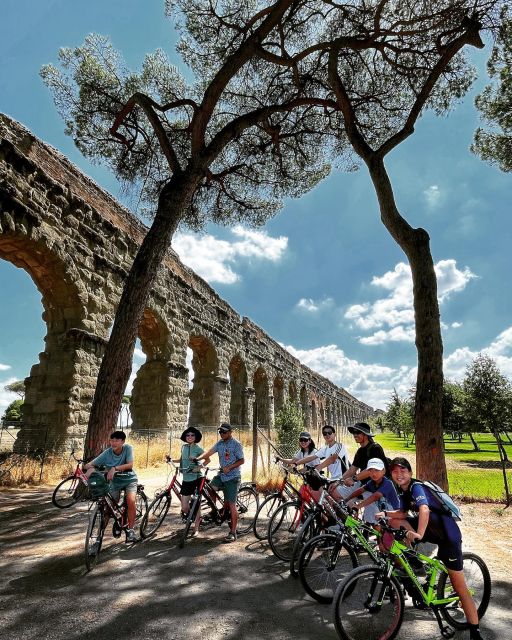
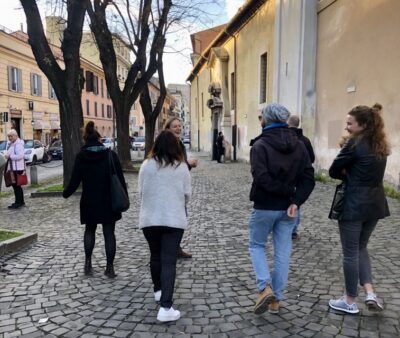
The tour starts at Via dei Serpenti, 89. That’s close enough to the core that you’re not spending the first hour commuting, but it still gives you time to get sorted before the real landmarks start.
Expect a clean start: helmets are included, and bikes are provided. You won’t be figuring out rental logistics while the city clock keeps ticking.
Colosseum viewpoint: a quick story that sets the map in your head
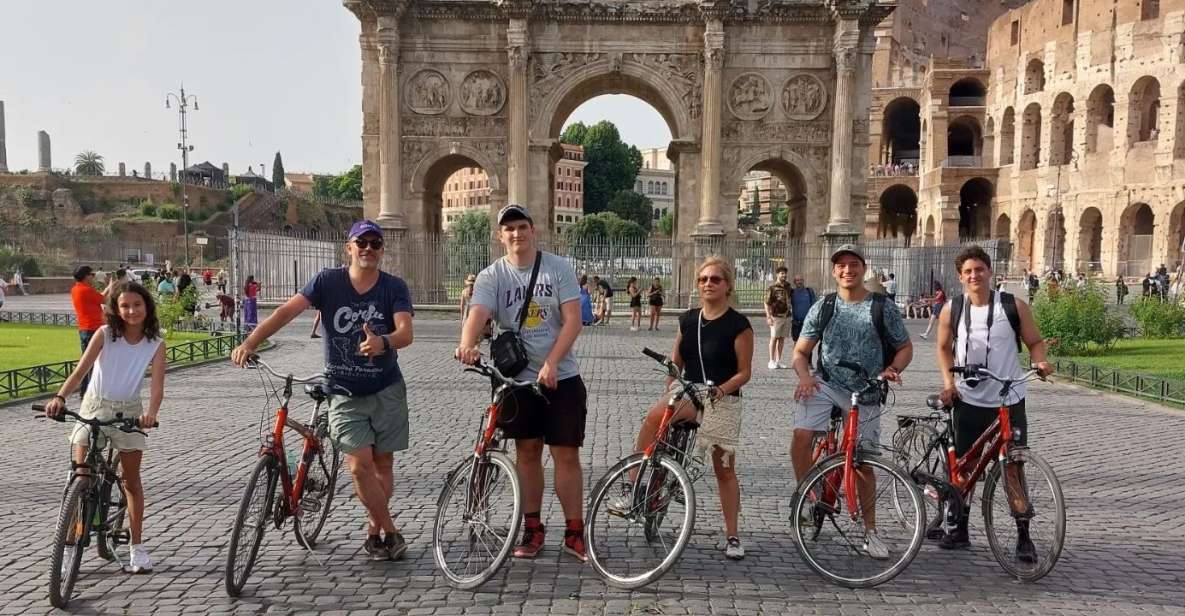
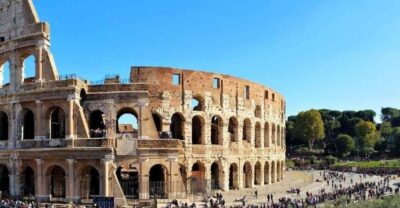
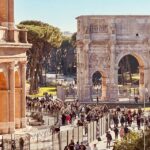
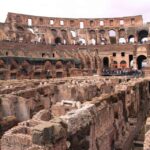
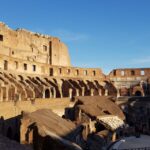
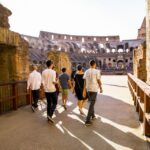
You’ll bike to a Colosseum-area viewpoint fairly early (about a 20-minute segment). The key here isn’t a long visit. It’s the brief framing: you get a story about the surrounding sites while you can actually see the Colosseum in the background.
That early context matters later, because the tour keeps referencing how Rome’s public spaces connected—stadium, baths, walls, roads, and water systems. A fast mental map beats trying to memorize every monument at the same time.
Circus Maximus and the Baths of Caracalla: Rome at operating speed
Next you’ll head to Circus Maximus for a short stop (around 10 minutes). Even when you only have a brief look, the scale hits. Circus Maximus isn’t just a place where shows happened; it’s a lesson in how Romans built mass gatherings as part of daily life and public culture.
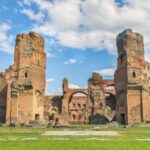
After that comes Terme di Caracalla, the Baths of Caracalla (about 10 minutes). This is Rome’s “second largest public bathroom complex” vibe—big infrastructure meant for crowds, routine, and social life. What makes it valuable on a bike tour is timing: you see it as part of a longer system rather than as a one-off stop.
A practical consideration: baths and large civic sites can be sprawling. On a bike tour, you get the essentials efficiently, not every corner.
Museo delle Mura and the Aurelian Walls: seeing the city’s boundaries
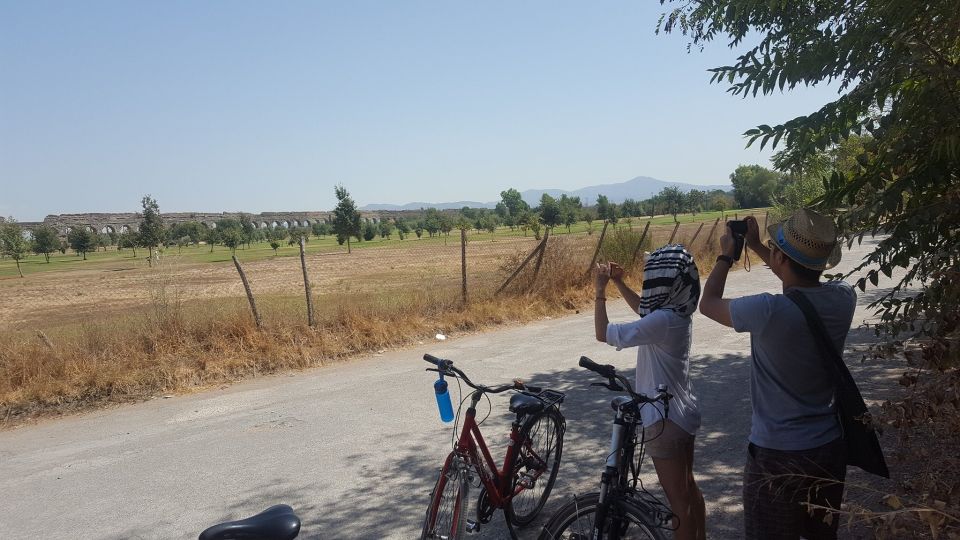
At Museo delle Mura, you’ll learn about the Aurelian Walls—Rome’s protective boundary—and how the museum ties it to the contemporary historic center. This stop takes about 20 minutes, and it works as a reset after the big public buildings.
On the ride, the walls concept becomes more tangible. You stop thinking of Rome as scattered landmarks and start seeing it as an enclosed system that shaped movement, defense, and daily life.
If you like urban planning and how cities evolved over centuries, this portion is a strong payoff. If you only want the most famous photos, it may feel more like a “thinking stop” than a monument stop.


Catacombs and Via Appia Antica: the Queen of Roman Roads
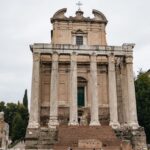
One of the most memorable parts of the ride is the time devoted to the Catacombs of Saint Callixtus and the Via Appia Antica area. You’ll spend about 30 minutes in this zone, and the tour is designed to give you more than one angle.
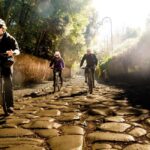
Via Appia Antica is described as the Queen of all the Roman roads, and that reputation makes sense when you’re actually pedaling along it. The surface and alignment create a different feel than modern streets. You get a sense of how roads shaped Rome’s reach and how people traveled through history.
The tour also includes a panoramic ride through what’s described as the largest catacomb complex of Rome. That matters because it keeps the experience visual. You don’t only process the site from one fixed viewpoint; you see the scale as you move past it.
A caution from practical experience with old roads: there can be a short bumpy section. It’s usually manageable, but it’s one reason you want comfortable shoes and you shouldn’t assume the ride will feel like smooth city cycling.
Appia Antica’s archaeological park stretch: more time on the old path
You’ll continue through the Appia Antica Archaeological Park for about 45 minutes. This is where the tour leans into the “cycle through eternity” promise. The value isn’t just that it’s old—it’s that the ride time lets you absorb the corridor’s atmosphere.
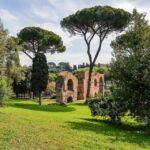
On a standard walking tour, you may rush from point to point. Here, the slow movement gives you time to notice what’s around you: walls, vegetation, open stretches, and the sense of space that makes the ancient road feel real rather than hypothetical.
If you’re the kind of traveler who likes “slow looking,” this long segment is a highlight.
Parco degli Acquedotti: aqueducts with room to breathe
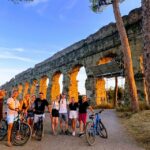
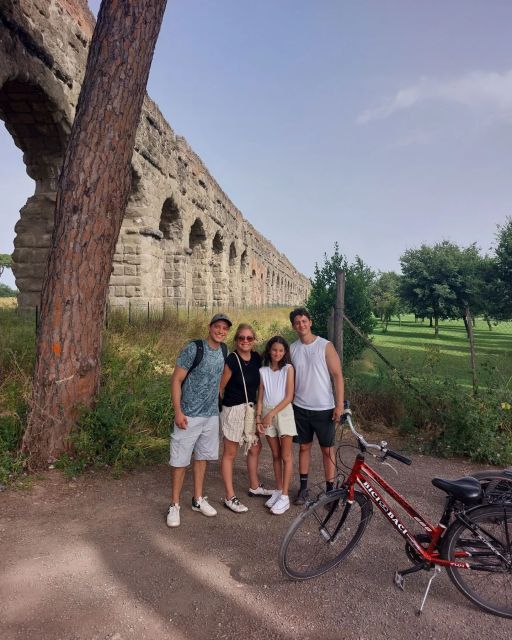
Then comes the aqueduct park: Parco degli Acquedotti, about 30 minutes. This is an outskirts setting with stunning views of natural areas and ancient Roman engineering wonders—aqueducts that are still strong enough to make you stop pedaling for a second.
This is one of those stops where you can feel the engineering behind the beauty. Water systems weren’t just practical; they were also monumental statements about power and permanence.
The cycling here also gives you what many Rome tours don’t: breathing space. You’re not stacked into the same crowd flow you see near the busiest monuments.
Parco della Caffarella and Torre Fiscale: where town meets open space
After the aqueduct section, you’ll ride into Parco della Caffarella for about 45 minutes. The point of Caffarella is simple: where urban and nature meet. You get green space with a Roman frame, so it feels like a break without leaving the city’s story behind.
Next is Parco di Torre Fiscale (about 15 minutes). This stop focuses on the history of the Fiscal Tour and its purposes. It’s a more specific, local-feeling slice of history, and it gives the day a satisfying texture—like you’re seeing Rome’s layers instead of only the headline attractions.
If you love small-but-meaningful stops, this pairing is a win. If you’re mainly chasing postcard monuments, you’ll still get them, just not in the usual order.
Egeria and the water story: L’Acqua Santa di Roma
You’ll also make a short ride segment to Egeria – L’Acqua Santa di Roma (about 10 minutes). This stop is brief, but it ties into the tour’s larger theme: water as Rome’s lifeline—from baths to aqueducts to the way places were named and remembered.
Even if you don’t know the background before you arrive, the structure of the day keeps you oriented. By the time you reach this water-focused moment, you’re already thinking about how Romans moved water through the city and beyond.
Via Cristoforo Colombo finish: easing back toward the city’s edge
To close the ride, you’ll travel along Via Cristoforo Colombo for about 20 minutes. This street connects the historic center to Ostia, the gateway of the Eternal City to the Tyrrhenian Sea.
Ending on a road link like this feels smart. It makes the day feel connected rather than random. You finish with a sense of direction—how Rome points outward.
Bikes, timing, and how to prep like a pro
The tour lasts 4.5 hours, with multiple short cycling segments that add up to a full experience. Small group size helps: you’re not waiting on a huge pack, and your guide can manage pace and safety better.
Included essentials:
- Helmets
- Bike hire
For what to bring, keep it practical:
- Comfortable shoes (older pavement can be unforgiving)
- Comfortable clothes for warm or changeable weather
- Water
- Sunscreen (especially if you’re starting earlier in hot weather)
Weather note: it runs rain or shine unless there’s extreme rain. That means you should plan for wet roads and keep an eye on footing. If you’re someone who hates cycling in rain, this is the one variable that can change your enjoyment level.
Value check: $100 for a guided ride that covers real variety
At $100 per person for about 4.5 hours, the price makes sense for three reasons.
First, you’re paying for more than narration. You’re getting a full structured route across many distinct Roman zones—public buildings, walls and museums, catacomb landscapes, and aqueduct parks—plus bike logistics handled for you.
Second, you’re paying for a small group and an English live guide. That’s a big quality factor on a bike tour, because bike pacing depends on communication and regrouping.
Third, you’re buying time in places most visitors don’t slow down for. Aqueduct parks, Caffarella open space, and the Appia corridor aren’t just “one stop.” The route gives them enough minutes to feel like an experience, not a checkbox.
If you already know you want only indoor monuments or only the very top headline sites, this might feel like less bang. But if you want Rome’s scale and systems—roads, water, walls, and public spaces—this day is priced like a good deal.
Who should book this cycling tour, and who should skip it
This tour is ideal for you if:
- you like cycling and want a break from classic walking tours
- you enjoy Rome’s infrastructure stories: roads, baths, walls, aqueducts
- you want a day that balances major landmarks with quieter countryside parks
You may want to skip it if:
- you need accessibility accommodations (it’s not suitable for mobility impairments)
- you’re traveling with young kids (children under 10 aren’t suitable)
- you’re pregnant (not suitable)
Should you book Rome: Cycling through Eternity?
Book it if you want Rome in motion: a guided bike route that links Colosseum-area context with Via Appia’s road feeling, catacomb panoramas, and aqueduct views where you can actually breathe. The small group size, helmets and bike hire, and the fact that it runs with an English live guide make it low-stress to plan.
Don’t book it if you hate the idea of riding rain or shine, or if your fitness and comfort level isn’t ready for a few older, potentially bumpy sections.
One last practical tip: start your day with sunscreen already on and water already in hand. You’ll thank yourself halfway through the longer outskirts stretches.
FAQ
Where does the tour start?
It starts at Via dei Serpenti, 89.
How long is the tour, and how big is the group?
The tour lasts 4.5 hours, and it’s limited to 10 participants.
What’s included in the price?
Helmets and bike hire are included, along with a live tour guide in English.
What should I bring?
Bring comfortable shoes and comfortable clothes, plus water. Sunscreen is also a smart idea.
Does the tour run in bad weather?
Yes, it runs rain or shine unless there is extreme rain.
Who is the tour not suitable for?
It’s not suitable for people with mobility impairments, pregnant women, or children under 10.