REVIEW · ROME
Ravenna: Private City Top Sights and Monuments Walking Tour
Book on GetYourGuide →Operated by TUI Musement · Bookable on GetYourGuide
Ravenna’s mosaics hit like time travel. In just three hours with your own dedicated guide, you’ll see the city’s most famous late Roman and Byzantine wonders in a tight, well-paced loop. I like the way this tour lines up the major mosaic stops without making you play guessing games in unfamiliar streets.
What I also love is the quality of the guidance. In particular, guides like Samantha are known for taking their time, explaining the artworks clearly, and adding the background that makes the style and symbolism click. One thing to consider: this is focused on specific sites, so if you’re hoping for extra entrances beyond those listed, you’ll need to plan those separately.
In This Review
- Key things to know before you go
- Ravenna’s Mosaic Magic: Why This City Still Feels Modern
- Piazza del Popolo Meeting Point: The 3-Hour Rhythm That Works
- San Vitale: Where Early Christian Meets Byzantine Power
- Mausoleum of Galla Placidia: Small Space, Big Effect
- Battistero Neoniano: The Baptistery Stop That Changes How You See Everything
- Sant’Apollinare Nuovo: From Mosaics to Street-Level Ravenna
- Piazza del Popolo and Dante’s Area of Silence: The Human Thread
- Price and Value: What $168.79 Buys in Real Terms
- Who This Private Ravenna Tour Is Best For
- Should You Book This Ravenna Top Sights and Monuments Tour?
- FAQ
- How long is the Ravenna private city walking tour?
- Where do I meet the guide?
- Where does the tour end?
- Is this tour private?
- What sites are included with entrance tickets?
- Is transportation included from your hotel?
- Which languages are available for the live guide?
- Does the tour run in bad weather?
- Are there entrance tickets for other venues not listed?
- Can I cancel and get a full refund?
Key things to know before you go
- A focused 3-hour loop covering the biggest mosaic power spots, end-to-end.
- San Vitale is the anchor for early Christian and Byzantine artwork.
- Galla Placidia’s mausoleum is short, special, and made for slow looking.
- Entrance tickets are included for Chiesa di San Vitale, Mausoleo di Galla Placidia, Battistero Neoniano, and Basilica Sant’Apollinare Nuovo.
- Private guide, multiple languages (English, French, Italian, Spanish, German) means you can ask real questions.
- It runs in rain unless conditions are exceptionally bad.
Ravenna’s Mosaic Magic: Why This City Still Feels Modern
Ravenna is an oddball in the best way. It’s inland, yet it stayed connected to the Adriatic through the Candiano Canal. That geographic advantage helped it swing between empires, and you can see the result in the buildings: late Roman forms mixed with Byzantine taste, all preserved in a way many places can’t match.
This matters because Ravenna’s monuments aren’t just pretty. They’re visual politics. The mosaics act like high-definition storytelling—religion, imperial identity, and authority—laid into stone and gold. In a short visit, it’s easy to look at mosaics without understanding what you’re seeing. A good guide fixes that fast, and that’s exactly what you get here.
Also, Ravenna has eight UNESCO World Heritage Sites, and these are among the most famous. This tour helps you hit the top names while keeping time realistic. You’re not trying to cover the whole city—just the sites that people come for and the context that makes them memorable.
You can also read our reviews of more walking tours in Rome

Piazza del Popolo Meeting Point: The 3-Hour Rhythm That Works
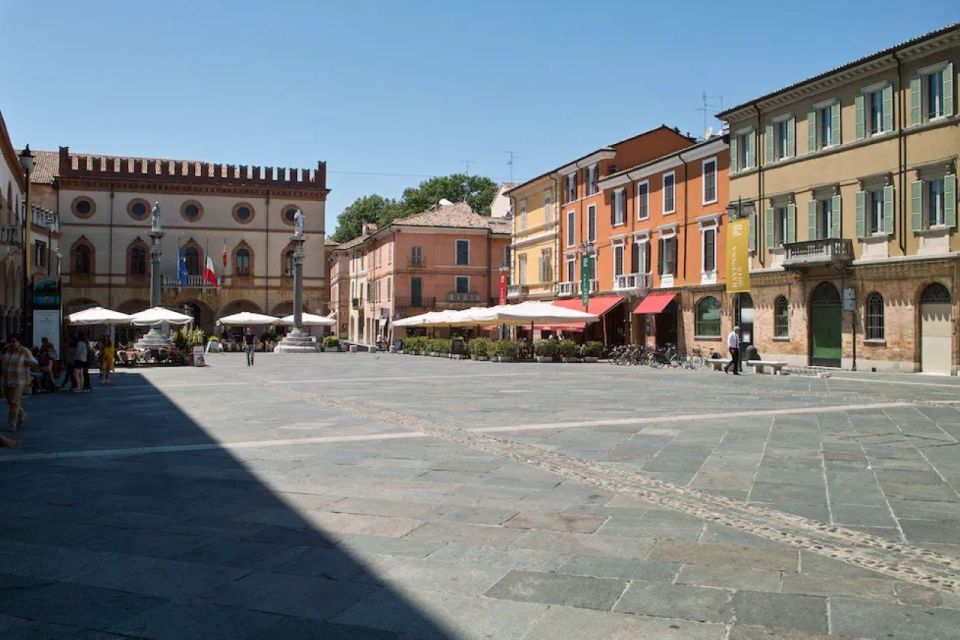
The tour starts in Piazza del Popolo. You meet your guide under the clock tower, then you walk from stop to stop and return to the same meeting point.
That “loop” style is smart. Ravenna’s center is walkable, but the landmarks are spread enough that a self-guided plan can turn into time lost at the wrong turn. Here, the order is designed to keep you moving logically: major mosaic sites back-to-back, then additional key buildings before you end where you started.
Time is also the hidden value. At three hours, you’re unlikely to get museum fatigue. Instead, you can actually pause and look up, not just pass by. You’ll want that, because mosaic walls reward stillness.
One more practical note: the tour operates even when it’s raining. If weather gets exceptionally heavy, it may be canceled with a full refund. Either way, you’re not stuck in endless uncertainty the day you planned to go.
San Vitale: Where Early Christian Meets Byzantine Power
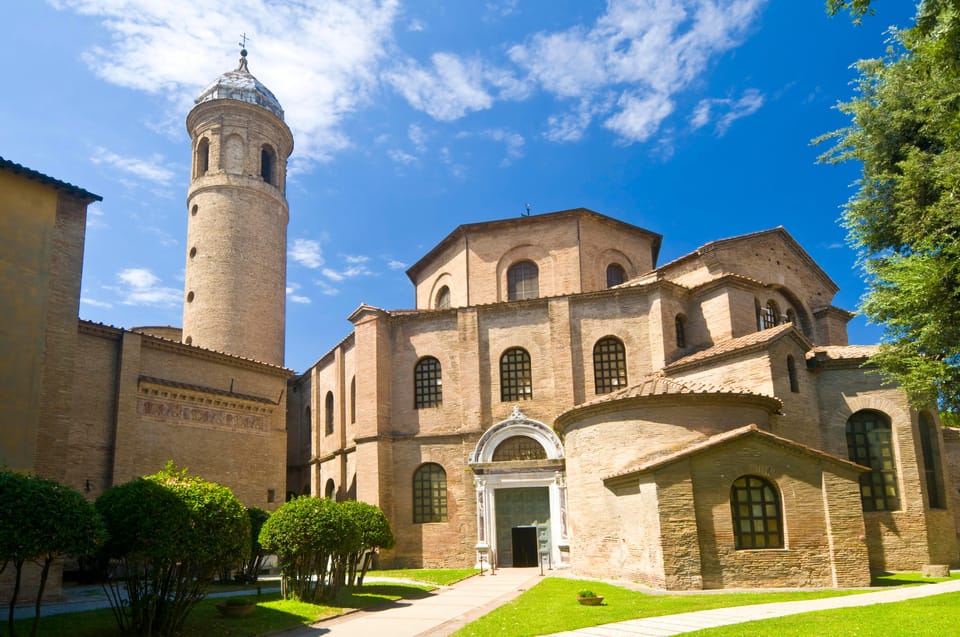
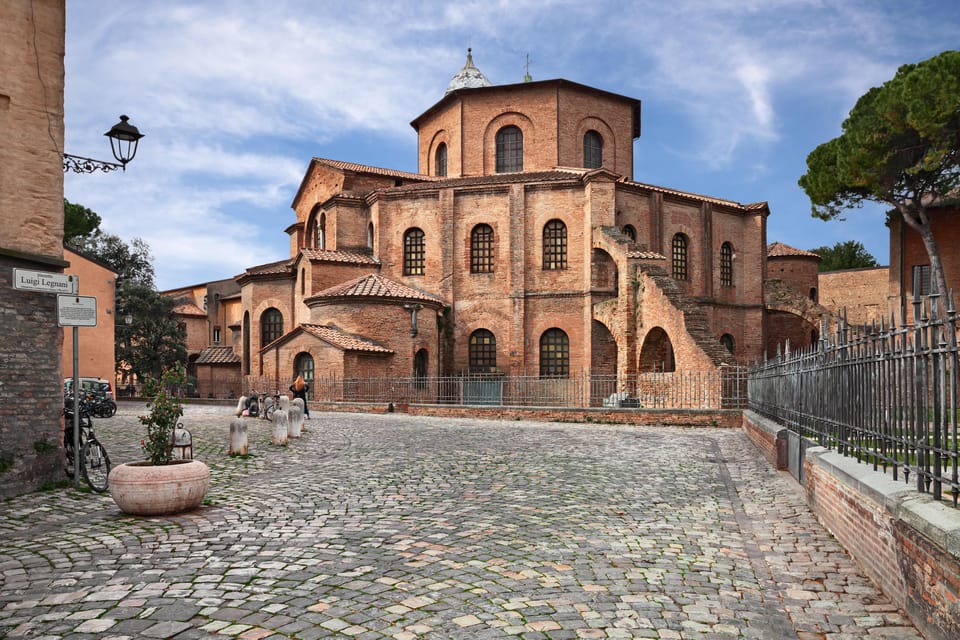
Basilica of San Vitale is usually where the Ravenna trip starts for good reason. It’s not just important because it’s famous. It’s important because it shows the look and ambition of the Byzantine world in a way you can actually see and understand.
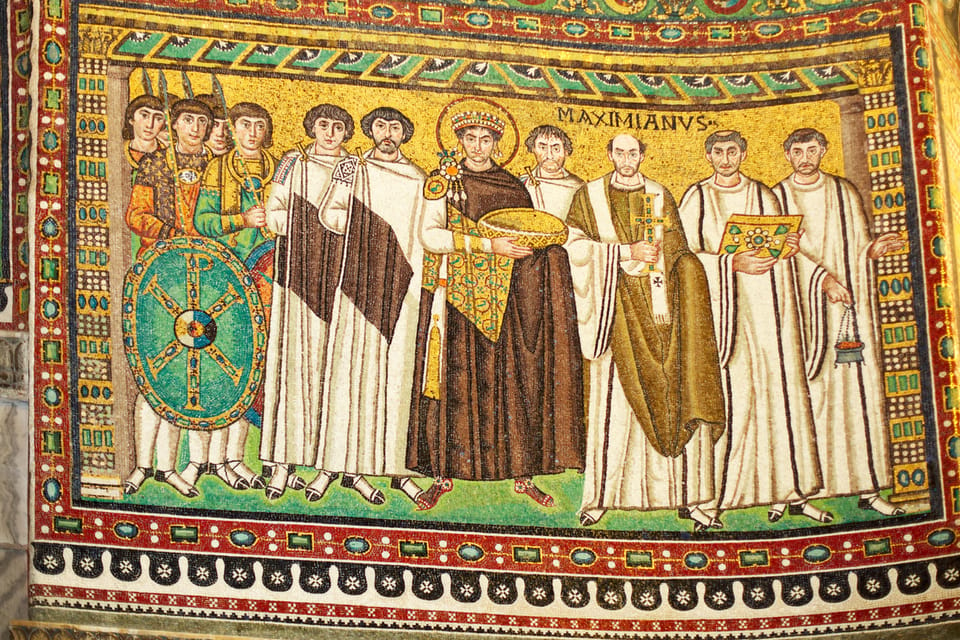
On this stop, you get a guided visit focused on early Christian and Byzantine mosaics. This is where your guide’s job becomes obvious: mosaics are full of repeated patterns, symbols, and figures that can feel flat if you’re just trying to read them at a glance. With interpretation, you start recognizing what the artists are doing—how color, materials, and composition communicate rank and meaning.
If you like religious art but don’t want a textbook lecture, this stop is built for you. You’ll get the visuals first, then the why. And if you already love art history, you’ll still appreciate the way the guide connects styles across time, instead of treating each panel like it’s unrelated to the next.
Tip for your first minutes here: don’t rush inside. Give yourself a minute to orient—what areas are most visually dominant, where your eyes keep returning, and what details seem too small until you step back.
Mausoleum of Galla Placidia: Small Space, Big Effect
Next comes the Mausoleo di Galla Placidia. This is the kind of stop that’s easy to underestimate if you only think in terms of length. It’s not “big” like a cathedral; it’s controlled and focused. That’s why it works.
A guided visit helps you slow down. The mausoleum’s mosaics and architecture create an atmosphere that’s different from the larger basilica experience. Here, the viewing rhythm is more intimate. You can spend time with the imagery without feeling like you’re fighting crowds or time pressure.
This is also where you get a feel for how Ravenna’s art carries meaning through atmosphere, not just size. The guide’s explanations make it easier to notice how the artwork supports the whole spiritual mood of the space—what’s emphasized, what’s symbolic, and what the overall message likely aimed to communicate.
One practical consideration: since it’s a dedicated site, you’ll want to be ready for a slightly more “stand and look” experience than a big walk-through. Wear shoes you can stand in comfortably.
Battistero Neoniano: The Baptistery Stop That Changes How You See Everything
The Battistery of Neon (Battistero Neoniano) is a key piece of the Ravenna mosaic puzzle, and it often helps you connect dots between earlier Roman elements and later Byzantine forms.
On this tour, you’ll get a guided visit here as well. That’s important because baptisteries are symbolic spaces. Even if you’re not focused on ritual details, you’ll still notice the structure, design choices, and the way mosaic art supports the idea of transformation—new beginnings, identity, and sacred space.
Guides also tend to explain how the imagery fits the setting rather than treating it as isolated decoration. That difference is huge. You start noticing how the building and the artwork reinforce each other.
If you want a stop that’s visually strong but also intellectually satisfying, this is it. It gives you another angle on the same cultural world, not just another photo opportunity.
You can also read our reviews of more city tours in Rome



Sant’Apollinare Nuovo: From Mosaics to Street-Level Ravenna
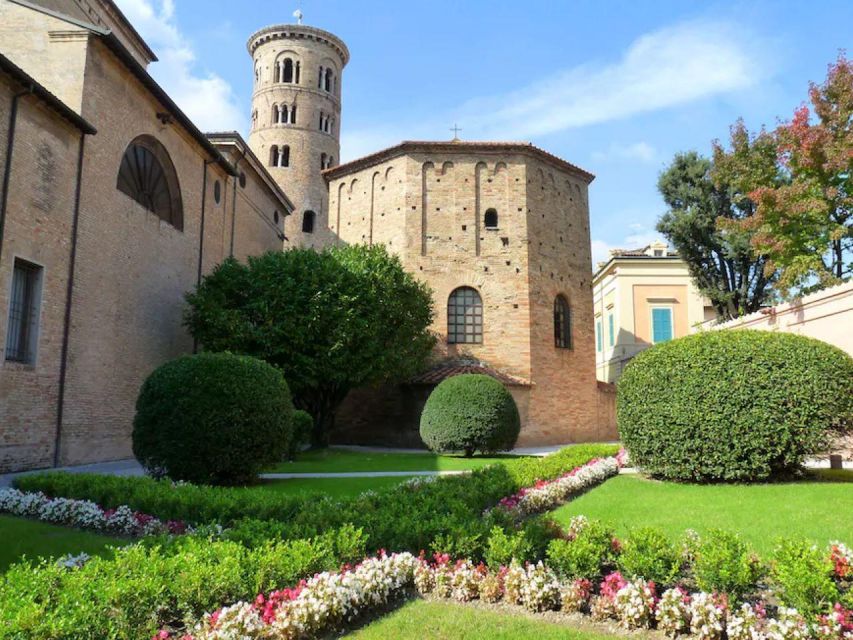
After the baptistery, you’ll visit the Basilica of Sant’Apollinare Nuovo. This is where the tour builds momentum. You’ve already seen the “wow” factor. Now the guide helps you understand how the next site continues the themes and styles you noticed earlier.
The mosaic experience here is different enough to matter. It’s not repetition for its own sake. You should feel like you’re watching the same language evolve—figures, arrangement, and messaging shifting slightly as Ravenna’s religious and artistic priorities took shape.
And then you transition out of the basilica mode into the city itself. That change is more than aesthetic. It helps you remember Ravenna is a living place, not just a list of monuments. When you step back into the streets, you get a sense of scale—how these buildings sit within daily life.
This tour also includes time for strolling through the old town and exploring Piazza del Popolo and the Dante area, often referred to as the Area of Silence.
Piazza del Popolo and Dante’s Area of Silence: The Human Thread
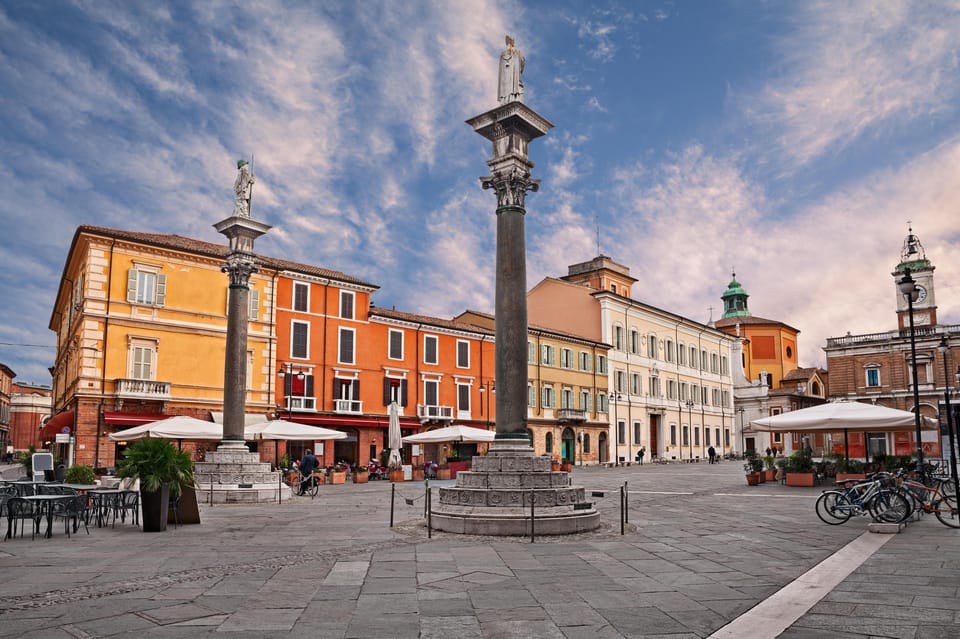
Not every Ravenna tour gives you time for the city between monuments. Here, you get a walk through older streets and a chance to pause in Piazza del Popolo.
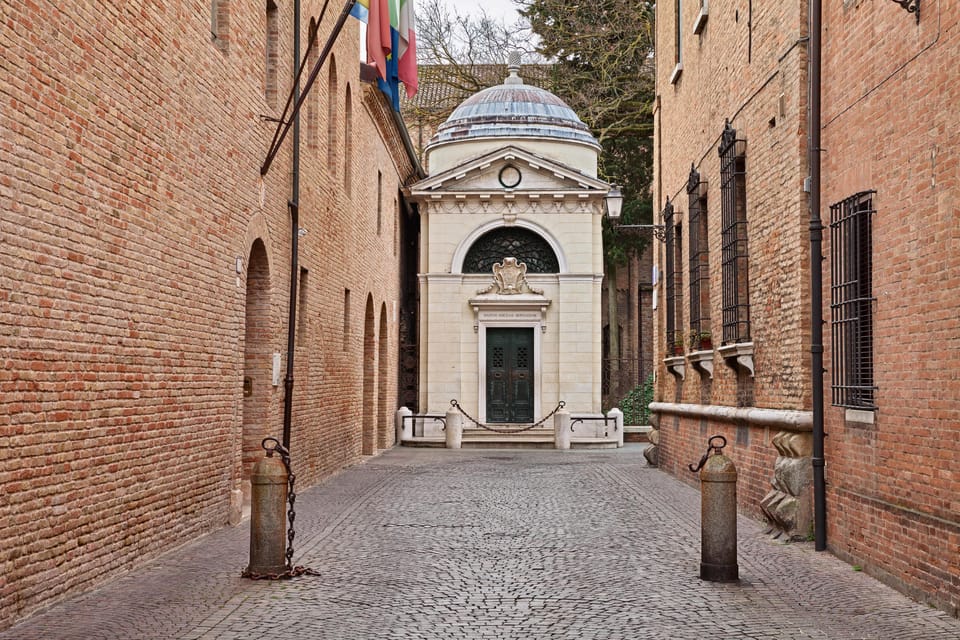
That matters because Ravenna’s monuments land harder when you’ve got a mental picture of the streets that surround them. You’ll also spend time around the Dante area, sometimes called the Area of Silence. Dante was exiled from Florence and eventually died in Ravenna on 13 September 1321. Having that historical anchor in your head changes how you experience the calm corners of the center.
Think of this part like the tour’s glue. The monuments are the substance. The walk is the context that keeps everything from feeling like separate stops.
If you enjoy literary history as much as art, this add-on makes the whole trip feel more personal and less like a checklist.
Price and Value: What $168.79 Buys in Real Terms
At $168.79 per person, this isn’t a budget choice. The key question is whether it saves you time and delivers understanding. For me, the value case is strongest because entrance tickets are included for the main mosaic buildings: San Vitale, Galla Placidia, Battistero Neoniano, and Sant’Apollinare Nuovo.
That does two things. First, it removes the hassle of ticket lines and decisions mid-trip. Second, it ensures you’ll actually get into the sites that matter most for Ravenna mosaics within your three-hour window.
You’re also paying for a private guide. That means your questions aren’t competing with a group schedule. It also means the pacing can be adjusted on the spot—especially useful in churches where your best viewing angle might depend on where people are standing.
Downside: since transportation to the meeting point isn’t included, you’ll need to handle how you reach Piazza del Popolo on your own. And the tour includes entrances only for the specified monuments, so don’t expect spontaneous extra stops.
If you’re the type who wants to see the big monuments and also understand them, this price starts to feel fair. If you just want a quick photo run, you might find it expensive for what you use.
Who This Private Ravenna Tour Is Best For
This tour fits best if you want three things at once: top monuments, art context, and efficient pacing.
- You’re here for mosaics and want them explained clearly.
- You like a guide who takes time with the story, not just quick facts.
- You prefer a private group format so you can ask questions at your own speed.
- You’re short on time and want the most recognizable Ravenna stops without building a plan from scratch.
- You’re visiting with mixed interests—art, architecture, and even Dante-related history.
It’s also a solid choice if you plan to visit other regions later. Ravenna is compact. Getting the main artistic highlights with guidance makes your broader trip feel more connected, because you’ll understand what you’re seeing rather than just collecting images.
Should You Book This Ravenna Top Sights and Monuments Tour?
I’d book it if you want Ravenna’s best-known mosaic monuments in a realistic three-hour window, with a guide who explains the artwork and its background in a way that makes you actually notice details.
Skip it if your main goal is wandering without structure or you’re hoping to add a bunch of extra unlisted attractions during the tour. Also, because the tour is priced for a private experience, it’s best for people who feel comfortable paying for guidance instead of using only guidebooks and photos.
If you’re aiming for a first-time Ravenna visit that feels meaningful instead of rushed, this is a strong, practical choice.
FAQ
How long is the Ravenna private city walking tour?
The tour lasts 3 hours.
Where do I meet the guide?
You meet at Piazza del Popolo, Ravenna, under the clock tower.
Where does the tour end?
The tour ends back at Piazza del Popolo.
Is this tour private?
Yes. It’s a private group tour with a guide totally dedicated to you.
What sites are included with entrance tickets?
Entrance tickets are included for Chiesa di San Vitale, Mausoleo di Galla Placidia, Battistero Neoniano, and Basilica Sant’Apollinare Nuovo.
Is transportation included from your hotel?
No. Transportation to the meeting point is not included.
Which languages are available for the live guide?
The live guide is available in English, French, Italian, Spanish, and German.
Does the tour run in bad weather?
The tour operates even when it’s raining. If there is exceptionally heavy rain, it may be canceled and you’ll receive a full refund.
Are there entrance tickets for other venues not listed?
No. The tour only includes entrances for the sites specified as included.
Can I cancel and get a full refund?
Yes. You can cancel up to 24 hours in advance for a full refund.