REVIEW · ROME
Rome: Trajan Markets Experience with Multimedia Video
Book on GetYourGuide →Operated by TOURISTATION · Bookable on GetYourGuide
Ancient Rome, mapped for your phone. This experience pairs a 25-minute multimedia video with an easy way to explore the Trajan Markets, the empire’s commercial hub.
I especially love two things: the market-area architecture, including the semi-circle layout, and the way the Fori Imperiali Museum fills in the human story with artifacts from multiple ancient cultures. One thing to consider: you’re mostly on your own here (no guided tour), so you’ll want working headphones and a charged smartphone to get the most from the app.
In This Review
- Key highlights worth your attention
- Starting With the 25-Minute Rome Video (So the Stones Make Sense)
- Meeting at Touristation Aracoeli: Easy to Find, Fast to Start
- Trajan Markets: The Roman Empire’s Shopping Mall, Rebuilt in Your Head
- The Imperial Forums Nearby: Trading and Meeting Points by Name
- Fori Imperiali Museum: Artifacts That Make Rome Feel Multi-Cultural
- The App Audioguide: Your Secret Weapon in a Self-Guided City
- What You’ll Do in a Typical 1-Day Visit (Without Feeling Rushed)
- Price and Value: Why $37 Can Feel Worth It (or Not)
- Practical Tips That Make the Day Go Smoothly
- Who Should Book This Trajan Markets Experience?
- Should You Book?
- FAQ
- How much does the Rome: Trajan Markets experience cost?
- How long is the experience?
- What’s included besides entry to the archaeological sites?
- Do I need to bring headphones?
- Is food or drinks included?
- Is there a guided tour included?
- Where do I meet the group?
- Is this experience suitable for wheelchair users?
- What’s the cancellation policy?
Key highlights worth your attention
- 25-minute Rome film that reconstructs major monuments so you can place what you’re seeing
- Trajan Markets: the Roman Empire’s shopping-and-commerce complex, with a distinctive semi-circle design
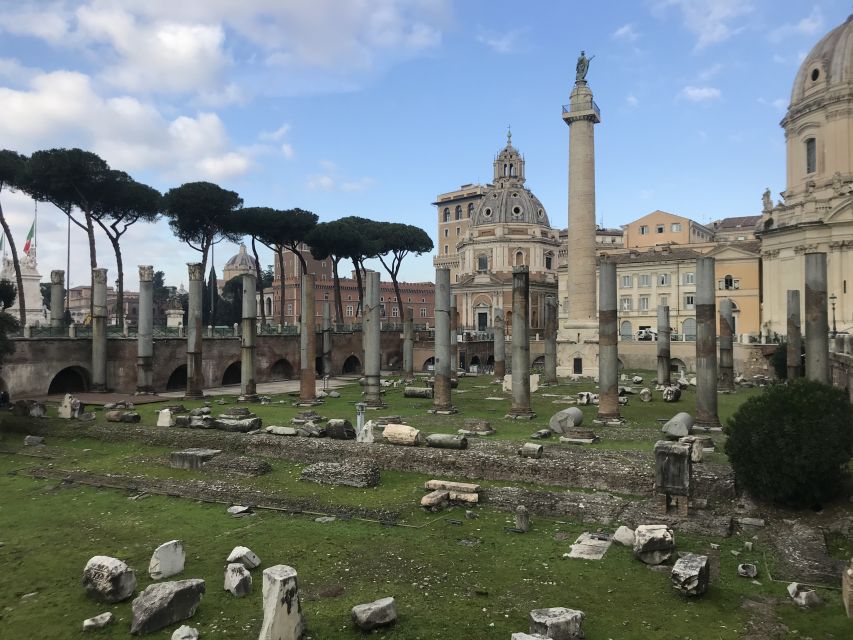
- Forum connections through the surrounding imperial area (Caesar’s, Augustus’, Nerva’s Forum, and the Templum Pacis)
- Fori Imperiali Museum artifacts collection, including amphorae and finds tied to different civilizations
- 17th-century cistern ruins as a reminder this area kept changing roles long after Rome
Starting With the 25-Minute Rome Video (So the Stones Make Sense)
Before you even step into the ruins, you start with a 25-minute multimedia video on Ancient Rome. This isn’t just a history lecture. It’s built to give you a mental sketch of what the area looked like when it was functioning—especially the big, recognizable monuments of the city.
For me, the value here is timing and clarity. When you show up in the Imperial area, you can easily get lost in fragments: walls, arches, bits of paving, and museum rooms. The video helps you connect those pieces to an actual place in time.
It also sets you up for the main idea of your visit: these were not empty ruins. Trajan Markets were part of the Roman world of daily buying, selling, and meeting. The surrounding imperial forums were the social and political heartbeat, too.
Tip: treat the video like the “glasses” for the day. Then when you walk outside, you’ll notice more than just texture and stone.
You can also read our reviews of more tours and experiences in Rome.


Meeting at Touristation Aracoeli: Easy to Find, Fast to Start
Your meetup is at the Touristation Aracoeli Office, Piazza d’Aracoeli 16, near Piazza Venezia. Look for the orange “Touristation” flags, and there’s a fountain right in front of the office entrance.
This matters because the starting point is in a dense area. Rome isn’t designed for rushing, and you’ll be happier if you arrive a few minutes early. Once you’re checked in, you get assistance at the meeting point, but the rest of the day is self-guided—so getting oriented at the start pays off.
Trajan Markets: The Roman Empire’s Shopping Mall, Rebuilt in Your Head
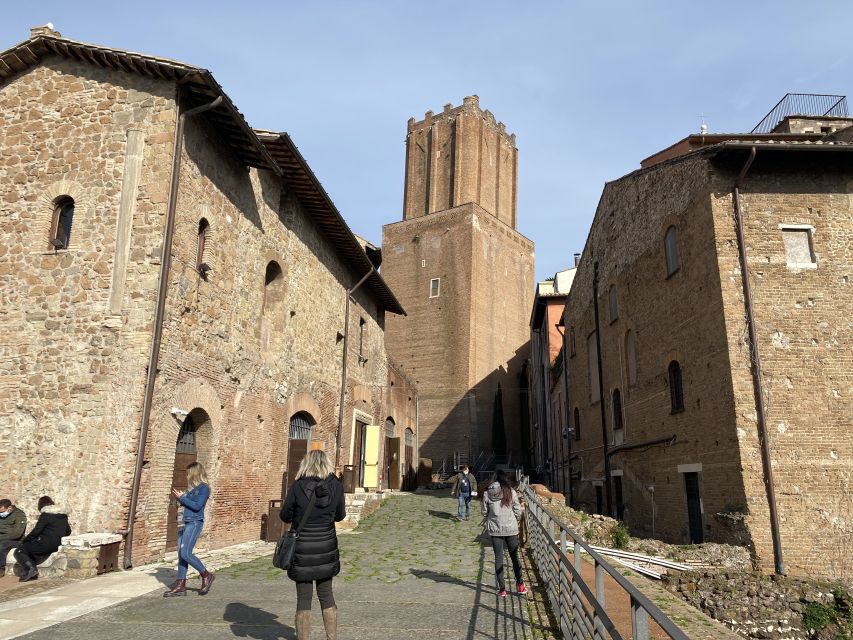
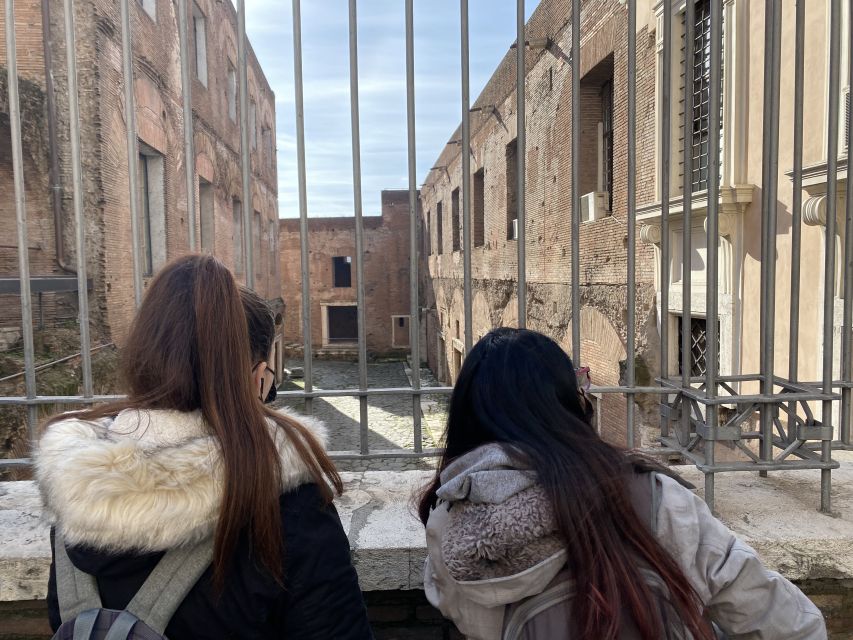
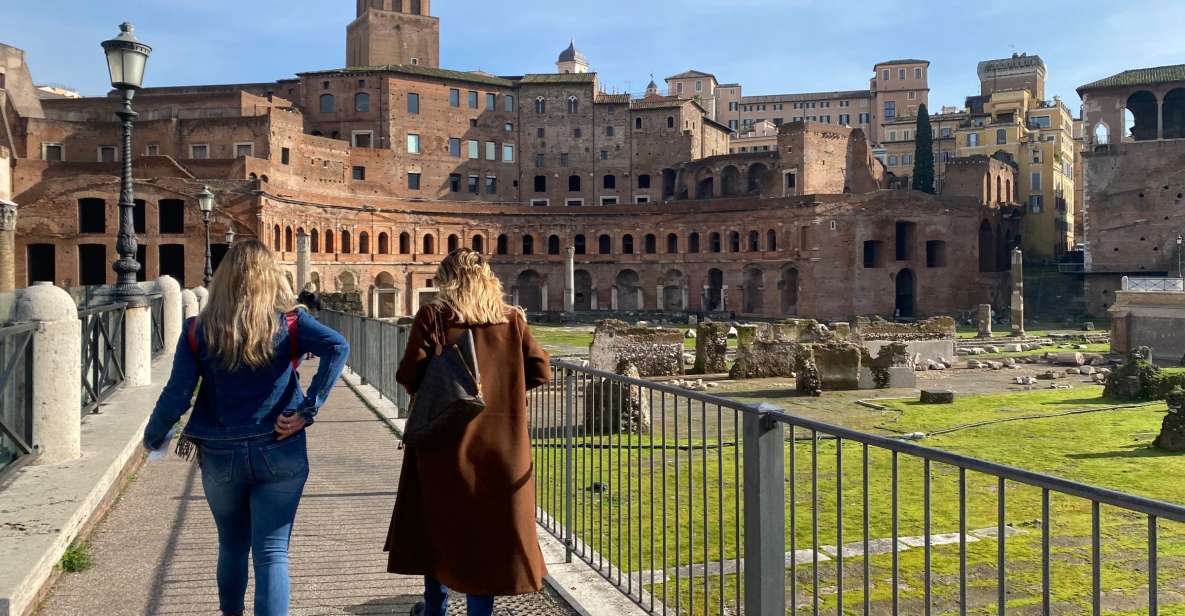
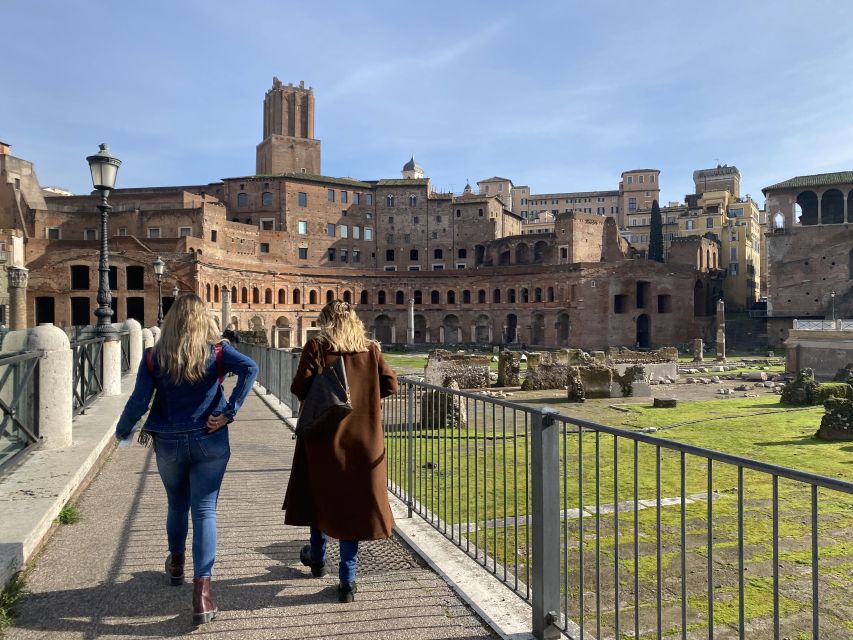
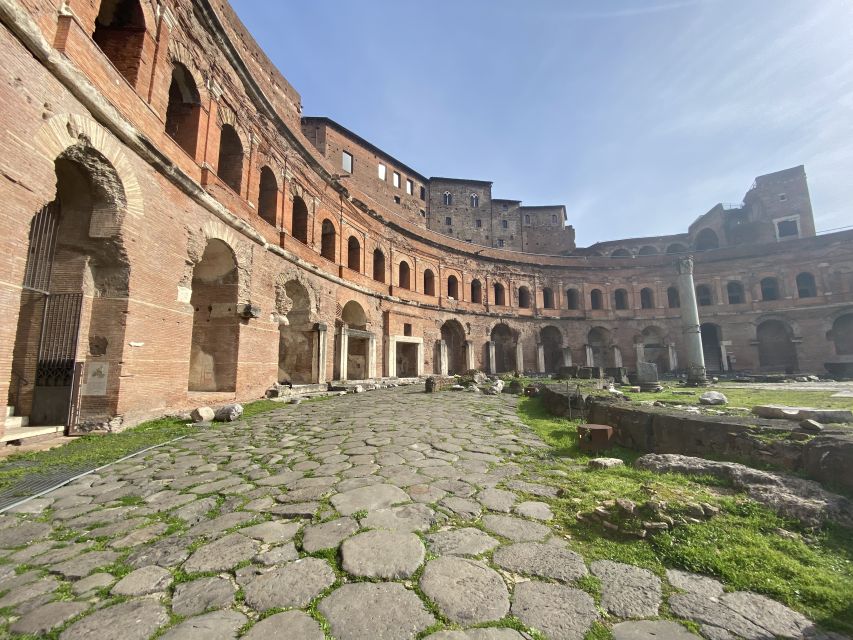
Trajan Markets are often described as a trading center, but the way you’ll experience them is more concrete than that. You’re walking through an archaeological complex that once functioned like a commercial mall for an empire-scale city.
The most memorable design detail is the overall semi-circle shape. That curved layout helps you understand the space as an organized destination, not random remains.
Here’s what I’d focus on as you explore:
- Think “commerce first.” This is where goods and money moved through the city’s day-to-day rhythm.
- Watch for how the complex connects visually to the imperial landscape around it. The markets weren’t isolated. They sat inside a bigger system of power, public spaces, and movement.
- Notice the different layers of use across time. Even if the Roman function is the headline, you’ll feel later history in the ruins.
There’s also a neat “variety of purpose” clue in the area: you can see the remains of a 17th-century cistern. It’s a small detail, but it’s the kind that makes the site feel real. The location kept getting reused because it was valuable, not because the original buildings magically stayed relevant forever.
The Imperial Forums Nearby: Trading and Meeting Points by Name
The experience also guides you through the surrounding imperial forums conceptually, with named locations tied to commerce, public life, and gathering.
You’ll learn about trading and meeting points connected to:
- Caesar’s Forum
- Augustus’ Forum
- Nerva’s Forum
- Templum Pacis
Even if you’re not standing inside every single forum structure at full size, the point is understanding how the markets fit into the city’s routine. A shopping complex in today’s terms is more than retail. In Rome, it was tied to status, politics, and the public calendar.
For you, that means the visit can feel like more than one stop. It becomes a map of how the city worked—how people moved, where they paused, and where they came together.
Fori Imperiali Museum: Artifacts That Make Rome Feel Multi-Cultural
After the outdoor archaeological portion, you move into the Fori Imperiali Museum, where you’ll see artifacts from different ancient civilizations, plus amphorae.
I like museum sections like this because they give you a counterweight to the ruins. Outdoors, your attention gets pulled by structure and scale. Indoors, you get to slow down and look at objects—what people actually used and carried.
The museum collection is described as spanning multiple ancient cultures, which is a helpful reminder. Rome wasn’t only Roman. It absorbed, traded with, and collected from many worlds. Seeing amphorae adds another layer: these containers hint at transport and supply chains, meaning the commercial theme of Trajan Markets stays in your head even when you’re inside.
You may also spot details focused on craftspeople—one account highlighted the presence of artificers in the museum section. If that’s your kind of history, you’ll likely enjoy how these objects connect back to work and production, not just emperors and monuments.





The App Audioguide: Your Secret Weapon in a Self-Guided City
This isn’t a guided tour with a person leading you step by step. Instead, you get a downloadable city app audioguide for your smartphone, described as featuring more than 170 points of interest.
That’s a big deal because the area around the forums can be confusing if you rely only on what you can read on your feet. The app lets you listen as you move, turning “I’m staring at stones” into “I’m connecting stones to stories.”
A practical thought: bring headphones, and make sure your phone is charged. The experience instructions explicitly call for both. Rome chews through battery life fast—photos, maps, and heat are all at play.
If you’re the type who likes structure, the app will feel like training wheels. If you hate spending time managing a phone, you might find the audio prompts add friction. But even then, it’s still a strong tool for understanding what you’re seeing.
What You’ll Do in a Typical 1-Day Visit (Without Feeling Rushed)
You’re looking at a 1-day experience. You start with the video, then you explore Trajan Markets, and you finish with the Fori Imperiali Museum.
A good pacing mindset:
- Use the video to create your “big picture.”
- Spend time on the semi-circle layout and the commercial logic of the complex.
- Look for the cistern remains to remind yourself this place changed over centuries.
- In the museum, shift to object-level attention—especially amphorae and the cross-civilization collection.
You don’t need to sprint, but you should give yourself enough time to switch from outdoors to indoors without rushing through either.
Also note a reality check: a lot of the site can be seen from the street. That’s helpful if you’re short on time, but it also means the most compelling understanding comes from going into the archaeological complex and museum spaces rather than just scanning from outside.
Price and Value: Why $37 Can Feel Worth It (or Not)
The price is $37 per person for a 1-day experience, and what you’re actually getting is a bundle:
- the 25-minute multimedia video
- Trajan Markets entrance
- Fori Imperiali Museum entrance
- the downloadable app audioguide with 170+ points
- assistance at the meeting point
Here’s how I think about value. If you’re the kind of visitor who uses multimedia and audio effectively, this is a cost-efficient way to combine three layers: orientation (video), site exploration (markets), and context (museum artifacts). The app also extends your day’s usefulness beyond the museum room—meaning you’re not just paying for entry tickets.
If you prefer a classic guided narrative led by a real-time human guide, the lack of a guided tour could reduce your satisfaction. You’ll get information, but you’re driving the experience yourself.
And if you’re sensitive to ticketing setup time, give yourself breathing room at the start of the process. One negative experience described ticket printing that took about 15 minutes and felt confusing. You can avoid stress by not showing up at the last possible moment.
Practical Tips That Make the Day Go Smoothly
A few details can make or break your comfort level on this kind of Roman day:
Bring:
- Passport or ID card
- Comfortable shoes
- Headphones
- Charged smartphone
Not allowed:
- pets
- weapons or sharp objects
- luggage or large bags
- drones
- alcohol and drugs
- sprays or aerosols
- glass objects
Also, this experience isn’t suitable for wheelchair users. If accessibility is a concern for you, you’ll want to look for alternatives in the area that match your mobility needs.
My advice: wear shoes you can walk in for hours on uneven surfaces, and plan for phone use. The app is a key part of how you’ll experience the site.
Who Should Book This Trajan Markets Experience?
Book it if you want:
- a structure-light but information-rich visit
- a self-paced approach with audio help
- the commercial history angle of Rome, not just monuments
- museum time that focuses on objects and artifacts (including amphorae)
You might want to skip it or rethink if:
- you hate relying on smartphone apps during sightseeing
- you’re expecting a full guided tour with a person explaining everything
- you need accessibility support for wheelchair use
This is a great match for curious independent travelers, history lovers who like to piece together the story, and anyone who wants to understand the Roman city as a living machine of commerce and public life.
Should You Book?
For many visitors, yes, it’s a solid book. The combo of the 25-minute orientation video, real entrances to Trajan Markets and the Fori Imperiali Museum, and the app-based audio guidance makes the price feel reasonable—especially if you’ll actually use your headphones and listen as you walk.
If you know you’re the kind of traveler who wants a human guide talking nonstop, you may feel the self-guided format is too hands-off. But if you’re comfortable exploring with audio support, you’ll likely leave with a clearer sense of how Rome’s imperial world worked—through trade, meeting places, and the objects people handled every day.
FAQ
How much does the Rome: Trajan Markets experience cost?
It costs $37 per person.
How long is the experience?
It’s valid for 1 day.
What’s included besides entry to the archaeological sites?
You get a 25-minute Ancient Rome multimedia video presentation, entrance to Trajan Markets, entrance to the Fori Imperiali Museum, a downloadable city app audioguide with points of interest, and assistance at the meeting point.
Do I need to bring headphones?
Yes. Comfortable shoes and headphones are listed under what to bring.
Is food or drinks included?
No, food and drinks are not included.
Is there a guided tour included?
No, a guided tour is not included.
Where do I meet the group?
Meet at the Touristation Aracoeli Office at Piazza d’Aracoeli 16, near Piazza Venezia. Look for the orange “Touristation” flags by the fountain in front of the office entrance.
Is this experience suitable for wheelchair users?
No. It’s not suitable for wheelchair users.
What’s the cancellation policy?
You can cancel up to 24 hours in advance for a full refund.