REVIEW · ROME
From Rome: Florence and Pisa Full-Day Small-Group Tour
Book on GetYourGuide →Operated by Welcome Italy · Bookable on GetYourGuide
One day, two Italy highlights.
This Rome to Tuscany tour ties together Pisa’s Piazza dei Miracoli and Florence’s Renaissance masterpieces, with practical help from a tour assistant and official guides (I noticed the same praise for guides like Giuseppe and Giovanni). I especially like the skip-the-line Accademia entrance for Michelangelo’s David, and the way the whole day is structured so you still get meaningful time in both cities. The main trade-off is that Pisa’s Leaning Tower is seen from outside, and the pace is brisk for a full 12-hour day.
What makes it interesting is the full journey across Tuscany, not just the stops. You’ll ride through the green valley of the Tiber, past the Apennines, and by the vineyards of Chianti before you ever reach Pisa. Then Florence hits with medieval streets, big-name art, and a finish at Piazzale Michelangelo with those classic views over the Arno, Ponte Vecchio, and the Duomo.
I also like that pickup and logistics are handled for you, starting with hotel pickup inside the Aurelian Walls (with a reminder to wait in the lobby about 10 minutes early). Rain or shine is the rule, so you should plan for weather, comfortable shoes, and a long sitting day on the road.
In This Review
- Key takeaways before you go
- Rome to Tuscany: the road trip parts you’ll actually remember
- Pisa’s Piazza dei Miracoli in a tight window
- Florence first impression: medieval streets plus a real meeting point
- Accademia Gallery: how to see David without burning time in line
- Florence landmarks beyond the postcard: dome views and bell-tower moments
- Piazzale Michelangelo at day’s end: the payoff view
- Price and value: what $303.60 is really buying you
- Who this tour suits best (and who should skip it)
- Should you book this Rome to Pisa and Florence tour?
- FAQ
- How long is the Rome to Pisa and Florence full-day tour?
- Where do pickup and drop-off happen?
- What will I see in Pisa?
- Can I enter the Leaning Tower on this tour?
- Is lunch included?
- Is the Accademia Gallery ticket included, and is there skip-the-line access?
- How long is the guided portion in Florence?
- Is this a small-group tour?
- What languages are available for the live guide?
- Is the tour wheelchair accessible or suitable for respiratory issues?
- What’s the weather policy?
Key takeaways before you go
- Skip-the-line Accademia: you get access to see Michelangelo’s David without the worst waiting.
- Small-group feel: the tour is designed for a manageable group size, sometimes very small.
- Pisa included, tower outside: you’ll see the Baptistery, Cathedral, and the Leaning Tower externally from Piazza dei Miracoli.
- Two Florence moments: a guided Florence walk plus extra time for wandering, photos, shopping, and a great viewpoint finish.
- Guides do more than recite dates: multiple named guide teams are praised for humor, clarity, and helpful context.
- Long day logic: you’re moving for 12 hours, so expect pacing—not a slow art stroll all day.
Rome to Tuscany: the road trip parts you’ll actually remember
This is a full-day outing, so the bus ride matters. You leave Rome and head into Northern Tuscany, crossing landscapes that change from river valley scenery toward the slopes of the Apennines. Along the way, you pass by the vineyards of Chianti, which gives the day a true “we’re traveling through Italy” feeling, not just a two-city checklist.
The vehicle is an air-conditioned minivan, and pickup is built around your base in Rome. Hotel pickup is included if you’re inside the Aurelian Walls, and you’re asked to be ready in the lobby about 10 minutes before the scheduled pickup time. In real terms, this is one less thing you have to coordinate with maps, tickets, and transfers after a long morning.
You also get an English-speaking tour assistant for the whole trip. That matters more than you might think on a day like this, because it helps keep transitions smooth—getting you from parking to meeting points, nudging the group along on timing, and answering questions so you’re not stuck decoding signage. Some guides are specifically praised for being punctual and attentive to comfort, including routine breaks for refreshments and restrooms.
And yes, it’s rain or shine. If you’re doing this in shoulder season, bring a light rain layer. The schedule is designed to continue even with bad weather, so your comfort gear pays off.
You can also read our reviews of more tours and experiences in Rome
Pisa’s Piazza dei Miracoli in a tight window
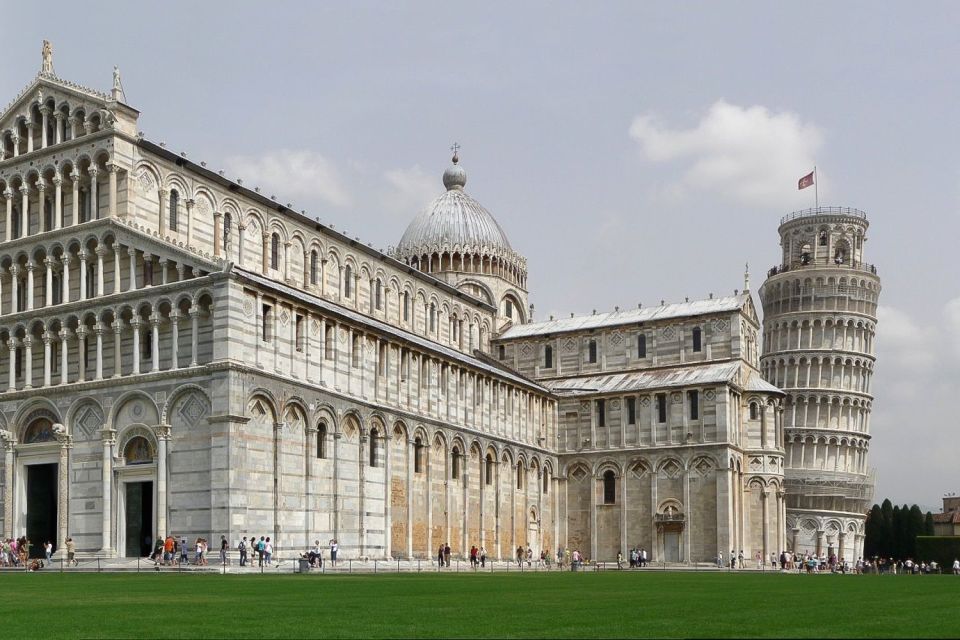
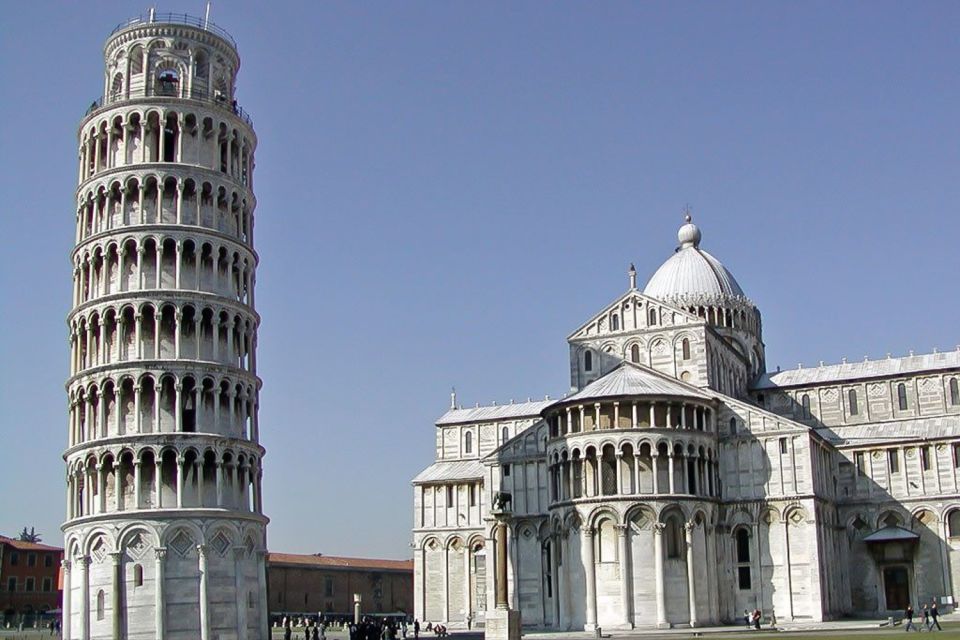
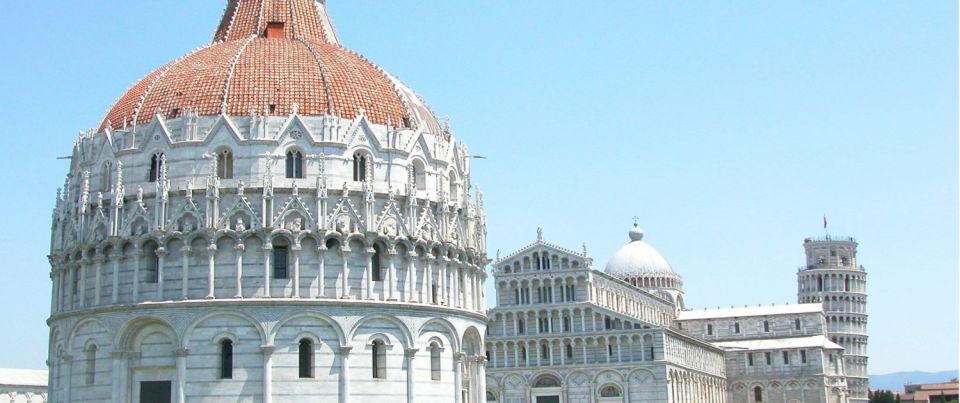
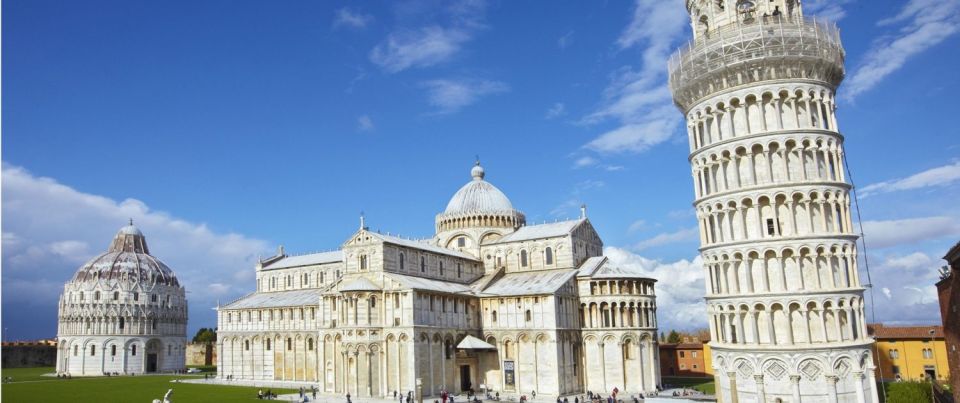
Pisa is all about one concentrated viewpoint: Piazza dei Miracoli. You’ll head there for photos and a walk, with time to visit the Baptistery and the Cathedral (Duomo). This is where the white marble look really hits—everything feels built for postcards, but also built for real architecture spotting once someone points out what you’re seeing.
One of the practical choices here: the Leaning Tower is external. That means you don’t go up inside the tower as part of this specific tour. If your personal priority is climbing the tower stairs or entering the tower itself, this won’t satisfy that goal. But if you mainly want the signature skyline moment and the context of the complex, seeing it from the piazza still delivers the core experience.
The best way to enjoy Pisa on a time budget is to focus on spacing and perspective. The square is open, so you can do short photo walks without it feeling like a sprint. If you’re the type who likes details, look at how the Baptistery and Cathedral frame the Leaning Tower even from outside—those buildings are part of a coordinated statement, not random monuments.
You should also plan for timing surprises. One earlier day had a bus glitch plus rain and traffic that cut the trip shorter, and there was no compensation mentioned. That doesn’t mean it always happens, but it’s a good reminder: in a day-trip format, Rome-to-Tuscany transit can influence how much you squeeze in.
Still, Pisa works well in this format. It’s compact, iconic, and guided enough to make the time feel worthwhile instead of rushed sightseeing.
Florence first impression: medieval streets plus a real meeting point
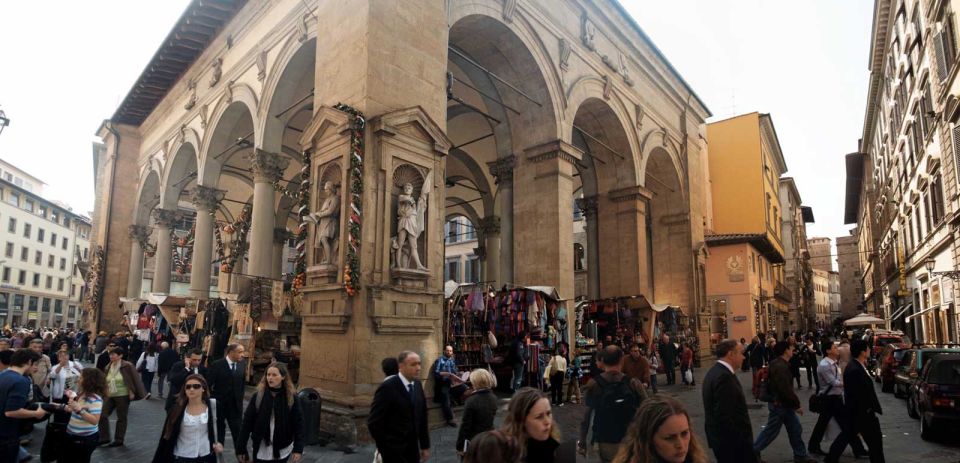
Once you leave Pisa, Florence is where you feel the difference. It’s not only famous for museums; it’s famous because the city still looks and feels like a working home for artists, artisans, and neighborhoods. You’ll stop for lunch (not included), then you’ll meet your professional guide for a Florence walking segment.
Before the guided time, there’s a photo stop and time built in for you to breathe a bit. You can also use the free time for shopping and getting your own bearings. That blend—guided context plus unguided wandering—is ideal in Florence, where too much structure can make the city feel like a theme park.
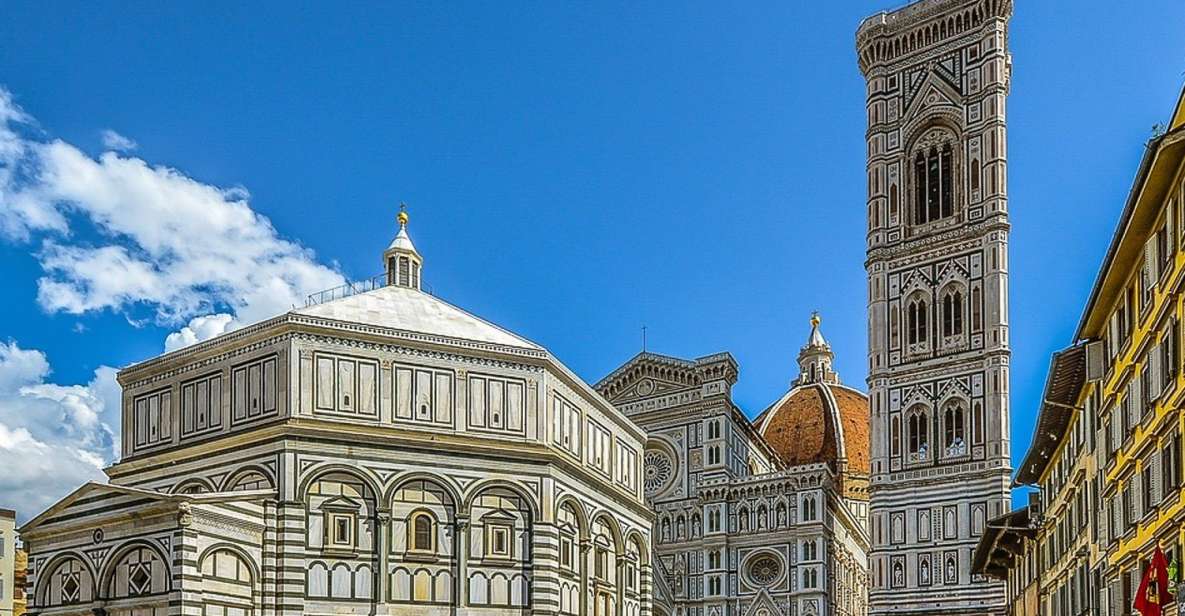
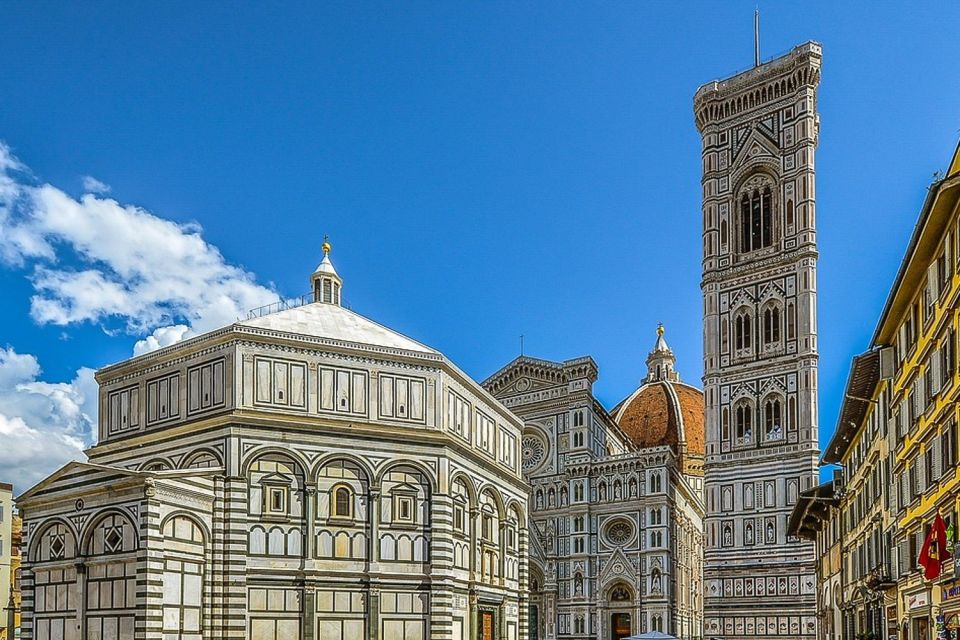
The guided walk is where you’ll get the real payoff: the group sees major landmarks and learns what they mean. You’ll pass by the Cathedral area, including Santa Maria del Fiore, and you’ll also get to understand the dome and its architectural importance. The walking route includes views of the Baptistery and Giotto’s Bell Tower too.
If you’re a “show me the story behind the stones” type, Florence is the right place for this. Dates and names can roll off your brain unless someone gives you a clean way to connect them. A good Florence guide turns that on—like explaining why the dome looks the way it does, or what makes the bell tower so distinct in the skyline.
Also, plan your walking shoes. Florence in a day can mean uneven pavement, steps, and long stretches of standing for photos. Comfortable shoes are not optional; they’re how you avoid turning the best part of your day into foot pain.
Accademia Gallery: how to see David without burning time in line
If Michelangelo’s David is a must-see, the Accademia visit is the center of this trip’s value. Your admission includes skip-the-line entry, which helps you spend your limited Florence hours looking at art instead of waiting at the entrance.
This matters because Florence can eat your schedule. Museums are timed, crowds are real, and lines are unpredictable. Skip-the-line access doesn’t remove everything, but it reduces one of the biggest time drains.
Inside, you’re specifically going for David, Michelangelo’s famous sculpture. Even if you’ve seen it in photos, seeing it in person changes the scale and the emotion. The posture, the proportions, and the details are hard to fully grasp from a screen.
You’ll also find that the Accademia experience pairs well with the rest of Florence. After walking near the Cathedral area and absorbing the city’s Renaissance architecture, David feels like the human side of the same cultural moment. One is stone and design. The other is anatomy, expression, and craft.
One practical note: this is still a gallery visit inside a city day-trip format. Don’t expect a slow, lingering museum day with hours and hours of reading labels. Expect a focused visit that hits the headline you came for, then pushes you back into the city for the rest of the highlights.
Florence landmarks beyond the postcard: dome views and bell-tower moments
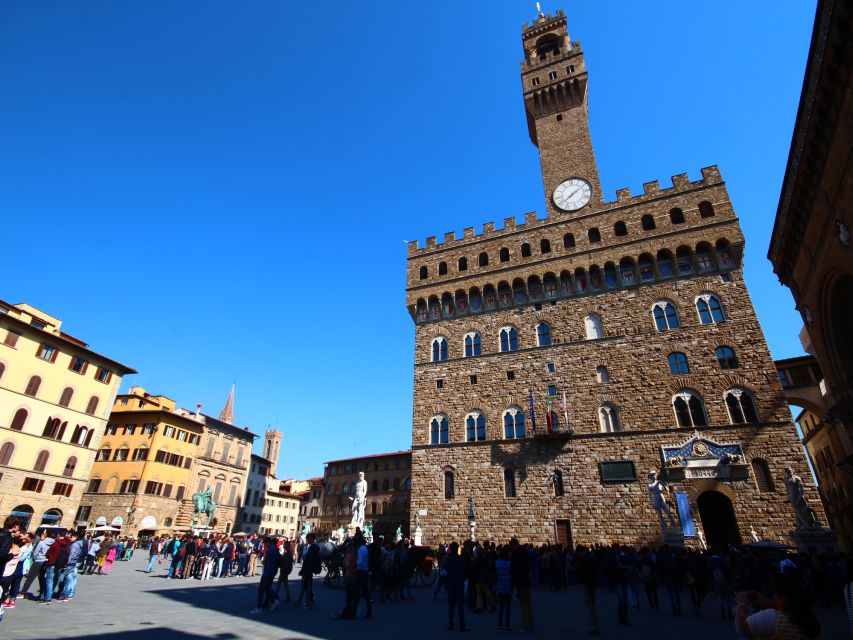
Florence’s main church sights can overwhelm you if you just follow crowds. The guided portion helps you slow down inside your own head—so you notice things like the dome’s structure and why it was such a statement.
You’ll see Santa Maria del Fiore and its dome projected by Brunelleschi, which is a key detail because it helps you stop calling it just a big pretty dome. You’ll also admire the Baptistery and Giotto’s Bell Tower. That trio gives you a full skyline rhythm: dome, bell tower, and the Baptistery complex.
This is one of those tours where the “small” guided stops make the biggest difference. It’s not only that you’re seeing buildings. It’s that a guide is pointing out how these landmarks connect—visually, historically, and in the way they shape the city’s identity.
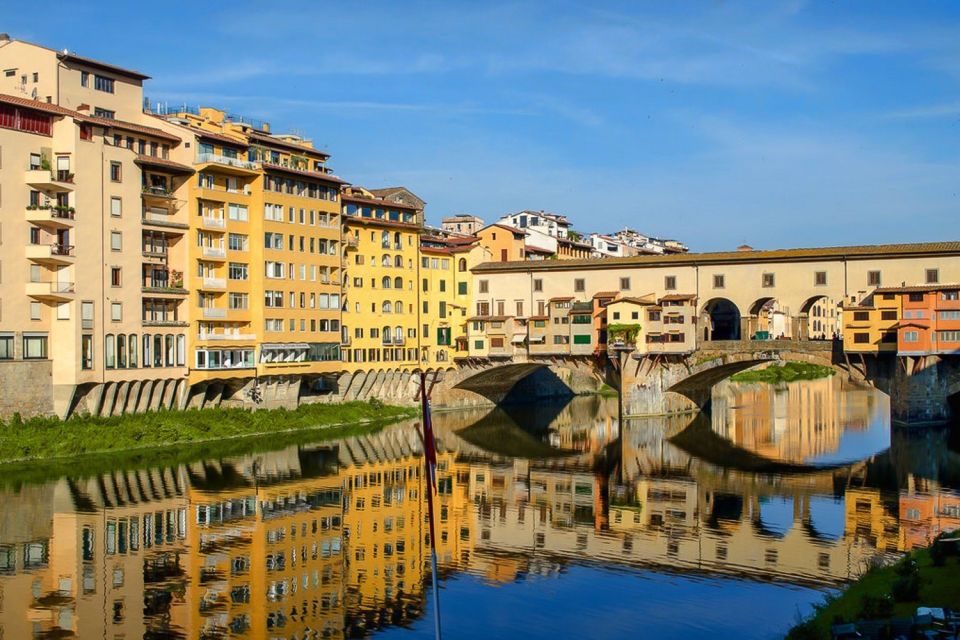
You’ll also get one of the best Florence finishing moves: time for photos and a big view from Piazzale Michelangelo. That viewpoint is more than a nice photo spot. It acts like a reset button. You step back from the street-level details and get the geography of Florence—the Arno River curve, Ponte Vecchio threading across, and the Duomo anchoring the skyline.
If you’ve ever struggled to understand Florence from a map, this viewpoint helps you “get it” fast. It’s how the city stops being a list of famous stops and becomes one place.
And if you’re traveling with art-leaning friends or family, the David plus this skyline moment is a strong combo.

Piazzale Michelangelo at day’s end: the payoff view
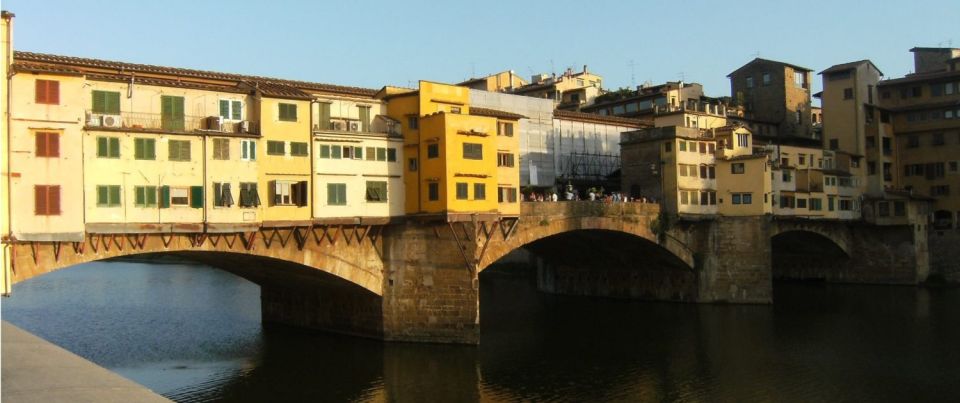
The tour ends with a view from Piazzale Michelangelo, giving you a panoramic look over Florence. This is the part I’d call the emotional closer. You’ve spent the day on monuments and museum time, and then suddenly you see the whole city layout.
You’ll take in Ponte Vecchio, the Arno River, and the Duomo in one sweep. That combination is iconic for a reason. From this angle, Florence feels engineered for drama: river + bridges + architecture + hills.
It’s also where the timing feels right in a day-trip format. You don’t want to do this too early when you’re still tired and still trying to pack in details. Doing it near the end helps you wrap everything into one mental picture before heading back toward Rome.
Just be ready for crowds at the viewpoint. Even if the tour gives you a good window, it’s still a popular stop. Keep your patience; keep your phone charged; and take the photos quickly so you can still enjoy the view with your own eyes.
Price and value: what $303.60 is really buying you
At $303.60 per person, this isn’t a budget half-day. You’re paying for the parts that cost time and coordination: air-conditioned transportation from Rome, hotel pickup inside the Aurelian Walls, and structured guided time in Florence plus a guide/assistant support layer for Pisa.
Here’s the value math that makes sense for this tour:
- Accademia skip-the-line is a real time saver when Florence is busy.
- Two Florence walking phases (guided plus free/extra time) mean you aren’t locked into one pace.
- Tour assistant for the whole day reduces confusion during transfers and meeting points.
- Pisa is handled with Baptistery and Cathedral visits plus the signature outside tower sight.
Lunch isn’t included, so you’ll have one meal choice to manage on your own. That’s not a dealbreaker, but it’s part of the overall cost you should factor in if you’re budgeting tightly.
The Leaning Tower entrance fee isn’t included either since it’s external viewing. So if tower access is your top priority, you’d need a different add-on or a different type of tour.
When the logistics go smoothly—and most reports point that way—you’re effectively paying to remove uncertainty. Guides like Giuseppe and other Florence guide names (Giovanni, Patricia, Elena, Elisabetta show up in praise) are repeatedly described as friendly, organized, and clear, which is a big deal when you’re trying to see a lot in one day without wasting time.
Who this tour suits best (and who should skip it)
This is a great fit if you want a classic Rome-to-Tuscany day that hits the big three: Pisa’s marble complex, Florence’s Renaissance core, and the Accademia David moment. It’s also well suited to people who don’t want to self-plan transit, parking, and museum timing.
Small-group format helps. You’ll avoid the chaos of giant bus herds, and several guides in the praised accounts were described as working well with groups that felt personal rather than overwhelming. One review even mentioned a group of just five people, which is about as comfortable as it gets for a day trip.
It’s less ideal if:
- You need wheelchair accessibility. This tour is explicitly not suitable for wheelchair users.
- You have respiratory issues, since it’s a full day with travel and time on foot.
- You want to climb the Leaning Tower or enter it. This tour keeps the tower external.
Also, mentally prepare for the long day. Even with breaks for comfort, this is still 12 hours. If you’re traveling with kids or anyone who hates long rides, consider whether you’d rather do a slower overnight in Tuscany instead.
Should you book this Rome to Pisa and Florence tour?
Book it if your “must-sees” are Pisa’s Piazza dei Miracoli, Florence’s top landmarks, and Michelangelo’s David—with skip-the-line Accademia entry. The guided Florence time plus the Piazzale Michelangelo finish is a strong structure for seeing the highlights without turning the day into a logistics headache.
Think twice if tower entry is non-negotiable, if you’re sensitive to long travel days, or if mobility and health constraints limit your walking and standing. And accept that timing can be influenced by rain and traffic, since this is a road-dependent day trip.
If that all sounds like your style, you’ll likely love how the day connects Renaissance art and Italian city drama into one continuous sweep—from the road through Chianti-style scenery to that final panoramic look over Florence.
FAQ
How long is the Rome to Pisa and Florence full-day tour?
The tour duration is 12 hours.
Where do pickup and drop-off happen?
Pickup and drop-off are included, with hotel pickup inside the Aurelian Walls. You’ll be asked to wait in the hotel lobby about 10 minutes before your scheduled pickup time.
What will I see in Pisa?
You’ll see Piazza dei Miracoli, including the Baptistery and the Cathedral, plus the Leaning Tower from the outside.
Can I enter the Leaning Tower on this tour?
No. The Leaning Tower entrance fee is not included, and the tower is visited externally.
Is lunch included?
Lunch is not included.
Is the Accademia Gallery ticket included, and is there skip-the-line access?
Yes. Accademia Gallery entrance is included, and you get skip-the-line access.
How long is the guided portion in Florence?
The tour includes an official guide in Florence for about 2 hours as part of the walking and visiting time.
Is this a small-group tour?
Yes, it’s available as a small group.
What languages are available for the live guide?
Live tour guide languages listed are Spanish, French, Portuguese, and English.
Is the tour wheelchair accessible or suitable for respiratory issues?
No. It’s not suitable for wheelchair users, and it’s also not suitable for people with respiratory issues.
What’s the weather policy?
The tour runs rain or shine.