REVIEW · ROME
Rome: Ancient Mosaic Making Workshop
Book on GetYourGuide →Operated by Studio Cassio · Bookable on GetYourGuide
A Roman mosaic isn’t just something you look at. It’s something you make, in a real studio near the Colosseum, with local marble and hands-on tool time. I especially like the fact you learn the craft from a master mosaicist and then create a take-home artwork sized for real life packing. One heads-up: it’s age 12+, so younger kids can’t join.
In 2.5 hours, you’ll move from mosaic history and technique to actually cutting and assembling your design. The studio is in Rome’s Monti area, and it’s set up for a small group (max 9), so you get real help—not just a quick demo.
If you’re spending days marching through ruins and churches, this is a different kind of Rome souvenir. It turns the art you’ve seen in museums and basilicas into a skill you can hold in your hands.
In This Review
- 6 Key Reasons This Workshop Feels Worth It
- Why Make a Mosaic in Monti, by the Colosseum
- Studio Cassio Setup: Master Mosaicist, Marble, and Small Groups
- The Workshop Flow: History, Texture, Composition, Cutting
- Your Finished Artwork: Size, Frame, and Safe Packing
- Learning Roman Mosaic Craft Without the Guesswork
- Logistics That Matter: Getting There and Using the 2.5 Hours
- Price and Materials Value: What $106 Really Covers
- Should You Book This 7 x 5 Take-Home Mosaic Lesson?
- FAQ
- How long is the Rome Ancient Mosaic Making Workshop?
- Where do I meet the group?
- What size mosaic will I make and take home?
- What’s included in the price?
- Is transportation to and from the workshop included?
- What languages is the workshop offered in?
- What is the group size?
- What ages is the workshop for?
6 Key Reasons This Workshop Feels Worth It
- Master-led instruction in a working studio: you practice the same basics pros use.
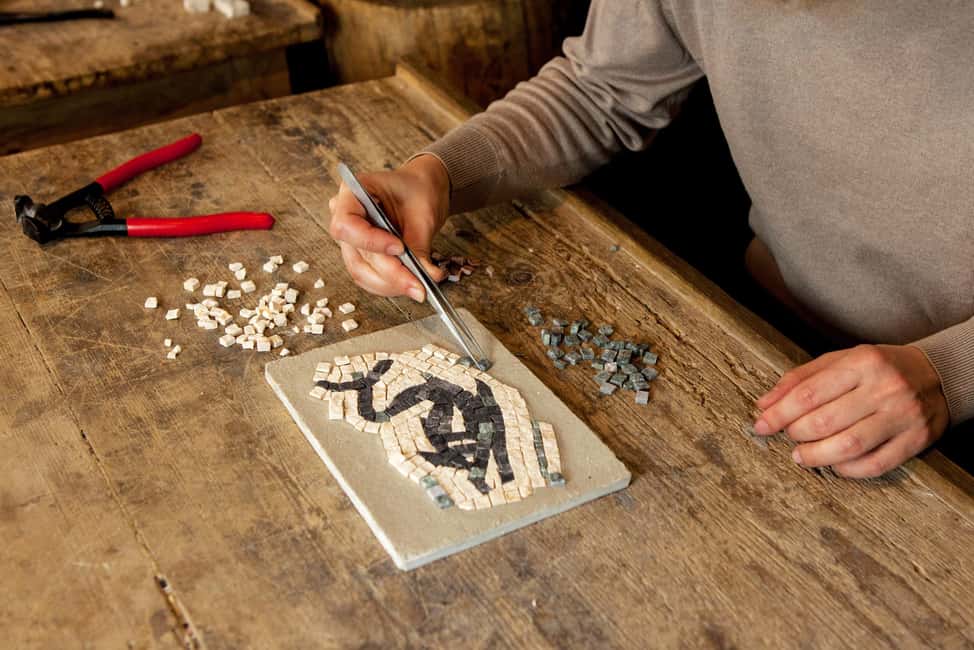
- Marble tile cutting and hands-on tools: not just coloring a template.
- Texture + composition lessons: you learn how Roman mosaics are designed, not only copied.
- A take-home mosaic built to spec: about 7” x 5”, around 14 oz.
- You get packing that makes sense: a sturdy box plus a frame for your piece.
- Perfect break from sightseeing heat: indoor, focused, and small-group paced.
Why Make a Mosaic in Monti, by the Colosseum
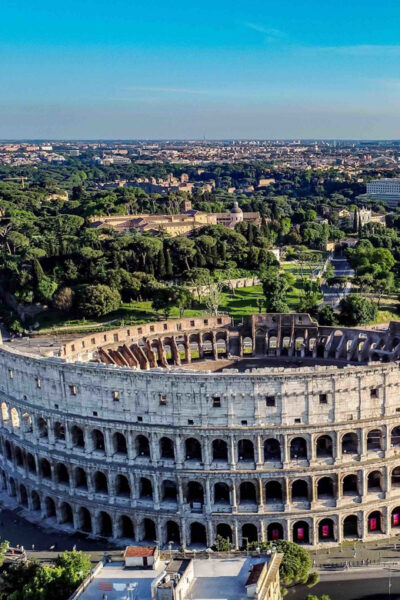
Monti is one of those Rome neighborhoods where you can walk a few blocks and feel the city change its mood. You’re close to the Colosseum, but you’re not stuck in a loud tourist-only bubble. That matters because this workshop is more about calm focus than sightseeing checklists.
I like that the experience starts with context. You don’t just get a craft lesson; you get an intro to the iconic history of mosaics in Rome. It helps you understand what you’re building as you work—why texture and spacing matter, and why composition is more than decoration.
Also, the whole setup is built for a small group. Up to 9 participants means the instructor can correct your approach when you’re making choices about cuts and layout. That’s huge for a craft that depends on small decisions.
The only real consideration is timing and energy. This is a full hands-on session for 2.5 hours. If you’re coming straight from a long day in the sun, plan to arrive ready to work, not just watch.
You can also read our reviews of more tours and experiences in Rome



Studio Cassio Setup: Master Mosaicist, Marble, and Small Groups
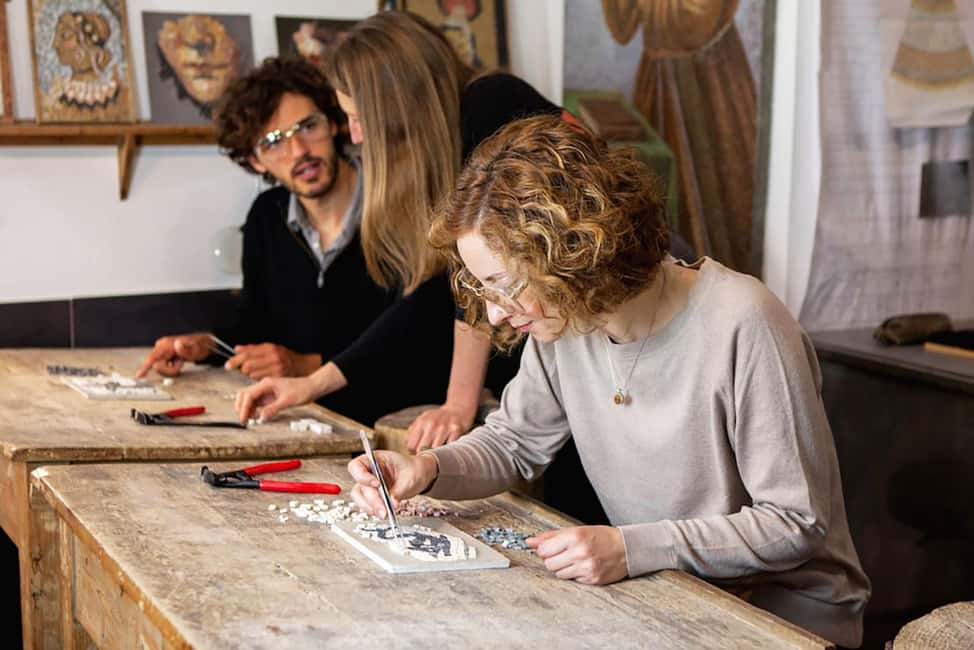
This workshop runs in a professional mosaic studio with a historical family-owned feel. In other words, you’re not in a pop-up classroom. You’re working where mosaic artists actually produce finished pieces.
You’ll have access to high-quality natural, local marble and all the necessary tools. That’s part of the value. People sometimes try mosaic-making at home later with the wrong materials, then wonder why results look different. Here, you start with the stone and tools designed for the job.
The class is led by a master mosaicist, and the teaching is structured. It’s not just, Do whatever you want. The studio focuses on authentic Roman techniques and what makes them look right.
From past sessions, the studio team is often friendly and hands-on—names that have shown up in instruction include Alex, and hosts such as Julia, Hope, and Ellie. That human touch matters. When you’re learning cutting and assembly, you want someone nearby who can show you how to adjust quickly instead of letting you struggle in silence.
Group size is capped at 9, and safety guidance recommends ages 12 and up. If you’re traveling with a teen or older child, this can be a great way to slow the trip down and do something skill-based.
The Workshop Flow: History, Texture, Composition, Cutting
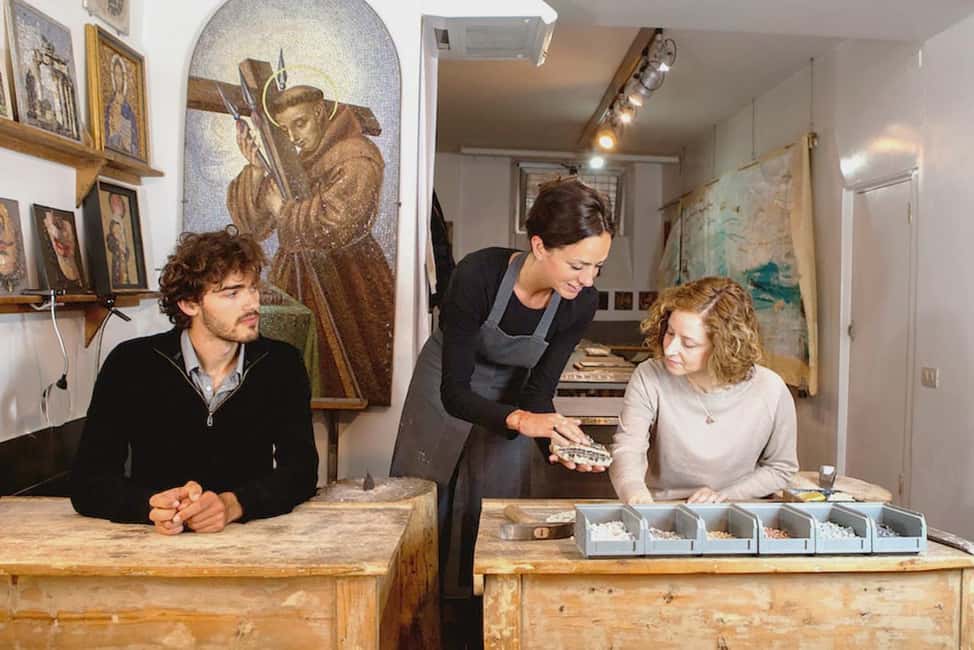
The workshop is paced like a real craft class: first the why, then the how, then the doing. You’ll begin with an introduction to techniques and history of Roman mosaics. That’s the stage where things click—Roman mosaics weren’t casual. They were designed, planned, and executed with care for surface and pattern.
After the intro, you’ll practice three key areas:
- Texture: learning how surfaces read when light hits different tile cuts.
- Composition: arranging your design so it looks intentional, not random.
- Marble tile cutting: the physical skill that turns stone into art.
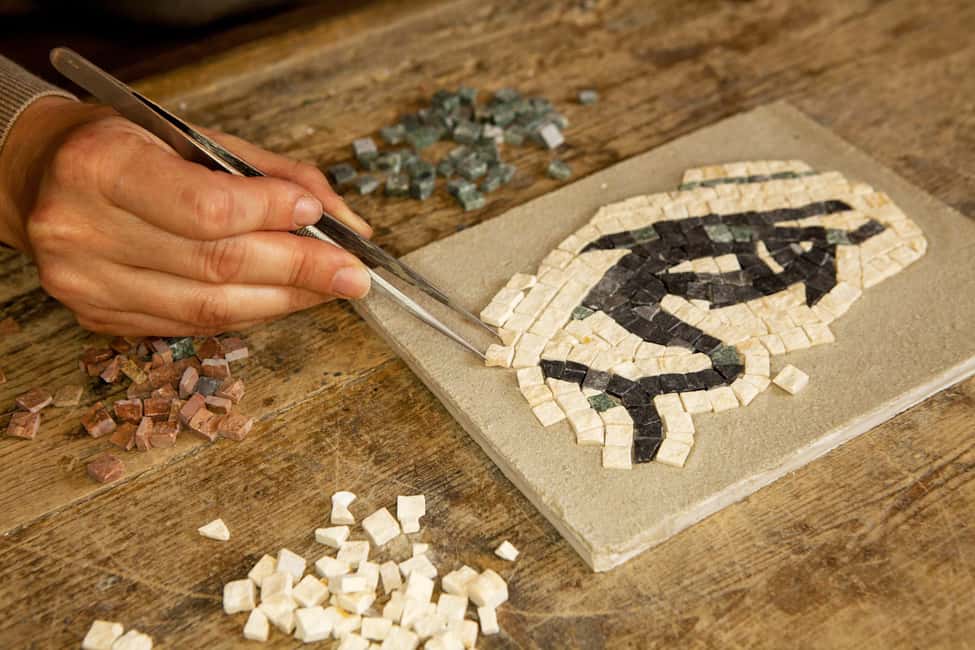
Then comes the main work: creating your mosaic to meet ancient requirements. The studio specifically teaches authentic mosaic craftsmanship, so your final piece isn’t just a craft-project souvenir. It’s made according to the traditional approach the studio uses.
In the workshop space, you’ll get to handle specific tools. That’s where this activity stops being passive. You’re learning through your hands, even if you’ve never cut anything like this before.
Expect a relaxed but focused rhythm. It’s long enough to feel satisfying, but short enough that you’re still fresh by the end. For many people, it’s a welcome change after hours of walking around major sights.
Your Finished Artwork: Size, Frame, and Safe Packing
You take home your own personal mosaic, roughly 7” x 5” and weighing about 14 oz. That size is practical. It’s big enough to feel like a real piece of Roman craft, but not so huge that it becomes a travel-storage nightmare.
Your work includes a frame, so you’re not stuck figuring out display options after you return home. You also get a sturdy box built to protect the finished artwork for the trip. That box is a big deal. Mosaics can chip or scratch, especially if they get knocked around in transit.
Because you’re working with local marble and assembling the piece yourself, the finished result feels different from buying a small souvenir in a shop. It’s not just decorative. It’s proof you made something with a process tied to Rome.
Also, you’ll get bottled water plus coffee and/or tea. It sounds simple, but it helps you stay comfortable during the active part of the class. And when you’re learning a hands-on technique, that small comfort can change the whole experience.
Learning Roman Mosaic Craft Without the Guesswork
One of the best parts here is the teaching approach. You’re not left to guess how to make a mosaic look good. The class breaks the craft into workable steps—texture, composition, and cutting—so each part has a purpose.
In Roman mosaics, texture is what makes stone feel alive. Light skims the surface differently depending on how pieces are cut and arranged. So when you practice texture in the studio, you’re learning a core visual effect that you can later spot in the mosaics you see around Rome.
Composition is next. You’ll learn how design choices affect the overall look: spacing, balance, and how the eye moves across the piece. This is the difference between a mosaic that looks like scattered tiles and one that reads as a designed image.
Then the hands-on cutting teaches you control. Marble tile cutting sounds intimidating until you’re shown how to approach it safely and consistently. With a small group and an instructor nearby, you’re able to correct course early instead of hours later.
The result is a mosaic that fits the studio’s standards for what Roman mosaic craftsmanship requires. That authenticity matters, because it keeps your souvenir from turning into a random craft project. You leave with something you understand—at least a little—and can be proud of.




Logistics That Matter: Getting There and Using the 2.5 Hours
The meeting point is near the Colosseum. It’s about a 2-minute walk from the Cavour stop on Metro Line B. That’s convenient because it lets you build the workshop into a normal day without rearranging your whole route.
Plan your timing like this: treat the workshop as the main event, not a side quest. Yes, Rome is full of distractions, but you’ll get more out of the experience if you arrive with time to settle in.
Duration is 2.5 hours. That’s long enough to actually finish a take-home piece, but short enough that you don’t end up exhausted at the end. If you’re pairing it with sightseeing, I’d schedule it when you can still enjoy a meal nearby afterward.
A key practical point: transportation to and from the workshop isn’t included. So make sure your plan accounts for getting to Monti-area streets on your own. The good news is the nearby Metro stop makes this manageable.
For best results, come ready for a studio setting. You’ll handle tools and work on your mosaic, so this is not the time for a rushed, forgetful schedule.
Price and Materials Value: What $106 Really Covers
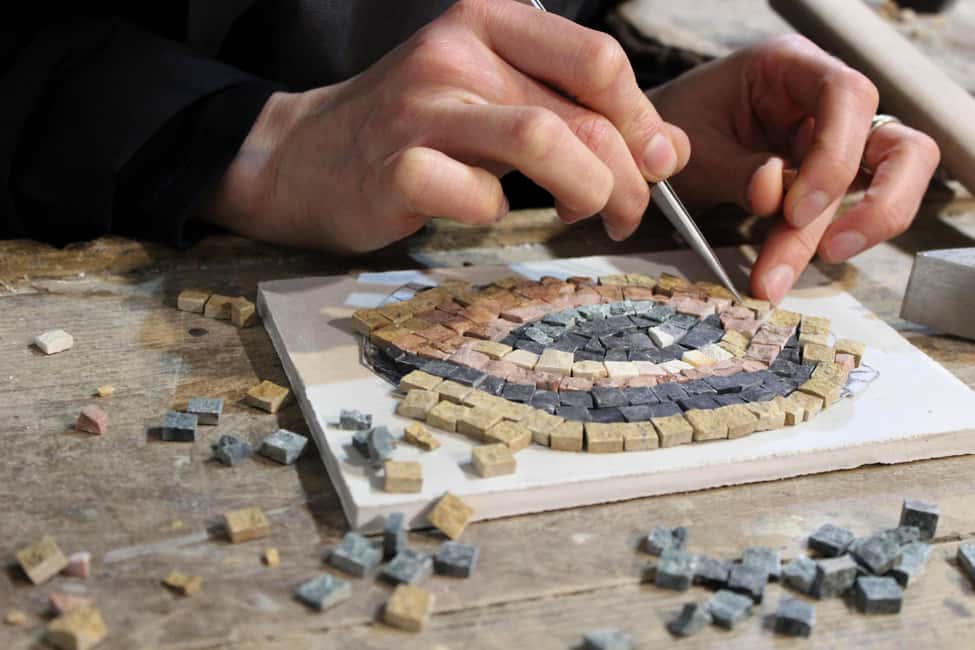
The price is $106 per person for 2.5 hours, and here’s what you’re actually paying for: instruction from a master mosaicist, access to high-quality natural marble, tools, plus framing and safe storage for your finished piece.
You don’t bring your own supplies, and you don’t have to figure out what “kind of tile” to buy. The studio provides everything necessary for the authentic technique they’re teaching. That’s part of the value—avoiding the common trap where a craft workshop looks affordable, but the materials are cheap and the results feel flimsy.
You also get refreshments (bottled water, coffee and/or tea). Again, it’s not the headline, but it supports the session so you can focus.
Small-group size (max 9) adds another layer of value. In a craft class, the cost is partly “time with an instructor who can actually help.” Here, you’re not competing with a large crowd for attention.
If you compare this to the cost of buying a mass-produced souvenir, the difference is clear. You’re paying for a skill-based experience and taking home a framed piece made with your own hands.
Should You Book This 7 x 5 Take-Home Mosaic Lesson?
Book it if you want a Rome souvenir that’s more than decorative. This workshop is ideal if you like hands-on learning, enjoy crafts, or have stared too long at mosaics in big museums and thought, I want to understand how that’s done.
It’s also a smart choice for a break from routine sightseeing. The indoor studio work feels focused and calming, and you finish with something you can display later.
Skip it (or look for another option) if you need something for younger kids. The experience is recommended for ages 12 and up, and it’s not suitable for children under 12. Also, if you hate workshops and want only tours on foot with views, this one is more about making than looking.
If you’re on the fence, consider this: you’ll learn the basics of Roman mosaic technique—texture, composition, and cutting—and take home a real, framed artwork made to specific dimensions. That combination is rare for a half-day activity in Rome.
FAQ
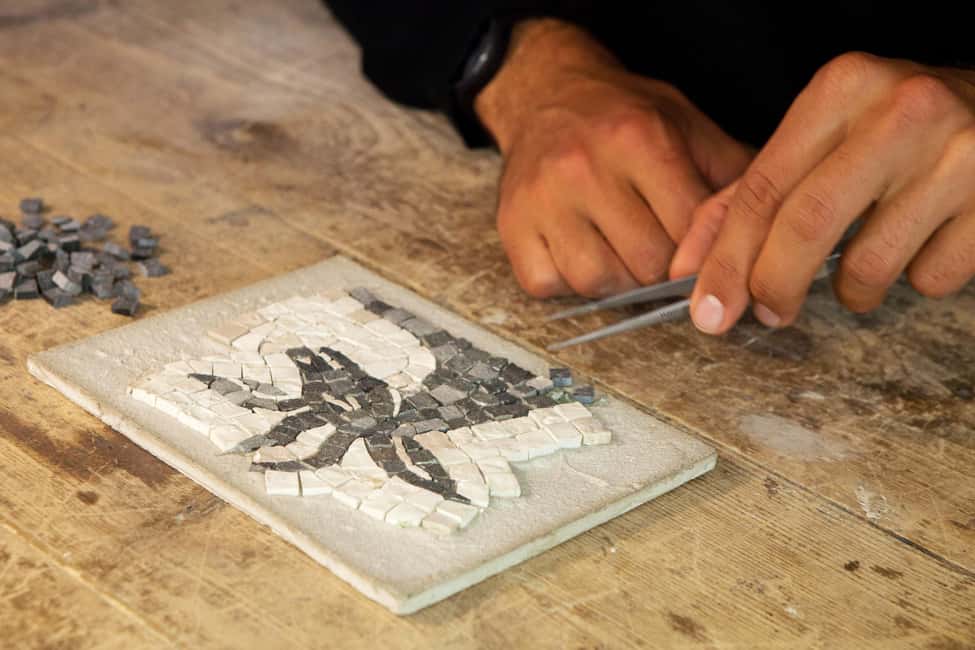
How long is the Rome Ancient Mosaic Making Workshop?
The workshop lasts about 2.5 hours.
Where do I meet the group?
You meet near the Colosseum, about a 2-minute walk from the Cavour stop on Metro Line B.
What size mosaic will I make and take home?
Your finished mosaic is approximately 7” x 5” and weighs about 14 oz.
What’s included in the price?
It includes an introduction to Roman mosaic technique and history, access to natural local marble and all necessary tools, a frame, a sturdy box for transport, and your hands-on mosaic creation. Bottled water and coffee and/or tea are also included.
Is transportation to and from the workshop included?
No. Transportation to and from the workshop is not included.
What languages is the workshop offered in?
The instructor offers English and Italian.
What is the group size?
It’s a small group limited to 9 participants.
What ages is the workshop for?
It’s recommended for ages 12 and up and is not suitable for children under 12.