REVIEW · ROME
The Genius of Caravaggio: Rome Private Tour
Book on GetYourGuide →Operated by Crazy4rome srls · Bookable on GetYourGuide
Caravaggio’s Rome is right under your nose. This private tour follows Michelangelo Merisi da Caravaggio through the exact churches that originally commissioned his work, and it ties the paintings to the streets of his life in Rome. I like the up-close look at major scenes in their original settings and the way the guide turns each stop into a clear story you can actually remember.
My favorite part is how the tour pairs big artistic moments with practical attention. At Santa Maria del Popolo, you focus on Saint Paul’s Conversion and the Crucifixion of Saint Peter, then you carry that same lens into San Luigi dei Francesi for the three Saint Matthew paintings. I also really like the human touch: guides such as Chiara and Maria are called out for being engaging, and they even share a great gelato tip alongside the art talk.
The one drawback to consider is simple: it’s 3 hours with several church interiors, so you’ll do some walking and standing in cool, dim spaces. If you hate crowds in popular churches or want long sits, you might need to pace yourself and take quick breaks when you can.
In This Review
- Key highlights worth your time
- Why Caravaggio looks different inside his commissioning churches
- Starting at Via del Governo Vecchio and getting your bearings
- Santa Maria del Popolo: Saint Paul and Saint Peter in one focused stop
- San Luigi dei Francesi: the French church with Caravaggio’s Saint Matthew set
- Rione IV Campo Marzio: the street-level bridge between art and life
- Basilica of St. Augustine (Sant’Agostino): The Madonna of Pilgrims
- Finishing near Piazza di Spagna: wrap the art into your Rome plans
- Price and value: a private guide for up to 4
- What you’ll actually experience in 3 hours (and how to prepare)
- Languages, private pace, and the small details that matter
- Should you book The Genius of Caravaggio in Rome?
- FAQ
- How long is the Genius of Caravaggio tour?
- What is the meeting point?
- Where does the tour finish?
- How much does it cost and how many people are included?
- Which churches do you visit?
- What are the key Caravaggio paintings you see?
- Are tickets included?
- Is transportation included?
- What languages is the live guide available in?
- Can I get a hotel drop-off?
Key highlights worth your time
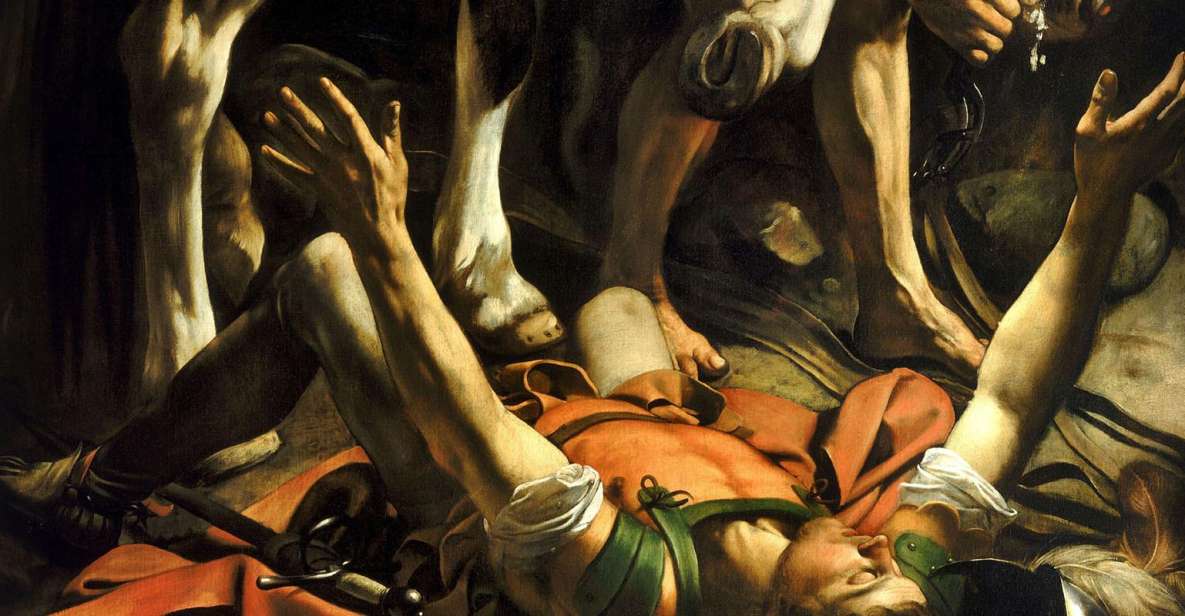
- Santa Maria del Popolo’s two standout scenes: Saint Paul’s Conversion and the Crucifixion of Saint Peter
- San Luigi dei Francesi and the Saint Matthew cycle: early altarpieces painted for the church
- A real neighborhood walk through Rione IV Campo Marzio, tied to Caravaggio’s working life
- Sant’Agostino’s Madonna of Pilgrims, discussed with the focus it deserves
- Private guide format for a calmer, more tailored pace (and multilingual support)
- Guides like Chiara and Maria bringing both art know-how and friendly energy, plus a gelato aside
Why Caravaggio looks different inside his commissioning churches
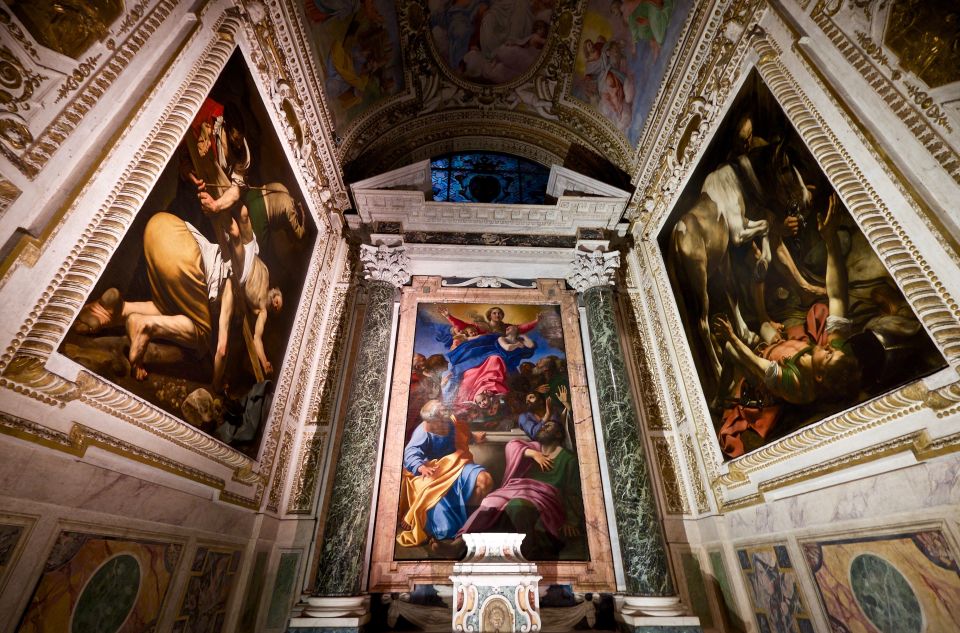
Caravaggio was famous for making paintings feel immediate—like they’re happening right now. What I love about this kind of route is that it doesn’t treat his art like museum items behind glass. You see major works in the churches that originally needed them, so the setting makes more sense.
You also get a better sense of what made him stick around for over 400 years. The tour approach emphasizes the stories and anecdotes around Caravaggio, plus his outstanding technical skill. That matters because Caravaggio isn’t just about subject matter; it’s about how he builds emotion through light, realism, and dramatic staging.
This is especially valuable if you’ve seen Caravaggio elsewhere and felt like the paintings were impressive but a bit hard to place. Here, you’re given the church context as you go, so each stop connects to the next.
You can also read our reviews of more private tours in Rome
Starting at Via del Governo Vecchio and getting your bearings
Your day begins at Via del Governo Vecchio, 82, at the exit of the Book Store Altroquando. This is a smart start because it puts you in the right mood: not rushed, not vague, just ready to walk into Caravaggio’s Rome and make sense of what you’re seeing.
From there, you’ll build a mental map of where Caravaggio lived and worked. Even if you’re not a history nerd, the guide’s job is to help you connect the artwork to the streets—Caravaggio was born in Milan in 1571 and was in Rome by the end of the 1580s. That timeline helps you understand why his Roman career and commissions landed where they did.
One practical tip: wear shoes that can handle short stretches of uneven pavement. You’ll move between sites and spend time inside churches, and comfortable footing keeps the day enjoyable.
Santa Maria del Popolo: Saint Paul and Saint Peter in one focused stop
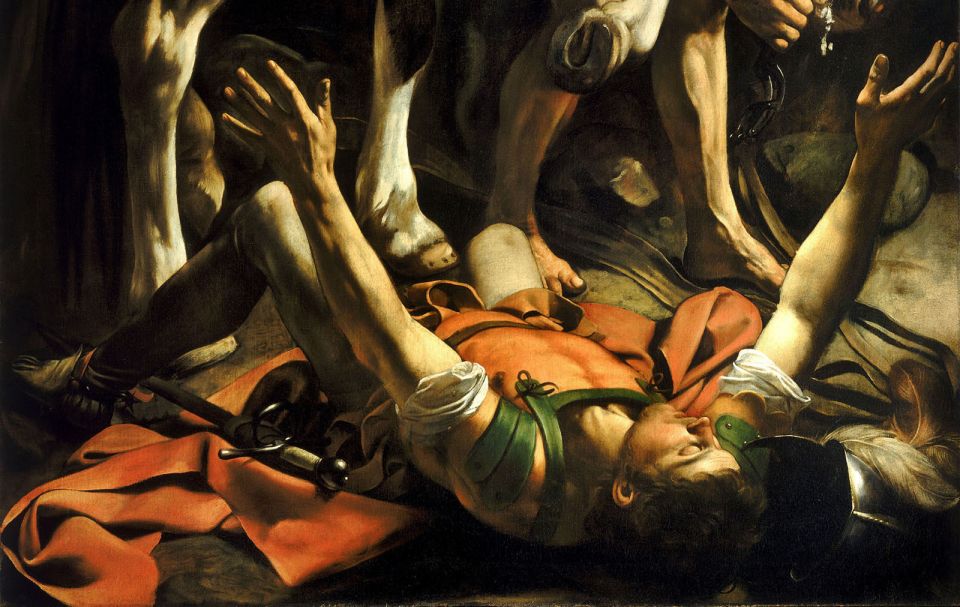
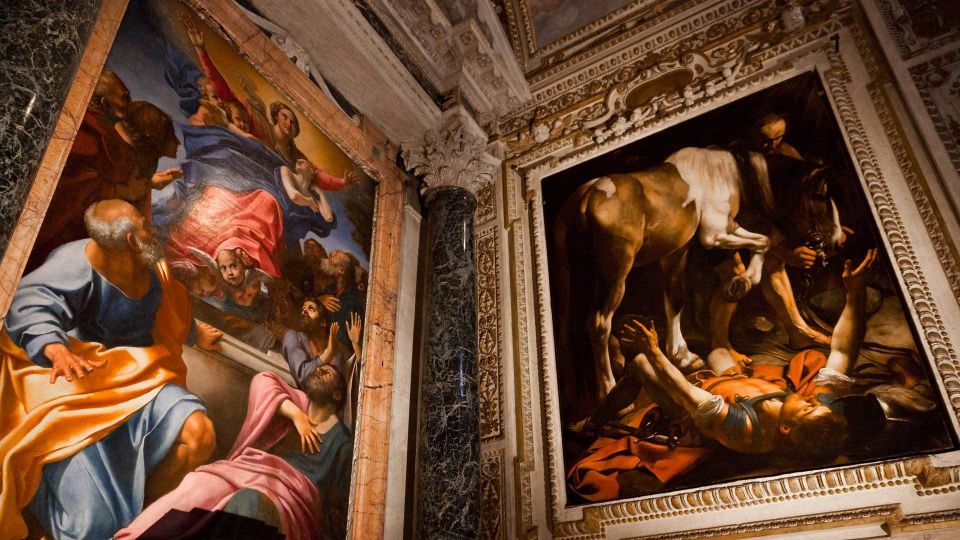
The first big art moment is Santa Maria del Popolo, with a guided visit of about 45 minutes. This church is the place to start because it gives you two major Caravaggio scenes to anchor your attention: Saint Paul’s Conversion and the Crucifixion of Saint Peter.
I like how this stop works as a “training session” for your eyes. Once you understand what the guide points out in these paintings—how the composition pushes your gaze and how the drama feels staged—you’re better prepared for what comes next. It’s not random sightseeing; it’s a sequence designed to sharpen your focus.
The drawback here is the usual one for Rome’s famous interiors: the lighting can be tricky, and your view may depend on where you stand. If you can, listen first, then adjust your position for your own line of sight. The guide’s pacing helps you do that without feeling rushed.
San Luigi dei Francesi: the French church with Caravaggio’s Saint Matthew set
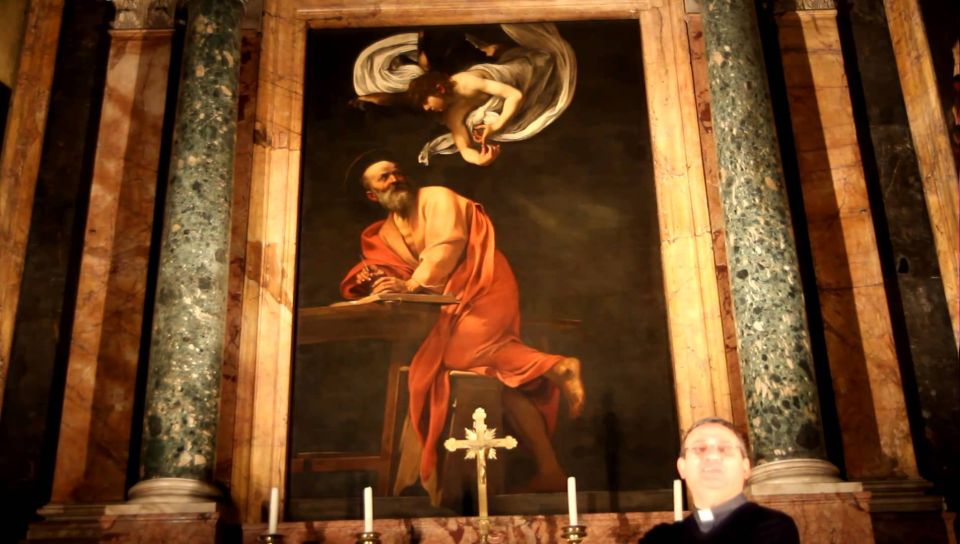
Next comes San Luigi dei Francesi (the Church of St. Louis of the French), also with about 45 minutes of guided time. This is one of the most rewarding stops because you see Caravaggio’s three Saint Matthew paintings in the same place where they were meant to function as altarpieces.
The tour highlights that these were the first altarpieces ever painted by Caravaggio. That detail changes the way you look. Instead of treating the works like just another famous set, you understand this as an early, decisive statement—when he was establishing his voice in a very public religious setting.
You’ll also appreciate the church’s identity as one of the few French churches in Rome. That cultural angle is useful because Caravaggio’s Roman world wasn’t only Italian—it was influenced by who funded, commissioned, and celebrated art. A good guide will help you notice how the stories of Saint Matthew fit the sacred purpose of the space.
As always, bring patience for quiet moments in church interiors. You’ll learn faster if you’re not trying to photograph everything at once.
Rione IV Campo Marzio: the street-level bridge between art and life
Between major church stops, the tour includes a walk and guided time in Rione IV Campo Marzio (about 30 minutes). This is the part that turns the day from a museum-style checklist into something more like a living city story.
Caravaggio wasn’t only a painter. He was a person working amid real neighborhoods, buildings, and street traffic. A focused walk here helps you imagine how his Roman life connected to the commissions you’re now seeing in churches.
This stop is also where your guide can add the smaller anecdotes that make the art feel less distant. And those moments matter, because Caravaggio’s fame can make you think his paintings are untouchable. When the guide connects the work to the neighborhood rhythms, it clicks.
If you prefer lots of indoor art time, this is the one segment you might wish were longer. But as a bridge, it earns its place—and helps the rest of the tour land better.

Basilica of St. Augustine (Sant’Agostino): The Madonna of Pilgrims
The day’s next church stop is Sant’Agostino (the Basilica of St. Augustine) for about 45 minutes. Here, the focus is The Madonna of Pilgrims, and this is where the tour shows its balance: not every stop is just about the biggest-known name, but about seeing the right work with the right context.
I like this kind of selection because it prevents Caravaggio from feeling like a one-note experience. You already spent time with dramatic religious violence and conversion scenes; now you shift toward a Marian theme that carries its own emotional weight and devotional purpose.
The guide’s job in this stop is to help you notice the details that make the painting work. Even if you don’t speak art-history language fluently, you can still learn to look. The tour’s structured pace helps you do that without feeling like you’re taking a crash course.
One practical note: if the church is busy, you may need to wait for a cleaner viewing angle. Being private helps here—you can usually adjust with less friction than a large group shuffle.
Finishing near Piazza di Spagna: wrap the art into your Rome plans
The tour finishes in the Piazza di Spagna area, ending back at the meeting point per the activity notes. Either way, you’ll have your bearings in a central part of Rome by the time you’re done.
This ending location is useful because Piazza di Spagna is a natural launchpad. After you’ve spent a few hours with Caravaggio’s stories, you’ll be in the right frame of mind to keep exploring the city on your own. You can follow the same “look and listen” approach—spot details, connect them to what you’ve learned, and let Rome feel like a place instead of a list.
If you’re planning a longer day, keep a little flexibility. Church interiors can slow you down, and a good guide’s pace encourages you to linger just enough to remember what you saw.
Price and value: a private guide for up to 4
The price is $456.21 per group for up to 4 people for a 3-hour private tour. That pricing is best when you’re traveling as a small group or family, because you’re essentially paying for an expert to customize the pace and take you inside the right spaces.
What you get for the money is practical: a private guide service plus a private official expert guide, and a guided visit through multiple key church interiors. Tickets aren’t required for this experience, and the tour notes that you can skip the ticket line, which can save real time in popular Rome.
Transportation to and from isn’t included, so you’ll want to plan how you’ll get to Via del Governo Vecchio on your own. If you’d rather have a driver handle everything, this might be less convenient. But if you’re comfortable meeting locally, the value is strong because the guide time is the core of what you’re buying.
What you’ll actually experience in 3 hours (and how to prepare)
This isn’t a fast walk-through. It’s a guided, stop-by-stop format designed to let you see key works and understand them while you’re standing in front of them.
Here’s the feel of the timing:
- Santa Maria del Popolo: 45 minutes of guided viewing
- San Luigi dei Francesi: 45 minutes focused on the Saint Matthew paintings
- Campo Marzio: about 30 minutes of neighborhood storytelling
- Sant’Agostino: about 45 minutes centered on The Madonna of Pilgrims
In short, you’ll spend most of your time indoors, which is a nice break from Rome’s open-air heat and crowds. Just plan for churches that can be dim and echo-y. Listen carefully, then take a moment to reset your stance so you can see what the guide is pointing out.
Also, remember the tour uses a printed voucher. Bring it with you, or make sure you have access to printing.
Languages, private pace, and the small details that matter
The tour supports many languages: Spanish, English, French, German, Italian, Arabic, Portuguese, and Russian. That’s a big deal if you want full clarity, not just a rushed summary in a second language.
Because it’s a private group, you’re not squeezed into a crowd line and forced to follow someone else’s pace. That matters in churches, where your viewing spot can make or break the experience. With a private format, you’re more likely to get a moment where you can actually look.
The experience also notes wheelchair accessibility, which is reassuring if mobility is a factor in your planning. If you have specific needs, it’s worth asking ahead through the operator so expectations match reality.
Should you book The Genius of Caravaggio in Rome?
Book it if you want Caravaggio in the most logical way: inside the churches tied to his commissions, with enough guided time to understand what you’re seeing. This is a great pick for art lovers who also want a street-level Rome connection, not just a series of photo stops.
Skip it if you want a super-fast hit list or you plan to do intense touring right after, because this day format rewards a calmer pace. Also consider your tolerance for church interiors and changing sightlines—some parts of these spaces can be crowded at peak times.
If you’re traveling with up to four people, the private value is especially solid: you’re buying expert guidance and access to multiple key works within a single 3-hour block.
FAQ
How long is the Genius of Caravaggio tour?
The tour lasts 3 hours. Starting times vary, so check availability when you book.
What is the meeting point?
Start at the exit of the Book Store Altroquando on Via del Governo Vecchio, 82.
Where does the tour finish?
The activity notes it finishes at Piazza di Spagna, and it also states the tour ends back at the meeting point.
How much does it cost and how many people are included?
It costs $456.21 per group for up to 4 people.
Which churches do you visit?
You’ll visit Santa Maria del Popolo, San Luigi dei Francesi, the area of Rione IV Campo Marzio, and the Basilica of St. Augustine (Sant’Agostino).
What are the key Caravaggio paintings you see?
In Santa Maria del Popolo you see Saint Paul’s Conversion and the Crucifixion of Saint Peter. In Sant’Agostino you’ll see The Madonna of Pilgrims. In San Luigi dei Francesi you’ll see the three paintings representing stories of Saint Matthew.
Are tickets included?
Tickets are not included, but the tour notes that tickets are not required for this experience and that you can skip the ticket line.
Is transportation included?
No. Transportation to or from the meeting point is not included.
What languages is the live guide available in?
The guide is available in Spanish, English, French, German, Italian, Arabic, Portuguese, and Russian.
Can I get a hotel drop-off?
Hotel drop-off by taxi (at your own expense) is available on request.