REVIEW · ROME
Forum, Colosseum Guided Tour and Capitoline Museum Ticket
Book on GetYourGuide →Operated by TICKETSTATION SRL · Bookable on GetYourGuide
Roman stories start before the first gate. This guided plan links the Colosseum and Roman Forum with the art and myth of the Capitoline Museums, so the day feels like one story instead of three separate stops. I especially liked the way the guide walks you along the Via Sacra with clear context, and I liked the skip-the-line access that protects your time for the big wow moments.
One thing to consider: the schedule is full, and the Capitoline Museums portion is ticketed (not a guided gallery tour). If you love lingering in museums for long stretches, you may feel the clock.
I also liked the people behind the tour. Guides such as Cynthia (praised for being friendly and inclusive) and Laura (praised as spectacular) are the kind of leaders who keep things moving, ask-and-answer well, and make sure you understand what you’re seeing.
In This Review
- Key Highlights You’ll Feel Fast
- The Big Picture: Forum, Colosseum, and Capitoline Hill in One 5-Hour Block
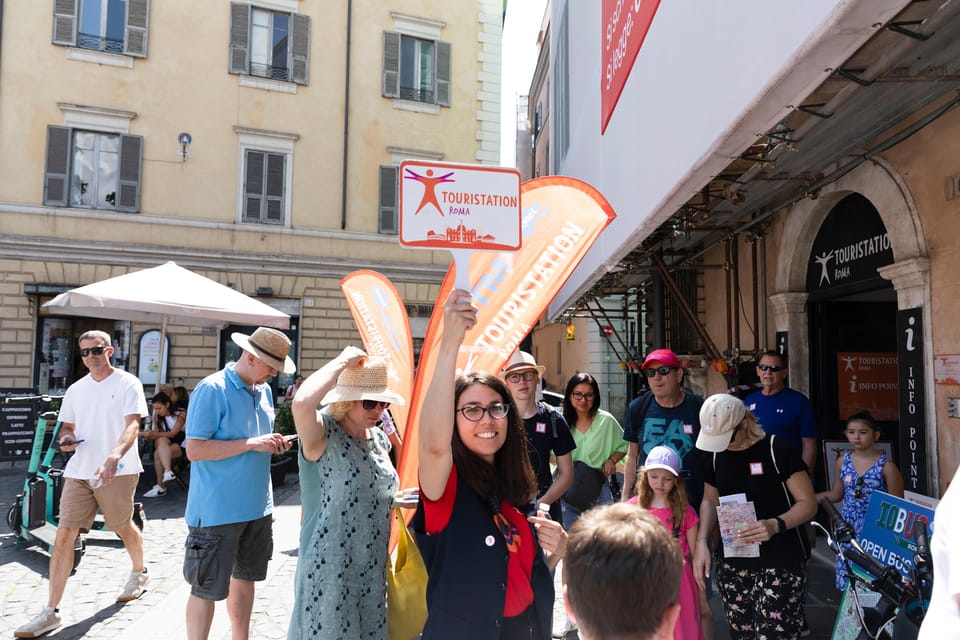
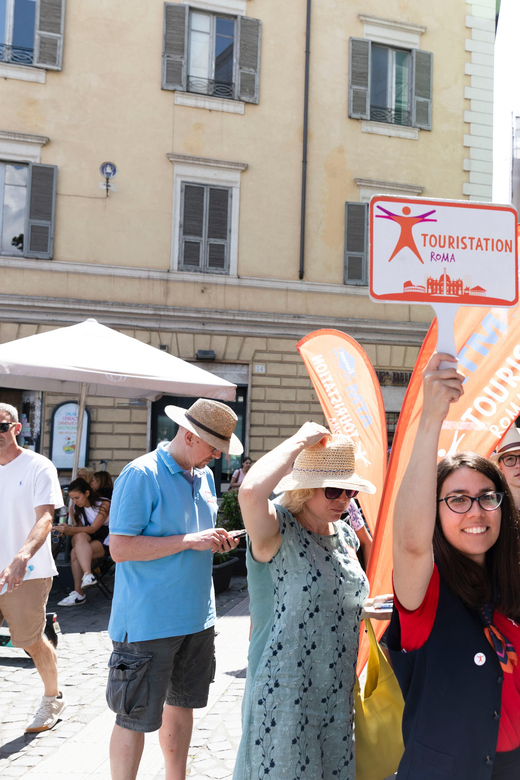
- 25-Minute Orientation at Touristation Office Before You Hit the Streets
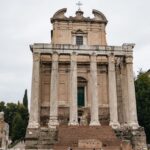
- Walking the Via Sacra and Reaching the Julius Caesar Cremation Altar
- Roman Forum Highlights: Seeing the Main Path With Meaning
- Colosseum Entrance With Skip-the-Line Access (and What to Watch For)
- Roman Forum and Palatine Hill Tickets: Flexibility After the Guided Walk
- Capitoline Museums: A Museum With a Mission Since 1734
- Michelangelo, Caravaggio, and the She-Wolf Moment
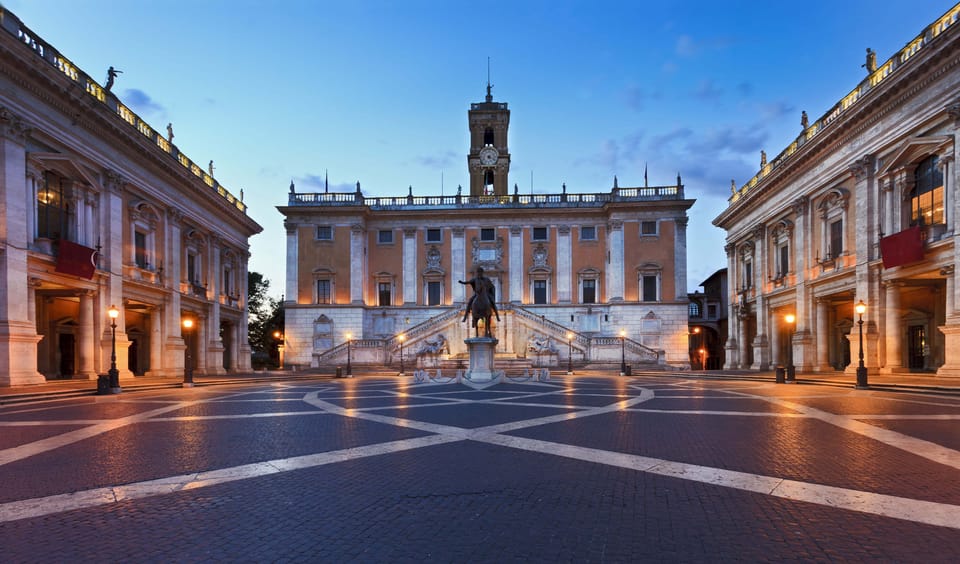
- Capitoline Hill Views and Michelangelo’s Square Design
- Price and Logistics: Is $129.14 Worth It?
- Who This Tour Suits Best (and Who Might Want Something Different)
- Should You Book This Forum, Colosseum, and Capitoline Tour?
- FAQ
- How long is the experience?
- What’s included with the ticket?
- Is Capitoline Museums guided?
- What languages are available?
- Where does the tour start and end?
- What do I need to bring?
- What if I need to cancel?
Key Highlights You’ll Feel Fast
- Via Sacra walk with Julius Caesar context as you trace the Sacred Road and the altar tied to his cremation
- Skip-the-line entry for both the Colosseum and the Roman Forum area (plus Palatine Hill ticket access)
- Capitoline Museums background starting in 1734 with Pope Clementine XII’s open-access idea
- Art that mixes power and drama, including works by Michelangelo and Caravaggio
- The she-wolf and Rome’s origin myth featuring Romulus and Remus
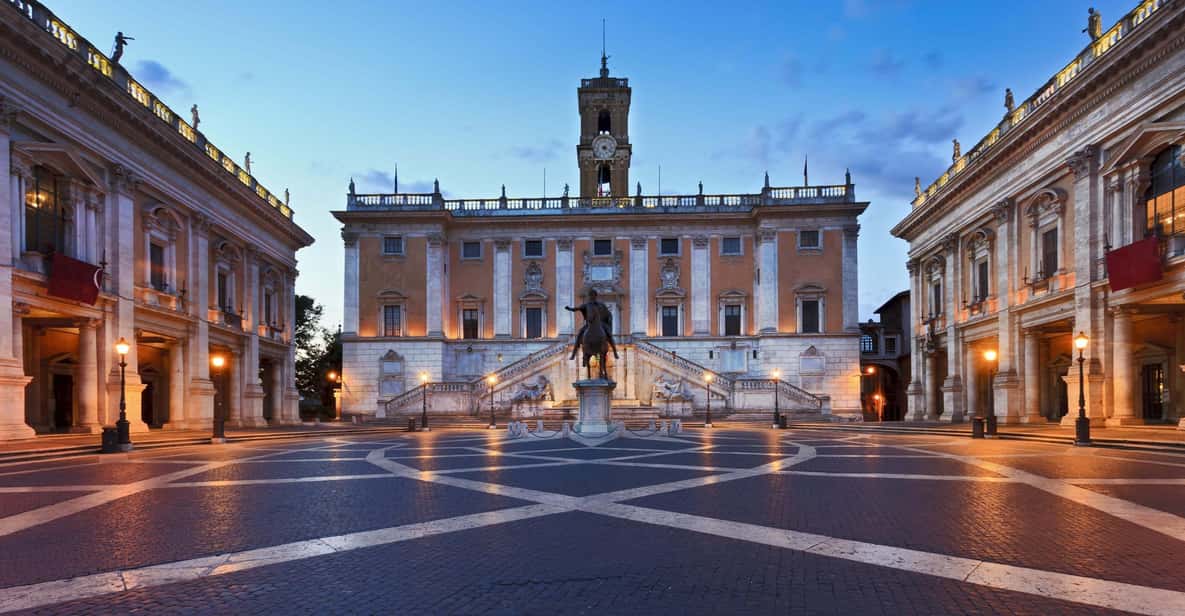
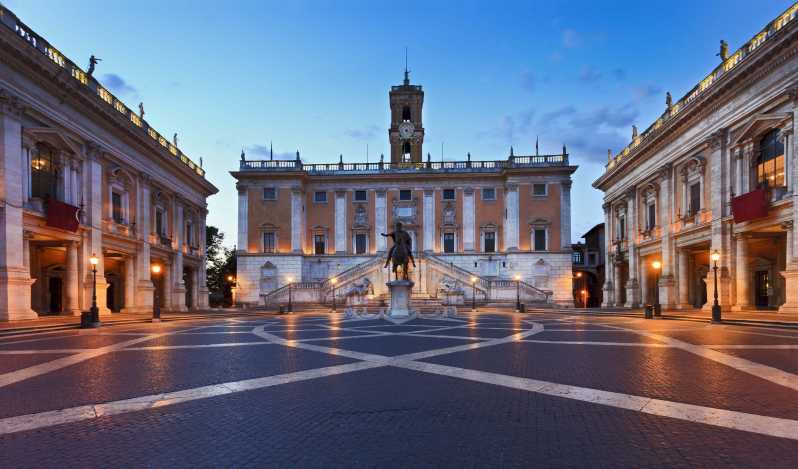
- Capitoline Hill viewpoints tied to Michelangelo’s commissioned redesign of the square
The Big Picture: Forum, Colosseum, and Capitoline Hill in One 5-Hour Block
This experience is built for people who want the essentials of Ancient Rome, but with enough explanation to make it stick. You start with a guided walk through the Roman Forum and surrounding highlights, then you move into museum time at the Capitoline Museums, ending with famous views from Capitoline Hill.
The 5-hour length is both the point and the trade-off. The upside is momentum. You won’t spend hours trying to figure out what matters. The downside is that this isn’t a slow, wander-at-your-own-pace museum day. It’s a focused route through Rome’s headline acts.
The value here is the pairing: architecture you can walk through (Forum and Colosseum) plus the art and symbols that Roman leaders kept collecting and showing off (Capitoline Museums). It’s the difference between seeing ruins and understanding how Romans remembered themselves.
You can also read our reviews of more tours and experiences in Rome


25-Minute Orientation at Touristation Office Before You Hit the Streets
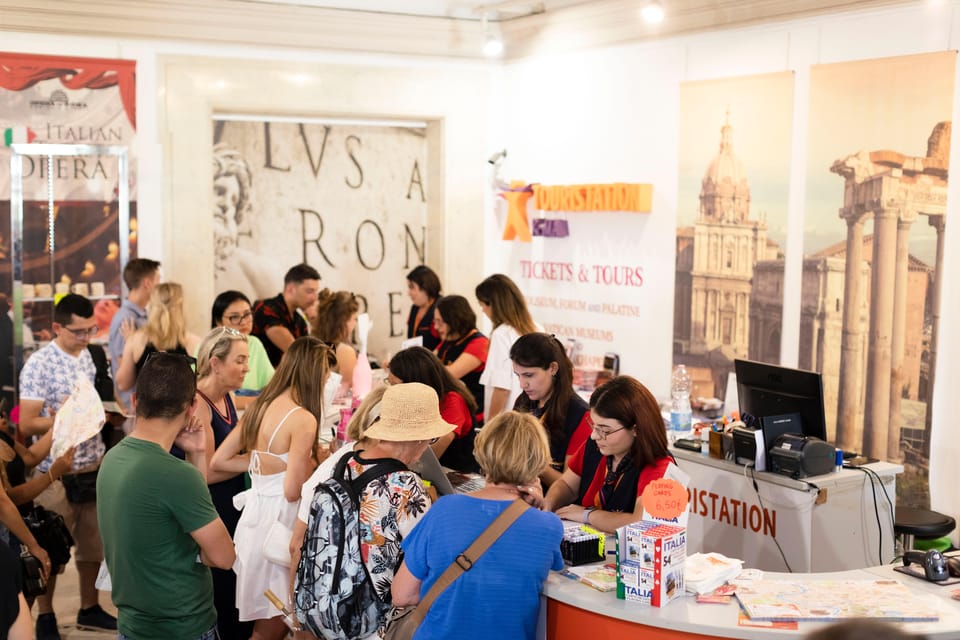
Before the walking portion starts, you get a 25-minute multimedia video on Ancient Rome at the Touristation office. This matters more than it sounds.
The Roman Forum is not one monument. It’s an entire neighborhood of stone leftovers, and your brain needs a map. A short video like this helps you attach the right themes to what you see next: sacred space, political power, public ceremonies, and the way myths got turned into legitimacy.
It also gives you a head start on the storytelling parts you’ll hear later, like why Via Sacra mattered and why people still react emotionally to specific Forum locations.
Walking the Via Sacra and Reaching the Julius Caesar Cremation Altar
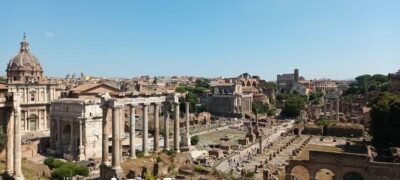
A guided route through the Roman Forum works best when the guide keeps you oriented. That’s what the Via Sacra section delivers: you walk the Sacred Road, the main route that once hosted festivals and triumphal processions.
As you move, you’ll be pointed toward the key “why this matters” moments—like the Temple area where the altar is associated with Julius Caesar’s cremation. Even though you’re walking among ancient stones, the guide helps connect the spot to what it symbolizes today.
And here’s a detail I like a lot: visitors still leave flowers and candles at that site. That small modern ritual helps you see the Forum as more than archaeology. It’s also a place where people perform memory.
Roman Forum Highlights: Seeing the Main Path With Meaning
The main path through the Roman Forum is the kind of place where first-timers often feel lost. Everything looks important, so nothing feels clear. With a professional guide, you get a structure: what you’re looking at, why it’s there, and how it connects to the bigger story of Ancient Rome.
This is where you learn the emotional tone of the Forum. It wasn’t just a backdrop for speeches and buildings. It was where Rome turned ideology into daily public life—religion, politics, victories, and the political theater of power.
You’ll also hear stories tied to how construction on Capitoline Hill began and how Rome’s leaders shaped what the city would look like centuries later. That pays off when you reach the Capitoline Museums.
Colosseum Entrance With Skip-the-Line Access (and What to Watch For)
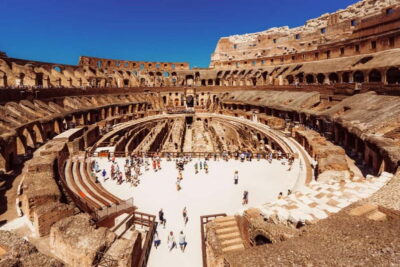
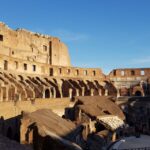
The Colosseum is the headline, but it’s also the most crowded. Skip-the-line ticket access is a real benefit here because it protects your energy for actual looking, instead of spending your time in long queues.
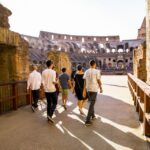
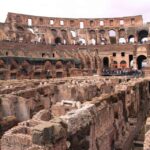
Once you’re inside, think of the Colosseum as a huge stage that Rome used to project dominance. The guide’s job is to help you see past the scale and notice the details: how the site functioned, what events it hosted, and why it became one of the city’s most recognizable symbols.
Even if you’ve seen photos before, I recommend you focus on two things during your visit:
- Proportions: how big it feels when you’re standing there, not staring at a screen
- Purpose: what the Colosseum represented in Roman public life
That combination is what turns a famous place into a memorable one.
You can also read our reviews of more guided tours in Rome
Roman Forum and Palatine Hill Tickets: Flexibility After the Guided Walk
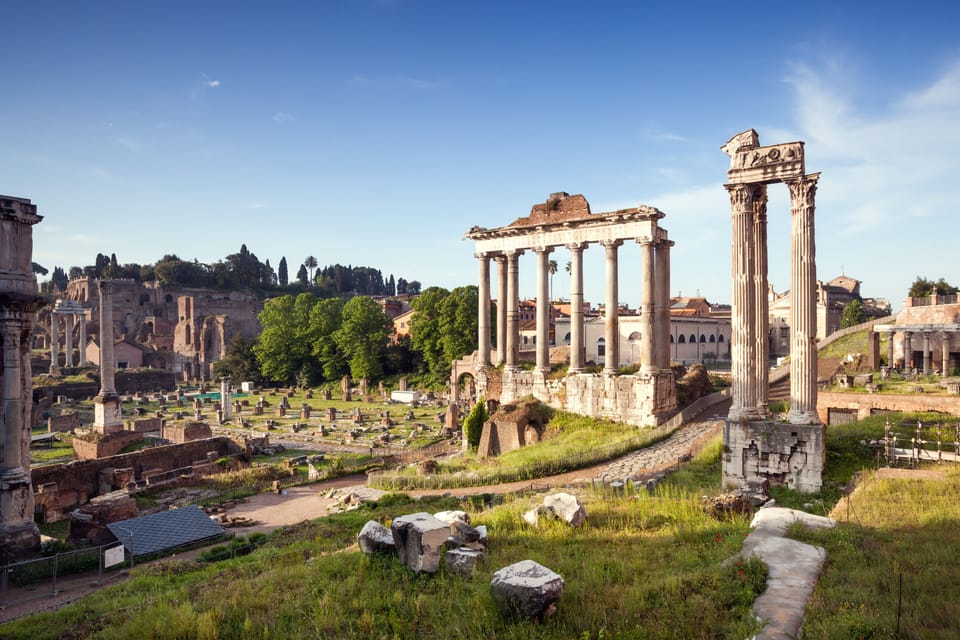
You receive skip-the-line access for Roman Forum and Palatine Hill. The important thing to understand is that Palatine Hill is not described as part of a guided tour within this package.
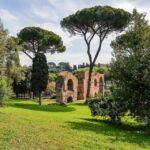
So what does that mean for you? It means you should treat Palatine Hill as your flexible add-on. If you have energy after the guided portion, it’s a strong next stop because it pairs well with what you learn on the route: Rome’s political center, elite residence area, and the layered geography of the city.
If you’re the type who always wants the guide to stay with you, plan your pace carefully. You’ll likely need a little self-direction on Palatine Hill.
Capitoline Museums: A Museum With a Mission Since 1734
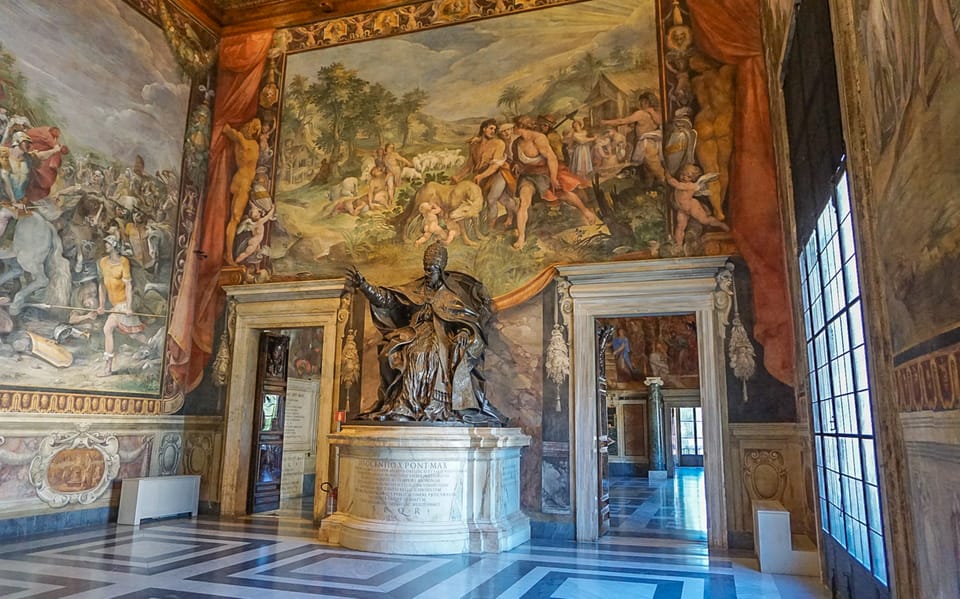
After the Roman Forum and Colosseum time, you move into the Capitoline Museums. The skip-the-line ticket helps you avoid the worst of the standstill and get to the art.
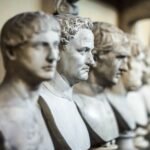
This is a museum with an origin story that’s worth hearing. You’ll learn that it opened in 1734 under Pope Clementine XII, with an idea that artwork and ancient sculptures should be accessible to every Roman. That’s a different museum mindset than you see in many places, where access historically felt restricted.
In practical terms, what you’ll like is the mix of art and Roman identity. The Capitoline Museums aren’t trying to be only decorative. They’re tied to who Rome was, and who Rome claimed to be.
Michelangelo, Caravaggio, and the She-Wolf Moment
This is the part where your eyes (and your brain) connect the ruins to the collections.
You’ll see art linked to major names, including works by Michelangelo and Caravaggio. The guide context helps here, because these artists didn’t appear in a vacuum. Their themes—power, drama, faith, and human intensity—fit perfectly with what you just learned in the Forum and around the Colosseum.
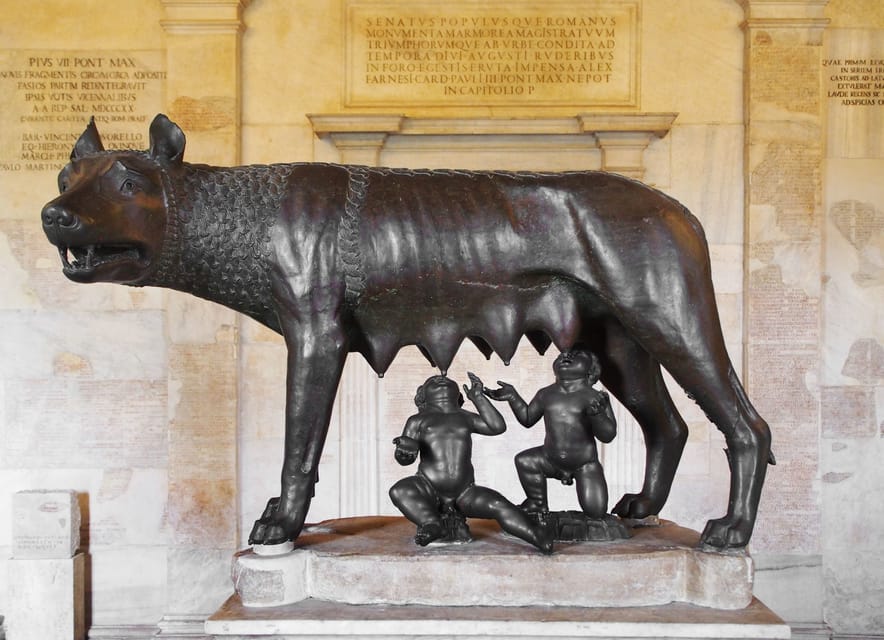
Then there’s the She-wolf statue. You’ll learn how it ties to the foundation myth of the Eternal City, with Romulus and Remus at the center of the story. The myth isn’t just a legend; it’s a political tool. Rome used origin stories like this to claim authority across generations.
Finally, there’s the Caput Mundi concept: a treasure-chest-style storytelling approach to items that explain Rome’s history. It’s the kind of structure that makes a museum feel like a guided conversation even when you’re moving at your own pace.
Capitoline Hill Views and Michelangelo’s Square Design
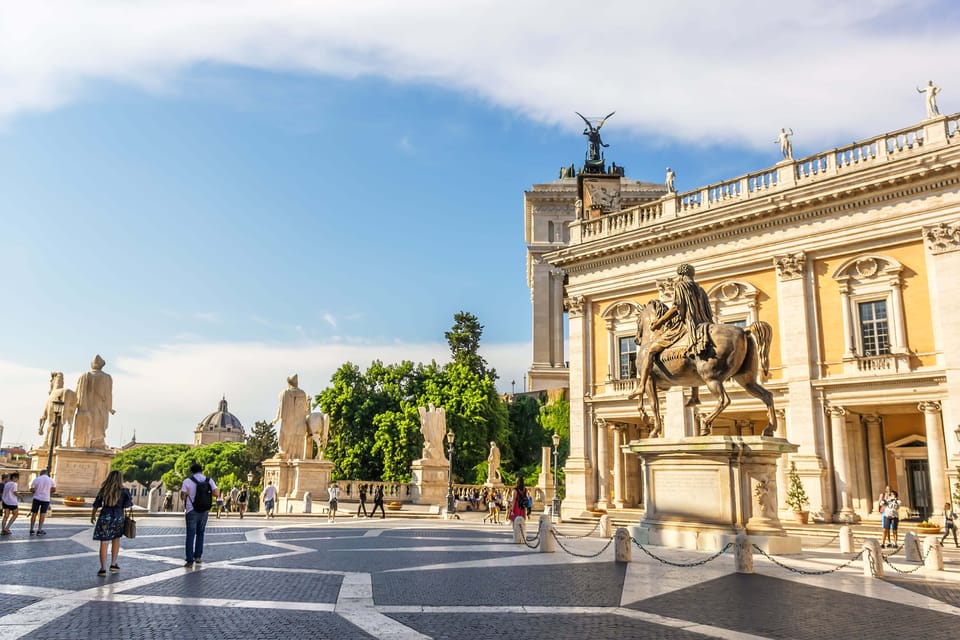
One of the best reasons to book a Capitoline stop is the view. Capitoline Hill is one of those places where the city layout starts to make sense. From here, you get sightlines to iconic landmarks like the Colosseum and the Imperial Forum, along with the ruins of the Roman Forum and Palatine Hill.
You’ll also hear the story of Michelangelo’s role: he was commissioned by Pope Paul III to design the square, and that design became the first square of modern Rome rising on Capitoline Hill.
I love that this isn’t a random photo stop. The view is connected to the history you’ve been learning. You’re not just taking pictures; you’re watching the city’s pieces line up in your mind.
Price and Logistics: Is $129.14 Worth It?
The price is $129.14 per person for a 5-hour experience. At first glance, it’s not “cheap,” especially when you see that separate ticket components exist for the Colosseum.
Here’s the key detail you should know: the Colosseum ticket price is €16.00, with a €2.00 reservation fee mentioned for the Colosseum. The rest of what you pay is tied to services like the professional guide and the skip-the-line ticket handling (plus the multimedia orientation).
So is it value? For many people, yes—because you’re buying three things at once:
- A guided Roman Forum and Colosseum experience (time-saving and clarity-building)
- Skip-the-line access for multiple sites, which really matters in Rome
- Built-in orientation through the 25-minute Ancient Rome video
If you were planning to visit everything anyway, the math tends to work out better than piecing it together one ticket at a time, especially when timing and queues are a factor.
The main situation where you might think twice is if you’re an expert Roman history traveler who doesn’t need a guide. If you already know exactly where you want to stand in the Forum and what to look for in the museum galleries, you could replicate some of the experience on your own. But if you want the story, the guide and routing are the value.
Who This Tour Suits Best (and Who Might Want Something Different)
This fits best if you want:
- a guided, high-impact Roman Forum and Colosseum experience
- art and myth at the Capitoline Museums rather than just ruins
- a plan that keeps you moving and organized within a single 5-hour window
It’s also a good match if you like asking questions and getting answers in real time. The tour leadership has been praised for being friendly and for handling questions well, and that’s exactly what you want in a place as layered as Rome.
It may not be ideal if:
- you want a long, slow museum visit at the Capitoline Museums
- you dislike structured routes and prefer to roam without time pressure
Should You Book This Forum, Colosseum, and Capitoline Tour?
If you’re visiting Rome for the first time or you want a smart “Rome hits” day, I’d book it. The biggest win is the way you get both the physical sites (Via Sacra, Roman Forum, Colosseum) and the symbolic side (Capitoline art, the she-wolf myth, the Caput Mundi story, and those Capitoline views).
You’re paying for clarity, timing, and skip-the-line access across major stops. Just be honest about your style: if you love to linger in museums for hours, you may wish you had more time than this 5-hour plan allows.
FAQ
How long is the experience?
The total duration is 5 hours, but starting times vary. You’ll need to check availability for the time options.
What’s included with the ticket?
You get a professional guide for the Roman Forum and Colosseum, skip-the-line tickets for the Roman Forum and Palatine Hill, skip-the-line tickets for the Colosseum, and skip-the-line tickets for the Capitoline Museums. There’s also a 25-minute multimedia video on Ancient Rome at the Touristation office.
Is Capitoline Museums guided?
A guided tour for the Capitoline Museums is not included. You’ll have ticket access, but you’ll explore the museum galleries on your own pace.
What languages are available?
The live tour guide is available in English and Spanish.
Where does the tour start and end?
The meeting point may vary depending on the option booked, and the experience ends back at the meeting point.
What do I need to bring?
Bring a passport or ID card, and the same applies for children (passport or ID card for children).
What if I need to cancel?
This activity is non-refundable.