REVIEW · ROME
From Rome: Ostia Antica Guided Half-Day Trip by Train
Book on GetYourGuide →Operated by City Wonders Ltd. · Bookable on GetYourGuide
Roman ruins by train beat a museum day.
This half-day outing turns Ostia Antica into something you can picture—loud commerce, everyday routines, and sea-port life where Rome kept its goods moving. I like that you go by train from central Rome with a guide meeting you right by the tracks, and then you walk the streets of the Roman Republic like the site is a time machine. One thing to plan for: it’s not designed for wheelchair users, and there’s walking on uneven archaeological ground.
My favorite part is how the guide stitches the buildings into daily life, not just facts. You’ll spend time on the main Decumanus Maximus thoroughfare, then hit standout stops like the Baths of Neptune with its famous sea-god mosaic and the amphitheater where about 3,500 people would have packed in back when it opened. I also really like the pacing: the tour is long enough to feel satisfying, but you finish with time to stay in Ostia after.
The possible downside is simple: you’re time-limited. The tour ends in Rome at Piramide Metro (around 1:00 PM), and while your return train ticket is provided, the ride back is unescorted—so you’ll want to know where you’re heading before you relax.
In This Review
- Key highlights worth your attention
- The quick reality check: what this tour really delivers
- Getting started at Cafe Piramide (and not wandering around Rome)
- The train ride from Rome sets the mood for the ruins
- Ostia Antica’s main street: reading the Decumanus Maximus
- Baths of Neptune: the sea-god mosaic you can’t forget
- Forica (public washrooms): the Roman routine part most people miss
- Amphitheater time: imagine 3,500 spectators
- Optional museum and staying in Ostia after the tour ends
- Logistics and small comforts that matter on a half-day
- The guide factor: why the tour experience can feel different
- Is $58 worth it for 4 hours?
- Who should book this tour (and who might want a different plan)
- Should you book the Rome to Ostia Antica half-day trip?
- FAQ
- How long is the Ostia Antica guided trip?
- Where do you meet for the tour?
- What’s included in the price?
- Is hotel pickup included?
- Is there a toilet break during the tour?
- Is this tour wheelchair-friendly?
Key highlights worth your attention
- Train + guide format keeps logistics easy and history flowing right from Rome
- Decumanus Maximus walking route helps you read the “city layout” as you go
- Baths of Neptune mosaic is the kind of detail you remember long after
- Forica (public washrooms) lets you see how Romans did ordinary life in real space
- Amphitheater seating experience makes the crowd feel almost present
- Optional beach time gives you a payoff beyond archaeology
The quick reality check: what this tour really delivers
This is a 4-hour guided route that’s built around one goal: getting you to Ostia Antica and helping you understand it fast, without turning it into a speed-walk. You start at Piazzale Ostiense, 9 and then take the train to the Ostia area. Once you’re at the ruins, you’re with a live English guide for about 3 hours, covering the sites that explain how a Roman port town functioned.
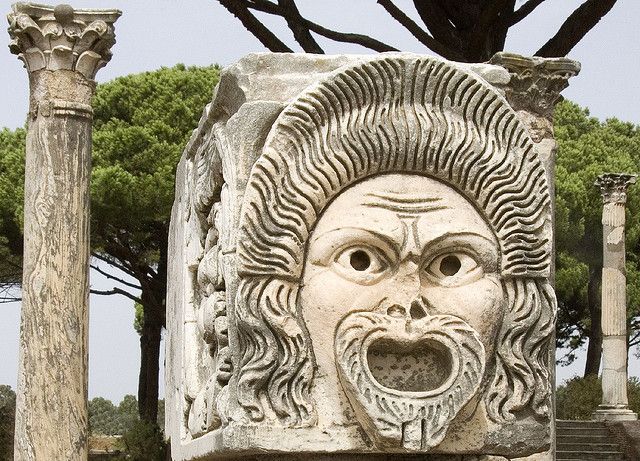
Ostia Antica is often mentioned alongside Pompeii, but in a different tone. Ostia feels more like the “working city” side of Roman life: warehouses, taverns, baths, public buildings, and the constant movement of people and products. The ruins are beautifully preserved, and the overall size can surprise you. That’s exactly why having a guide matters here.
At $58 per person, the price is less about the ruins ticket and more about what you’re buying: train time booked into the experience, your entry ticket handled, plus a guide to connect the dots while you’re standing in the middle of it all.
You can also read our reviews of more guided tours in Rome

Getting started at Cafe Piramide (and not wandering around Rome)
Meeting is at Cafe Piramide, right by the Piramide metro (Line B – blue line). If you’re facing the metro station, the cafe is on your right, visible near the train tracks and the station exit. The quickest visual clue: white umbrellas outside, and the guides hold a City Wonders sign with the tour name.
A couple practical tips that come straight from how people experience this meeting point:
- Give yourself a little buffer time if you’re arriving during peak metro crowd hours.
- If you want to ask a question before boarding, do it early. Guides tend to keep everything moving once the group is formed.
The tour provides train tickets for the day, but the ride back is unescorted. That means you should pay attention when the guide explains where to go after the tour ends at Piramide.
The train ride from Rome sets the mood for the ruins
The schedule is tight but doable: a 15-minute train ride to Ostia, then about 3 hours on-site, then a 20-minute train back toward Rome. That short transit window is a big part of why this trip works as a half-day.
If you’re comparing options, this format is a sweet spot. Full-day tours can feel heavy when you’re already doing Rome sightseeing. On the other hand, a self-guided walk can leave you staring at ruins without knowing what you’re looking at. Here, the guide bridges that gap before you even hit the best rooms, mosaics, and street corners.
Also, the small group size—limited to 12—helps. You’re able to keep up on a wide site without feeling lost in a crowd.
Ostia Antica’s main street: reading the Decumanus Maximus
Once you’re at Ostia Antica, you’ll walk the Decumanus Maximus, the main thoroughfare. This isn’t just a “pretty path.” It’s the spine of a city. When you follow it with a guide, you start noticing patterns: where public life sits, where commercial life would have been active, and how people moved through town.
One of my favorite aspects of this walking portion is how it’s described as moving in the footsteps of people from the Roman Republic. You’ll see well-preserved remains that suggest daily rhythms: taverns, warehouses, thermal baths, and theaters. You’ll also notice Roman statues lining parts of the walkways, which helps the place feel less like scattered ruins and more like a designed civic space.
A real consideration: Ostia Antica covers a lot of ground. Your best strategy is to wear comfortable shoes from the start and keep your pace steady. The guide typically keeps you moving while still stopping at the right moments.
Baths of Neptune: the sea-god mosaic you can’t forget
The Baths of Neptune are one of the tour’s strongest stops. The highlight isn’t only that it’s a bath complex. It’s the quality of the surviving art—especially the mosaic of the sea god being drawn by a four-horse chariot.
Standing near that mosaic helps you understand Roman culture in a way that feels more concrete. Baths weren’t just for hygiene; they were a social engine. They were where people met, talked, and spent time—often as part of broader daily routines.
If you like details, this is a stop built for you. If you prefer bigger “wow” moments, you’ll still find it rewarding, because the mosaic is vivid even after centuries. In hot weather, you’ll also appreciate that strong guides often manage shade breaks along the way, which can make a huge difference in summer.
You can also read our reviews of more tours and experiences in Rome



Forica (public washrooms): the Roman routine part most people miss
Then comes a stop that’s strangely human: the Forica, the communal public washrooms. You’ll see a marble bench lined with 20 well-spaced holes along four walls of an open room.
Yes, it’s an odd thing to get excited about. That’s exactly why it’s so useful. When you sit or look here, you feel the reality of how public and practical Roman life could be. This isn’t grand theater or myth on a pedestal. It’s a place designed for ordinary needs, and the layout makes that clear.
This stop works best if you lean into the experience and don’t rush past it. Give it a moment. It’s the kind of detail that makes Roman history feel less like a textbook.
Amphitheater time: imagine 3,500 spectators
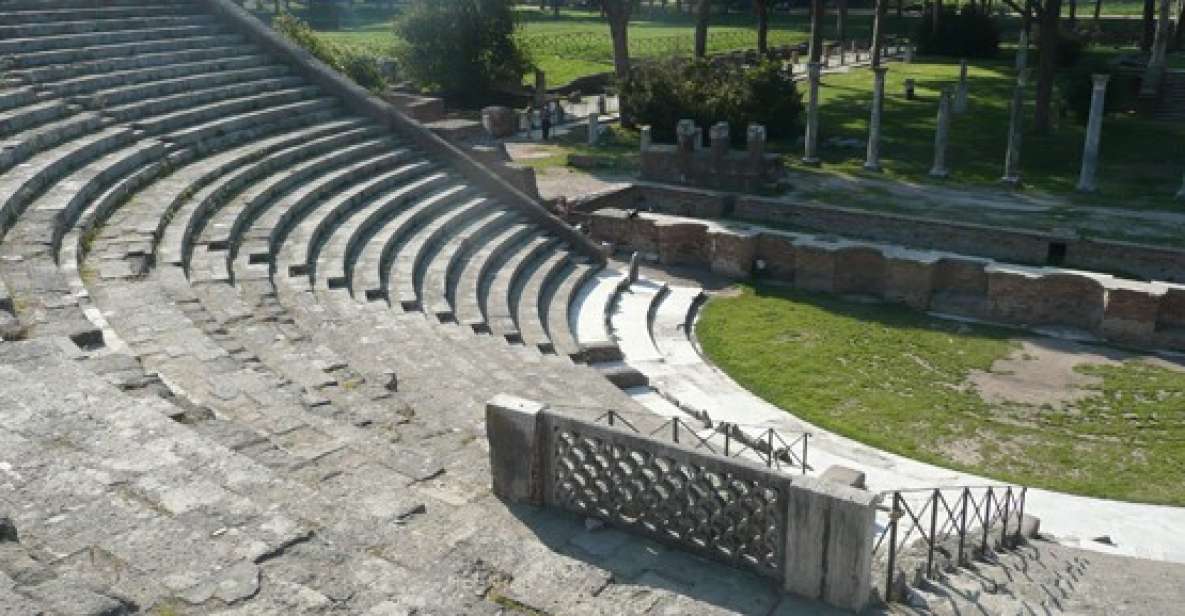
Next is the amphitheater, where the scale hits you in your body, not just your brain. The amphitheater was built in 12 BC, and it could hold around 3,500 spectators. When you take a place in the stands, you can start picturing the noise and the focus, even if you don’t know exactly which event would have filled those seats.
This part of the tour is a mental trick, and it works. The stones give you the shape. Your guide gives you the context: what an audience like that meant, how the venue fit Roman public life, and why it wasn’t only entertainment—it was also civic rhythm.
Practical point: amphitheater areas can be exposed. If you’re doing this in warm months, plan on sun. Bring what you can to stay comfortable.
Optional museum and staying in Ostia after the tour ends
At the end, you have a choice. You can remain in Ostia Antica and the modern city of Ostia to explore on your own, or you can head toward the beach. This is a great feature if your ideal day is half guided structure and half wandering.
If you want the museum side too, keep seasonal timing in mind. One important heads-up: in winter, the museum can close early, around 1:30 PM. So if you’re planning museum time after your guided portion, don’t wait too long.
And if you’re beach-minded, this is one of the easier ways to add that without blowing up your Rome schedule. The area is quieter than the big headline sites, so it can feel like a calmer shift from city crowds.
Logistics and small comforts that matter on a half-day
Here’s what helps this tour feel manageable:
- Toilet break built in, plus time for a snack or drink at the snack bar.
- Guide-led navigation on-site, so you’re not constantly asking where to go next.
- A plan for disruption: if there’s a transportation strike or other public transport issue, a minibus can be provided at no extra cost.
Bring:
- Comfortable shoes (you’ll walk more than you think)
- A towel and beachwear if you’re aiming for the beach after
- Sports shoes if the weather’s warm or the ground feels dusty
Not allowed:
- Baby strollers
Also: the tour is listed as not suitable for wheelchair users, so if mobility access is a priority, look for another format.
The guide factor: why the tour experience can feel different
This tour lives and dies by its guide—and the pattern in what people highlight is consistent: clear explanations, good pacing, and storytelling that makes Roman port life feel like a scene rather than a summary.
You’ll see names pop up in the feedback often: Rob, Cat, Alberto Terrasi, Laura, Catarina/Cat (including spelling variants), Alberto, Roberto, and Angellina. The common thread isn’t just facts. It’s delivery—some guides even use small reenactment-style moments or humorous side notes to keep attention steady on a large site.
Here’s what that means for your decision:
- If you like history as lived experience, you’ll benefit a lot from the guide’s approach.
- If you’re the kind of visitor who wants to understand what you’re seeing before you take photos, you’ll also feel the value quickly.
With a small group, it’s easier to ask questions and stay together. That reduces the classic Ostia problem: the site is big, and without guidance you can end up seeing highlights only from a distance.
Is $58 worth it for 4 hours?
Let’s talk value in plain terms. You’re paying for:
- Return train tickets between Rome and Ostia Antica
- Ostia Antica entry ticket
- A live English guide for about 3 hours
- Small-group format (up to 12 people)
In other words, this isn’t just “pay for a guide.” It’s also about not having to figure out train connections and entry logistics on your own while fitting it into a half-day.
If your alternative is self-guided Ostia, the savings can be tempting. But Ostia works best when someone helps you connect the architecture and art to daily life—Decumanus Maximus, baths, public washrooms, and the amphitheater story. That interpretive layer is what you’re buying with the tour fee.
Who should book this tour (and who might want a different plan)
This is a good fit if:
- You want a high-impact Roman ruins day without losing your whole afternoon.
- You prefer less crowded experiences compared to the biggest-name sites.
- You enjoy guides who connect buildings to everyday life.
You might think twice if:
- You need wheelchair-friendly access (this one is not suitable).
- You hate group pacing. It’s not a private tour, and the guide keeps things moving to hit key stops.
Should you book the Rome to Ostia Antica half-day trip?
If you want a Roman port city experience that feels more personal than a rushed highlight tour, book it. The combination of easy train logistics, small group size, and the focus on specific stops like the Baths of Neptune, Forica, and the amphitheater makes the time feel well used.
My advice: plan to wear good shoes, bring sun protection, and decide ahead of time whether you’ll stay in Ostia for a museum stop or head toward the beach. If you do that, this tour becomes a clean win—Rome, then ancient street life, then breathing room.
FAQ
How long is the Ostia Antica guided trip?
The total experience is about 4 hours, with roughly 3 hours spent on the guided visit in Ostia Antica.
Where do you meet for the tour?
Meet at Cafe Piramide near the Piramide metro (Line B – blue line). The cafe has white umbrellas outside, and the guides hold a City Wonders sign.
What’s included in the price?
Your ticket includes the return train ticket from Rome to Ostia Antica, the Ostia Antica entry ticket, and a live English guide.
Is hotel pickup included?
No. There is no hotel pickup or drop-off.
Is there a toilet break during the tour?
Yes. There is a toilet break with time for a snack and/or drink at the snack bar.
Is this tour wheelchair-friendly?
No. The tour is listed as not suitable for wheelchair users. Baby strollers are also not allowed.