REVIEW · ROME
Rome: Hadrian’s Villa and Villa d’Este Half-Day Tour
Book on GetYourGuide →Operated by Green Line Tours · Bookable on GetYourGuide
Hadrian’s Villa plus Villa d’Este in one short outing sounds like a lot—because it is. You’ll ride out from Rome to Tivoli on the old Via Tiburtina, then spend your time among two wildly different kinds of Italian splendor: Roman imperial ruins and Renaissance fountain theater. I especially love the big-picture feel you get at Hadrian’s Villa, where you can stand in the landscape and understand why it once outshone central Rome, and I also love how Villa d’Este turns water into design—terraces, grottoes, mosaics, and that constant fountain rhythm. One consideration: with a 4-hour total window, you may feel rushed, especially if you want long pauses for photos or shopping.
The best part for me is how the day is paced like a sampler platter, not a deep seminar. You get expert context from a live guide (one guide you’ll hear firsthand is Antonio), so you’re not just looking at stones and water features—you know what you’re seeing and why it mattered. It’s a great way to do Tivoli without committing to a full day in the countryside.
In This Review
- Key things to know before you go
- Price and timing: does a 4-hour Tivoli run feel worth it?
- From Rome to Tivoli via Via Tiburtina: the ride is part of the show
- Hadrian’s Villa (Villa Adriana): standing in the imagination of an emperor
- The views and the setting: more than a backdrop
- What you’ll want to focus on during your time
- A practical note: ruins can feel big and time can feel small
- Villa d’Este: water as architecture, not just decoration
- Why the fountains matter (and how to experience them)
- The engineering story you’ll actually understand
- Terraces and symbolism: Hanging Gardens vibes
- Time pressure: the #1 reason this tour can feel rushed
- Coach-tour logistics: what works well, what to plan around
- Timing surprises to watch for
- Comfortable shoes are not optional
- Who should book this tour?
- Should you book Green Line Tours to Hadrian’s Villa and Villa d’Este?
- FAQ
- How long is the Rome: Hadrian’s Villa and Villa d’Este half-day tour?
- What times does the tour start?
- Where do I meet for the tour?
- What’s included in the price?
- Is food or drinks included?
- What languages are the live guides available in?
- Is the tour wheelchair accessible?
- Is this tour refundable if plans change?
Key things to know before you go
- Two sites, one tight schedule: you’ll cover both Hadrian’s Villa and Villa d’Este in about an hour each, so plan to move.
- Big views on the way: the coach ride includes countryside moments near Bagni di Tivoli, not just highway time.
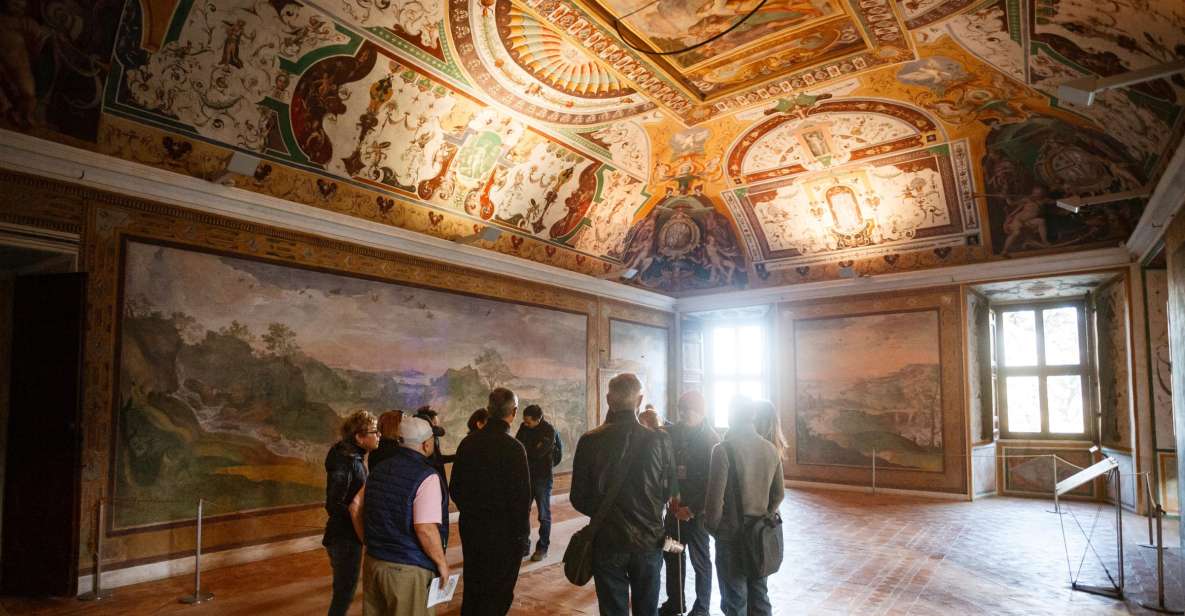
- Fountain garden focus: Villa d’Este is famous for an enormous number of fountains, grottoes, frescoes, and mosaics—this is where you’ll spend your eyes.
- Roman power in ruin form: at Hadrian’s Villa you can make sense of how this place was built to impress more than the center of Rome.
- Travertine is part of the story: you’ll spot the idea of vast travertine marble quarries en route.
- English/French/Spanish guidance: live tours are available in multiple languages, which helps a lot for ruins and symbolism.
Price and timing: does a 4-hour Tivoli run feel worth it?
At $113.29 per person for a half-day tour, you’re paying for something simple: transportation out of Rome plus guided entry to both major sites. If you tried to do this on your own, you’d still need the logistics sorted (getting to Tivoli twice, coordinating ticket lines, and figuring out how to connect the two villas with sensible walking). For many visitors, that time-saving is the real value.
Timing matters here. Depending on the season, you start either 2:15 PM (April–September) or 7:45 AM (October–March). Late afternoon can be lovely for walking gardens, while a morning departure can help you avoid the midday crush around outdoor attractions. Either way, your window is short enough that you should treat this like an efficient “greatest hits” tour rather than a slow stroll.
Also know that your route is built around Hadrian’s Villa first, then Villa d’Este. If you’re personally more obsessed with one than the other, this schedule can be a deal-breaker—or it can work fine if you’re open-minded.
You can also read our reviews of more tours and experiences in Rome



From Rome to Tivoli via Via Tiburtina: the ride is part of the show
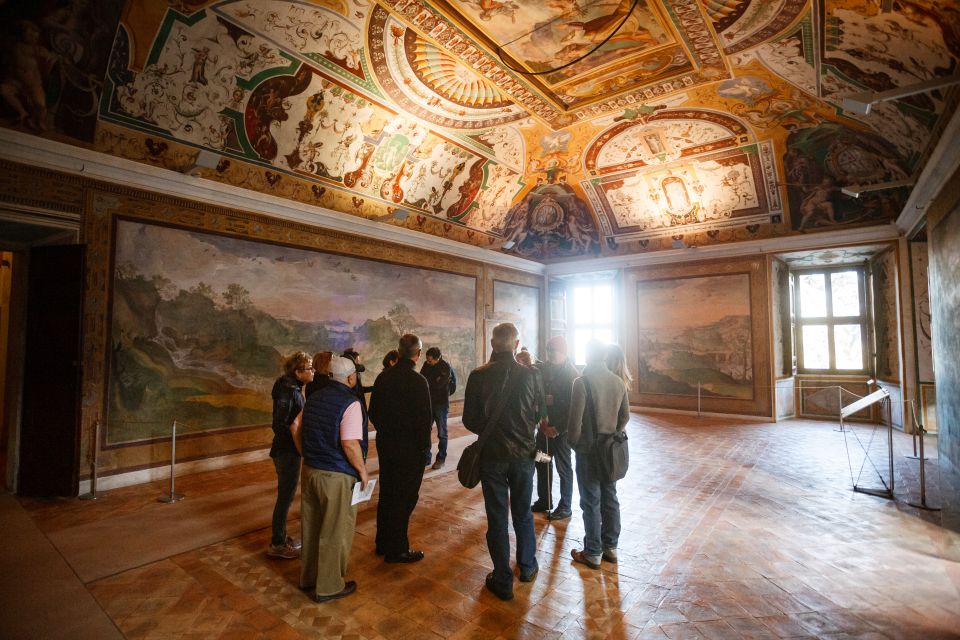
You meet at 32 Via Giovanni Amendola (GLT Terminal) in Rome, and you return to the same place. That matters because it keeps the day from turning into an extra transportation puzzle on your own.
On the way into Tivoli, the coach follows the old Via Tiburtina corridor—an important Roman road link in the broader story of the region. You also get glimpses of the countryside as you approach Bagni di Tivoli, which ties directly to the villas’ real-life setting. This isn’t just “getting there.” It’s a quick orientation to why Tivoli has always been about water: springs, spa traditions, and the kind of landscape Romans wanted to control and display.
One more thing I appreciate: the tour cues you to look for travertine marble quarries. Even if you don’t nerd out over building materials, it gives you a clearer picture of how Rome’s power was literally extracted, transported, and turned into stone architecture.
Hadrian’s Villa (Villa Adriana): standing in the imagination of an emperor
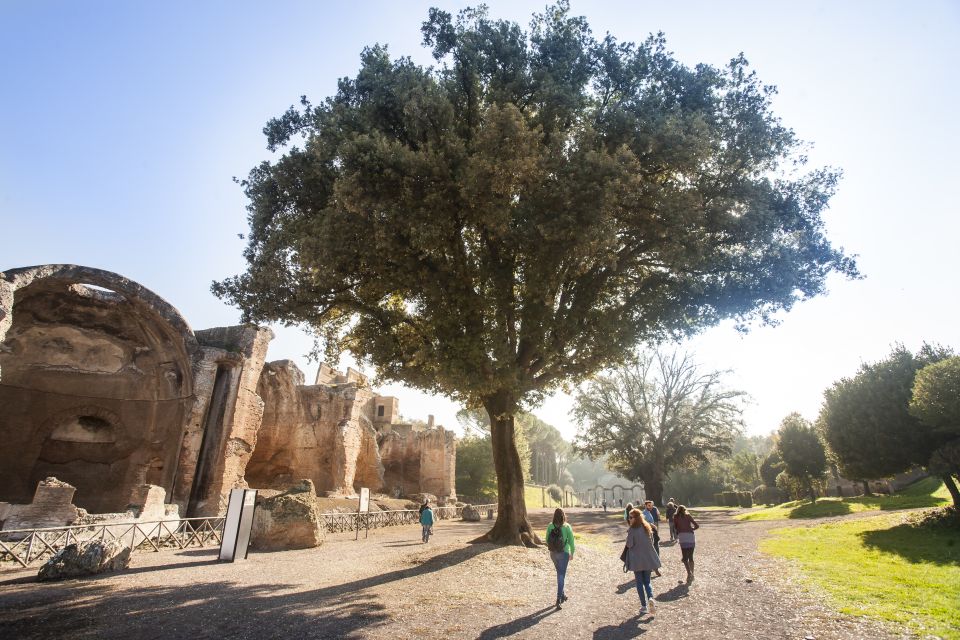
Hadrian’s Villa is one of those places where the ruins don’t feel like scattered leftovers. They feel like a plan that outlived the person who created it.
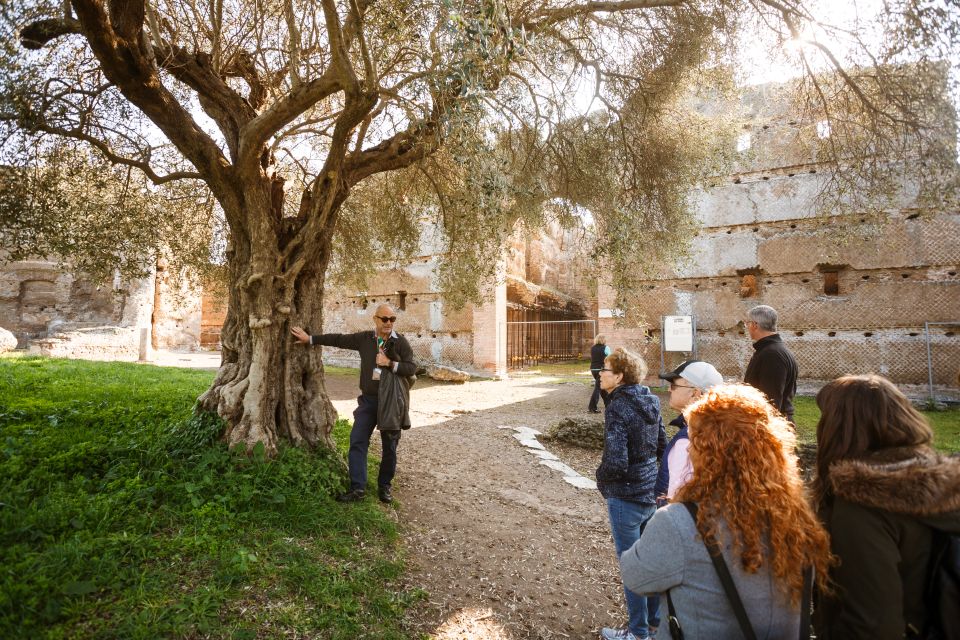
In the 2nd century, Hadrian’s Villa functioned as an imperial statement. It was built with a sense of scale and control that made it feel more impressive than the political center of Imperial Rome. That’s a big claim, but the site layout helps you understand why: you’re not just seeing a palace. You’re walking through an empire-level “world” made of gardens, water features, theatrical architecture, and zones for different moods.
The views and the setting: more than a backdrop
Even when you’re staring at stone foundations, you’re also staring out at hills and the countryside. The location near the Tiburtini Hills matters because springs fed the area, and the same water logic reappears at Bagni di Tivoli. You start to feel how this place was both designed and fed by the land itself.
What you’ll want to focus on during your time
You’re not going to see everything in a short visit. What you can do is aim for the elements that give the villa its personality:
- Canopus and the Serapeum area: you’ll see architectural pieces like columns and caryatids that help explain the villa’s theatrical styling. This isn’t random decoration; it’s Roman taste with an eye to prestige and meaning.
- The artificial grotto linked to Serapis: the tour highlights the grotto named after an Egyptian temple to Serapis. That detail is a clue to how Hadrian collected ideas. He wasn’t just building in Rome’s style—he was borrowing symbols and moods and placing them into his own imperial setting.





A practical note: ruins can feel big and time can feel small
Here’s the tradeoff. Hadrian’s Villa covers a lot of ground, and the tour keeps the visit to about an hour. If you’re the type who wants to linger—read every plaque, soak up every courtyard, and take a slow photo circuit—you may find yourself moving faster than you like. The flip side: because your time is limited, you’ll likely concentrate on what you most care about: the centerpiece architecture, the named zones, and the water-and-mood elements.
Villa d’Este: water as architecture, not just decoration
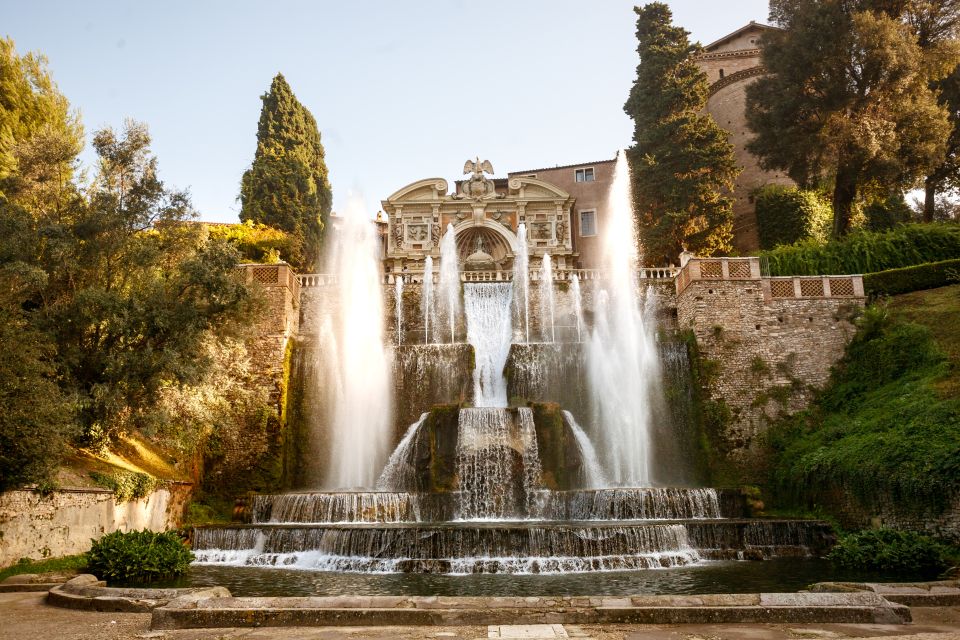
If Hadrian’s Villa is about power expressed in stone and planning, Villa d’Este is about sensation—water, shade, sunlight, and constant visual movement.
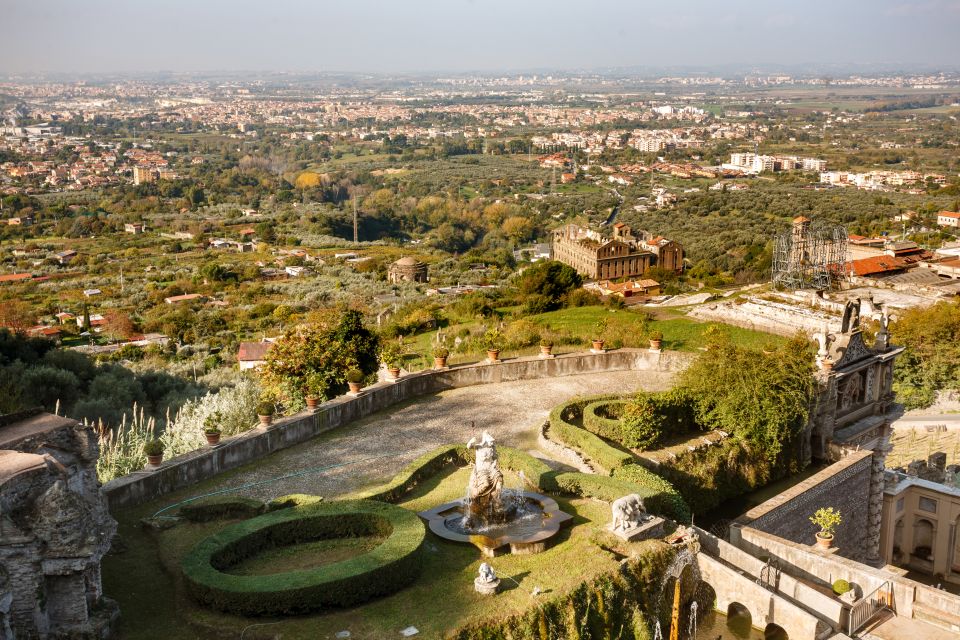
This is the Renaissance villa that people remember. You’ll walk Italianate gardens with grottoes, frescoes, mosaics, and a whole system of terraces where fountains create that syncopated soundscape. The “wow” factor isn’t just that fountains exist—it’s how they’re placed and staged, so each terrace level feels like a new scene.
Why the fountains matter (and how to experience them)
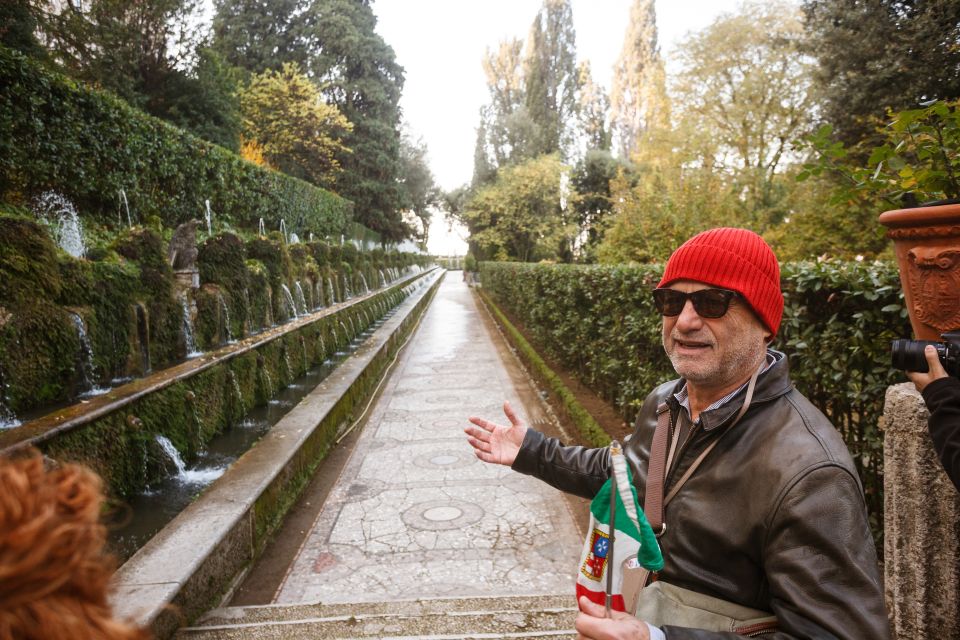
Villa d’Este is famous for an abundance of fountains, and it’s easy to get hit with overwhelm. My advice: don’t try to catch every single spout like it’s a checklist. Instead, pick two or three fountain clusters to follow from terrace to terrace. That way, you notice how the designers used elevation and sightlines to choreograph where your attention goes.
Also, pay attention to shade. These gardens offer pockets of relief, and sunlight hits the stone and water in different ways. If your timing lands you in harsh afternoon light, step back when the sun is strongest and let your eyes adjust—your photos will improve, and the whole place feels less frantic.
The engineering story you’ll actually understand
You’ll learn about Roman engineering through the underground aqueduct concept here—evidence of how much planning had to happen behind the scenes to make fountain performance possible. That’s the kind of fact that transforms the gardens from pretty to impressive. You’re not just admiring water; you’re understanding the system that keeps it moving.
Terraces and symbolism: Hanging Gardens vibes
A series of terraces is designed to evoke the Hanging Gardens of Babylon idea. Whether or not you care about the legend, the terraces change how you walk. You move upward and downward through scenes, so you’re always experiencing a sequence instead of one static viewpoint.
Time pressure: the #1 reason this tour can feel rushed
This is where you need to be honest about your own pace. The garden visit is roughly an hour, and for many people that’s enough to hit the main highlights. But if Villa d’Este is your top priority, plan to arrive ready to focus. One day-long dream can’t fit into a half-day schedule, and even with a smooth flow, you may still feel you missed slower pleasures like extended wandering or stopping for small shopping.
Coach-tour logistics: what works well, what to plan around
This is a guided coach tour. You get transportation, entrance fees to both Hadrian’s Villa and Villa d’Este (including the gardens), and a local guide. Food and drinks are not included, so you’re responsible for water and any snack needs.
If you hate being herded, this tour might stress you. The upside is that everything you need—entry, guidance, and route planning—is handled. You don’t lose time figuring out the connection between sites, and you get context that helps you understand the difference between an imperial complex and a Renaissance garden machine.
Timing surprises to watch for
Your tour is described as 4 hours, but it may run a bit long in real life. That can be good (more time inside), but it can also mess with any tight evening plans. If you have dinner reservations or a hard stop later in the day, keep some cushion.
Comfortable shoes are not optional
Both sites involve walking on uneven grounds. Ruins and gardens don’t always play nice with sandals. Bring shoes that let you move confidently, because your success here is about pace.
Who should book this tour?
This tour is a strong fit if you want:
- A first-timer’s Tivoli fix: you get the two headline villas in one day.
- Guided orientation: you like explanations of what you’re seeing (ruins zones, why symbols matter, and how water works in the garden design).
- A practical time budget: you’re in Rome and you don’t want a full day commitment.
It’s less ideal if:
- You want a slow, photo-heavy experience with lots of reading and lingering.
- You’re mainly there for shopping time or extra freedom between stops.
- You’re sensitive to rushed pacing and have very specific expectations about how long you’ll spend in each place.
If you’re torn, I’d use this rule: if Villa d’Este is your top love, you’ll still enjoy it here, but you should go in with a plan for what you want to catch. If Hadrian’s Villa is your priority, be prepared for the site size and keep your focus on the standout zones the guide points out.
Should you book Green Line Tours to Hadrian’s Villa and Villa d’Este?
I think this tour is worth it for most visitors who are short on time and want the big highlights without logistics headaches. The value isn’t just the price—it’s the fact that you get entrance included for two major attractions plus a guide who can connect the dots between Roman imperial design and Renaissance fountain engineering.
Book it if you want a guided “greatest hits” day and you can live with a brisk pace. Skip it (or adjust expectations) if you’re the kind of person who hates time limits at ruins and gardens and wants hours to wander freely.
If you’re sitting in Rome with limited time, this is a smart way to see the countryside’s prettiest famous villas—without turning your day into a map-reading exercise.
FAQ

How long is the Rome: Hadrian’s Villa and Villa d’Este half-day tour?
The tour duration is listed as 4 hours.
What times does the tour start?
Starting times depend on the season: 2:15 PM (April–September) and 7:45 AM (October–March).
Where do I meet for the tour?
You meet at 32 Via Giovanni Amendola (GLT Terminal), Rome.
What’s included in the price?
Entrance fees to Hadrian’s Villa and Villa d’Este and gardens, transportation, and a local guide are included.
Is food or drinks included?
No. Food and drinks are not included.
What languages are the live guides available in?
The live guide is available in English, French, and Spanish.
Is the tour wheelchair accessible?
The tour is listed as wheelchair accessible, but only if the passenger travels with a companion who can assist them on and off the bus. Wheelchairs are stored in the luggage area of the bus.
Is this tour refundable if plans change?
Yes. It offers free cancellation up to 24 hours in advance for a full refund.