REVIEW · ROME
Ostia Antica Tour with Transfer: Private or Group of Max. 8
Book on GetYourGuide →Operated by Touriks · Bookable on GetYourGuide
One step out of Rome and you get history that feels human. This small-group Ostia Antica tour with transfer brings you to a remarkably intact Roman port city, explained by an expert archaeologist with clear, story-driven context. I especially like the way the headsets keep the guide easy to follow, and I like the pacing: enough time to wander key streets and spaces without feeling rushed.
The one real consideration is walking: expect a moderate amount across uneven archaeological ground, and it’s not recommended for wheelchair users or people with reduced mobility.
In This Review
- Key highlights I’d circle first
- A smooth way to reach Ostia Antica (without burning your day)
- Meet your guide and get oriented fast
- The 2-hour guided walk: what you’ll actually see
- The ancient port city feeling
- Decumanus Maximus: Rome’s main street, made practical
- Roman baths and mosaic artistry
- The Roman Theatre: architecture you can feel
- Forum, temples, and the strange pull of underground cults
- Forum and temples: the city’s power center
- The Mithraeum: religion beneath your feet
- Return to Rome (and your choice to keep exploring)
- Group size and pacing: why max 8 changes the experience
- Price and value: what you’re paying for at $123.48 per person
- Who should book this Ostia Antica tour?
- My bottom line: should you book
- FAQ
- How long is the Ostia Antica tour with transfer?
- Is this a private tour or a group tour?
- What’s included in the ticket price?
- Where do we meet, and what time should we arrive?
- How do I get back to Rome after the tour?
- Are headsets provided, and will I be able to hear the guide?
- Is the tour suitable for wheelchair users or reduced mobility?
Key highlights I’d circle first
- Small group max 8 or private option, so questions don’t get lost in the crowd
- Licensed archaeologist guide who turns daily Roman life into something you can picture
- Skip-the-ticket-line entry plus entrance fees included to keep your time on-site efficient
- Baths of Neptune, Roman Theatre, Decumanus Maximus, and more major sights in a tight 2-hour walk
- Mithraeum and underground cults explained in a way that makes the ruins feel less mysterious
- Transfer + luggage deposit option from a central office, which is a big deal in Rome
A smooth way to reach Ostia Antica (without burning your day)
Ostia Antica sits close enough to Rome that you can treat it like a day trip, but far enough that logistics can eat your time. This tour is built to solve that problem. You meet at the TouriksPoint at Via di San Giovanni in Laterano 132, and then you head out by private van from the city center.
The schedule is simple: about 30 minutes in the van to get to the archaeological park, then 2 hours of guided exploring, then 30 minutes back. Because the transport is handled, you’re not hunting for schedules, figuring out transit connections, or arriving to the site already tired.
One smart touch: there’s mention of a luggage deposit at the city-centre office, but only if you select the return-transfer option during purchase. If you’re traveling light, you might skip this detail. If you’re not, it’s exactly the kind of practical Rome fix that can make the trip feel “easy.”
You can also read our reviews of more private tours in Rome

Meet your guide and get oriented fast
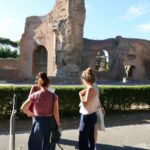
You start at the TouriksPoint in Rome, and you’ll want to show up 15 minutes before your scheduled departure. That isn’t just theater. It gives you time to find your group, sort out headsets, and get your bearings before you leave.
Your guide works through the park with an expert, archaeologist-style approach. The effect is that Ostia stops being a list of ruins and becomes a place with routines: markets, bath culture, public entertainment, religious spaces, and home life. The guides are also praised for making the site feel alive through storytelling. In particular, I saw guide names like Mario and Francesca connected to standout experiences, including excellent narration that keeps the ruins from feeling flat.
Headsets are included, and that matters more than it sounds. Archaeological sites can be open, windy, and spread out. With audio delivered to you, you don’t have to constantly turn your head or play guessing games when someone speaks a few steps ahead.
The 2-hour guided walk: what you’ll actually see
This tour is built around a classic Ostia Antica route, but the real value isn’t just the list of landmarks. It’s the order and the explanation, which helps you understand why each part existed and what it meant day to day.
The ancient port city feeling
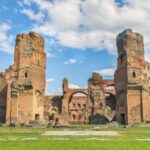
Ostia is often compared to Pompeii, but the comparison is mostly about the “time-frozen” preservation and the readable layout. Here, the story you’ll hear is specifically about a Roman port city, full of movement and commerce. When you’re guided well, you start to notice how the streets connect public spaces to everyday needs: where people gathered, where they cooled off, where they watched performances, and where different religious groups marked important moments.
If you’re tired of Rome where everything is spread out and crowded, this is the counterweight. The park setting feels quieter and more controlled, which makes it easier to see details.
Decumanus Maximus: Rome’s main street, made practical
You’ll stroll down the Decumanus Maximus, Ostia’s main east-west artery. Streets like this sound boring on paper, but with context they become a framework. The guide’s job is to help you read the layout: where movement would have concentrated, how shops and buildings faced the street, and how the city functioned as a working system rather than a museum backdrop.
You can also read our reviews of more tours and experiences in Rome




Roman baths and mosaic artistry
One of the specific “wow” stops is the Baths of Neptune and its mosaics. Baths in Roman cities weren’t only about hygiene. They were social hubs: meeting points for conversation, gossip, and routine. Seeing the space with a guide helps you understand why people spent so much time there.
You’ll also walk by stunningly intact Roman baths, theatres, and streets. That phrasing is marketing, but the practical takeaway is this: you’re going to see structures that still communicate scale and layout. That’s what makes Ostia satisfying even if you’ve seen other ruins before.
The Roman Theatre: architecture you can feel
The Roman Theatre is another major highlight. It’s the kind of space where the architecture does some of the work for you. If you stand in the right area with a guide, you can connect seating levels and sightlines to how people watched performances.
It’s also a break from purely architectural reading. The theatre helps you picture entertainment as part of civic life.
Forum, temples, and the strange pull of underground cults
Ostia isn’t only about public entertainment and daily routines. The spiritual side is a major thread of the tour, and it’s where you get some of the most memorable “wait, what?” moments.
Forum and temples: the city’s power center
You’ll explore the Forum and Temples, learning about their spiritual significance. What I like here is that religion isn’t presented as random superstition. The guide frames cult life as something tied to community identity, official worship, and belief systems that shaped behavior.
The result is that the Forum feels like a place where important decisions and public ceremonies would have mattered. You’re not just looking at columns. You’re being guided to understand function.
The Mithraeum: religion beneath your feet
One of the standout promises is discovering secret underground temples and the Mithraeum. The Mithraeum is described as mysterious, and that mystery is the point. Roman cults like this weren’t necessarily designed for casual public access. When a guide connects that idea to what you’re seeing in the ruins, it makes the underground spaces feel purposeful rather than confusing.
This is also where a strong guide makes the difference between a “check the box” visit and a real learning experience. If you like symbolism and hidden-room stories, this part is often where you’ll feel the tour earn its place on your itinerary.
Return to Rome (and your choice to keep exploring)
At the end of the tour, you come back to the same meeting point for the guided portion. But you’re not locked into rushing back immediately.
The structure works like this:
- You can choose to stay longer in the archaeological park.
- Or you can let the guide accompany you to the train station.
- From there, you can return either to the city center or the nearby beach.
- A public transport ticket is included for that return movement.
Here’s the key detail: the return method depends on what you bought. The tour includes a train ticket for the return to Rome if a specific return transfer wasn’t selected during purchase. If you did select the return transfer option, then the return transfer from Ostia Antica back to the city-centre office is included. If you want maximum ease, select the option that matches your comfort level with public transport.
If you’re pairing this with a Rome-and-beach plan, the beach option is a nice bonus. You can turn one guided morning/afternoon into a longer day without wasting time.
Group size and pacing: why max 8 changes the experience
The tour offers two modes:
- Small group with a maximum of 8
- Private guide
In practice, that small ceiling matters. Ostia Antica is a site where questions come up as you walk: Why is this laid out this way? What did this room function as? How did daily life connect to politics and religion? When your group stays small, the guide can actually adjust. You don’t just listen—you can talk.
The format is also built for comfort. The duration is listed as 2.5 hours, which includes transfer time. The on-site guided portion is 2 hours, enough to hit major highlights without you feeling like you’re stuck on a long walking treadmill.
Still, wear comfortable shoes. The tour explicitly mentions moderate walking, and Ostia’s ground can be uneven. If you’re the type who needs frequent long breaks, you might find the pace a bit brisk. If you’re okay with a good walking rhythm, you’ll likely enjoy it.
Price and value: what you’re paying for at $123.48 per person
At $123.48 per person, this isn’t a bargain-basement tour, but it does stack up in value if you care about time and explanation. Here’s what’s included, and how it affects real decisions:
You’re getting:
- A licensed expert guide
- Entrance fees to Ostia Antica
- Headsets so you hear clearly
- Private transfer from a city-centre office to the site (and back if you select that option)
- A train ticket for the return (unless you choose private return transfer)
- Optional luggage deposit at the office if you pick the return-transfer option
So you’re paying mostly for guided interpretation plus the logistical lift. If you were to DIY this, you’d still need to solve transport and entry time, and you’d miss out on the kind of context that makes the Mithraeum and cult stories stick.
For me, the best value is when you want more than sightseeing. If you like understanding how Roman cities worked—streets, baths, theatre life, and religious spaces—an archaeologist-led route is worth the extra cost.
Who should book this Ostia Antica tour?
This is a great match if:
- You want a more relaxed alternative to central Rome crowds
- You prefer small groups or a private guide
- You enjoy ruins with stories that connect architecture to daily life
- You want a practical day plan with transfer handled
It’s not an ideal fit if:
- You need wheelchair-friendly routing (the tour notes it’s not suitable for wheelchair users)
- You dislike walking on archaeological terrain
- You want a totally self-directed, slow museum-style browse (the tour has a set guided route)
Also, if you’re traveling with kids, there’s a good sign here: the tour is described as a highlight for a family group, with the guide sharing lots of stories without losing attention. Shorter ruins-focused routes like this can work well for families when the guide keeps the energy moving.
My bottom line: should you book
Yes, if you want Ostia Antica to feel like a real place, not a pile of stones. The blend of licensed guide storytelling, headsets, and easy transfers makes it one of the more efficient ways to see this site without draining your day.
If your priority is maximum independence, or if you’re sensitive to walking uneven ground, you might consider other formats. But for most visitors who want the essentials done well—Baths of Neptune, theatre, main streets, the Forum, and the underground Mithraeum—this hits the right amount of structure.
FAQ
How long is the Ostia Antica tour with transfer?
The tour lasts about 2.5 hours total, including transport. The guided time at Ostia Antica is 2 hours, with around 30 minutes by van to and from the site.
Is this a private tour or a group tour?
You can choose either a private option or a small group with a guaranteed maximum of 8 people.
What’s included in the ticket price?
The tour includes a licensed expert guide, entrance fees to Ostia Antica, headsets, private transport from the city-centre office to Ostia Antica, and a return train ticket if private return transfer is not selected.
Where do we meet, and what time should we arrive?
You meet at the TouriksPoint at Via di San Giovanni in Laterano 132, 00184 Rome. Arrive 15 minutes before your scheduled starting time.
How do I get back to Rome after the tour?
After the tour, you can stay longer or go with the guide to the train station. From there you can return to Rome city center or to the nearby beach using public transport. A public transport ticket is provided, and a train ticket for return to Rome is included if private return transfer was not specifically chosen.
Are headsets provided, and will I be able to hear the guide?
Yes. The tour includes headsets so you can hear the guide clearly during the walking sections.
Is the tour suitable for wheelchair users or reduced mobility?
No. This tour is not recommended for people with reduced mobility or wheelchair users.