REVIEW · ROME
Rome: Catacombs of Domitilla Entry Ticket & Guided Tour
Book on GetYourGuide →Operated by OPERA ROMANA PELLEGRINAGGI · Bookable on GetYourGuide
Cold stone, old prayers, real stories.
This Rome catacombs tour is interesting because you go below street noise into one of the city’s biggest underground burial grounds. I especially like the way the visit brings together pagan and Christian art in the same underground world, and how the guide focuses on the burial significance and the restoration effort behind what you’re seeing. One consideration: no photography inside, so if you want photo proof, you’ll have to rely on your notes and memory instead.
In just 30 minutes, you get a guided route with an English or Italian live guide in a small group of up to 10. You descend about 16 km beneath the busy surface streets to walk through chambers and levels that were reused and reinterpreted over centuries, from family tomb areas to later Christian spaces.
In This Review
- Key things to know before you go
- Why the Catacombs of Domitilla Feel Different from Other Rome Stops
- The 30-Minute Plan: What You See on the Two Levels
- Hypogeum of the Flavians: Domitilla and the Family Burials
- Frescoes and Belief Change: Pagan Spaces Turn Christian
- Martyrs, Crypts, and the Popes: Nereus, Achilleus, Damasus, Siricius
- Guides, Questions, and Restoration Talk in a Small Group
- Price, Duration, and Value for a 30-Minute Underground Visit
- Getting There and Showing Up at the Ticket Office
- What to Bring (and the One Rule That Changes Your Memories)
- Who This Tour Suits Best (And Who Might Want Another Option)
- Should You Book This Domitilla Catacombs Tour?
- FAQ
- Where do I meet for the Catacombs of Domitilla tour?
- How early should I arrive before the tour?
- How long is the guided tour?
- What languages are offered?
- Is a tour guide included?
- How much does it cost?
- Is photography allowed inside the catacombs?
- What group size should I expect?
- Is the tour suitable for wheelchair users or mobility impairments?
- What should I bring and wear?
- What is the cancellation policy?
- Is there a reserve now and pay later option?
Key things to know before you go
- Small group (max 10) means you’re more likely to hear details clearly and ask questions
- Pagan-to-Christian transformation is a major theme, not just a “history lesson”
- Guides explain restoration so you understand why the site looks the way it does today
- Two main levels help you visualize how burial practices shifted over time
- No photos inside keeps the focus on seeing and listening rather than documenting
Why the Catacombs of Domitilla Feel Different from Other Rome Stops
The Catacombs of Domitilla sit on via delle Sette Chiese, outside the usual loop of famous ruins. What makes them memorable is the scale and the layers. This isn’t one sealed “time capsule.” It’s a burial landscape that changed as belief changed, with spaces that shifted from pagan use to Christian use.
You’ll also feel the underground mood fast. The walls are cold, the air is still, and the stone changes how you perceive sound. Even with a short visit, it has that “you are underground for a reason” effect, because the site was built for remembrance, not sightseeing.
Another thing I like is how the story connects people, families, and rulers instead of staying abstract. The name Domitilla matters here, tied to Flavia Domitilla and her family background, and it keeps the catacombs from feeling like a generic Roman cemetery.
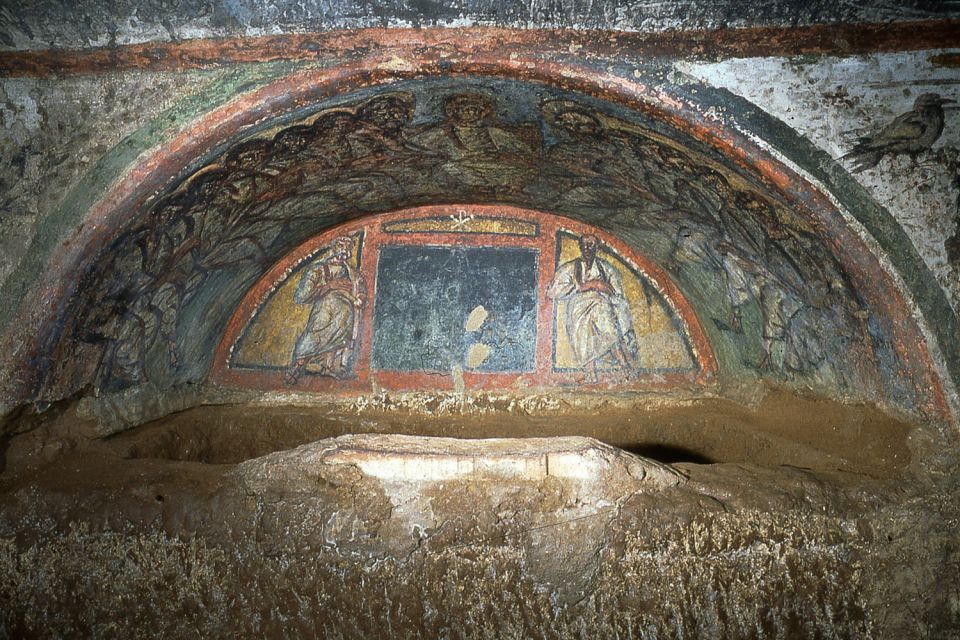
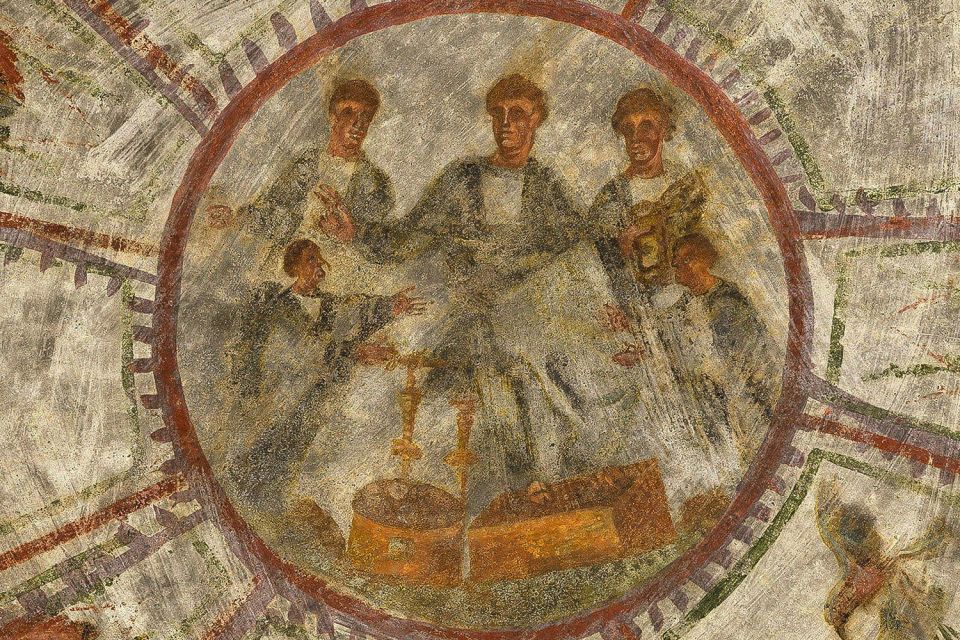
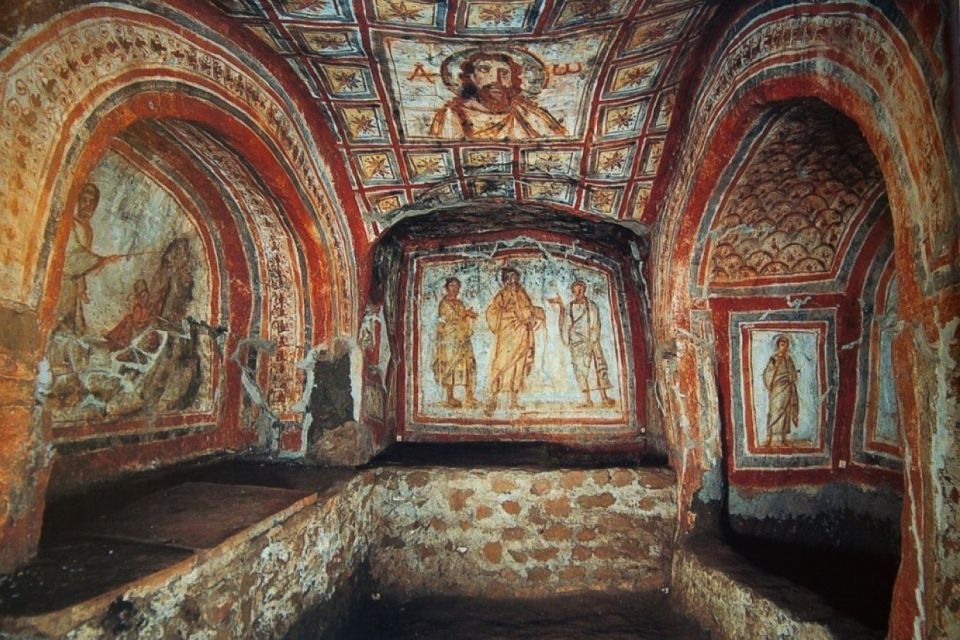
Finally, there’s the art. You’ll see a unique mix that includes both pagan and Christian frescoes, which is not something you usually get in a single underground stop. It gives you a practical way to understand how early communities lived next to, and then through, changing beliefs.
You can also read our reviews of more tours and experiences in Rome


The 30-Minute Plan: What You See on the Two Levels
This tour is designed to be efficient. It lasts about 30 minutes, so you won’t wander for hours. Instead, you follow a guided route that focuses on the most important areas and the main transitions in the catacombs’ history.
The site is divided into two main levels. That structure matters because it helps you track the “before” and “after” moments. The first level connects with the area tied to the Flavian family story. The second level is where later Christian burial developments become especially clear.
Even though the highlight list sounds big, the tour stays readable. Guides typically point out the architectural logic: chambers built to be reached and reused, corridors shaped to keep movement orderly, and spaces adapted as different communities needed them. In a small group, you’re less likely to feel rushed or lost in the dark.
A small but meaningful detail: because it’s only 30 minutes, you should treat it like a focused museum visit rather than a long “explore and get lost” adventure. If you want to ask lots of questions, arriving on time helps, because the schedule is built around short, guided blocks.
Hypogeum of the Flavians: Domitilla and the Family Burials
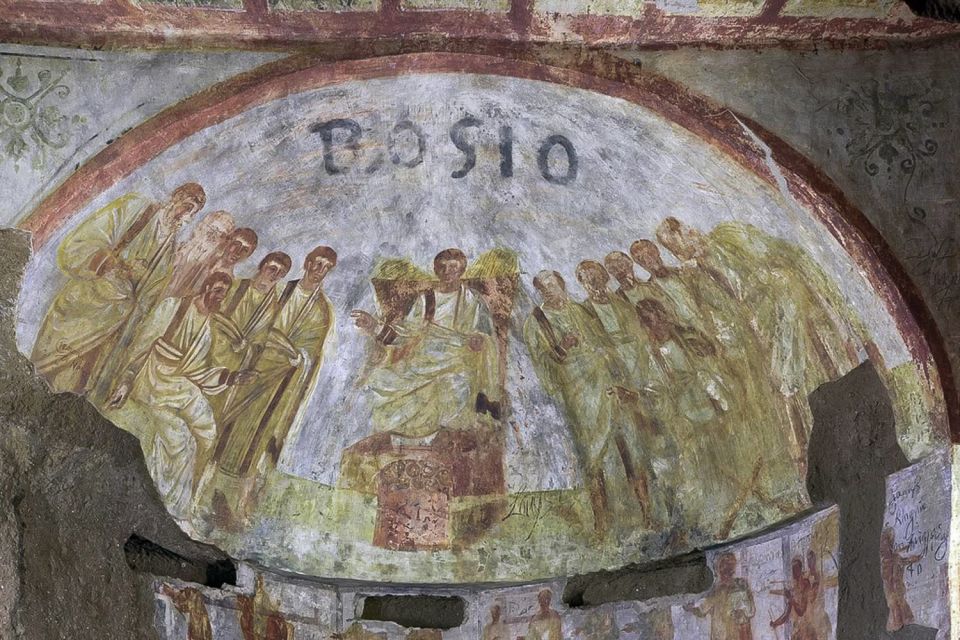
One of the most compelling parts of the story is the early association with the Flavia Domitilla family area. This begins in the so-called Hypogeum of the Flavians. It’s linked with land tied to Flavia Domitilla and burial grounds set up there by donation to her freedmen.
You also get the political and family context. Flavia Domitilla is described as related to the imperial family, with a background connected to Flavio Clemente, consul in 95 AD. That connection matters because it shows how status and family ties influenced who could be buried where, and how underground spaces gained meaning over time.
Historically, there’s also a researcher angle built into the guide’s explanation: Giovanni Battista de Rossi believed he could identify tombs tied to Christian members of the Flavia Domitilla family. Even if you don’t know his name going in, you’ll come away with the idea that scholars have debated and compared evidence for generations.
What you should take from this stop is simple: the catacombs start with a family-linked burial setting, then shift. The guide helps you understand that the underground layout isn’t random. It’s tied to decisions made aboveground—by people with names, connections, and reasons.
Frescoes and Belief Change: Pagan Spaces Turn Christian
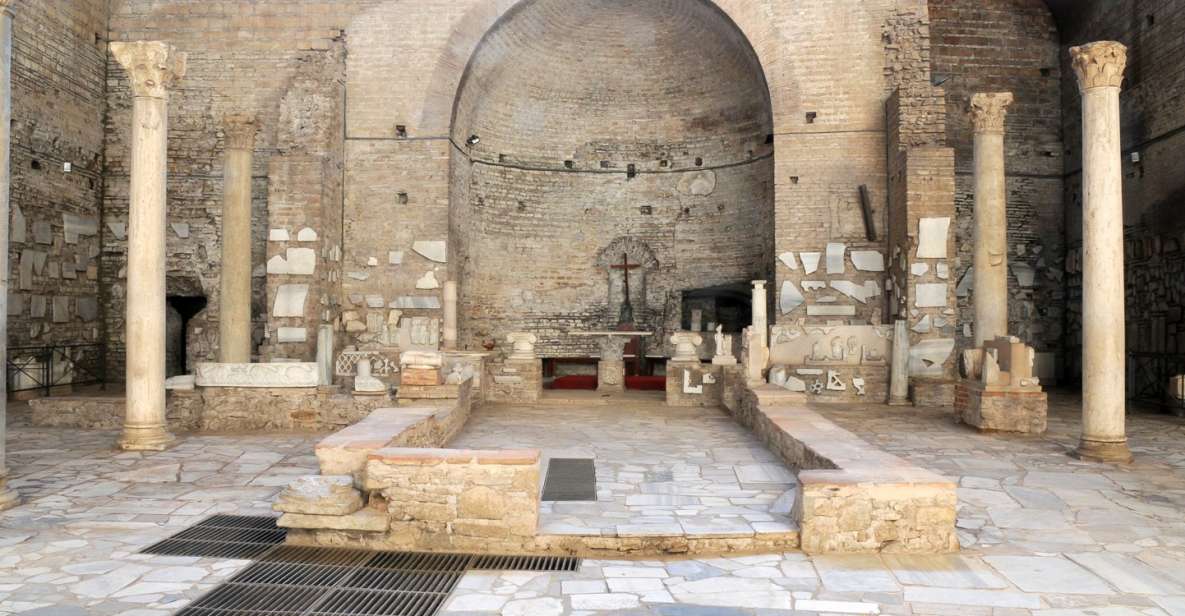
The Catacombs of Domitilla are famous for showing a transition, not a clean break. One major component is a pagan hypogeum that dates roughly from the end of the 2nd century into the early 3rd century. Later, it becomes Christian and is expanded in the middle of the 3rd century.
This is where the frescoes do their job. You’re not just looking at “old paintings.” You’re comparing what symbols and themes meant for different communities, and how later Christians adapted existing spaces. That overlap is exactly why this site feels different. You can see the same physical environment repurposed rather than treated as a sealed monument.
Your guide’s narration is key here. The tour emphasizes the sanctity of burial grounds for Christian martyrs, so the story doesn’t stay only in art history terms. It becomes about the sacred role of these spaces and the way communities used underground chambers for remembrance.
Another practical note: because it’s a short guided visit, your best strategy is to listen for the guide’s “compare and connect” moments. When the guide points out differences—what changed, what stayed, and why—you’ll walk away with clearer mental pictures than if you only focus on the walls as scenery.
Martyrs, Crypts, and the Popes: Nereus, Achilleus, Damasus, Siricius
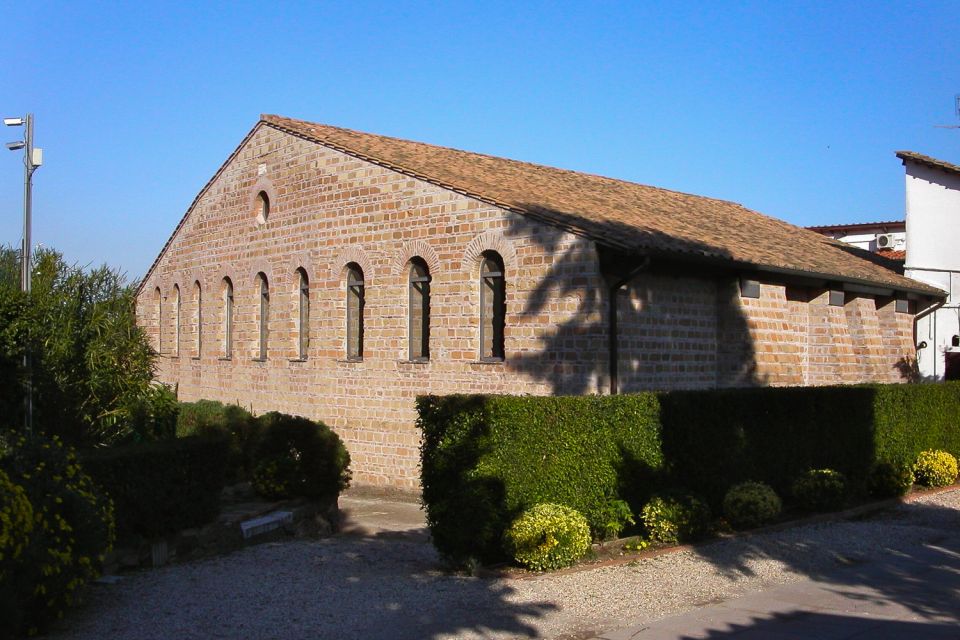
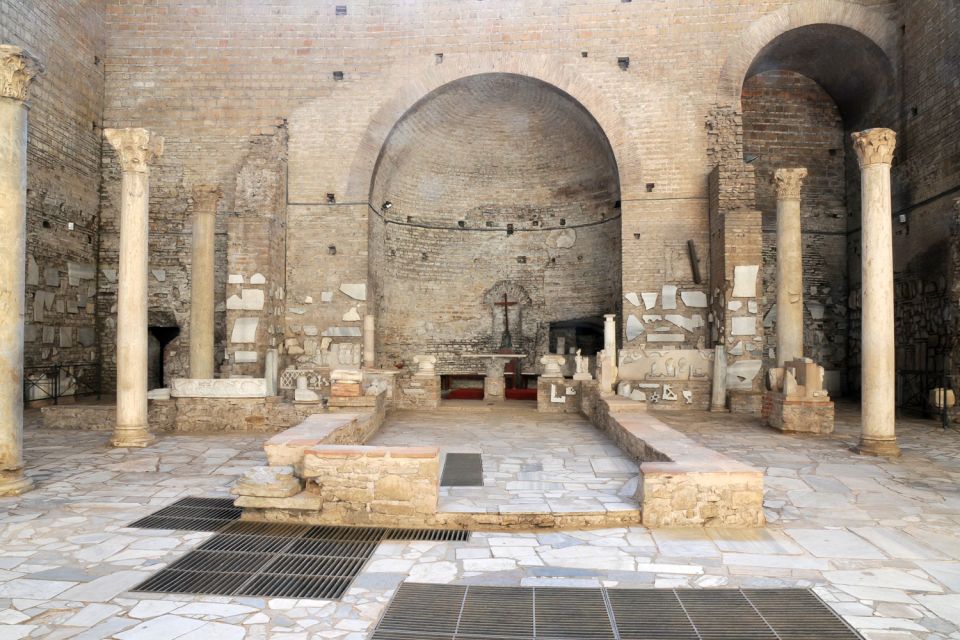
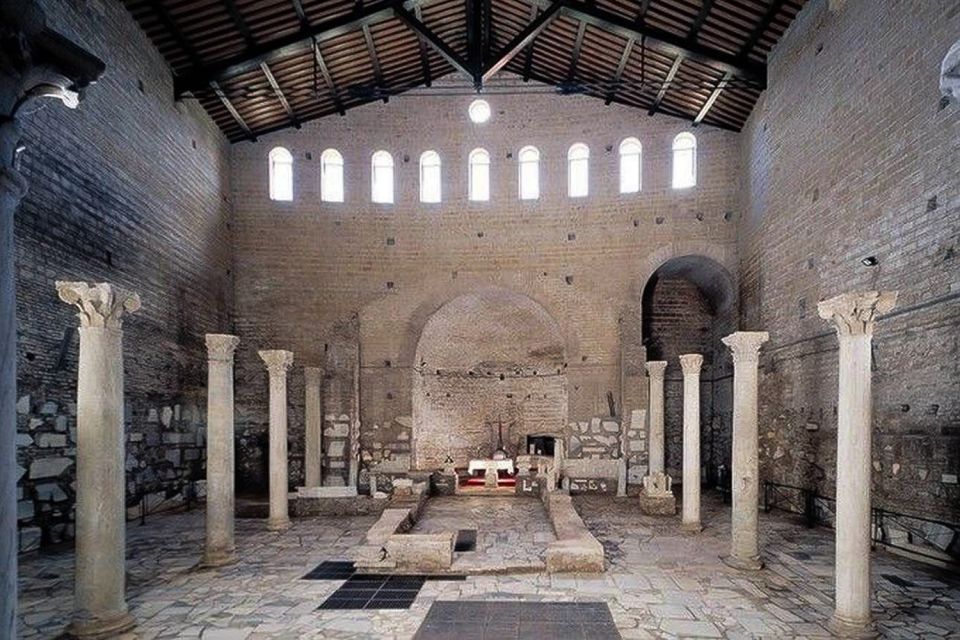
One of the strongest “wow” portions of the route is tied to the burial of specific martyrs. Towards the end of the third century, the bodies of martyrs Nereus and Achilleus were placed in a crypt on the second floor. That move is important because it’s not just about two people—it’s about how a space becomes a focal point for devotion.
Pope Damasus (366–384) is then part of the story. The crypt is transformed by Damasus into a small basilica. After that, Pope Siricius (390–395) enlarges it until it reaches the size you can still recognize as the main basilica area today.
This sequence helps you understand what changes under Christianity. It’s not only “new faith.” It’s the creation of spaces for collective memory and worship, with a physical form that grows as importance grows.
If you’re the kind of person who likes learning the “who did what” behind famous sites, this portion is built for you. The catacombs feel less like a dark hallway and more like a timeline, with names and dates you can hold onto.
You can also read our reviews of more guided tours in Rome
Guides, Questions, and Restoration Talk in a Small Group
The tour’s value is tightly linked to the guide quality. The site’s details can be complex—two levels, shifts in use, art transitions, and key names like Damasus and Siricius—so having someone explain it clearly makes a big difference.
The small group size (limited to 10 participants) helps a lot. You’re not stuck as a face in a crowd, and you’re more likely to hear your guide’s explanations without straining. It also makes questions more realistic.
Language options are Italian and English, and guides are typically described as friendly and professional. People specifically praised guides for being passionate about history and art and for answering questions in a calm way. One guide named Andrea stood out for being very friendly and good at explaining details, and a Polish-speaking guide was noted for being expressive and thorough.
One more content angle: the guide discusses the delicate restoration process. That matters because catacombs preservation isn’t just about stopping damage. It’s about maintaining fragile surfaces and preventing deterioration while still letting visitors see what’s meaningful.
So you’re not only getting a “what happened” story. You’re learning why these underground walls look the way they do today—and why some things are handled carefully.
Price, Duration, and Value for a 30-Minute Underground Visit
At $16 per person for a 30-minute guided tour, this is priced like a focused add-on rather than a half-day commitment. What makes it feel like good value is that the ticket includes entrance fees and a live guide, not just admission.
Thirty minutes is also a practical sweet spot. It’s long enough to cover both main levels and key story points, but short enough that you’re not exhausted—especially with the underground conditions. If you’re doing a “Rome hits-and-misses” schedule, this tour fits where longer ones might break your day.
One thing to consider is the no-photo rule. That affects perceived value if you measure worth in pictures. Still, if you’re the type who remembers with notes and attention, it can actually be a relief. Your brain gets less distracted, and you can concentrate on the fresco themes and the timeline the guide shares.
If you want a low-cost, high-impact underground experience, this fits the bill. If you’re expecting a long, self-paced wandering session, you may feel the time limits.
Getting There and Showing Up at the Ticket Office
The meeting instruction is straightforward: go directly to the ticket office of the Catacomb and show your reservation at least 10 minutes before your scheduled tour.
That “at least 10 minutes” buffer matters underground, because you don’t want to arrive while the group is already lined up. One practical caution from the real world is that some people found it hard to reach on the exact time slot using public transport. So if you rely on buses or trains, give yourself more time than you think you need.
Also, because the tour is only 30 minutes, late arrival can feel extra punishing. Build your day with a little slack so the catacombs don’t turn into a sprint.
If you like tidy plans, mark the meeting time clearly on your phone calendar and aim to be at the ticket office early, not at the street corner hoping to find it quickly.
What to Bring (and the One Rule That Changes Your Memories)
For what to bring, the instruction is simple: wear comfortable clothes. Under the ground, you’ll likely be on enclosed paths with limited room to move around. Comfortable footwear is usually the smart choice even if it isn’t explicitly stated, because you’ll spend those 30 minutes standing, walking, and listening.
The big rule is photography. Photography isn’t allowed inside the catacombs. That’s not just a “don’t be rude” rule. It changes your whole experience.
So do this instead: plan to take a few quick notes on the names and transitions—Domitilla, the pagan-to-Christian shift, Nereus and Achilleus, and the popes connected to the basilica development. If your guide points out fresco details, jot a short keyword. You’ll thank yourself later when you walk back into the brighter Rome street life.
Also, since you can’t document the moment with photos, the tour is even more dependent on your listening. This is a good match if you enjoy guided explanations and stories, not if you need to self-navigate and “collect” images.
Who This Tour Suits Best (And Who Might Want Another Option)
This experience works well for people who like architecture plus story. If you enjoy connecting names, dates, and how spaces were repurposed, you’ll get a lot out of the tour in a short time.
It also fits travelers who prefer small groups. Limited to 10 participants, it’s easier to hear the guide and ask questions without feeling like you’re interrupting a conveyor belt of visitors.
One clear drawback for some people: it isn’t suitable for people with mobility impairments and wheelchair users. So if accessibility is a concern, look for an alternative Rome underground or museum option that matches your needs.
Finally, if you’re traveling with kids, you might find it short enough to keep attention, but the underground setting and no-photo rule might not be everyone’s favorite. If you do go with children, the guide’s story about martyrs and the basilica change can be a strong hook.
Should You Book This Domitilla Catacombs Tour?
Yes, I’d book it if you want a compact, guided entry into Rome’s underground world. The pagan-to-Christian transitions, the martyrs’ storyline with Nereus and Achilleus, and the popes’ role in shaping the basilica make this more than a “dark tunnel” stop.
Book it especially if you care about good guiding and dialogue. Guides like Andrea were singled out for friendly, professional, history-and-art focus, and that’s exactly what you need for a site where the details can otherwise blur together.
Skip it or reconsider if you strongly prefer taking photos, because photography isn’t allowed inside. Also skip it if mobility accessibility is needed, since the tour isn’t suitable for wheelchair users.
If you’re looking for a value-priced, story-rich Rome add-on that fits into a busy day, this one is easy to recommend.
FAQ
Where do I meet for the Catacombs of Domitilla tour?
Go directly to the ticket office of the Catacomb. Show your reservation there.
How early should I arrive before the tour?
Arrive at least 10 minutes before your scheduled tour time.
How long is the guided tour?
The duration is about 30 minutes.
What languages are offered?
The tour guide is available in Italian and English.
Is a tour guide included?
Yes, you get a live tour guide along with entrance fees.
How much does it cost?
The price is $16 per person.
Is photography allowed inside the catacombs?
No, photography is not allowed inside.
What group size should I expect?
The group is limited to 10 participants.
Is the tour suitable for wheelchair users or mobility impairments?
No, it is not suitable for people with mobility impairments and wheelchair users.
What should I bring and wear?
Bring comfortable clothes.
What is the cancellation policy?
You can cancel up to 24 hours in advance for a full refund.
Is there a reserve now and pay later option?
Yes, you can reserve your spot and pay nothing today.