REVIEW · ROME
Rome: Colosseum, Roman Forum, and Palatine Hill Guided Tour
Book on GetYourGuide →Operated by Find Rome Tours · Bookable on GetYourGuide
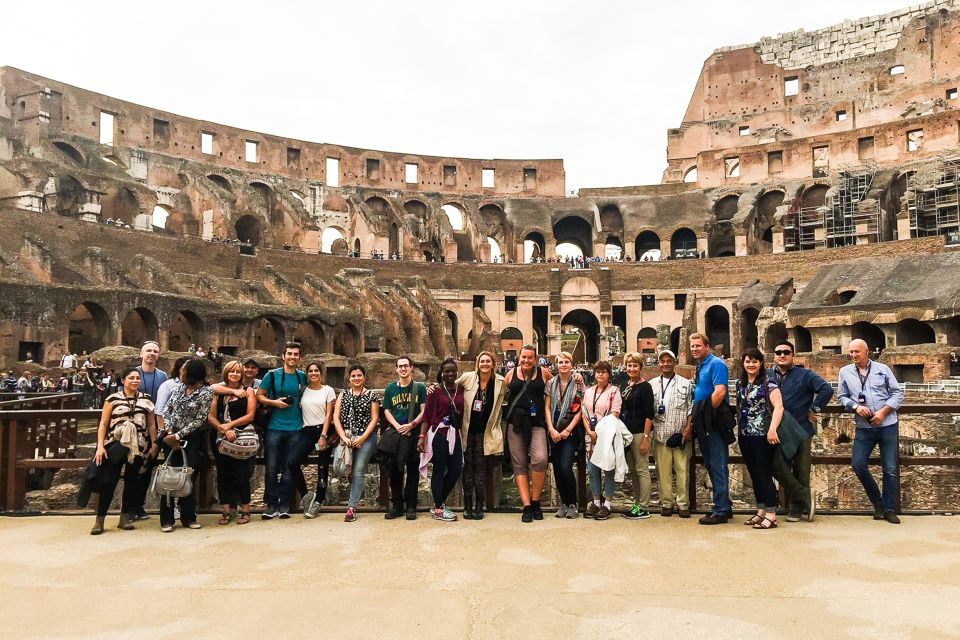
Big crowds fade fast at the Colosseum.
What makes this tour fun is the priority access so you spend less time standing around, and more time inside the sites. I also like that you get a live English guide plus headsets, so the stories don’t turn into a guessing game when it’s loud.
You also get the full power-triangle of ancient Rome: the Roman Forum for the political and religious core, and Palatine Hill for the emperor’s neighborhood and museum spaces. The main drawback is simple: it’s not suitable for wheelchair users or people with mobility impairments, and there’s a lot of walking over uneven, outdoor ground.
In This Review
- Key Things I’d Focus On
- What This Colosseum-Forum-Palatine Tour Really Gives You
- Starting Point Near Colosseo Metro: Get Oriented Fast
- Entering the Colosseum: Priority Access Plus a 75-Minute Story
- Roman Forum: The Center of Ancient Rome’s Public Life (45 Minutes)
- Palatine Hill: Emperor Power, Open-Air Museum Spaces (30 Minutes)
- How Priority Access Changes Your Day (and Your Value)
- What to Bring and What to Skip
- Timing: A 2.5-Hour Plan That Works for First-Time Rome
- Who This Tour Is Best For
- Quick Booking Advice: Should You Choose This Tour?
- FAQ
- How long is the Colosseum, Roman Forum, and Palatine Hill guided tour?
- Where do I meet the tour?
- What’s included in the price?
- What should I bring?
- Is this tour suitable for wheelchair users?
- Are backpacks or pets allowed?
Key Things I’d Focus On
- Priority access to help you get moving quickly at the Colosseum
- Headsets so you can actually hear the guide’s explanations
- Three linked landmarks that show how Rome’s public life and private power worked
- Clear, timed stops (75 minutes Colosseum, 45 minutes Forum, 30 minutes Palatine)
- Restricted-access elements are part of what you’re paying for
- A tight 2.5-hour window that’s ideal for first-time Rome visitors
What This Colosseum-Forum-Palatine Tour Really Gives You
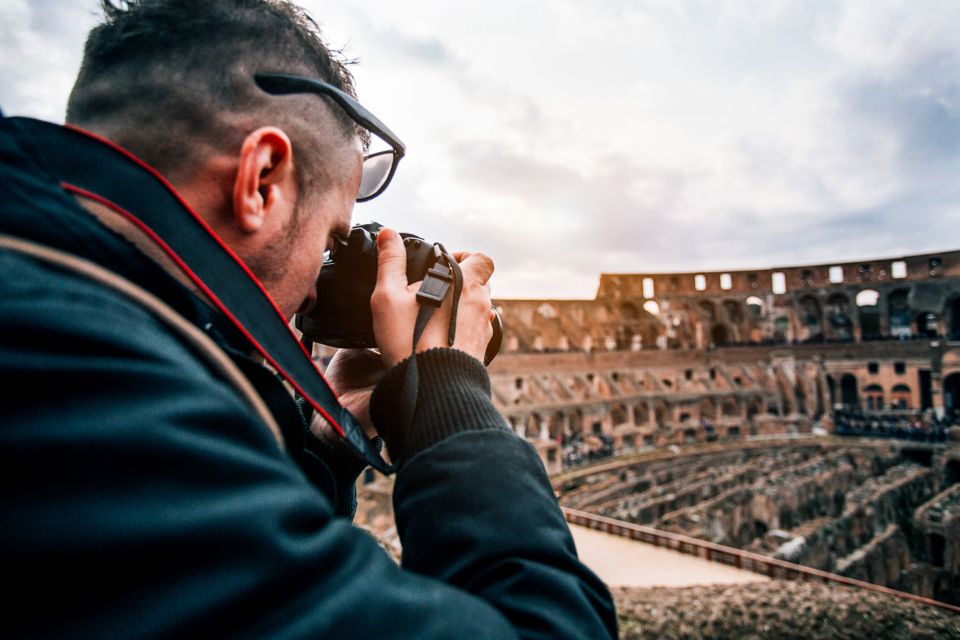
If your Rome day has limited hours, this style of tour is a smart way to hit the big three without spending half your day figuring out what’s where. The Colosseum, Roman Forum, and Palatine Hill are close enough to combine, but different enough that a guide’s context makes a huge difference.
You’re looking at places that can feel confusing when you arrive with only names on a map. With a guide, you connect the dots: public spectacle in the Colosseum, government and religion in the Forum, and the emperor’s residence on Palatine Hill. And because it’s built around a timed flow, you’re not stuck doing the same thing twice while searching for the right entry point.
It’s also built for hearing. Headsets are included, which matters at the Colosseum and Forum, where sound can bounce and crowds can make voices hard to catch.
You can also read our reviews of more guided tours in Rome
Starting Point Near Colosseo Metro: Get Oriented Fast
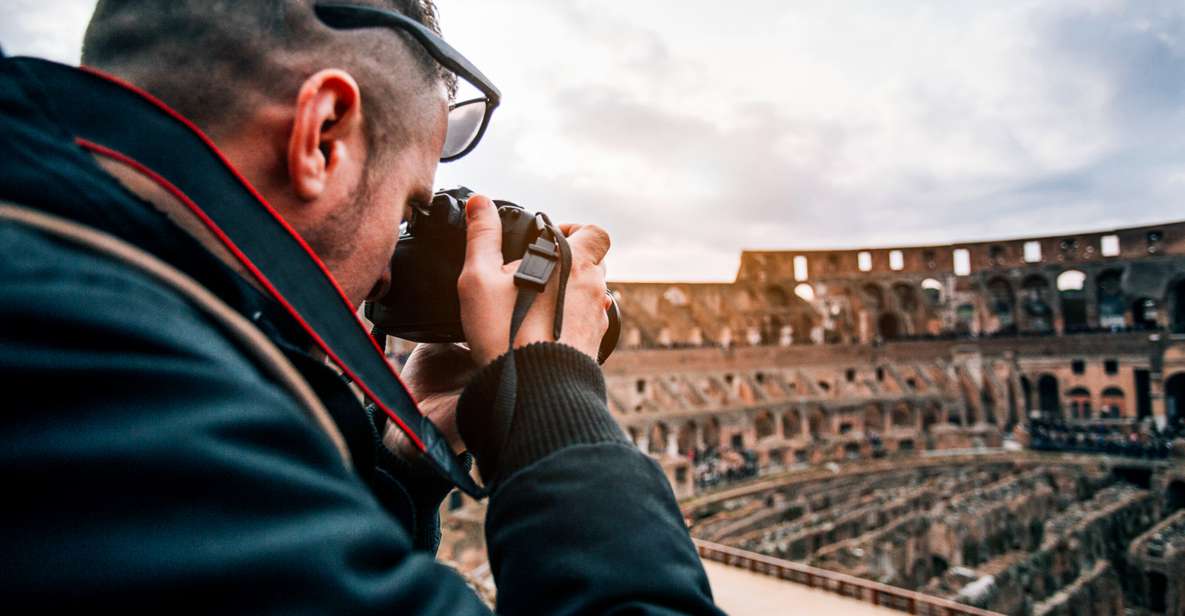
You’ll meet at the upper level of the Colosseo metro station, near the M metro symbol and the SOS sign, close to Caffe Roma. Look for the Find Rome Tours staff. This meeting spot is practical because it’s right in the heart of the area, so you’re not juggling an extra commute before the tour even begins.
The tour ends back at the same meeting point, which is useful when you’re planning lunch or your next stop. You won’t be dropped somewhere inconvenient.
One thing to keep in mind: this area has lots of security and ticket checks. Even with priority entry, you should still show up with time to spare and keep your bag rules in mind. No backpacks are allowed, and pets aren’t allowed (assistance dogs are allowed).
Entering the Colosseum: Priority Access Plus a 75-Minute Story
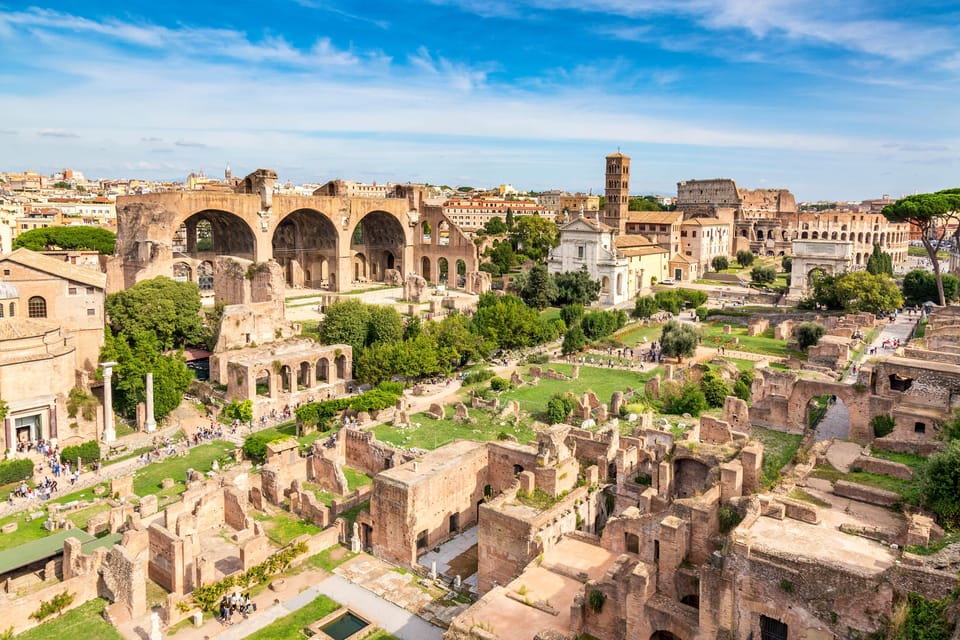
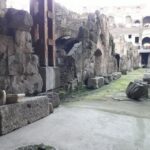
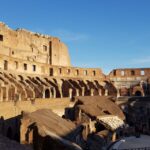
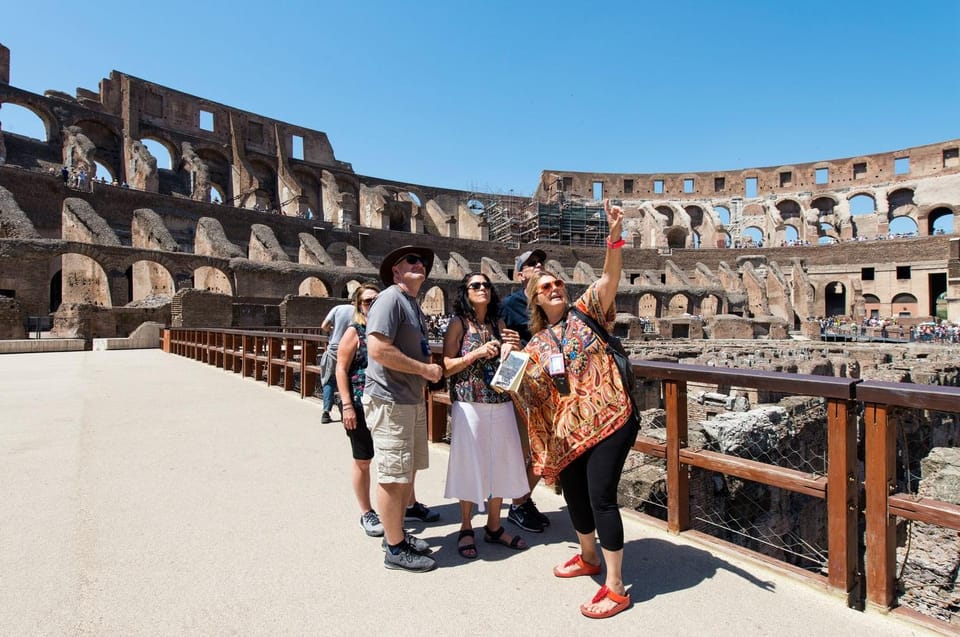
The Colosseum stop is long enough to feel meaningful—about 75 minutes—and you start with entry that’s designed to reduce crowd friction. The Colosseum was the largest Roman amphitheater ever built, and it hosted over 50,000 spectators for gladiator fights, public spectacles like plays, and even dramatic public executions. Those numbers are big enough to be impressive on their own, but the guide’s job is to make the shape and scale actually click in your mind.
Inside, you’re not just looking at stone. You’re walking through a space that was engineered for noise, movement, and drama. With a guide, you can better understand how it functioned as a stage for power and entertainment at the same time.
What I like most here is that priority access changes your stress level. Without it, you can spend a chunk of your limited Rome time in lines. With it, you get to start the story sooner, and the day feels like it’s flowing.
Possible downside: the Colosseum is still the Colosseum. There can be security lines, and the site is busy no matter what. Priority helps, but it doesn’t turn it into a private museum.
Roman Forum: The Center of Ancient Rome’s Public Life (45 Minutes)
Next comes the Roman Forum, guided for about 45 minutes. This is where Rome shifts from entertainment to administration and belief. The Forum started as a swamp, and over time it became a reclaimed valley that turned into the bustling center of political, social, and religious life. By the 7th century BCE, it was already a key part of how Rome worked.
Without context, you might wander among ruins and think: this column is nice, that arch is cool. With a guide, you learn why particular spaces mattered, and how the Forum’s role changed as Rome grew. It also helps you understand that the Forum wasn’t one single building—it was a place made up of many roles, activities, and monuments stacked into one “everyday Rome” zone.
This stop is also a good place to notice how the landscape itself tells a story. Even in ruin form, you can feel the Forum’s purpose: it was built for crowds gathering around power, law, ceremonies, and daily politics. It’s one thing to read that Rome was a political machine. It’s another thing to stand where people managed it.
Practical note: wear comfortable shoes. You’re walking through outdoor ruins, and the ground can be uneven. If you’ve got blisters waiting in your suitcase, this is where they get worse.
Palatine Hill: Emperor Power, Open-Air Museum Spaces (30 Minutes)
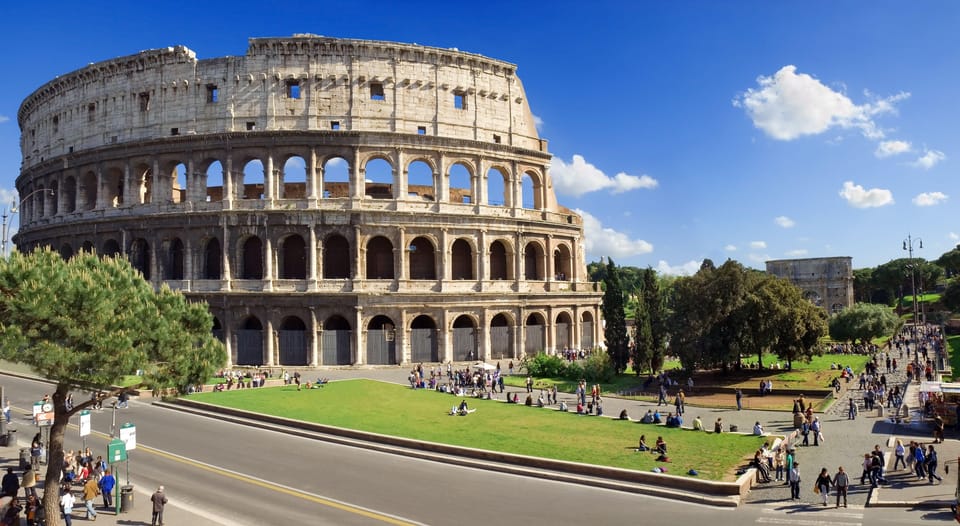
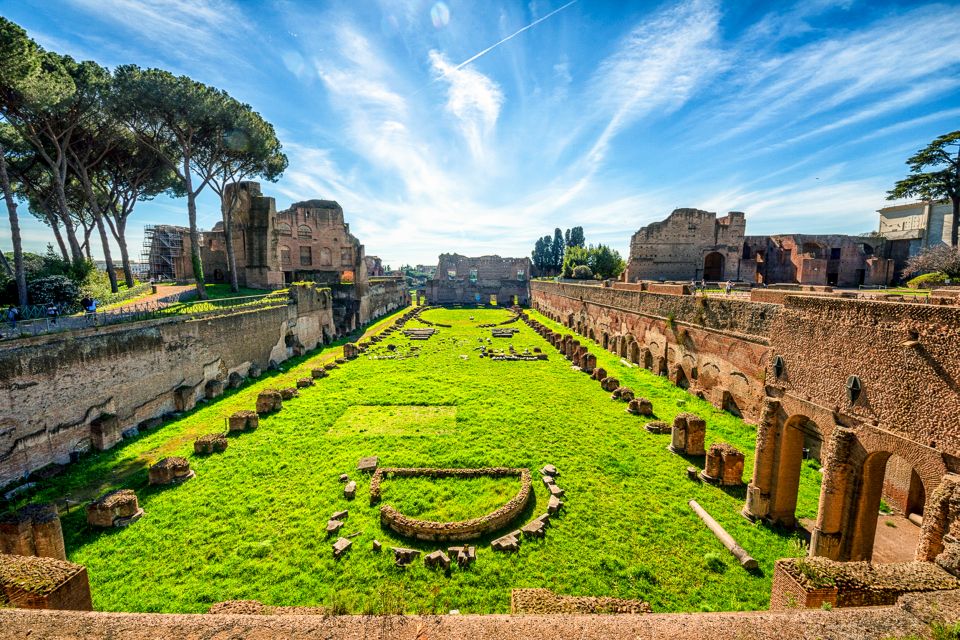
The final stop is Palatine Hill for about 30 minutes. Palatine is where Roman power lived in a more private, elite sense. Emperors once lived there, and today it functions like an open-air museum area—plus it includes the Palatine Museum with artifacts uncovered in the region and across ancient Italy.
This stop is shorter than the others, but it’s the right kind of finish. If the Colosseum is about spectacle and the Forum is about public life, Palatine Hill brings it back to personal power: who lived at the top, where they looked out, and how the elite controlled the view of the city.
One smart way to think about Palatine: it’s not just “ruins on a hill.” It’s the physical reminder that Rome’s hierarchy wasn’t abstract. The hill location and museum pieces tie the political story to real spaces where decisions were made and lives were lived.
If you’re arriving later in the day, I also find it helpful to plan your photos accordingly. Palatine can give you classic viewpoints over Rome’s urban sprawl, and timing matters for light and crowd flow. Even if your tour route is fixed, you can still adjust your photo rhythm so you’re not sprinting for the best angles.


How Priority Access Changes Your Day (and Your Value)
This tour costs about $67.19 per person for a total of roughly 2.5 hours. Is it expensive? Rome ruins aren’t cheap, and the Colosseum area has its own pricing logic. What makes this feel like value is the blend of:
- Colosseum entry included
- Roman Forum and Palatine Hill entry included
- Headsets so you get the guide’s explanations clearly
- A guided format that saves you from piecing together three sites on your own
- Priority access designed to cut down the worst bottlenecks
Some people wonder if they could wait in line and buy cheaper tickets directly. Here’s the honest take: you can sometimes avoid paying a guide premium if you’re comfortable handling everything yourself. But if your goal is to understand the sites while you’re standing in them, and you’d rather spend your time learning instead of queuing, this package can make sense.
Also, the biggest slowdown often isn’t only the ticket line. Security checks can be the longest part. Even when you do everything right, that part still exists. Priority access can still reduce your overall waiting time, which is what you’re really paying for.
What to Bring and What to Skip
To make the tour comfortable, pack like this:
- Comfortable shoes
- Hat
- Camera
- Sunscreen
- Water
Don’t bring:
- Backpacks
- Pets (assistance dogs allowed)
This is a good checklist for the Colosseum-Forum-Palatine circuit in general. Sun can hit hard, and you’ll be outside across all three stops. Water is included nowhere, so bring it.
Timing: A 2.5-Hour Plan That Works for First-Time Rome
The tour is about 2.5 hours, with specific guided segments of 75 minutes at the Colosseum, 45 minutes at the Roman Forum, and 30 minutes at Palatine Hill. Starting times vary, so check availability.
That timing matters because it keeps you from getting stuck in one place too long. If you only did the Colosseum, you’d miss the political and elite context. If you only did the Forum and Palatine, you’d miss the public spectacle that made the Roman state visible.
For your planning, treat this as an efficient “ancient Rome core” session. It pairs well with other sights nearby and works especially well if you want to return to the center of Rome after you’ve burned your first big dose of ancient history.
Who This Tour Is Best For
This is best for you if:
- You’re seeing the Colosseum, Forum, and Palatine for the first time
- You want the history explained while you walk
- You care about cutting down the most frustrating lines
- You prefer an organized path and timed stops
It’s not the best fit if:
- You use a wheelchair or have mobility limitations, since it’s not suitable for wheelchair users
- You’d rather move slowly and wander without a set structure
Quick Booking Advice: Should You Choose This Tour?
I’d book this tour if you’re the type of traveler who likes to understand what you’re looking at. The priority-entry approach plus headsets is a practical win, and the guided structure ties three sites together into one story about Roman public life and power.
Skip it (or consider a different format) if you know you’ll hate structured time blocks, or if mobility constraints make walking hard. Also, if you’re only chasing photos and you don’t care about context, you might decide to handle entry on your own.
FAQ
How long is the Colosseum, Roman Forum, and Palatine Hill guided tour?
The tour lasts about 2.5 hours, with guided time at each site.
Where do I meet the tour?
Meet on the upper level of the Colosseo metro station, near the M metro symbol and the SOS sign, close to Caffe Roma. Find the Find Rome Tours staff.
What’s included in the price?
Entry to the Colosseum, Roman Forum, and Palatine Hill, all entry fees, and headsets to hear the guide clearly.
What should I bring?
Bring comfortable shoes, a hat, a camera, sunscreen, and water.
Is this tour suitable for wheelchair users?
No. It is not suitable for wheelchair users or people with mobility impairments.
Are backpacks or pets allowed?
Backpacks are not allowed. Pets are not allowed (assistance dogs are allowed).