REVIEW · ROME
Rome: Squares and Fountains Walking Guided Tour
Book on GetYourGuide →Operated by Tour in the City - Travel Agency Rome - · Bookable on GetYourGuide
Rome’s best fountain moments have stories. This walking tour strings them together with an art-history and archaeology lens, from the Spanish Steps area down toward the Pantheon and on to Piazza Navona. I especially like the small-group feel and the chance to ask questions in plain English (or Italian), not just look and move on.
The tour’s lineup is also smart: you’ll hit Trevi Fountain and Piazza Navona and get the background that changes how you see the statues, proportions, and even the legends. One heads-up: it’s a solid walk on mostly uneven old-street surfaces, so it’s not a fit if you have back issues or trouble walking.
In This Review
- Key Highlights You’ll Feel on the Walk
- Getting Your Bearings at Trinità dei Monti and the Spanish Steps
- Trevi Fountain Myths, Short Stop Smart Seeing, and Photo Timing
- The Pantheon Stop: Ancient Power You Can Still Measure
- Piazza Navona: Where Baroque Rome Feels Like Theatre
- Bernini and Borromini in One Square, Plus the Church Details That Make It Click
- Hidden Alleys to Ponte Sant’Angelo and the Castello View
- Price and Walking Pace: Is It Good Value for $85?
- The Guide Makes the Difference: Sabrina, Martin, and How the Tour Really Runs
- Should You Book This Rome Squares and Fountains Tour?
- A quick decision shortcut
- FAQ
- Where does the tour start?
- How long is the walking tour?
- What languages are available for the guided tour?
- Is this a small-group tour?
- What’s included in the price?
- Are food and drinks included?
- What should I bring?
- Is the tour wheelchair accessible?
- When should I arrive for the meeting point?
- Is cancellation allowed if my plans change?
Key Highlights You’ll Feel on the Walk
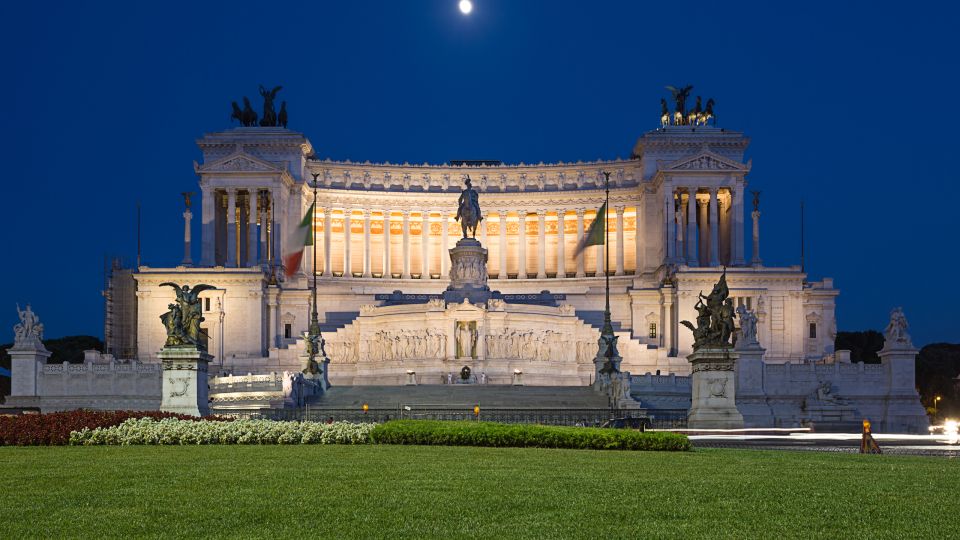
- Panoramic start at Trinità dei Monti with a Rome-wide view before you head into the historic center
- Expert commentary focused on art and archaeology, not just dates
- Trevi Fountain myths plus practical seeing time for photos
- Piazza Navona as a Baroque “stage” with Bernini and Borromini highlights
- A break for ice cream in the middle of the sights
- End-of-tour atmosphere at Ponte Sant’Angelo with Castel Sant’Angelo views
Getting Your Bearings at Trinità dei Monti and the Spanish Steps
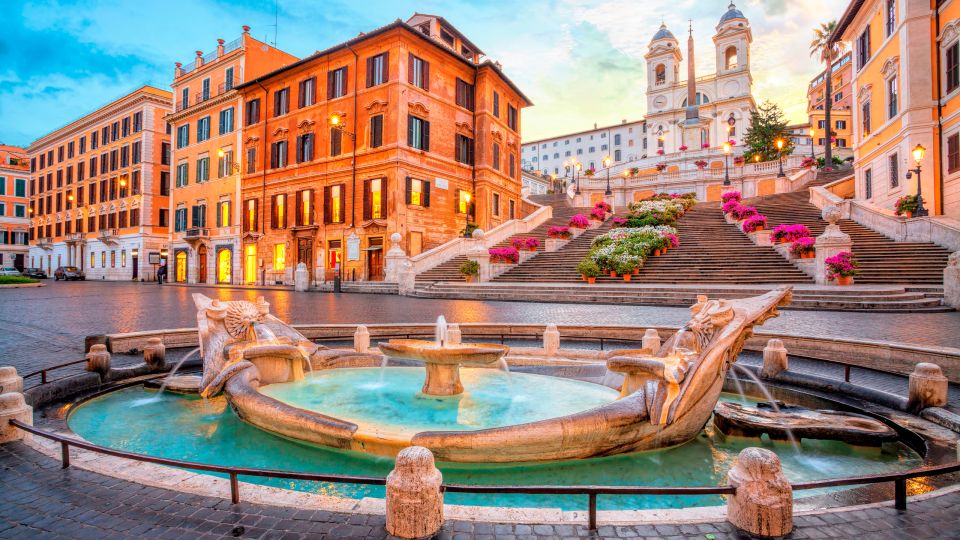
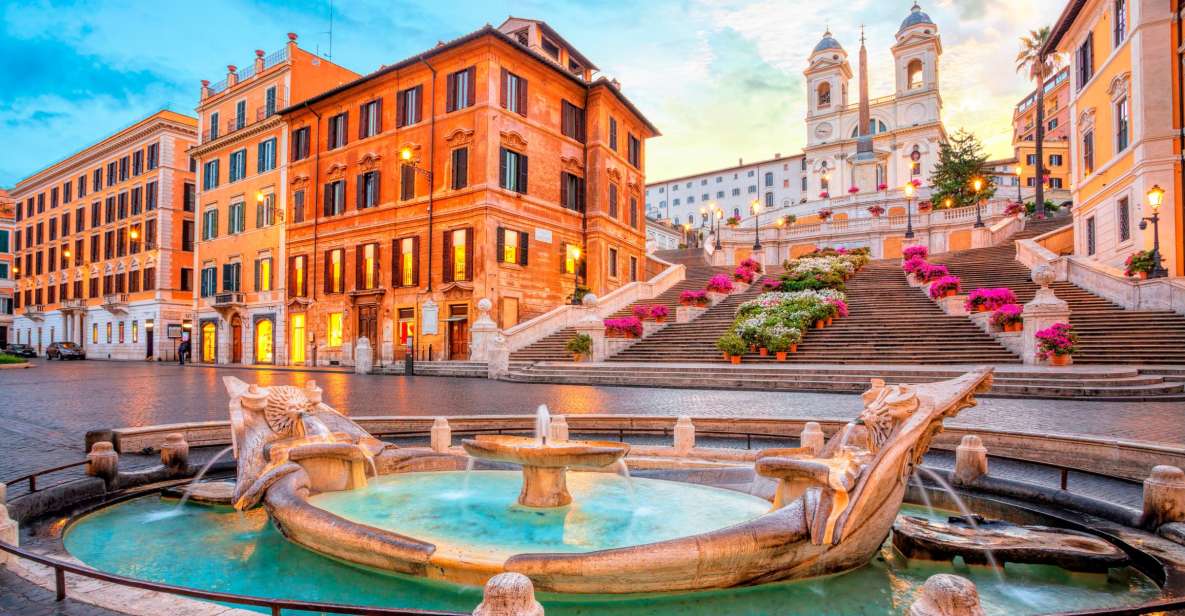
The tour starts at Trinità dei Monti, above the Spanish Steps. That’s a great move because you get a Rome panorama right away, then you understand the layout when you start descending into the center. There’s a short stop at Santissima Trinità dei Monti for a photo and a guided orientation, so you’re not trying to figure out where you are while everyone else is walking.
Then comes the Spanish Steps area for another photo stop and sightseeing time. This part is also where the walking reality hits: you’re dealing with steps and sloped streets. Wear comfortable shoes and expect a steady, old-city pace.
You can also read our reviews of more walking tours in Rome

Trevi Fountain Myths, Short Stop Smart Seeing, and Photo Timing
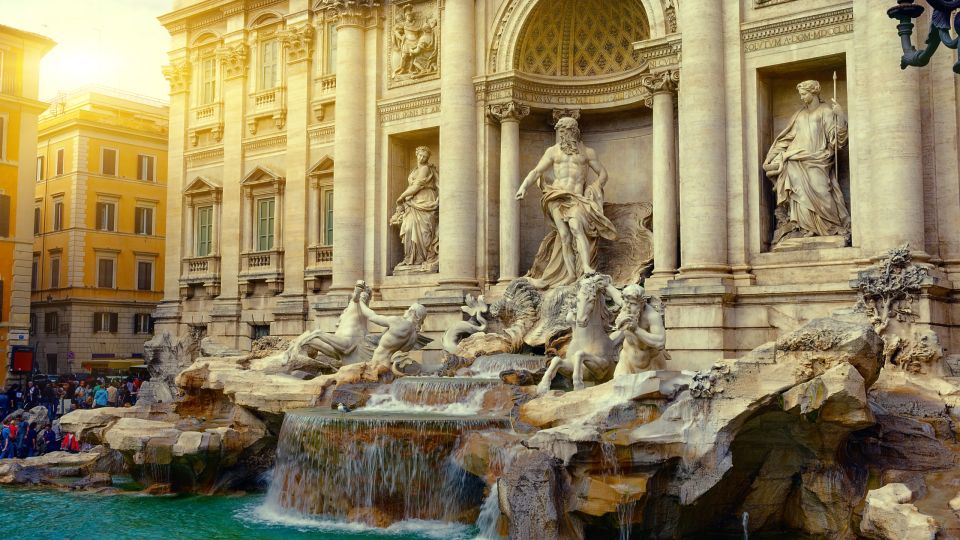
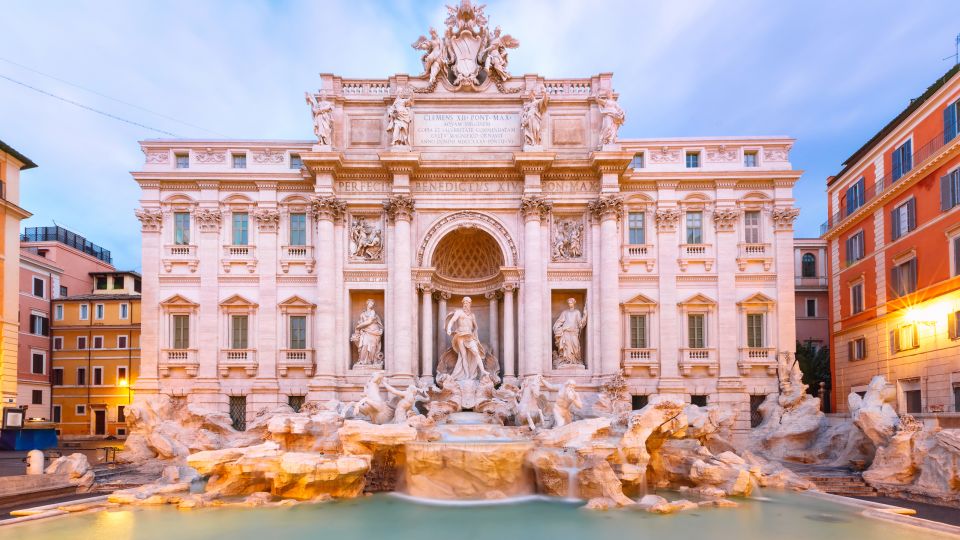
Trevi Fountain is the obvious headline, but what makes this tour worth doing is how it’s explained. You’ll stop near the fountain for a guided look and a brief break for photos, with the guide sharing the legends and myths connected to the monument. I like that approach because Trevi is crowded and loud; having the story in your head helps you slow down even when the scene doesn’t.
From there, you walk onward toward the Pantheon. The tour keeps your time efficient: quick photo moments, short guided sections, and then movement to the next place before you get stuck in the most chaotic areas too long.
The Pantheon Stop: Ancient Power You Can Still Measure
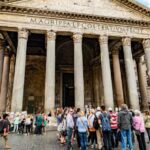
The Pantheon visit is short, but it lands. This is one of those stops where you’re not just looking at a pretty building—you’re seeing what Roman engineering made possible. The tour highlights the Pantheon’s role as a temple for the Olympian gods and points your attention toward the dome, which was the largest in the world since ancient times.
The dome matters because it gives you a real sense of scale. Even if you’ve seen photos, it’s different when you’re standing there and the guide connects what you’re seeing to how the structure was designed and used.
Piazza Navona: Where Baroque Rome Feels Like Theatre
Piazza Navona is where the tour’s tone shifts into full Baroque drama. You’ll arrive for a longer break time plus guided sightseeing, and the square’s history of theatrical events and festivals is part of the explanation. This matters, because Piazza Navona isn’t just a backdrop—it’s a space that was meant for performance and spectacle.
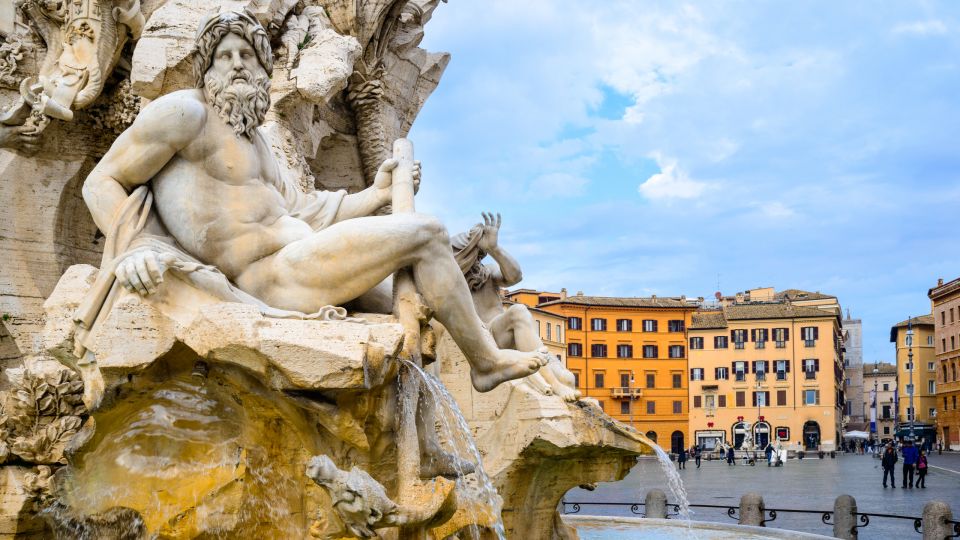
The standout here is Bernini’s Fountain of the Four Rivers, which the tour calls out as a sculptural and architectural masterpiece. You’ll also spot the church of Santa Agnese in Agone by Borromini, so you get a sense of how competing Baroque voices expressed themselves in stone and form.
A practical bonus: the tour includes time to taste one of the best ice creams in Rome. This is timed so you can refuel without feeling like you abandoned the sights. It’s also a nice reset, because after Trevi and the Pantheon, your eyes need a quick break from hard surfaces and crowds.
Bernini and Borromini in One Square, Plus the Church Details That Make It Click
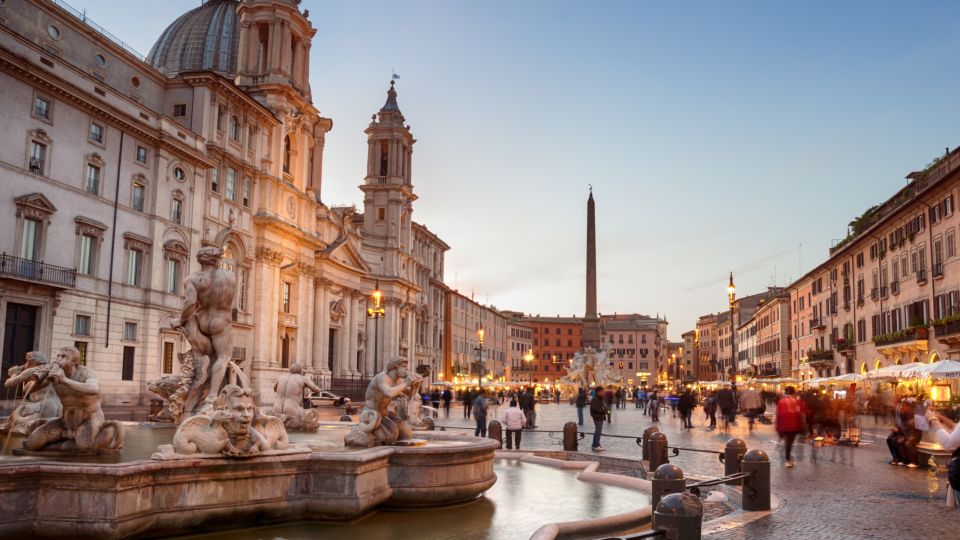
When people rush Piazza Navona, they usually focus only on the fountains. This tour pushes you to look past the obvious, because the stories connect the art to the era’s ideas about power, religion, and public life. The guide’s commentary helps you notice relationships—how the fountain’s drama pairs with the church’s presence and how the square’s layout supports both.
You’ll also have a bit of walking time that feels like moving through the same city in a different mood. After Piazza Navona, you head toward Santa Agnese in Agone for a closer sightseeing moment before continuing onward.
And one more thing I appreciate: the tour cadence avoids the trap of nonstop lecturing. Stops are guided, but you’re given moments to take in the details yourself and frame questions while you’re still standing in front of the object.
You can also read our reviews of more guided tours in Rome
Hidden Alleys to Ponte Sant’Angelo and the Castello View
Between the formal squares, the tour gives you the “city within the city” feeling by moving through hidden alleys. That’s where Rome often changes from postcard to lived-in: smaller streets, sudden viewpoints, and the sense that you’re cutting across layers of time.
Then you reach Ponte Sant’Angelo, built in the second century AD. The guide points out the view of Castel Sant’Angelo, and the story here is a big reason the stop works. You’ll hear how it began as Hadrian’s tomb, later became a fortress for the popes, and today remains one of the most iconic monuments near the river.
You’ll get sightseeing time and scenic views along the way, and the tour ends with the atmosphere of Sant’Angelo Bridge in front of Castel Sant’Angelo. That ending choice is smart: it’s calmer than some central squares, and it gives you space to absorb the final set of shapes and viewpoints.
Price and Walking Pace: Is It Good Value for $85?
At $85 per person for about 2.5 hours, you’re paying for more than access to famous places. You’re paying for an expert guide who links the squares and fountains to art and archaeology context, plus headsets for groups larger than 8 so you can hear clearly. Without that kind of interpretation, you’d basically be doing a self-guided checklist—seeing monuments but missing the threads that tie them together.
This is also why the tour’s pacing feels fair. It focuses on a tight central route, with short guided stops and photo breaks built in. You don’t spend the whole time in one location where you can’t move or hear.
The main consideration is physical comfort. This isn’t for wheelchair users, and it’s not recommended for people with back problems or difficulty walking. Even with a moderate pace, the old streets and steps mean you should plan like this is a real walk day.
The Guide Makes the Difference: Sabrina, Martin, and How the Tour Really Runs
The reviews point to a consistent pattern: the best part is the guide’s energy and how they explain what you’re seeing. Many bookings name Sabrina as the standout—she’s described as energetic, deeply informed, and great at keeping younger family members engaged. One review also notes Sabrina uses picture-taking stops so you’re not scrambling for your own photos while you try to listen.
Another guide named Martin shows up in the reviews, praised for art-and-history explanations tied to Italian context. He’s described as eloquent and able to connect monuments, statues, artists, and squares so they feel like part of one story instead of separate stops.
In practical terms, that means you should treat this as a question-friendly tour. If you’re the type who likes to ask what a statue symbolizes or why a fountain is designed the way it is, this format works well.
Should You Book This Rome Squares and Fountains Tour?
I’d book this if you want a guided Rome walk that focuses on the Baroque and Renaissance highlights you’ll actually remember. The mix of Trevi, Pantheon area context, Piazza Navona, and the ending at Ponte Sant’Angelo is a strong route, especially if you like learning the stories behind what you see.
Skip it if walking is a problem for you. Also, if you prefer long museum-style time at one site, this may feel fast because it’s designed for movement and multiple outdoor stops.
A quick decision shortcut
- Choose it for art storytelling plus efficient sightseeing in central Rome
- Choose a different option if you need minimal walking or wheelchair access
FAQ
Where does the tour start?
You meet at Trinità dei Monti above the Spanish Steps. The tour begins with a panoramic view of Rome.
How long is the walking tour?
It lasts about 2.5 hours.
What languages are available for the guided tour?
The live guide is available in English and Italian.
Is this a small-group tour?
Yes, it’s described as a small-group experience. Headsets are included for groups of more than 8 people.
What’s included in the price?
Included are a professional guide, headsets (for more than 8 people), and the walking tour.
Are food and drinks included?
No. Food and drinks are not included unless specified, though the tour does include time for ice cream.
What should I bring?
Bring comfortable shoes, sunglasses, and a sun hat.
Is the tour wheelchair accessible?
No, it is not wheelchair accessible.
When should I arrive for the meeting point?
You should plan to arrive 15 minutes before the tour departure time.
Is cancellation allowed if my plans change?
Yes. Free cancellation is available up to 24 hours in advance for a full refund, and you can reserve with pay later.