REVIEW · ROME
Rome: Vatican, Sistine & St. Peter’s Fast Track Private Tour
Book on GetYourGuide →Operated by LivTours - We craft tours, you live them · Bookable on GetYourGuide
Three hours can change how you feel about the Vatican. With priority entrance and a private guide, you get moving fast and stay on a smart route through the Vatican Museums, the Sistine Chapel, and St. Peter’s Basilica. One thing to consider: 3 hours is tight, so you may not see every corridor and access to the Raphael Rooms can depend on crowds and guards.
I also like that the guide can tailor the pace and focus to your interests, instead of running a one-size-fits-all script. In feedback, guides such as Giovanni, Lia, Vera, Stefano, and John get called out for keeping the flow smooth and not dragging. Still, if St. Peter’s access is affected by events, timing can shift and your experience may adjust.
In This Review
- Key highlights worth knowing before you go
- The real value of fast-track Vatican planning in 3 hours
- From Viale Vaticano to the VIP entrance: getting started without stress
- Vatican Museums: where your guide makes the route make sense
- Courtyard and highlights you’ll recognize fast
- Gallery of Maps: a fun way to train your eye
- Raphael Rooms: when access is possible, it’s worth prioritizing
- Sistine Chapel: rules first, then the art
- St. Peter’s Basilica VIP time: seeing the church without the grind
- How the guide customization actually changes your day
- Price and value: what you’re paying for at $283.21 per person
- What to know before you go: dress, rules, and possible access hiccups
- Who should book this Vatican fast-track private tour
- Should you book this tour?
- FAQ
- How long is the Vatican, Sistine & St. Peter’s fast-track private tour?
- Is this tour private, and what is the group size?
- Where do I meet the tour guide?
- What does fast track mean on this tour?
- What parts of the Vatican Museums are included?
- Are the Raphael Rooms guaranteed?
- What are the rules for the Sistine Chapel?
- What languages are available for the live tour guide?
Key highlights worth knowing before you go
- Priority entrance to jump ahead of the usual outer lines so you start right away
- Private guide with customization so your route can fit what you care about most
- Sistine Chapel pacing with rules explained before you step inside
- St. Peter’s Basilica VIP entry that helps you avoid another long queue
- Max group size of 6 for a calmer, less chaotic feel
The real value of fast-track Vatican planning in 3 hours
The Vatican is huge, and the crowds can feel like a moving obstacle course. A fast-track private plan matters because it buys you time at the exact moments when the line friction is highest: entry and the transition into St. Peter’s.
You’re also not just paying for access. You’re paying for a guide who keeps the tour moving at a human pace and helps you see what you’re actually looking at—especially in the museums and the Sistine Chapel. That makes a short visit feel like more than a checklist.
The “private” part is what turns this from a fast shopping trip into a coherent experience. Even in a 3-hour window, you’ll have time for the big visual payoffs and enough context to connect them.
You can also read our reviews of more private tours in Rome

From Viale Vaticano to the VIP entrance: getting started without stress
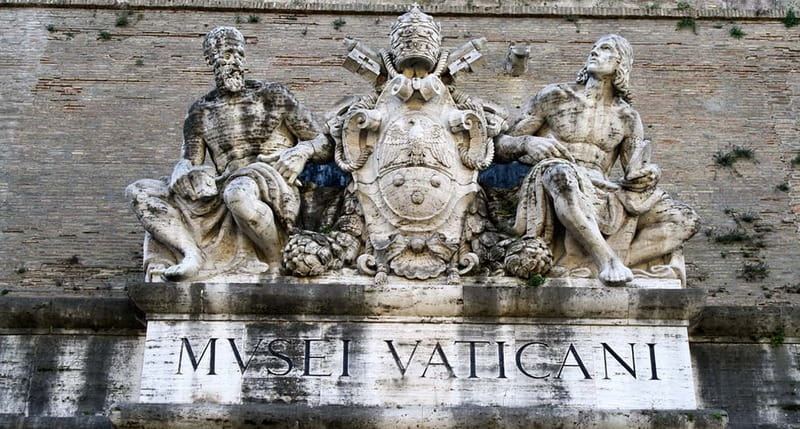
Meet at Café Vaticano on Viale Vaticano 100, right across from the museum entrance. That location is practical because it’s close to where you need to be, and it reduces the usual last-minute scrambling.
From there, the tour starts by entering through the Vatican’s VIP entrance to skip the lines outside. If you’ve ever tried to enjoy the Vatican while watching the queue eat your morning, you’ll understand why this is such a big deal.
Also note the small-but-important rules that affect comfort: no backpacks, ID is required, and you’ll want shoulders and knees covered. These aren’t for style points. They’re what keeps your day from getting stalled at security.
Vatican Museums: where your guide makes the route make sense
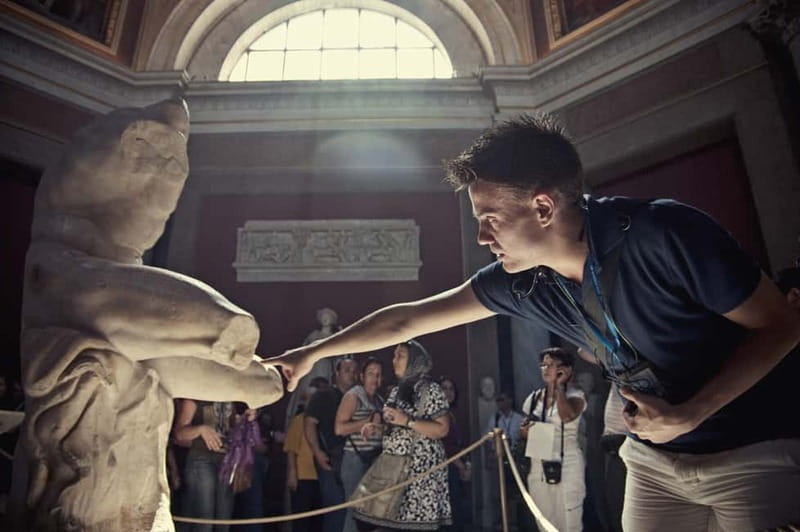
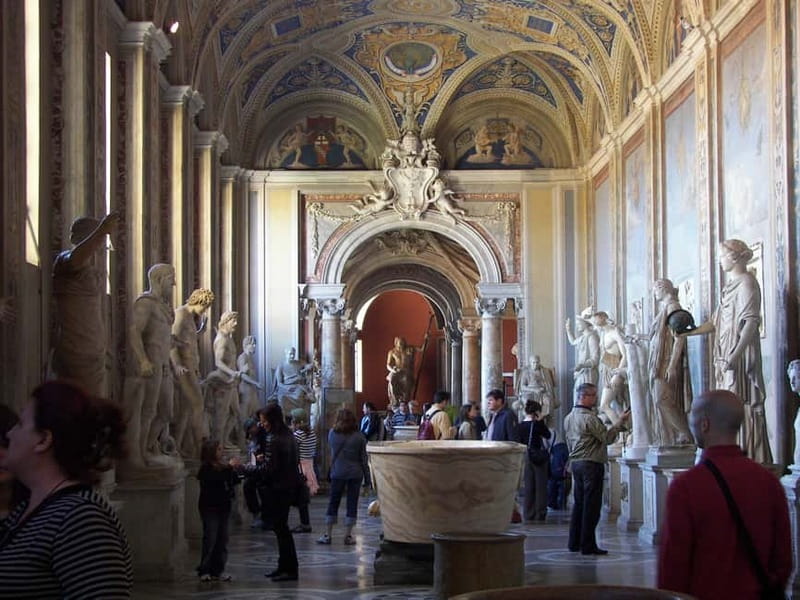
The tour is organized around the rooms that deliver the biggest artistic and architectural hits. You’ll spend about 2 hours in the Vatican Museums with a guided walkthrough, and the stops are designed to get you out of the “where are we going?” fog.
Courtyard and highlights you’ll recognize fast
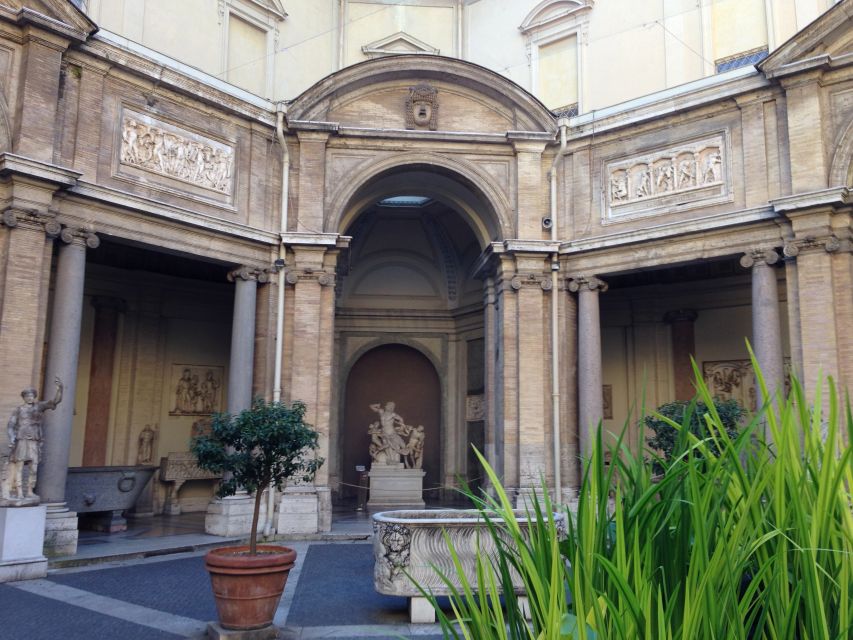
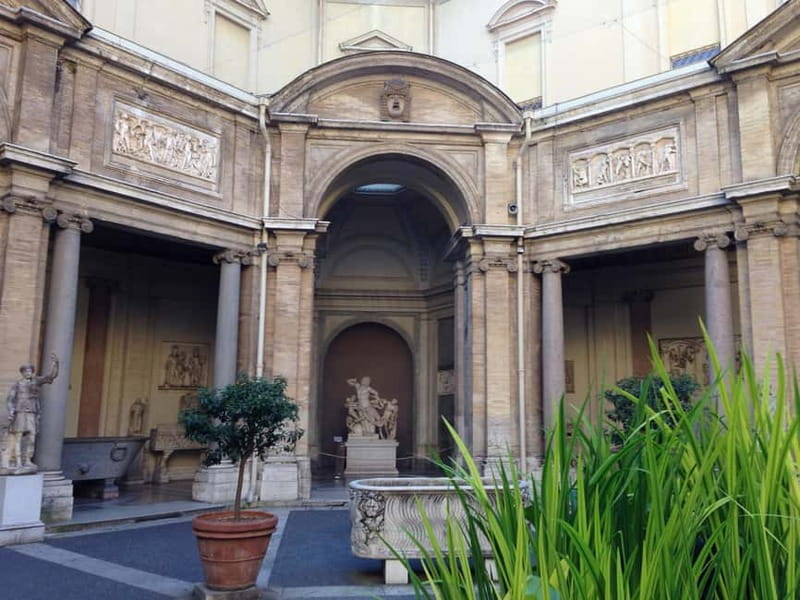
You begin with the Courtyard of the Pigna area, plus a set of standout works and spaces included in the experience. Think of this as the Vatican’s way of saying, look up—then look closer.
The included stops can feature the Pinecone and Octagonal Courtyard, the Belvedere Torso, a round room, and Constantine coffins, plus other signature museum rooms. Even if you don’t know every detail yet, your guide’s job is to point out the why: what the artist emphasized, why the sculpture matters, and how power and religion show up in stone.
Gallery of Maps: a fun way to train your eye
The route continues to the Gallery of Maps, with a guided visit. This is one of those rooms that can go either way: you’ll either walk through it without noticing much, or you’ll have someone help you see the cleverness in how it’s built and what it’s trying to communicate.
With a guide, you can turn it into a visual lesson instead of a hallway blur. You’ll also get a sense of how the Vatican used art and knowledge to project influence.


Raphael Rooms: when access is possible, it’s worth prioritizing
Next up are the Raphael Rooms, including highlights such as the School of Athens painting. These rooms are a major reason people dream about this part of the Vatican.
One caution: access to the Raphael Rooms depends on crowds, timing, and guards, so it’s not guaranteed. Your guide should still ensure you experience the most important museum highlights even if a specific room is blocked.
Sistine Chapel: rules first, then the art
The Sistine Chapel is where the tour either becomes magical—or becomes rushed and tense. The key difference here is that the guide explains the rules before you enter, so you know what to expect and you can settle into the moment.
Inside, you’ll follow chapel etiquette: silence is required, and there are areas where photos are not allowed. That can sound like a buzzkill until you realize it’s what makes the experience feel focused rather than chaotic.
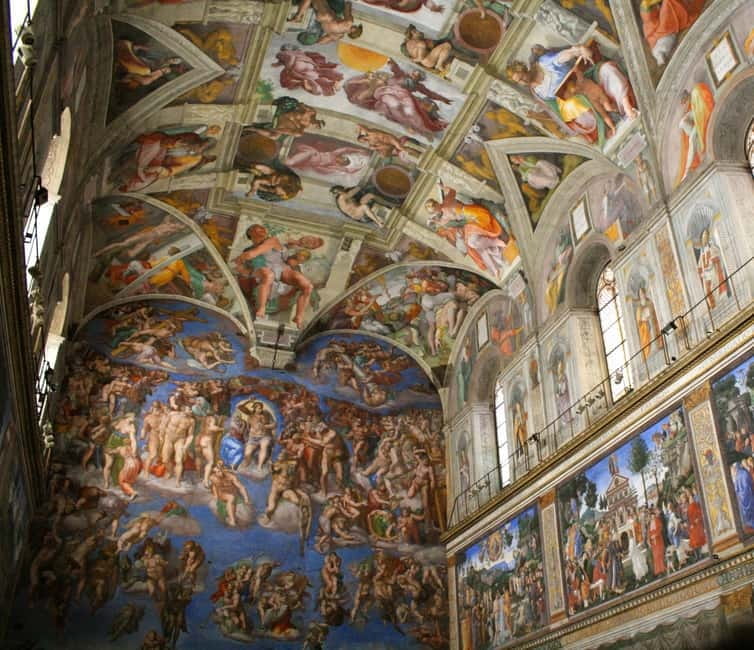
Your guide’s job is to slow you down just enough to look. You’ll get guided attention on Michelangelo’s ceiling and The Last Judgement, which are the two visual anchors most people come for.
Here’s what I think makes this work well: a private guide can help you avoid the common trap of staring at one ceiling panel for five seconds and feeling underwhelmed. Instead, you’ll get a structured way to scan the ceiling, understand what you’re seeing, and connect the imagery to the stories around it.
Also, even if you’re not a die-hard art person, Michelangelo’s scale lands in your body. The chapel is engineered so you keep looking upward. With a guided plan, you don’t just see the famous moments—you understand why they were made to hit you.
St. Peter’s Basilica VIP time: seeing the church without the grind
After the Sistine Chapel, the tour ends at St. Peter’s Basilica with VIP access designed to skip another long line. St. Peter’s is the kind of place where your first reaction is almost always the same: wow, this is too much.
The guided visit focuses on the major areas, including the Bernini bronze alter canopy and St. Peter’s Square as part of the overall experience. Those are high-impact points that help you orient quickly, so you don’t wander for an hour just to feel like you’ve seen something.
A practical note: St. Peter’s Basilica may close for events, and access can be restricted on Wednesdays due to the Papal Audience. If that happens, your tour timing shifts—your time in the museums is extended, and the itinerary adapts.
There’s also an extended possibility of closures connected to the Jubilee period from Dec 24, 2024 to Jan 6, 2026. If you’re traveling in that window, build in flexibility so you’re not disappointed if the Basilica portion changes.
How the guide customization actually changes your day
This is where private tours earn their keep. You’re not just getting facts. You’re getting a route shaped around your interests and the group’s pace.
In feedback, guides like Giovanni, Lia, Vera, Stefano, and John are praised for tailoring the experience and keeping it from feeling dragged out. People also mention a smooth flow through the crowds, which usually comes down to one thing: the guide is proactive about timing and transitions.
So what does customization look like on the ground?
- If you care most about Michelangelo, you’ll likely get more time and clearer guidance in the Sistine Chapel moments.
- If you want Raphael and classical themes, the Raphael Rooms and School of Athens stop become the center of the visit.
- If you like architectural landmarks, you’ll spend more time orienting in courtyard and basilica highlights.
Even the “gossip” and lesser-known pope-and-artist stories can matter, because they add human context to religious art. It’s not just dates and titles. It’s why these works were made and how people in power wanted them to be read.
For many visitors, this is the difference between seeing the Vatican and actually enjoying it.
Price and value: what you’re paying for at $283.21 per person
At $283.21 per person for about 3 hours, this isn’t a budget ticket. The value sits in three places.
First, you’re paying for reserved tickets and the ability to skip lines using separate entrances. Time in the Vatican is expensive. Saving it lets you focus on art instead of queue management.
Second, you’re paying for private guiding with a maximum group size of 6. Even if you’re traveling with a small circle, that size cap helps keep noise and friction down, especially in tight museum corridors and the Sistine Chapel area.
Third, you’re getting a guided highlight route that hits both the Vatican Museums and St. Peter’s Basilica. Many visitors underestimate how much coordination it takes to do both in one morning without burning the day.
Where the math can feel less perfect is if you personally prefer slower wandering and don’t care for structured explanations. If your ideal Vatican day is drifting and snacking at leisure, a 3-hour fast-track plan may feel too paced.
Still, for most first-time or limited-time visitors, this feels like a rational spend: it turns a famously stressful place into a guided, coherent experience.
What to know before you go: dress, rules, and possible access hiccups
Plan around practical rules so you can enjoy the art instead of dealing with preventable delays.
Dress code is shoulders and knees covered. That means bringing something that won’t get you blocked at entry.
In the Sistine Chapel, there’s silence required and photos are restricted in some areas. Your guide explains this before you go in, so you can get into the right mindset.
Backpacks are not allowed. If you arrive with one, you might have to deal with storage options on your own.
ID is required for all guests. Bring it, even if you’re used to traveling with a phone only.
Wheelchair accessibility is supported, but mobility needs can affect logistics, so it’s worth contacting the provider if you have questions about timing and support.
Finally, remember the known access variability: Raphael Rooms depend on crowds, timing, and guards. St. Peter’s can be affected by events and Wednesday restrictions.
Who should book this Vatican fast-track private tour
This tour fits best if you want three things at once: speed without chaos, guided context, and the big visual hits in a short window.
It’s especially good for:
- First-time Vatican visitors who feel overwhelmed by scale
- Couples or small groups who want the calm of a max 6-person setting
- People who care about Michelangelo’s ceiling and The Last Judgement and want help looking properly
- Travelers who want to see St. Peter’s without losing half the day to queues
It might not be the best match if:
- You want a very slow, unscripted meander through every museum room
- You dislike strict chapel rules like silence and photo limits
- You’re traveling on a date when St. Peter’s access is likely to be restricted and you would rather reschedule than adapt
Should you book this tour?
If you have limited time and you want a smart way to experience the Vatican’s top moments, I’d lean yes. The priority entrances and VIP-style routing are exactly what you want in a place famous for lines, and the private guide approach helps the art click instead of just impressing you for a second.
If you’re traveling during the Jubilee window or on a Wednesday, keep expectations flexible. Access can shift. But the tour is designed to adapt, so you still get the best of the itinerary rather than getting stuck at the door.
For value, the biggest question is simple: do you want to pay to save time and get context? If yes, this is a strong choice for a first, memorable Vatican visit.
FAQ
How long is the Vatican, Sistine & St. Peter’s fast-track private tour?
It lasts about 3 hours. Starting times vary, so you’ll want to check availability for your date.
Is this tour private, and what is the group size?
Yes, it’s a private tour. Groups are capped at a maximum of 6 people.
Where do I meet the tour guide?
The meeting point is in front of Café Vaticano, Viale Vaticano 100, across the street from the museum entrance.
What does fast track mean on this tour?
You’ll skip the lines by entering through separate VIP entrances, including for the Vatican Museums and then again for St. Peter’s Basilica.
What parts of the Vatican Museums are included?
The route includes guided visits through key areas such as the Courtyard of the Pigna, Gallery of Maps, and the Raphael Rooms, when access is possible.
Are the Raphael Rooms guaranteed?
No. Access to the Raphael Rooms depends on crowds, timing, and guards, so it isn’t guaranteed.
What are the rules for the Sistine Chapel?
You must follow chapel etiquette, including silence required. There are also areas where photos are not allowed, and the guide will explain what to expect beforehand.
What languages are available for the live tour guide?
The tour guide is available in English, Spanish, French, Italian, German, and Portuguese.