REVIEW · ROME
Jewish Rome District, Old Ghetto and Trastevere Private Tour
Book on GetYourGuide →Operated by Crazy4rome srls · Bookable on GetYourGuide
Rome’s Jewish story runs right through the streets.
This private 3-hour walk follows that trail from the Old Ghetto up to Trastevere, with major stops like Piazza Mattei, Portico d’Ottavia, the Great Synagogue, Tiber Island, and Santa Maria in Trastevere. You also cross the Fabricio Bridge (62 B.C.), one of the oldest bridges still standing in Rome.
I especially like the way the route is built: you get both the heavy, real-world context of the Ghetto and then the change in mood as you move toward the river and Trastevere. The other thing I like is the guide setup—an official expert guide with a private format, plus skip-the-line entry so you spend less time waiting and more time looking closely.
One consideration: it’s a walking tour on cobblestones, so comfortable shoes matter. Also, there’s no luggage or large bags allowed, so plan to travel light.
In This Review
- Key points to know before you go
- Jewish Rome in three hours: the smart route that connects everything
- Starting at Via del Teatro di Marcello: get your bearings fast
- The Old Ghetto: forced residence, citizenship changes, and what you can still read today
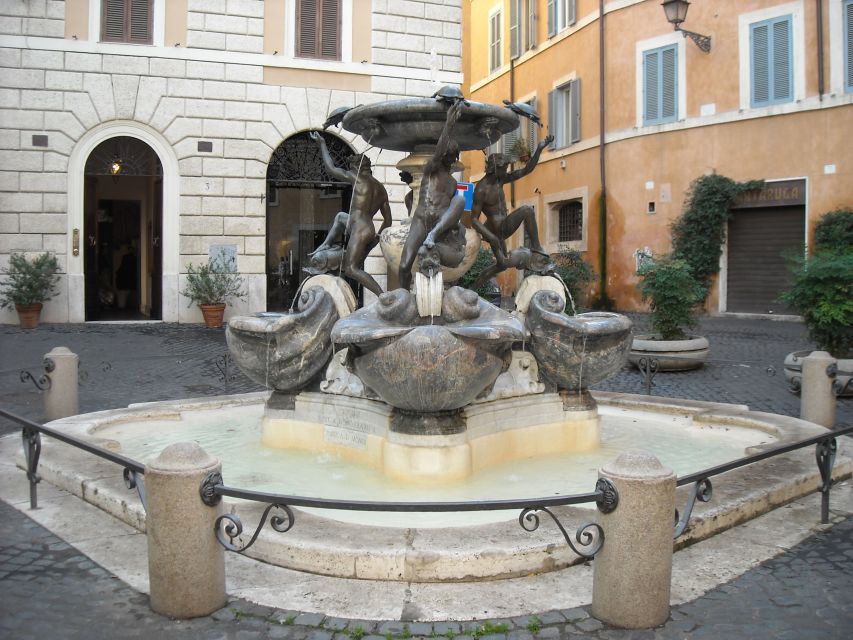
- Piazza Mattei: a small square with big neighborhood meaning
- Portico d’Ottavia and Via della Reginella: architecture that keeps the story close
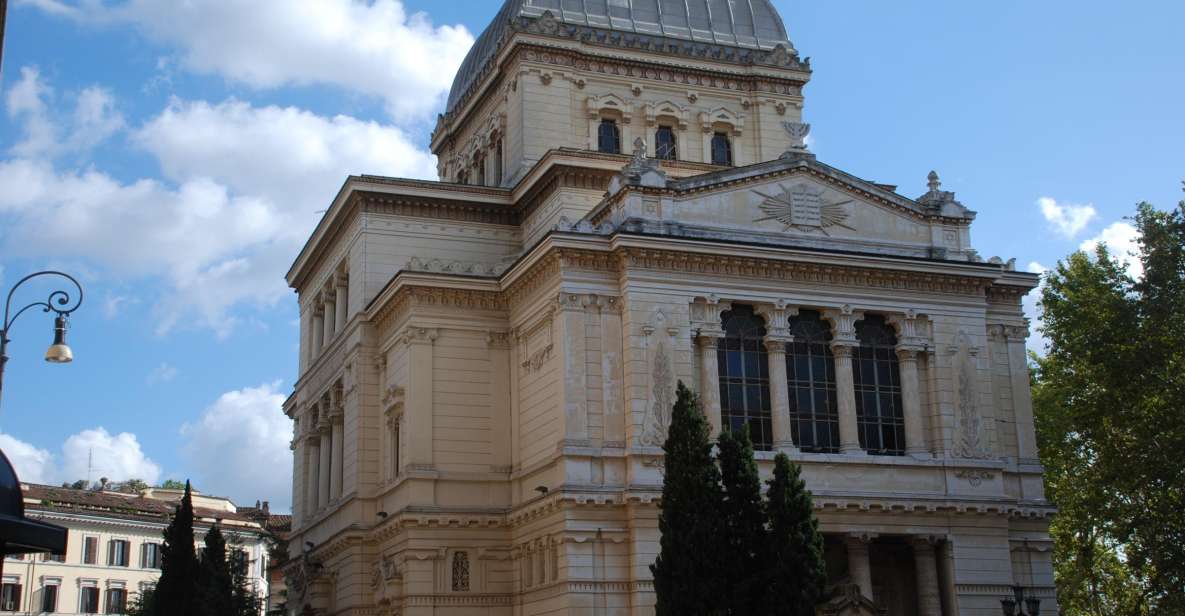
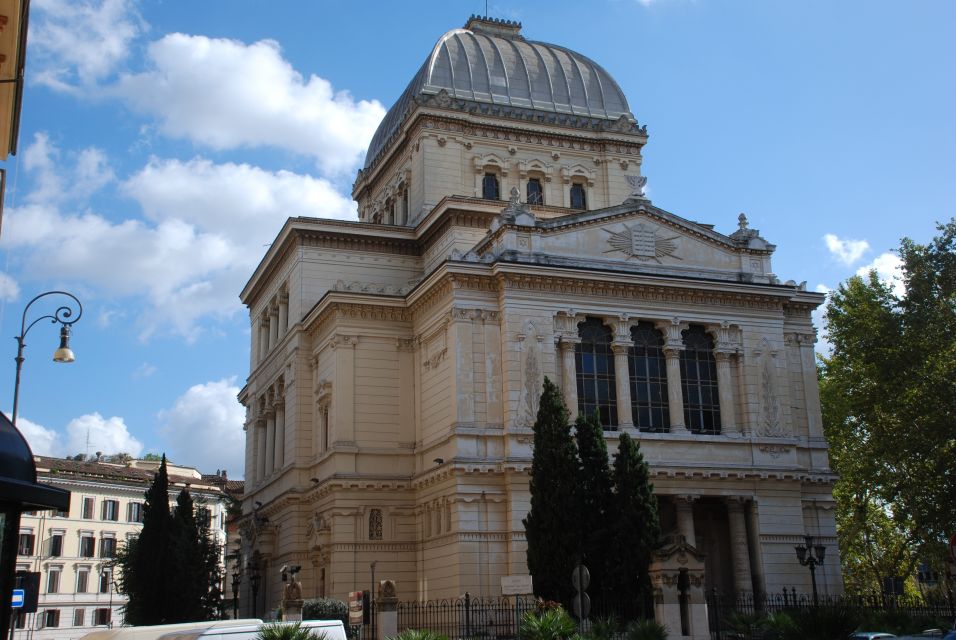
- Great Synagogue of Rome: built early 1900s, still the main anchor
- Fabricio Bridge to Tiber Island: one crossing that changes the vibe
- Trastevere: cobblestones, old houses, and Santa Maria in Trastevere
- Private guide quality: what the high rating really signals
- Price and value: paying for a focused private route
- What to bring, what to skip, and how to pace yourself
- Who this Jewish Rome and Trastevere tour suits best
- Should you book this Jewish Rome tour?
- FAQ
- How long is the Jewish Rome District, Old Ghetto and Trastevere Private Tour?
- Where does the tour start?
- Where does the tour end?
- Is the tour private?
- Do I need tickets for any of the stops?
- Will I be able to skip the line?
- Is the tour offered in multiple languages?
- Is it wheelchair accessible?
- FAQ
- Can I bring luggage or large bags?
- Is there free cancellation?
- Can I reserve now and pay later?
- What should I wear?
- How many main guided stops are included?
- Does the tour include the Great Synagogue of Rome?
- Does the tour cross a historic bridge?
Key points to know before you go
- Private, official expert guide for focused explanations (and the feedback score is extremely high)
- Skip-the-line entrance for smoother timing at the Great Synagogue
- Stops include Piazza Mattei, Portico d’Ottavia, Via della Reginella, and Tiber Island
- You cross the Fabricio Bridge (62 B.C.) and walk into the Trastevere vibe
- The experience runs about 3 hours and ends near Piazza Trilussa
- Wheelchair accessible, but you’ll still want to be comfortable moving around historic streets
Jewish Rome in three hours: the smart route that connects everything
A lot of Rome tours feel like separate lists: one stop here, another stop there. This one has a clearer logic. You start near the old theater area (Via del Teatro di Marcello), then you walk into the Jewish Ghetto zone and keep moving toward the river and Trastevere. It’s a compact route that makes the neighborhood feel like one story instead of a grab bag of landmarks.
Why that matters: the Jewish community of Rome is among the oldest in the Western world, and the area you’re walking through was shaped by specific centuries and specific laws. The tour gives you that framework, then lets you see how the streets, bridges, synagogues, shops, and churches all sit in the same physical space.
At 3 hours total, you’re not trying to cover Rome from A to Z. You’re focusing on one powerful slice of the city—and that kind of focus usually makes the details stick.
You can also read our reviews of more private tours in Rome

Starting at Via del Teatro di Marcello: get your bearings fast
Your tour begins at Via del Teatro di Marcello, 42, at the exit of Antico Caffè del teatro di Marcello. That location is useful. It places you at the edge of major historic Rome, so the walking doesn’t start from a random corner—you get context right away.
From there, the guide leads you into the Jewish district area at a walking pace that fits a private group. You’ll likely spend the most time once you reach the Ghetto proper, but the early walking is also part of the point: it helps you orient to the neighborhood shape before you start seeing the major set pieces.
Practical tip: wear shoes you trust on uneven pavement. Even when you’re only walking for a few minutes at a time, the cobbles in central Rome can be a little sneaky.
The Old Ghetto: forced residence, citizenship changes, and what you can still read today
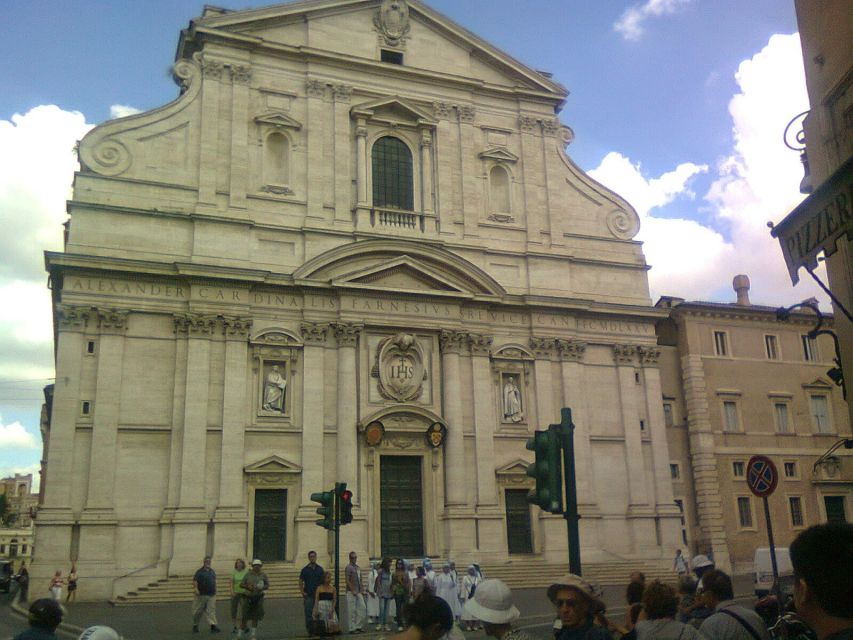
The Jewish Ghetto area is the heart of the tour. The guided portion here runs about 30 minutes, long enough to go beyond surface talking and connect the dates to the streets.
Here’s the big historical arc you’ll hear about: the Jewish community of Rome traces back to the 2nd century B.C., and the Ghetto itself was created between 1555 and 1870, when Jewish residents were forced to live there. After Rome became the capital of Italy, the old Ghetto structure was dismantled and Jewish people were granted citizenship.
That’s heavy material, and the value of a private guide is that you can ask follow-ups. You’re not just looking at buildings—you’re learning how policy changed daily life, how communities regrouped, and why certain landmarks matter.
You’ll also hear about the district’s character in practical terms: you’ll see the area’s shops and kosher restaurants, which helps translate history into what you can still experience today. In Rome, the past isn’t trapped behind glass here—it’s woven into how the neighborhood works.
Piazza Mattei: a small square with big neighborhood meaning
After the Ghetto segment, the tour moves to Piazza Mattei (about 20 minutes guided). This is one of those Rome pauses where you can slow down and look around. Squares like this help you absorb the surrounding street pattern, not just the individual site.
Why I like this stop on the schedule: it gives your brain a break from the heavier timeline before you head back into more architectural and cultural landmarks. You’re building a mental map: Ghetto streets, then open space, then more landmark-dense streets again.
If you’re the type who likes to understand how neighborhoods feel, not just what they contain, Piazza Mattei works well.
Portico d’Ottavia and Via della Reginella: architecture that keeps the story close
Next up are Portico d’Ottavia (about 20 minutes) and Via della Reginella (about 20 minutes). These stops matter because they help you connect the Ghetto area to Roman urban design.
Portico d’Ottavia is a key place to look at the way Rome layers eras. Even when you’re standing in a narrow district, you’re still surrounded by structures that anchor you to older Rome. Then Via della Reginella brings you back to street-level texture—exactly where daily life happens.
What you’ll gain: a better sense of how the Jewish district wasn’t isolated like a museum exhibit. It sat inside the larger city’s movement—merchant life, foot traffic, and the constant overlap between different communities.



Great Synagogue of Rome: built early 1900s, still the main anchor
The tour includes the Great Synagogue of Rome (about 20 minutes guided). The overview you’ll get here is clear and useful: between 1901 and 1904, a monumental temple was built to celebrate the granting of citizenship, and it remains the main Jewish temple in Rome.
That date connection is exactly what you want from a focused walking tour. You’re learning how a political turning point became a physical landmark. You’re not just hearing that something was built—you’re understanding what it meant.
Also, you’ll benefit from skip-the-line access via a separate entrance. In practice, that’s what keeps the day from feeling like you’re paying with time instead of money.
Timing note: this stop is only about 20 minutes guided, so if you want extra time reading details inside, plan to spend a little extra time nearby afterward on your own.
Fabricio Bridge to Tiber Island: one crossing that changes the vibe
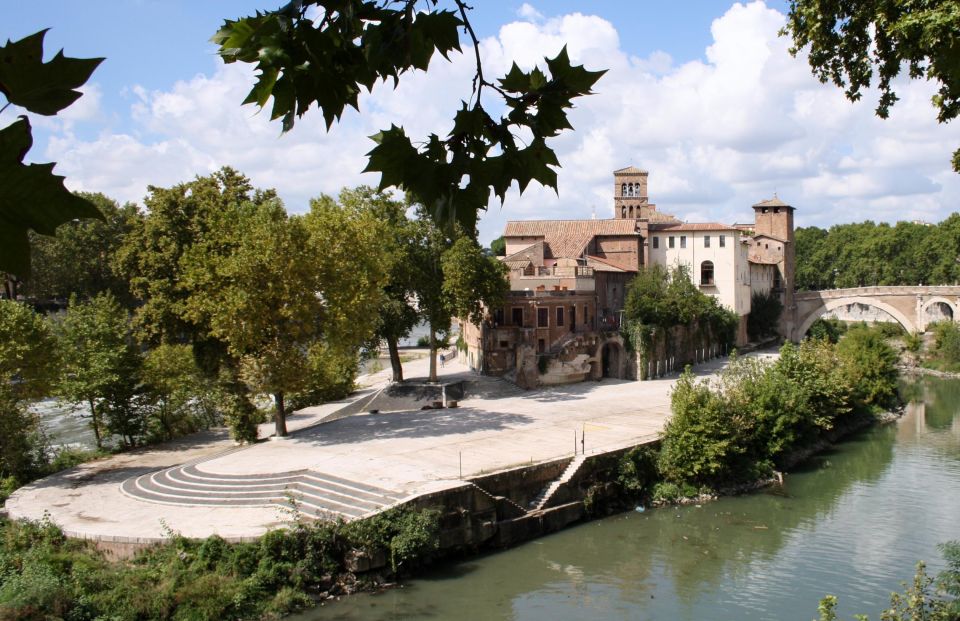
One of the most interesting route details is that you cross the Fabricio Bridge (62 B.C.), the oldest bridge still left in Rome, and you reach Tiber Island.
This is where the tour’s geography starts doing storytelling work. The river becomes a line you can feel in your walking rhythm. You’re no longer just in the Ghetto streets; you’re moving toward the Tiber and the districts on the other side.
Why this is valuable: bridges are natural “transition points” in Rome tours. They force you to look up and out, not only down at pavement. Standing at the right angle, you get a sense of why people historically moved the way they did—toward trade routes, toward water access, toward connected neighborhoods.
Trastevere: cobblestones, old houses, and Santa Maria in Trastevere
Then comes Trastevere (about 20 minutes guided), ending at Piazza Trilussa. Trastevere is described best as maze-like: narrow, winding streets and cobblestones lined with ancient houses.
The tour includes Santa Maria in Trastevere among the sights you’ll encounter in this area. Even with limited time, a stop here helps you understand how the Jewish district fits inside a wider web of Rome’s historic neighborhoods.
Here’s what you can expect from this final segment: it’s less about a strict timeline and more about atmosphere you can see. The street shape, the old-looking facades, and the sense of “this has been here for centuries” all help the earlier history feel more grounded.
And because the tour ends near Piazza Trilussa, you’re positioned for an easy next step—coffee, gelato, or dinner plans nearby.
Private guide quality: what the high rating really signals
The tour’s rating is 4.9 from 8 reviews, and the standout feedback phrase is simple: great tour guide. That may not sound specific, but it usually means the guide is doing the job you want a private guide to do—making connections clear, keeping the pace right, and answering questions without losing momentum.
With this kind of subject, that matters. Jewish Rome isn’t just a list of monuments; it’s a set of events and policies that changed real lives. A strong guide helps you hold the timeline in your head while also pointing out the on-the-ground visual clues.
Language coverage is also a practical plus. You can get the tour in Spanish, English, French, German, Italian, Portuguese, or Russian, which is a big deal if you want nuance rather than summary.
Price and value: paying for a focused private route
The price is $456.21 per group (up to 1, based on the listing). That’s not cheap in ticket terms. But private tours are priced differently: you’re paying for a dedicated expert guide for about 3 hours, plus skip-the-line entry.
So the real value question is: do you want a guided, structured route through the Jewish Ghetto and Trastevere, with a narrative that ties dates to places? If yes, this format can be good value because you get multiple key sights covered in one walk—Piazza Mattei, Portico d’Ottavia, Via della Reginella, the Great Synagogue, Tiber Island, and Trastevere—with someone steering you through the meaning.
If you’re traveling with more people (the listing indicates a private group setup), the economics can also improve because the guide cost becomes shareable—though you’ll want to check the exact group size rules when you book.
What to bring, what to skip, and how to pace yourself
This tour is straightforward in requirements. Bring comfortable shoes. Wear something you can walk in for the full 3 hours.
Don’t plan on bringing luggage or large bags. If you’re carrying extra items, consider storing them before you meet the guide.
For pacing, think of it like this: the guided parts are scheduled in clear blocks, but you’ll still do extra walking between stops. The total timing is built for a smooth loop, not marathon distance.
Who this Jewish Rome and Trastevere tour suits best
This is a great fit if:
- You want a guided explanation of the Jewish Ghetto and why the Great Synagogue matters
- You like walking routes that connect history to actual streets and buildings
- You prefer private format clarity over joining a larger group
It may be less ideal if:
- You don’t like walking on cobbles or uneven historic streets
- You want a long visit inside the synagogue beyond a short guided window (the guided time is set at about 20 minutes)
Should you book this Jewish Rome tour?
I’d book it if you care about context, not just photos. In three hours you get a rare combination: the old Ghetto story, major landmark stops (Piazza Mattei, Portico d’Ottavia, the Great Synagogue), a historic river crossing (Fabricio Bridge), and an ending in Trastevere near Piazza Trilussa.
Add the skip-the-line access and the consistent feedback about the guide, and you have a strong case for spending your time here rather than trying to piece it together alone.
If you like your Rome tours focused, respectful, and actually informative, this one is a solid choice.
FAQ
How long is the Jewish Rome District, Old Ghetto and Trastevere Private Tour?
It lasts 3 hours.
Where does the tour start?
The meeting point is at the exit of Antico Caffè del teatro di Marcello, Via del Teatro di Marcello 42.
Where does the tour end?
The tour ends at Piazza Trilussa.
Is the tour private?
Yes, it’s a private group tour.
Do I need tickets for any of the stops?
The tour information says no tickets are required.
Will I be able to skip the line?
Yes. The experience includes skip-the-line access through a separate entrance.
Is the tour offered in multiple languages?
Yes. Languages include Spanish, English, French, German, Italian, Portuguese, and Russian.
Is it wheelchair accessible?
Yes, it’s listed as wheelchair accessible.
FAQ
Can I bring luggage or large bags?
No. Luggage or large bags are not allowed.
Is there free cancellation?
Yes. You can cancel up to 24 hours in advance for a full refund.
Can I reserve now and pay later?
Yes. The option is reserve now & pay later.
What should I wear?
Wear comfortable shoes.
How many main guided stops are included?
The tour includes guided segments at the Jewish Ghetto, Piazza Mattei, Portico d’Ottavia, Via della Reginella, the Great Synagogue of Rome, Tiber Island, and Trastevere.
Does the tour include the Great Synagogue of Rome?
Yes, it includes a guided visit to the Great Synagogue of Rome.
Does the tour cross a historic bridge?
Yes. You cross the Fabricio Bridge (62 B.C.) during the route.