REVIEW · ROME
Mosaic-Making Workshop in Rome’s Trastevere
Book on GetYourGuide →Operated by Romeing · Bookable on GetYourGuide
Make art the Roman way, by hand. This mosaic-making workshop in Trastevere is about doing, not watching. I especially like two things: you get hands-on time cutting and placing tiles, and you leave with a true one-of-a-kind souvenir you made yourself. One drawback to consider is the language flow: the mosaic teacher may not be fluent in English, but they still guide you clearly with demonstrations and patient communication.
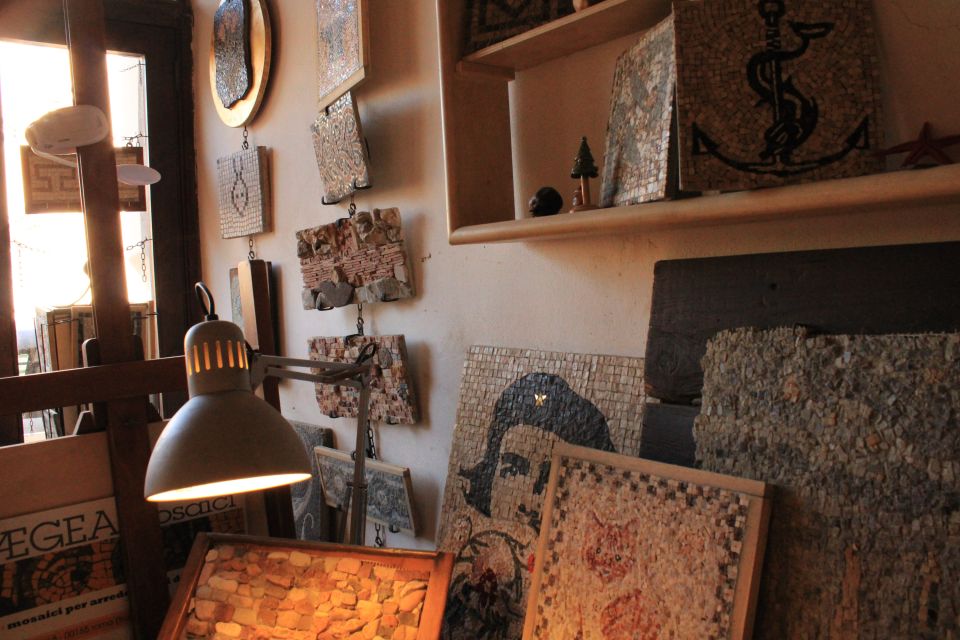
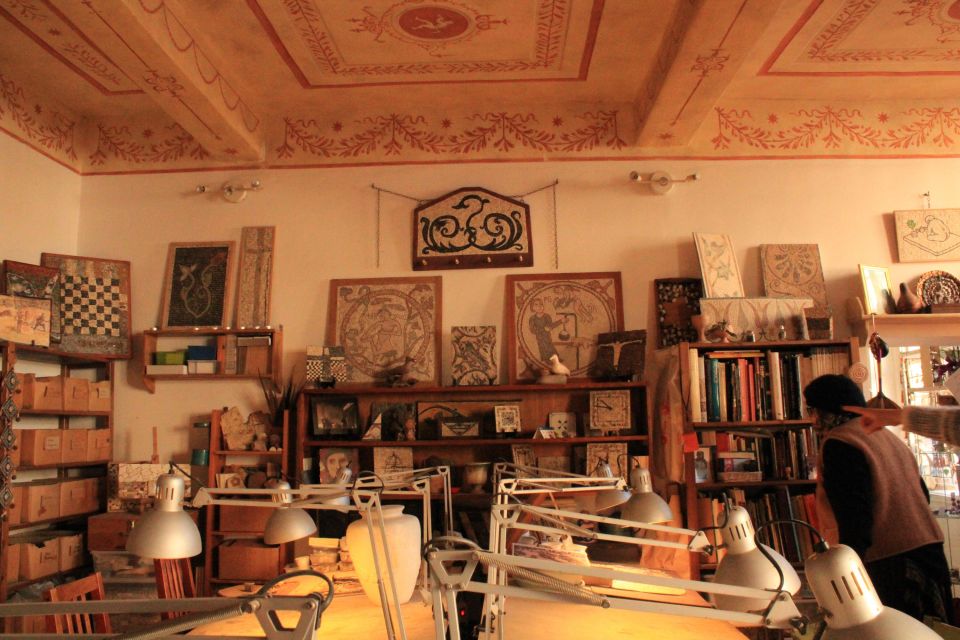
The studio setting helps. It feels like a working craft space in a real neighborhood, not a performance. You’ll be in a small group (up to 8), so questions don’t get lost in the shuffle.
Plan for a bit of creative time too. Your active workshop is about 2–3 hours, but the mosaic needs extra time to set in its box, up to 6 hours, so the “done” part isn’t instant.
In This Review
- Key things to know before you go
- What You Actually Do in the Mosaic Workshop (Design to Take-Home)
- Meeting Nadia in Trastevere (And How the Language Works)
- Tile-Cutting, Fitting Small Angles, and Why It Takes Longer Than You Expect
- Your Mosaic’s Timeline: 2–3 Hours Working, Up to 6 Hours Setting
- Small Group Size and Studio Feel in Trastevere (Great for Couples and Families)
- Price and Value: Is $147.27 Worth It?
- Getting There Without Hotel Pickup (And What to Do in the Neighborhood)
- Practical Tips for a Smooth Session (Tools, Attention, and Expectations)
- Should You Book This Trastevere Mosaic Workshop?
- FAQ
- How long is the mosaic workshop?
- Where is the workshop located?
- How much does it cost?
- Can I choose what my mosaic design looks like?
- Do I take my mosaic home?
- What group size is it?
- What languages are used in the workshop?
- Is the workshop wheelchair accessible?
- Do children need to be with an adult?
- Is hotel pickup or drop-off included?
- What’s the cancellation and payment flexibility?
Key things to know before you go
- Small group up to 8: plenty of attention while you work at your station
- You choose the design: you’re not copying a sample from start to finish
- Tile cutting takes real patience: fitting small angles can be the tricky part
- Your finished mosaic is boxed for transport: setting time up to 6 hours
- Studio mentorship (Nadia and others): hands-on help throughout
- English support is practical: even if English isn’t perfect, demonstrations do the heavy lifting
What You Actually Do in the Mosaic Workshop (Design to Take-Home)
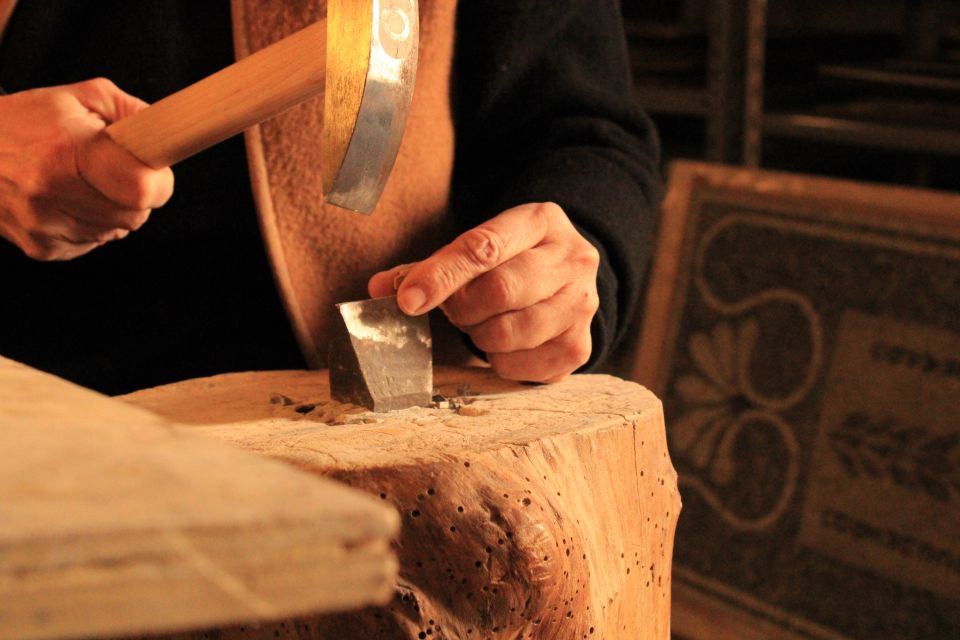
This isn’t a craft class where you glue a few pre-cut pieces and call it art. It’s a proper mosaic session with steps that reflect how mosaic work is really made—plus guidance while your hands learn the process.
You start in the Trastevere atelier with your mosaic artisan instructor. In this workshop, you’ll be shown the workflow and the tools. Then you sit down at your station and get to choose your preferred design. That choice matters. It turns the workshop from a generic souvenir into something personal you can look at later and remember how it came to life.
From there, the class moves through the core stages:
- Tracing or setting up your design: you transfer the pattern you’re working from
- Cutting tiles to fit: you reshape pieces so they match curved lines and tight angles
- Placing and gluing tiles: you build the image tile-by-tile at your workspace
- Finishing steps like cementing and cleaning: you’ll learn how the mosaic gets “locked in” and tidied up
The tile work is the star. One person noted that cutting to fit small angles can feel tedious. That’s normal. The satisfaction is in realizing why mosaics take time—and why the finished detail looks so sharp in Roman churches and fountains.
At the end, your mosaic isn’t just left on a table. It’s carefully placed in a box, so it can finish setting and also travel home more safely. That box-and-set approach is a big part of the value: your souvenir arrives ready to be displayed, not just partially finished.
You can also read our reviews of more tours and experiences in Rome



Meeting Nadia in Trastevere (And How the Language Works)
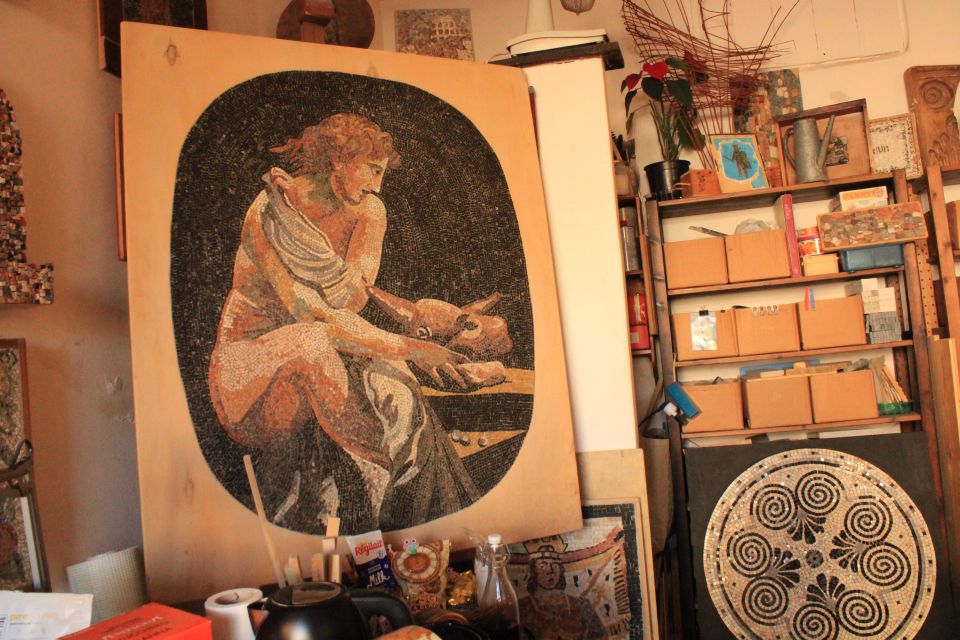
You’ll be taught by a skilled mosaic artisan—Nadia is specifically named as the instructor in the workshop description. You may also see other studio instructors (some classes are associated with names like Michaela/Micaela in past sessions), but the key is the same: you’re working with a mosaic professional.
Here’s the practical part: the teacher who guides you may not speak fluent English. Still, the class is set up so you’re not left guessing. You get demonstrations, and the instructor communicates with everyone in a way that stays hands-on. A common theme from past participants is that the instructor shows you what to do, then keeps checking in.
That matters because mosaic making is “learn by doing.” If you’re worried about the language, don’t be. Your main instructions come from what you see at your station. English support is included in the overall workshop info, and the teacher can communicate with everyone, even if it’s not perfectly fluid.
Tile-Cutting, Fitting Small Angles, and Why It Takes Longer Than You Expect
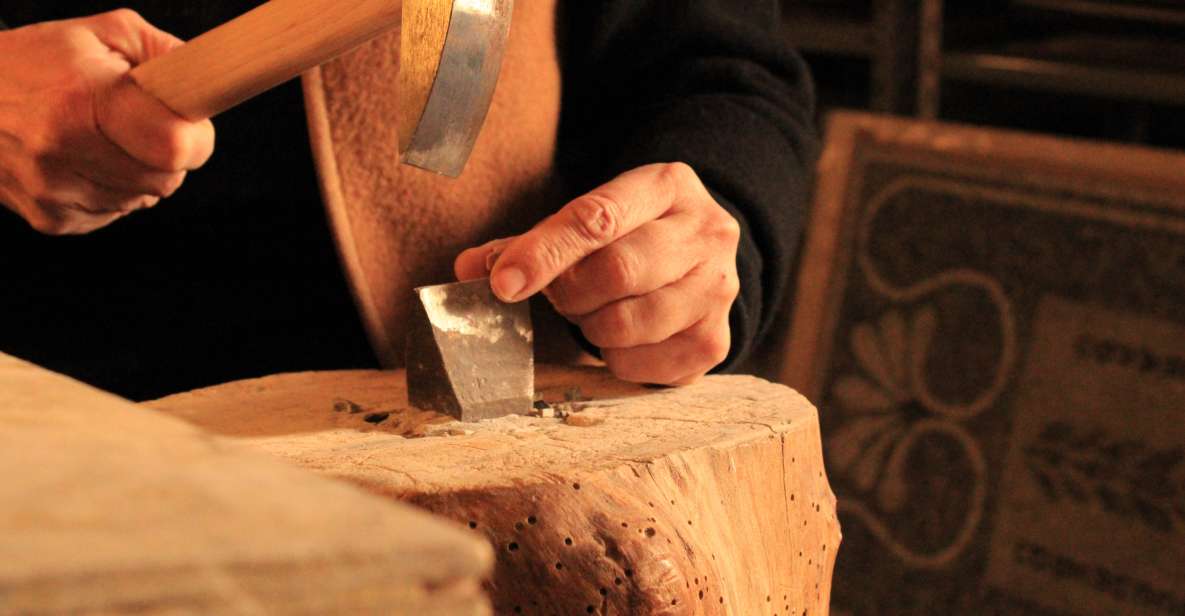
If you’ve ever looked at a mosaic and thought, That’s just tiles on a wall, this workshop gently corrects that idea.
Tile cutting is where your brain and hands learn together. You’ll cut pieces to match your pattern. Some designs have curves and tiny points. That means you’re constantly fitting tiles to small spaces. One participant specifically said it was tedious cutting tiles to fit small angles. That same person also said they now understand why the workshop needs the full time: mosaics require more effort than it looks like from a distance.
This is actually good news for you. It means you’ll come away with a new appreciation for the craftsmanship you’ll see around Rome—especially the mosaics in major churches. The workshop doesn’t just hand you a souvenir. It gives you a behind-the-scenes understanding of how much precision goes into those bright Roman scenes.
Also, the class atmosphere is described as organized and practiced, with demos that are brief and then hands-on time that continues. That balance is ideal if you want to be active, but not overwhelmed.
Your Mosaic’s Timeline: 2–3 Hours Working, Up to 6 Hours Setting
The workshop duration is listed as about 3 hours, with the active building time described as 2/3-hour mosaic-making. The reason the experience feels longer in a satisfying way is that mosaics aren’t finished the moment your last tile is placed.
Once your piece is complete, it’s placed into a box so it can properly set. The setting process is listed as taking up to 6 hours. This is a huge logistics point for you. It means the studio isn’t rushing your piece out the door while it’s still fragile. Instead, they handle the part you can’t do yourself in your apartment: the careful setting and transport readiness.
So what does that mean practically?
- You do the creative work in the workshop window.
- You leave with a boxed mosaic that’s been cared for so it can finish the final stage safely.
If you’re the kind of person who loves the planning behind a good souvenir, you’ll appreciate this more than you think.
Small Group Size and Studio Feel in Trastevere (Great for Couples and Families)
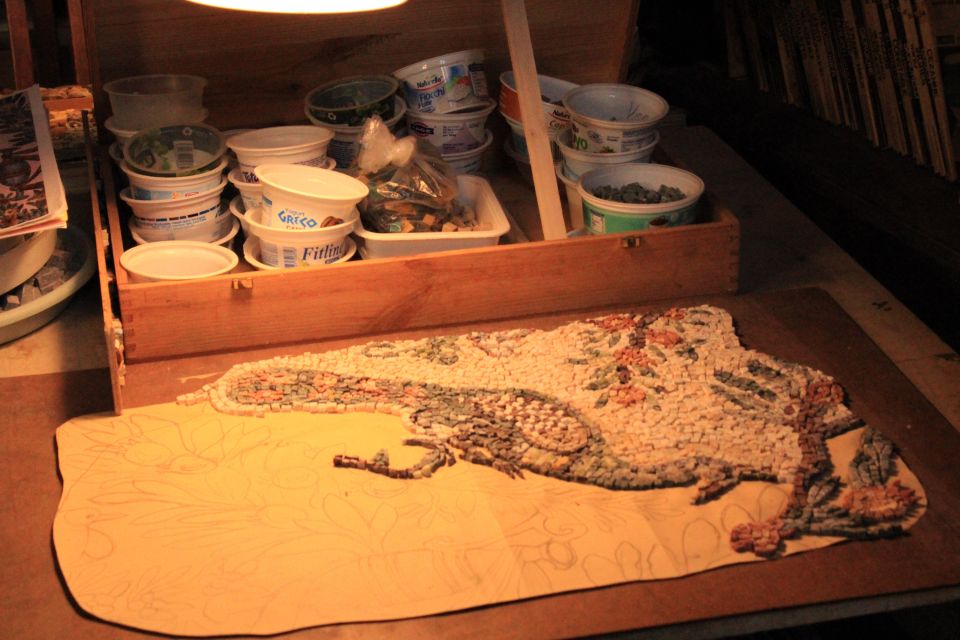
This is a small-group class limited to up to 8 participants. That size is the reason you can actually learn. When you’re cutting tiles and trying to fit pieces neatly, you need quick help. In a big class, you might wait. In a small studio, you get attention.
In past sessions, groups have included couples working together and also families with kids. One example mentioned a 9-year-old creating a mosaic with guidance through tracing, cutting, gluing, and the cementing and cleaning process. Another session described a group with ages 11 and 13 plus parents. That tells me this workshop can work well for motivated younger makers who are comfortable sitting and concentrating for a few hours.
The class is also described as casual in a way that still stays structured. One person said it felt like hanging out in an artist’s studio, with a nice mix of instruction and time to explore materials. That vibe is exactly what you want in Rome when you’re tired of walking from ticket line to ticket line.
Two practical notes for families:
- Children must always be accompanied by at least one adult.
- The class is wheelchair accessible, which can matter a lot if you’re planning your day around smoother movement.






Price and Value: Is $147.27 Worth It?
At $147.27 per person, this workshop isn’t the cheapest thing on your Rome list. So let’s talk value the real way: what are you paying for?
You’re paying for:
- Expert guidance from a mosaic professional (and hands-on help throughout)
- A fully equipped mosaic studio
- A small group setting (up to 8), which affects how much attention you get
- A finished take-home mosaic, boxed to help with the setting and transport phase
- All the materials and tools you need to complete your design within the class format
If you usually buy souvenirs that look nice but stay in a drawer, this changes the equation. You’re creating an object that’s tied to your own effort and time. Several participants called it their favorite experience in Italy or their favorite break from Rome’s busier schedule. That’s not about “perfect marketing.” It’s because mosaic making feels different than sightseeing. It also gives you a new skill appreciation you can carry forward.
Also, consider the “replacement cost.” The kind of handmade, truly personal mosaic you’d commission or purchase is often far more expensive than a workshop price. Here, you get instruction plus the finished piece as your souvenir.
In short: if you want an authentic hands-on memory and you’re okay spending a few hours at a worktable, this price can feel fair fast.
Getting There Without Hotel Pickup (And What to Do in the Neighborhood)
There’s no hotel pickup or drop-off included. You’ll handle getting to the studio yourself.
The workshop is in Trastevere, and it’s described as being near the Botanical Garden. That’s a useful anchor when you’re plotting your day. Trastevere also means you can plan this as a middle-of-the-day activity and still enjoy the neighborhood before or after. You’ll find plenty of places to pause for a cappuccino, snack, or casual break.
One practical idea: schedule this when you’re ready to sit down for a bit. Even if you love walking, mosaic making is concentration time. It works best as a calmer block after you’ve done your main sights.
And if you’re thinking about timing: the workshop notes that duration is about 3 hours and you should check availability for starting times. Rome has a way of stretching your day, so picking a time that gives you margin helps.
Practical Tips for a Smooth Session (Tools, Attention, and Expectations)
A few things help you enjoy the workshop even more:
1) Expect cutting to be the hardest part.
It’s normal. One participant said cutting and fitting small angles was tedious. That’s the craft at work. If you relax into the process, you’ll be proud of the end result even if a few pieces take extra patience.
2) Don’t worry too much about perfect English.
The instructor may not be fluent, but the class is set up so you can follow demonstrations and still communicate. You don’t need to debate art theory. You need to match your pattern and get help when you’re stuck.
3) Use the small group advantage.
With only up to 8 people, you can ask for clarification without embarrassment. If your placement looks off, check sooner rather than later. Mosaics are forgiving, but quick feedback saves time.
4) Plan your day around setting time.
Your mosaic can take up to 6 hours to set properly after it’s boxed. That’s mostly handled by the studio. Your job is simply to plan a relaxed end to your afternoon. You’ll likely want a comfortable exit from the session.
5) If you’re visiting with kids, keep it realistic.
Children must be accompanied by an adult. The workshop can be a big hit for kids who enjoy focused activities. If your child gets restless easily, consider timing and bring the right expectations.
One charming detail from past experiences: a couple mentioned getting a cappuccino and breakfast on the way, and then enjoying music and espresso made in the studio. That’s not guaranteed for every session, but it hints at the relaxed, craft-atmosphere vibe you can look forward to.
Should You Book This Trastevere Mosaic Workshop?
I’d book it if you want a Rome memory you can hold, not just a photo on your phone. This is a hands-on art class that teaches real skills: tracing, tile cutting, fitting, gluing, and finishing steps like cementing and cleaning. You also get the practical benefit of taking home a boxed mosaic designed to complete its setting.
Skip it (or reconsider) if:
- You want a sightseeing-only day with constant movement.
- You’re not interested in sitting at one station for a few hours.
- You’re hoping for a fast, no-effort souvenir. Mosaics take time, and that effort is the point.
If you’re flexible and you like learning by doing, this is one of those rare activities that’s both relaxing and genuinely satisfying. In a city full of masterpieces, you’ll get to make one with your own hands.
FAQ
How long is the mosaic workshop?
The experience is listed as about 3 hours, with mosaic-making described as a 2/3-hour workshop. Starting times vary, so check availability for the exact slot.
Where is the workshop located?
It’s in Trastevere, Lazio, Italy, in a studio near the Botanical Garden.
How much does it cost?
The price is listed as $147.27 per person.
Can I choose what my mosaic design looks like?
Yes. You’re able to choose your preferred design.
Do I take my mosaic home?
Yes. You’ll create your own mosaic and take it home. It’s placed in a box so it can set properly (up to 6 hours) and be transported.
What group size is it?
It’s a small group limited to up to 8 participants.
What languages are used in the workshop?
The instructor support is listed as English and Italian. The mosaic artist teaching may not be fluent in English, but can communicate with everyone.
Is the workshop wheelchair accessible?
Yes, it’s listed as wheelchair accessible.
Do children need to be with an adult?
Yes. Children must always be accompanied by at least one adult.
Is hotel pickup or drop-off included?
No. Hotel pickup and drop-off are not included.
What’s the cancellation and payment flexibility?
Free cancellation is available up to 24 hours in advance for a full refund. You can also reserve now and pay later (book without paying today).