REVIEW · ROME
Rome: 2.5-Hour San Clemente & Underground Private Tour
Book on GetYourGuide →Operated by Tour in the City - Travel Agency Rome - · Bookable on GetYourGuide
Gladiators and saints share the same streets. This private 2.5-hour route connects underground San Clemente layers with Michelangelo’s Moses and the Colosseum area—without feeling like a rushed museum stampede. You’ll get a professional art historian guide, plus entrance tickets and headsets, so you can focus on what matters: real buildings from different eras, standing side by side.
I like the way this tour turns Rome’s big timeline into something you can see in 3D, not just read in a guidebook. And I like that it pairs prison relics and Renaissance sculpture with the gritty remains of gladiator training. One possible drawback: if your guide leans into odd side tangents, it can dilute the clean art-and-architecture focus you might be hoping for.
Key things I’d circle before you go
- San Pietro in Vincoli relics + chains tied to St. Peter’s imprisonment story
- Michelangelo’s Moses and the story of its unfinished Julius II tomb plan
- Ludus Magnus ruins linked to the Colosseum, plus the idea of underground connections
- San Clemente’s three-level building complex, where you walk through eras
- Underground access that shows what sits beneath the current basilica
In This Review
- San Pietro in Vincoli: Chains and Michelangelo’s Moses
- Ludus Magnus Ruins: Gladiator Training Near the Colosseum
- San Clemente al Laterano: Three Rome Layers in One Walk
- Walking into the Underground: What the Layers Mean on the Ground
- Pacing, Meeting Point, and the 2.5-Hour Flow
- Price and value: Is $195.98 per person worth it?
- Who this private tour is best for
- Should you book this San Clemente & Underground private tour?
- FAQ
- What sites are included on this 2.5-hour tour?
- Where does the tour start and where does it end?
- What time should I arrive at the meeting point?
- Is this tour private?
- Is there a dress code for churches?
- What’s included in the price?
- What language is the tour guide?
- Is it wheelchair accessible?
- How much walking is involved and what should I wear?
San Pietro in Vincoli: Chains and Michelangelo’s Moses
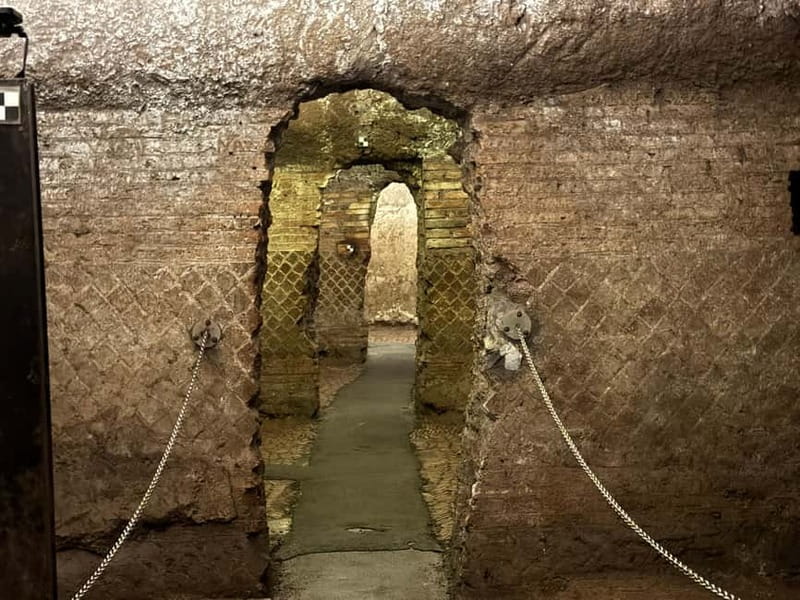
Your tour starts at Piazza San Pietro in Vincoli, right in front of Basilica San Pietro in Vincoli. The quick win here is logistics: the guide meets you with a signboard showing your name, and you can be on your way fast if you arrive about 15 minutes early. Expect a short, pleasant walk through the neighborhood streets near the Colosseum area before the history really starts.
Inside San Pietro in Vincoli, the big draw is the church’s connection to St. Peter. You’ll see an important relic: the two sets of chains said to have bound St. Peter during his imprisonment in Jerusalem and Rome. It’s the kind of detail that makes the church feel less like a pretty stop and more like a living piece of Rome’s religious memory.
Then comes the headliner. Michelangelo’s Moses sits inside this church as an unfinished masterpiece. Michelangelo intended it for the tomb of Pope Julius II, and the original concept included a huge funeral monument with 47 statues. It never reached completion because of Michelangelo’s other commissions. Even if you’ve only seen photos, seeing the scale and the expression in person hits differently. You’re not just looking at a sculpture—you’re looking at a “what could have been” moment in Renaissance ambition.
Practical note: this is a church stop, so plan your outfit accordingly. Knees and shoulders must be covered for both men and women, and the rule is strictly enforced. If you show up in shorts or a tank top, you may not get in—no matter how fast you are.
Ludus Magnus Ruins: Gladiator Training Near the Colosseum
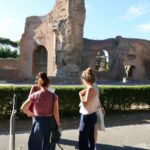
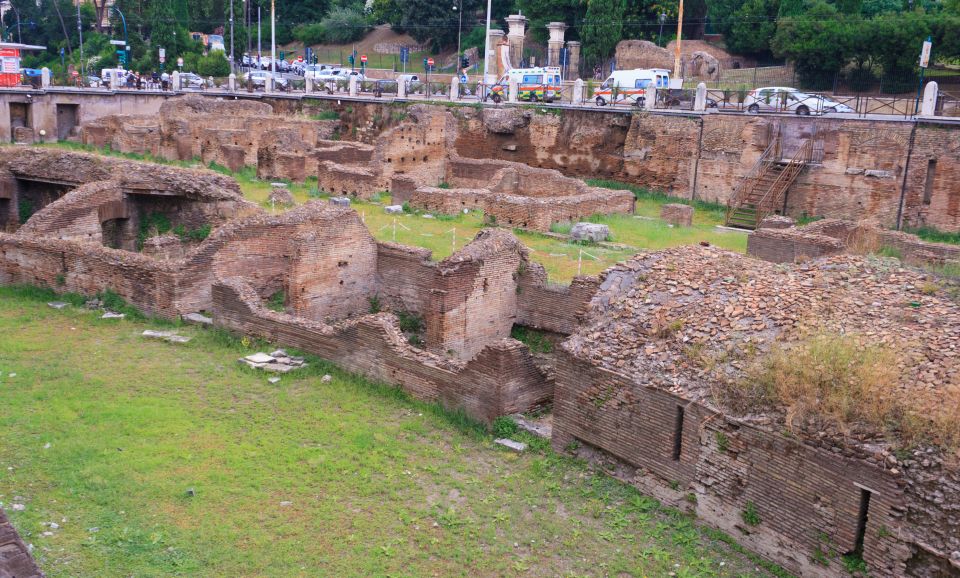
From San Pietro in Vincoli, you move to the Colosseum area for a stop at the ruins of Ludus Magnus, an ancient gladiator training school. This is one of those places where Rome does a good job of rewarding people who slow down. Even though you’re not walking into a fully intact arena, the location and the layout ideas matter.
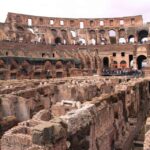
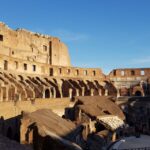
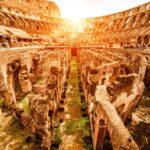
Ludus Magnus sits on the northeast side of the Colosseum. The key concept to understand as you look around: the training school wasn’t isolated from the action. It was connected to the arena by underground tunnels. That detail changes how you imagine the place. You’re picturing men training above, while the routes to the main spectacle run below ground like a secret hallway of Roman logistics.
What I like about including Ludus Magnus in this specific tour is the contrast. You start with sacred relics and Renaissance drama, then you switch gears into the practical, violent world that helped power the Colosseum’s show. The tour doesn’t treat these as separate Rome stories. It treats them as neighbors on the same map—different eras, same ground, different rules.
Drawback to keep in mind: ruins can feel underwhelming if you want lots of guided “show and tell” about a specific structure you can clearly identify in every direction. This stop works best when you’re open to learning the setting and the purpose, not just spotting a single obvious monument.
You can also read our reviews of more private tours in Rome

San Clemente al Laterano: Three Rome Layers in One Walk
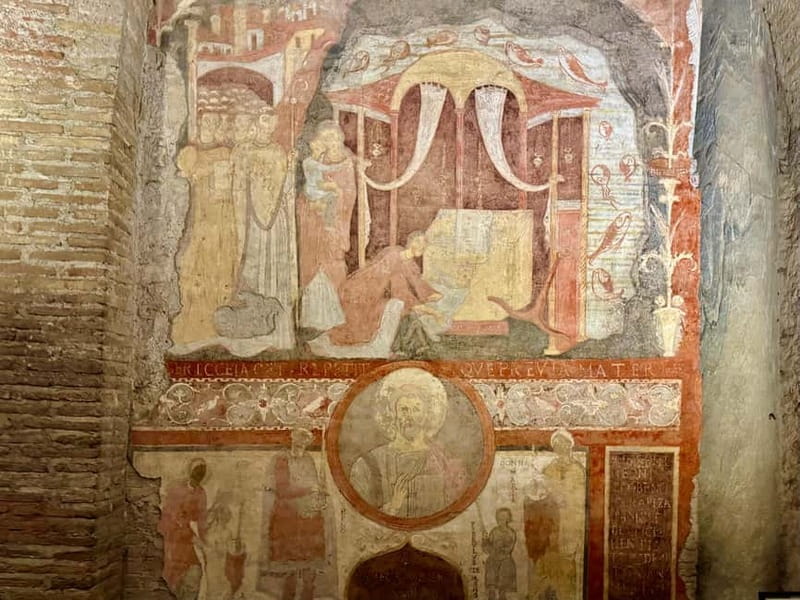
Your final stop is Basilica San Clemente al Laterano (and Via San Giovanni in Laterano). This is where the tour earns its underground reputation in a way you can’t get from a quick surface-only visit.
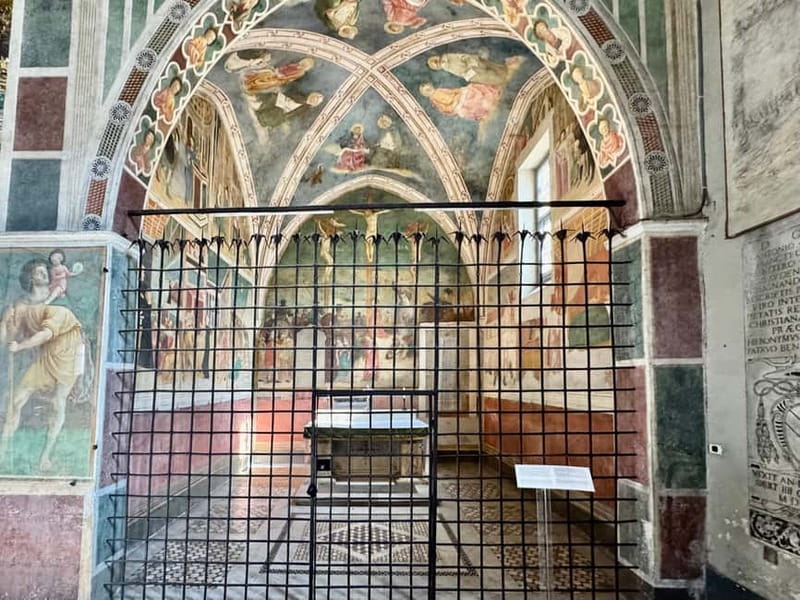
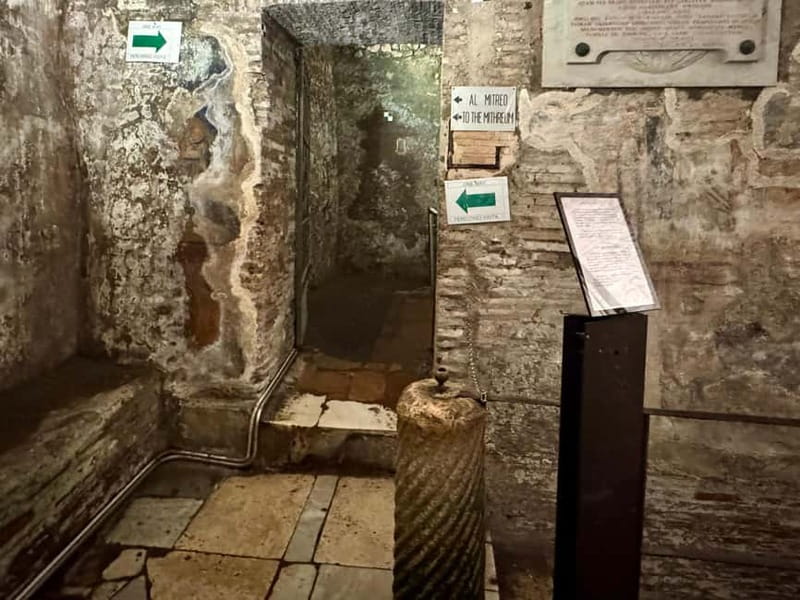
San Clemente is a 12th-century basilica, but the real magic is how the building works like a time machine. The current structure is a three-level complex. Each level corresponds to a major era of Roman history, and the remains under the present basilica suggest the foundation was originally part of a Republican-era villa.
Then the story shifts. In the 4th century, that site was converted into a Christian church dedicated to Pope St. Clement (the third pope after St. Peter). The medieval basilica you see today was built in 1100. So you get overlapping layers: Roman domestic beginnings, early Christian transformation, and medieval church life—stacked where you’d expect just one level.
If you love architecture that actually shows history instead of talking about it, this stop is made for you. The value here is that you’re not learning Rome as a list of dates. You’re watching the city rebuild itself on top of earlier choices.
And yes, dress code still applies for church interiors. Wear smart casual, but make sure your shoulders and knees are covered so you don’t waste time negotiating entry.
Walking into the Underground: What the Layers Mean on the Ground
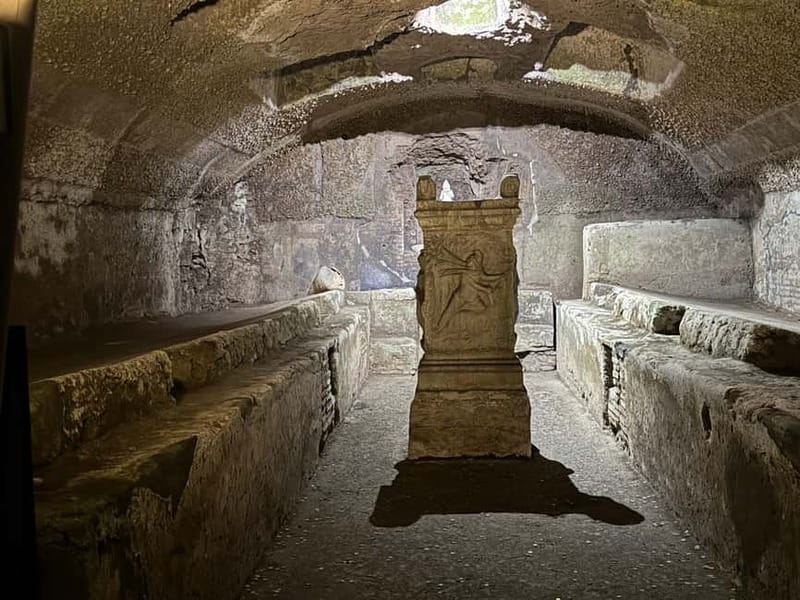
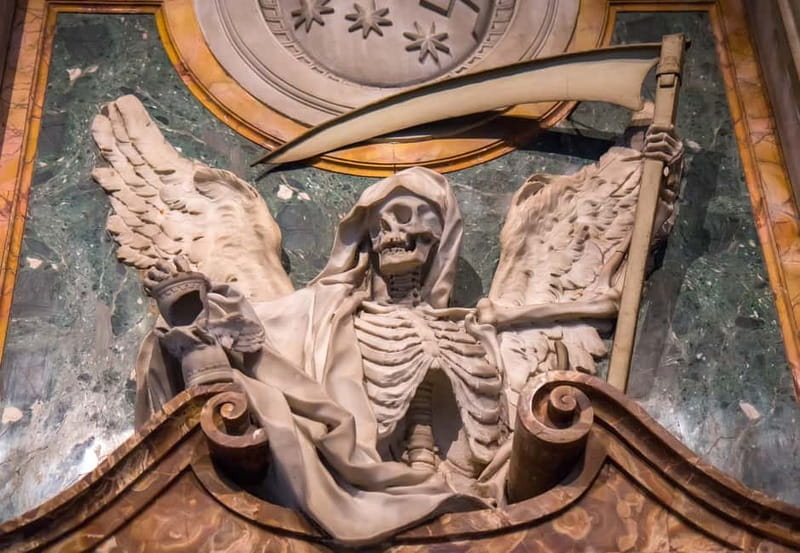
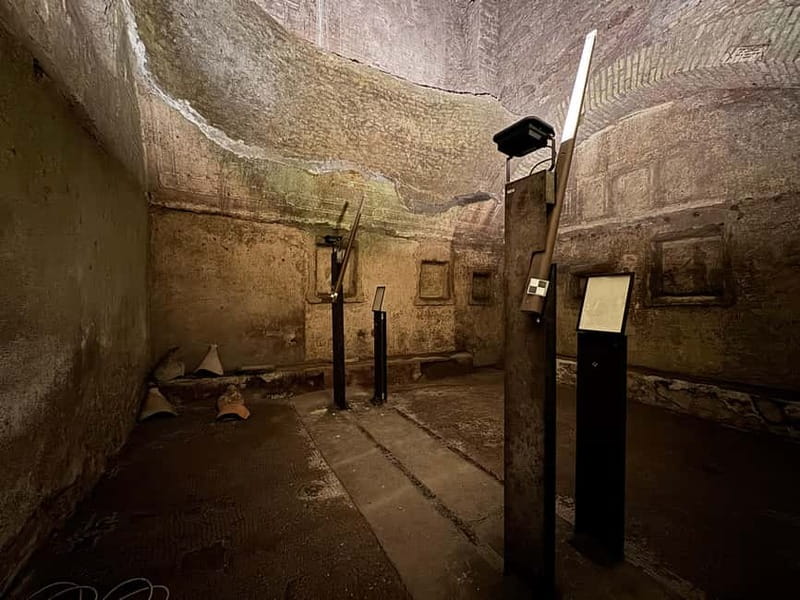
The highlight here is the underground of San Clemente. This is the part that tends to make people say Rome feels different after. Instead of only seeing surfaces—carved stone, painted walls, big church spaces—you get a chance to understand how the present sits on top of earlier floors.
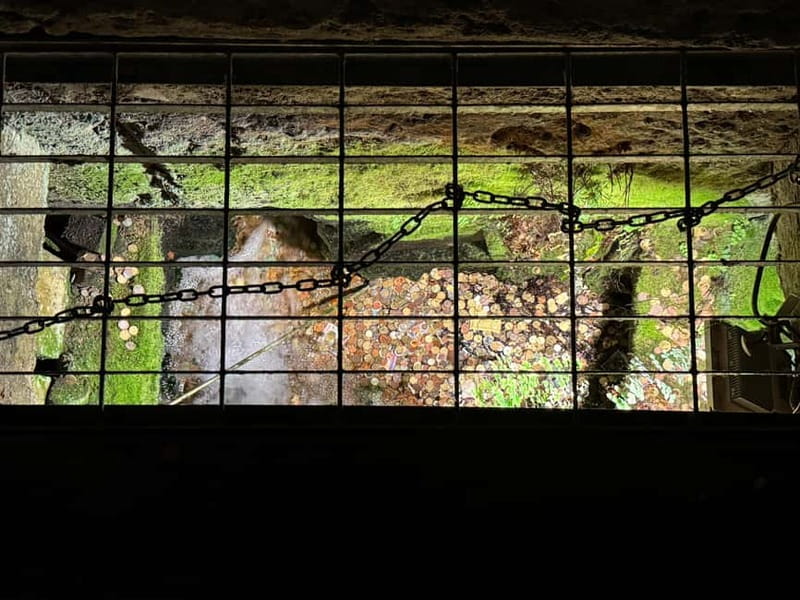
You’ll connect the big-picture timeline to physical reality. You’re stepping into spaces where the city’s layers are literal, not metaphorical. Under one basilica, you can sense a shift from a Republican villa base to a 4th-century Christian use, then forward to the medieval rebuild.
The underground visit also changes your perspective on the entire route. Ludus Magnus, on the surface, is just “ruins near the Colosseum.” San Pietro in Vincoli is “a church with a famous statue.” San Clemente underground turns the whole area into one continuous story about reuse—materials, sites, and meaning passing from era to era.
You’ll also appreciate the headsets. If you’re in a larger private group (the tour provides headsets over 8 people), audio clarity matters in churches and underground spaces. You don’t want to strain to hear the guide while you’re looking at the exact details you came for.
Pacing, Meeting Point, and the 2.5-Hour Flow
This is a tight 2.5-hour format designed to hit three major sites without turning into a half-day chore. The walk begins near the Colosseum, then you head through the neighborhood to Piazza San Pietro in Vincoli. That matters because it keeps the tour human-sized. You’re not just herded from one ticket gate to the next; you’re moving through the streets that connect the landmarks.
The tour ends back at the meeting point, so you’re not left figuring out transit from far away. You’ll also appreciate that it operates in all weather conditions. Rome weather can swing fast, so bring the kind of clothing that works if the sky decides to participate.
Moderate walking is involved. Comfortable shoes are non-negotiable, especially if you’re doing the underground portion where surfaces can feel uneven. Also note what’s not allowed: no pets, no smoking, no luggage or large bags, and no walking frames. If you’re carrying a big backpack, plan to travel light.
One more small but important detail: confirmation is received at booking time, and there’s a smart casual dress code. In church stops, the covered shoulders and knees rule is strictly enforced. The tour doesn’t let you treat that as a suggestion.
Price and value: Is $195.98 per person worth it?
At $195.98 per person, this isn’t a budget walk. But it’s also not overpriced when you look at what’s included.
You’re paying for:
- a professional art historian guide
- entrance fees
- headsets for clear audio
- skip-the-ticket-line access
- a private-group experience centered on art, architecture, and underground structure
So the money mostly goes to the guide expertise and the access. In a place like Rome, access and time matter. Standing in lines at multiple church sites can eat into your enjoyment fast. Here, the skip-the-line factor helps you spend more of your limited vacation hours looking and learning.
What you should consider is that this price makes the most sense when you value interpretation and you’re okay with moderate walking. If you just want a quick glance at the famous names—Moses, Colosseum ruins, and another basilica—you can cobble together a cheaper route on your own. But if you want the “why” behind each layer of meaning, this tour is built for that.
Private format is another value piece. It’s 2.5 hours with a live guide and headsets, ending where you started. For couples, small families with older kids, and art-history fans, it’s often easier to get your questions answered without feeling like background noise.


Who this private tour is best for
I think this tour fits best if you:
- care about how Roman and Christian history overlap physically
- want Michelangelo plus underground architecture in one outing
- enjoy guided context more than doing everything unguided
It may be less ideal if:
- you want only strict, linear history with zero side talk
- you’re expecting the Ludus Magnus stop to look like a fully developed museum exhibit
- you need wheelchair access (it’s not wheelchair accessible)
If you’re the type who likes to connect facts to buildings—how sites get repurposed, how art gets planned and abandoned—you’ll likely get a lot out of San Clemente underground. If you’re more into grand panoramic views, you’ll find this tour more focused on surfaces, relics, and structures than skyline scenery.
Should you book this San Clemente & Underground private tour?
I’d book it if you want a concentrated Rome experience that actually teaches you what you’re seeing. The combination is smart: San Pietro in Vincoli for relics and Michelangelo, Ludus Magnus for gladiator training context near the Colosseum, and San Clemente for the underground “Rome stacked in layers” moment. And because entrance fees, a live professional guide, and skip-the-line entry are included, the tour feels more like a planned visit than a collection of stops.
Pass or look closer if you dislike tours that can wander in tone, since the art-and-architecture focus depends on your guide’s style. Also plan your outfit and shoes early—church dress code is enforced, and the walking is moderate.
If you match that mindset, this is a great 2.5-hour use of your time in Rome.
FAQ
What sites are included on this 2.5-hour tour?
You’ll visit Basilica San Clemente, San Pietro in Vincoli Church, and the ruins of Ludus Magnus.
Where does the tour start and where does it end?
The meeting point is Piazza San Pietro in Vincoli, in front of Basilica San Pietro in Vincoli. The tour ends back at the same meeting point.
What time should I arrive at the meeting point?
Arrive 15 minutes before your departure time so you can meet the guide easily.
Is this tour private?
Yes, it’s a private group tour.
Is there a dress code for churches?
Yes. Knees and shoulders must be covered for both men and women, and the dress code is strictly enforced for church entry.
What’s included in the price?
Entrance fees, a professional art historian guide, and headsets to hear the guide clearly (especially for groups over 8 people) are included.
What language is the tour guide?
The tour is offered in English.
Is it wheelchair accessible?
No, the tour is not wheelchair accessible.
How much walking is involved and what should I wear?
Expect moderate walking. Wear comfortable shoes, and bring an ID or passport.