REVIEW · ROME
Rome: Capitoline Museums Private Guided Tour
Book on GetYourGuide →Operated by Tour in the City - Travel Agency Rome - · Bookable on GetYourGuide
Bronze and painting, with real Rome views. This private Capitoline Museums tour is a smart way to hit the museum’s top sights fast, from the equestrian statue of Marcus Aurelius to the Spinario and beyond. I love that it’s guided by a professional art historian, so you don’t just see famous works—you get the what-it-means and where-it-fits-in-Rome context.
The one thing to think about is logistics: there’s no hotel pickup, and you meet at the museum entrance. If you’re juggling Rome maps, plan to arrive a few minutes early so you’re not stressed before the tour starts.
In This Review
- Key things that make this tour work
- First Steps: meeting your guide at the Capitoline Museums
- Palace of the Conservatives: Constantine’s shadow and the famous trio
- Pinacoteca Capitolina: the oldest painting collection, with focused context
- Marcus Aurelius exedra and the temple ruins you can actually see
- Tabularium tunnel: getting Roman Forum views without wasting time
- New Palace galleries: inscriptions, sarcophagi, and the Dying Gaul
- Price and value: why $201.65 per person can make sense
- Who should book this private Capitoline Museums tour?
- The guide matters, and it shows in real moments
- Should you book this Capitoline Museums private tour?
- FAQ
- How long is the Rome Capitoline Museums private guided tour?
- Where do we meet the guide?
- What’s included in the price?
- Is hotel pickup included?
- What languages is the live guide available in?
- What should I wear and bring?
- What are the group limits and cancellation rules?
Key things that make this tour work
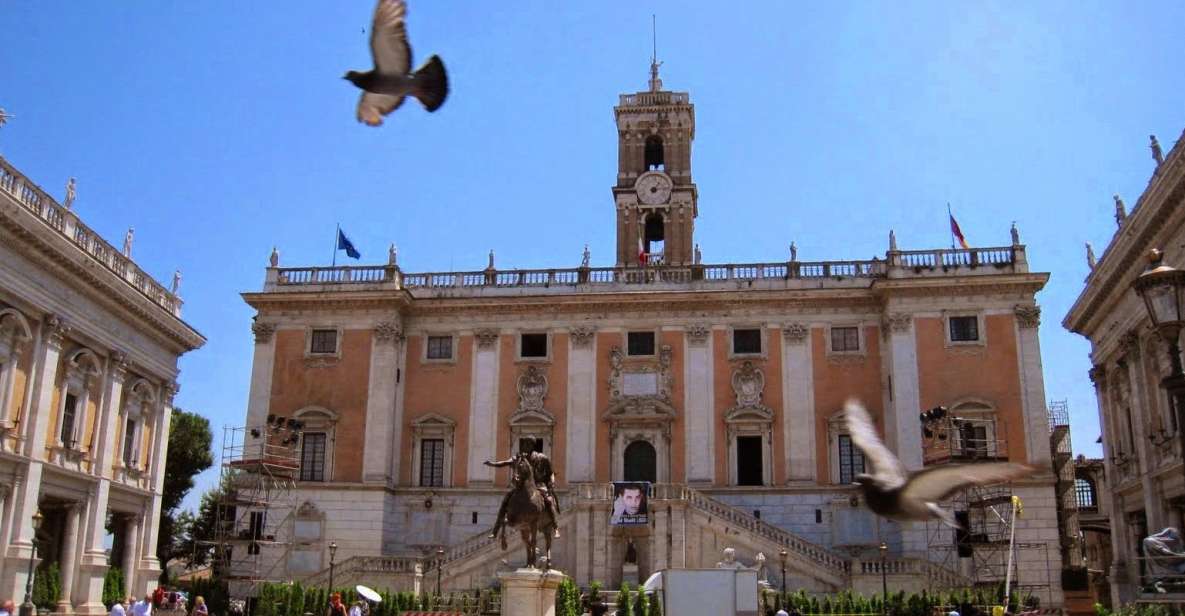
- Skip-the-line entry: more time inside the galleries, less time in the queue.
- A professional art historian guide: explanations that connect statues, paintings, and Roman life.
- Capitoline highlights in 2.5 hours: major works across both museum palaces without feeling lost.
- Pinacoteca Capitolina stops: you get a focused taste of older masterpieces rather than a random museum wander.
- Forum views through the Tabularium tunnel: you’re shown a standout photo moment in motion, not as an afterthought.
- Small private group setup: capped at 20 people per booking, so it stays manageable.
First Steps: meeting your guide at the Capitoline Museums
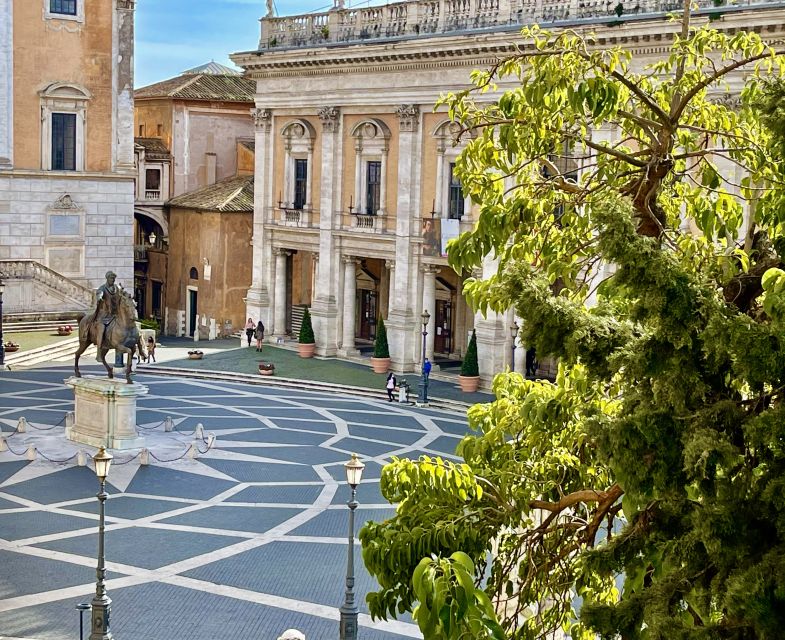
This tour starts at the Capitoline Museums entrance. Your guide waits with a sign showing your name, which is a small detail but a big help in a busy area. You’ll want to be on time because once you’re inside, the whole point is to keep the momentum going through multiple floors and spaces.
You’ll also want comfortable shoes. The museum is not just one hallway—it moves across levels, and you’ll be doing plenty of walking and standing while you look up at sculptures and down at inscriptions. Rome in general can be uneven underfoot, so I’d treat this as a “real walking day,” not a casual museum stroll.
The dress code is smart casual. That’s easy—just think “comfortable, neat,” not formal. And if you’re packing, keep it light: oversize luggage isn’t allowed, and walking frames aren’t permitted.
You can also read our reviews of more guided tours in Rome
Palace of the Conservatives: Constantine’s shadow and the famous trio
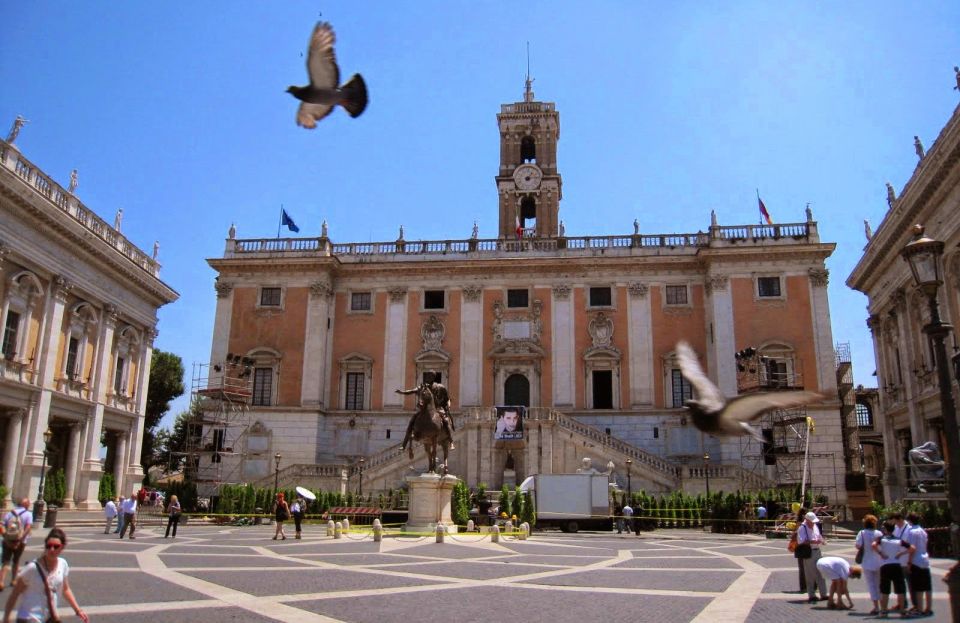
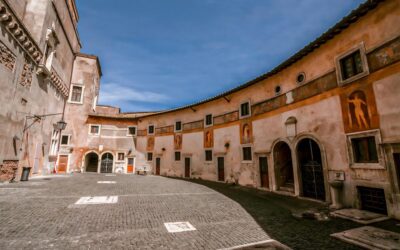
The visit begins at the courtyard of the Palace of the Conservatives, one of the museum’s historic seats. Even before you get to the major masterpieces, you’ll see the sense that this place was built to hold history in layers.
One early stop that sets the tone: the remains of a colossal acrolith representing Constantine. It’s a reminder that museums in Rome aren’t just about objects; they’re also about the city’s power, politics, and changing eras. You’re looking at a fragment, but the guide helps you understand why it mattered.
Then the tour moves to key sculpture pieces on the first floor. This is where the tour really earns its “private” label. Instead of being one more person trying to read tiny labels, you’re guided through the stories behind the objects:
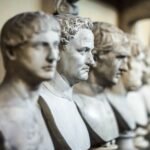
- Capitoline Brutus bust: a face that symbolizes political virtue and Roman identity, not just portraiture.
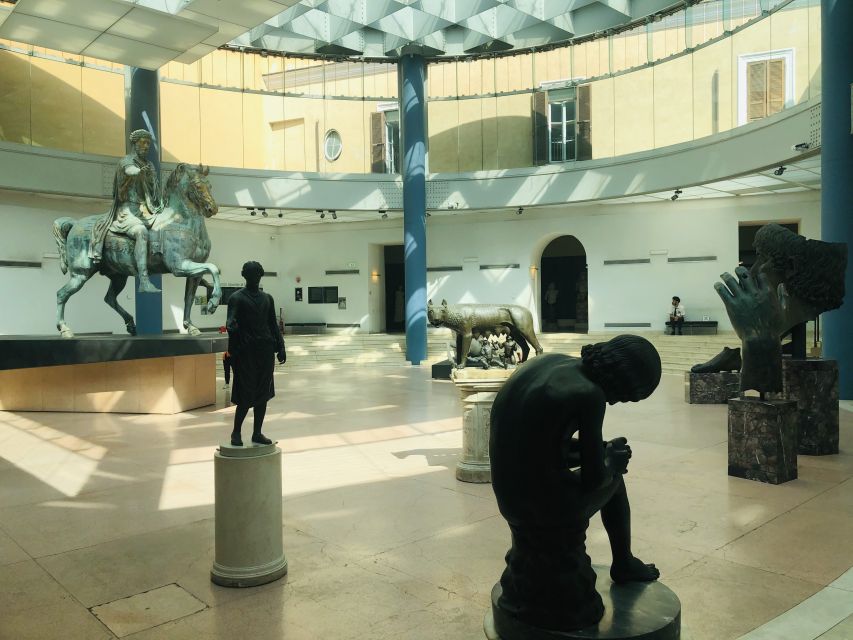
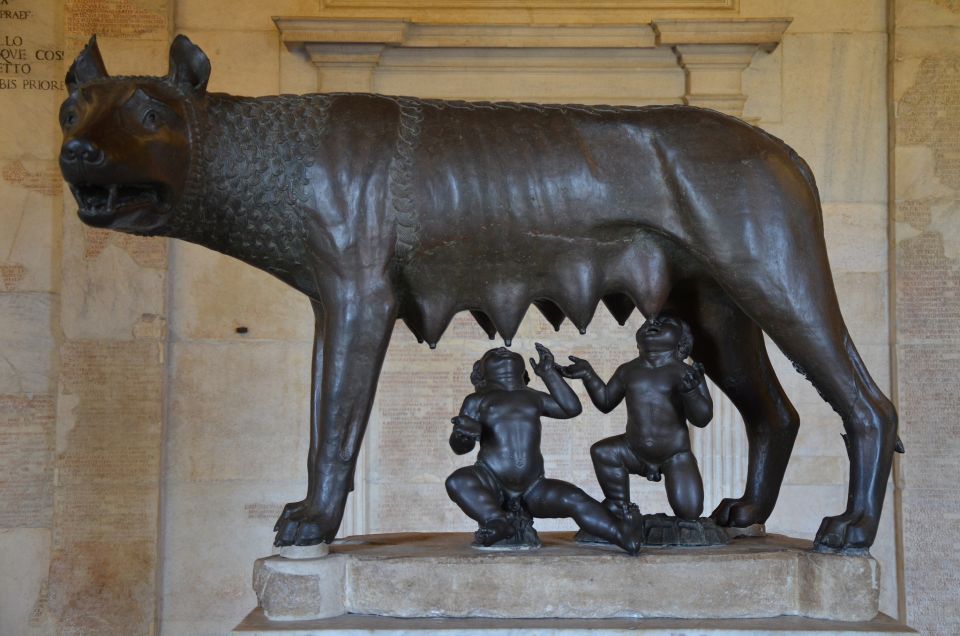
- Spinario: the Greco-Roman Hellenistic bronze sculpture of a boy withdrawing a thorn from his foot. It’s famous for a reason—the pose pulls you in because it’s physical, almost human-scale, even though it’s ancient.
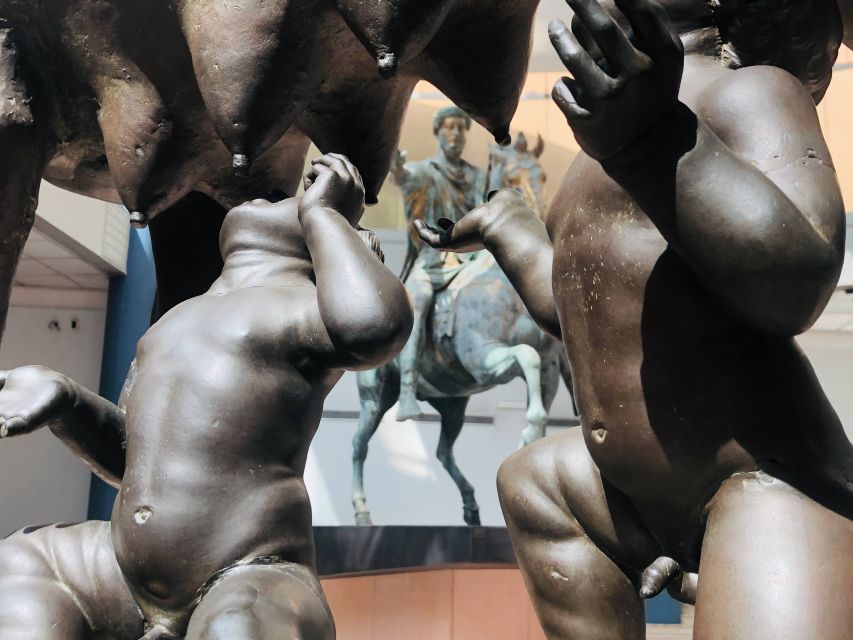
- Capitoline Wolf: the bronze she-wolf nursing Romulus and Remus, the symbolic emblem of Rome.
What I like about this sequence is pacing. You get iconic works early, then you start understanding how the museum thinks—myth, identity, and power, all in one stop after another.
Next comes the Castellani collection, with roughly 700 Greek and Etruscan vases. That’s a lot of material, so you’re not going to see every single piece in detail in a 2.5-hour tour. Still, the guide’s job is to point you toward what to watch for: styles, shapes, and what these objects say about everyday life and artistic taste in the ancient world.
Pinacoteca Capitolina: the oldest painting collection, with focused context
After the sculpture-heavy start, the tour shifts upstairs to the Pinacoteca. This is the oldest public collection of paintings, and the guide helps you turn a “famous name list” into something you can actually look at.
You’ll see works by artists like Caravaggio, Guido Reni, the Carracci, Guercino, Domenichino, Veronese, Titian, Tintoretto, Rubens, and Pietro da Cortona. The trick with a museum tour is not just knowing who painted something—it’s knowing what to look for when you’re standing in front of it.
This is also where the tour’s value shows if you’re short on time. Instead of trying to learn an entire art history timeline while you’re tired and staring at brushstrokes for the first time, you get guided “anchors.” You’ll also look at frescoes and sculptural works tied to Renaissance and Baroque Rome. Those transitions matter because they show how Rome kept reusing its old heart for new artistic messages.
If you’re the type who likes to linger, you might wish you had more time for the painting rooms. But as part of a compact private itinerary, it’s a well-balanced hit: Roman antiquity first, then painting and later artistic eras that shaped how Romans (and later Europeans) understood those antiquities.
Marcus Aurelius exedra and the temple ruins you can actually see
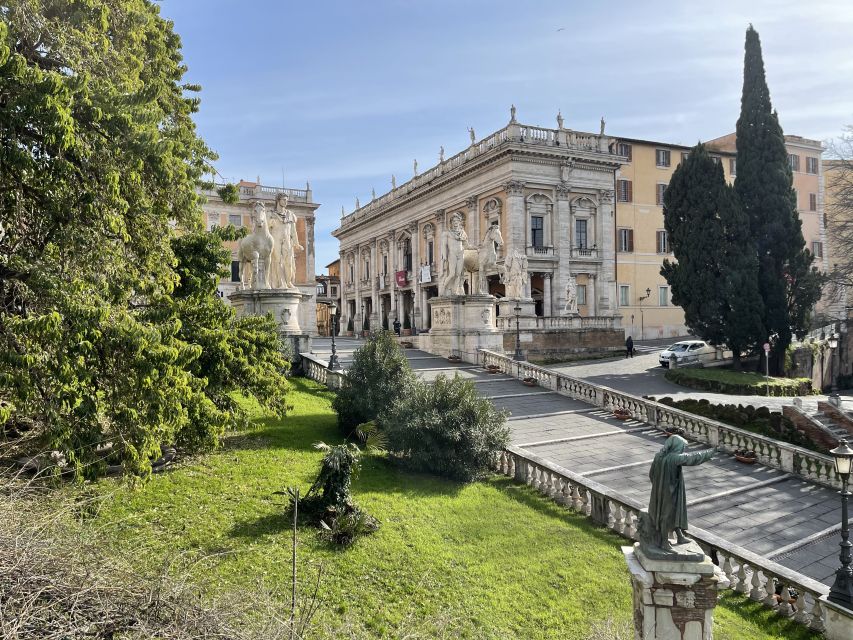
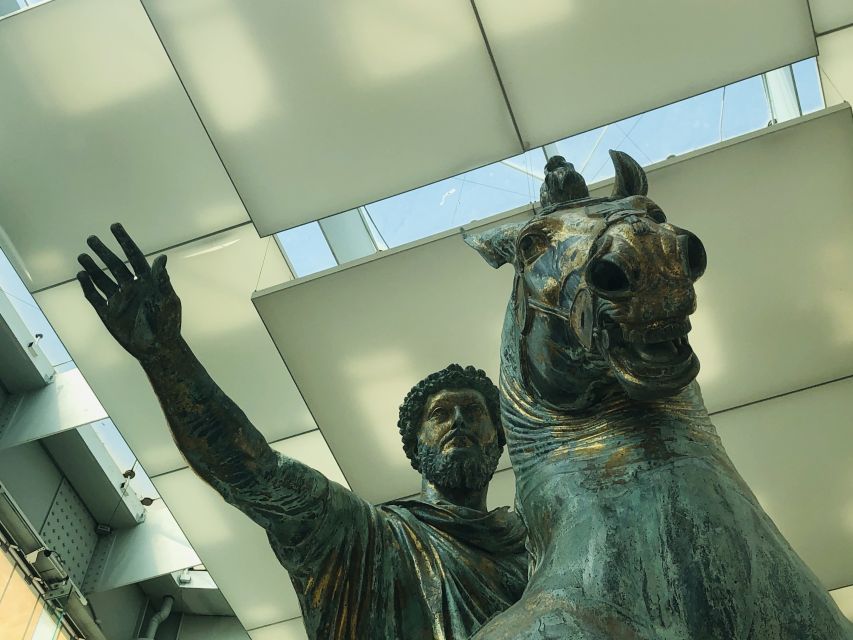
The tour moves down to the ground floor for the exedra with the equestrian statue of Marcus Aurelius. This is one of those stops where a guide really helps, because the statue is iconic, but the meaning is deeper than the pose.
You’ll also appreciate the ruins of ancient temples still visible in the structure of the building. That’s a Rome-specific moment: you look at a “museum room,” and it becomes clear you’re inside a historical shell that wasn’t created from scratch for museum visitors. It’s a living contradiction—ancient architecture and modern presentation stacked together.
This stop is also a good mental break. You can step back, look at the statue in context, then let the guide’s explanation settle before you move into the next phase of the tour.
Tabularium tunnel: getting Roman Forum views without wasting time
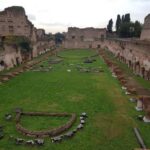
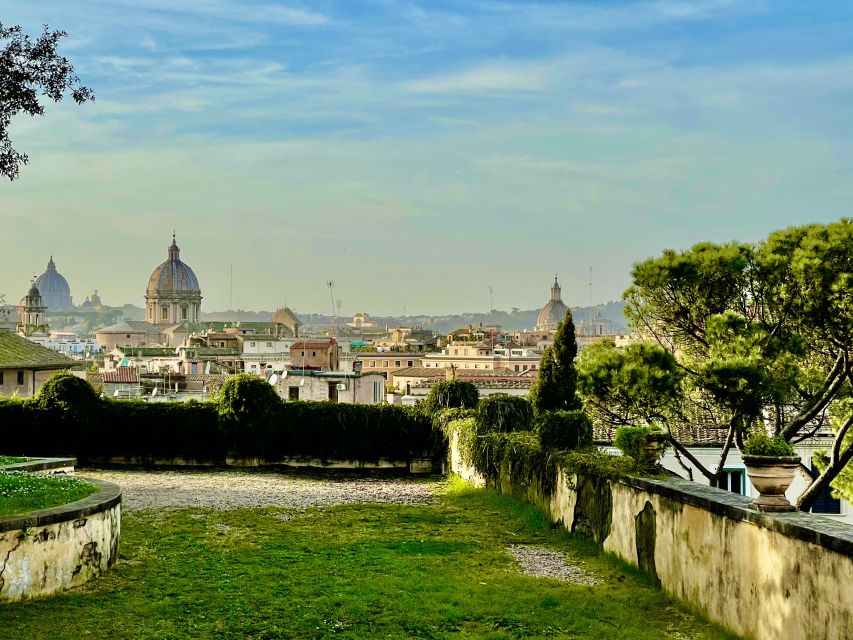
Here’s the kind of detail that makes this tour feel efficient: you’ll go through an underground tunnel that crosses the Tabularium. From that path, you get magnificent views of the Roman Forum.
This is more than a photo detour. When you’re visiting Rome, the Forum can feel like a confusing pile of stone until someone gives you a “where you are in the story” explanation. The tunnel route helps you arrive at the Forum perspective in a controlled way, rather than wandering and guessing.
The tour includes a scenic Roman Forum portion on the way—about 20 minutes—so you’re not stuck in that space for the whole day. You get a strong visual hit, then you’re pulled back into the museum experience to keep the flow.
One practical note: underground walkways can feel cooler than the street, and then you step back into daylight. Wear shoes you can handle for both smooth and slightly uneven surfaces, and don’t count on your phone battery lasting if you’re photographing constantly.
You can also read our reviews of more private tours in Rome



New Palace galleries: inscriptions, sarcophagi, and the Dying Gaul
After the Forum views, you move to the second historic seat of the museum: the New Palace. This section emphasizes what makes the Capitoline Museums a top-tier “Roman object” collection—not just famous sculptures, but the range of what Romans saved, displayed, and repeated.
You’ll see statues, inscriptions, sarcophagi, busts, mosaics, and other Roman artifacts. Again, the benefit of a private guide is that you’re not reading everything alone. The guide connects objects to themes: commemoration, myth-making, civic pride, and personal identity all appear in different material forms.
A standout sequence includes:
- Marforio: the famous statue you’ll hear about for its association with Rome’s lore and stone-faced humor. (It’s one of those works that feels more alive once someone explains why it became well-known.)
- The Dying Gaul: a sculpture that hits you emotionally because it captures struggle and defeat in a very physical way.
- Cupid and Psyche: myth in a different mood—more about story, movement, and idealized emotion.
This is the point where many visitors feel the museum switch from “tourist mode” to “art recognition mode.” After seeing the myth and identity themes in the earlier sculpture rooms and then getting painting context in the Pinacoteca, these later statues and artifacts land differently. You start noticing how often Rome used art to narrate values—bravery, beauty, lineage, and power.
Price and value: why $201.65 per person can make sense

At $201.65 per person for a private tour, this isn’t the cheapest museum option in Rome. But the value comes from three specific pieces you’d otherwise have to piece together yourself:
1) Skip-the-line access
If you want to see major museum works and you’re there during peak hours, time matters. Saving the ticket queue lets you keep the schedule tight.
2) A professional art historian guide
You’re paying for interpretation. In a museum like this—where famous names sit next to technical details like inscriptions and where sculptures and later art share the same walls—an expert guide can turn a quick visit into something you actually remember.
3) The “both palaces” structure in a compact window
The Capitoline Museums sprawl across historic buildings. A private guided route is a practical way to cover the highlights without turning your day into a navigation game.
One thing I’d be honest about: if you prefer total freedom and you love reading everything slowly at your own pace, you might feel a bit scheduled. But if your Rome time is limited, this is a focused, efficient way to see more of what matters.
Who should book this private Capitoline Museums tour?
This tour fits best if you:
- want to see the top sculpture icons (like Spinario, the Capitoline Wolf, and Marcus Aurelius) without guessing what to prioritize
- care about art history context, especially the blend of Roman antiquity and later painting in the Pinacoteca
- like guided Forum perspectives that don’t require you to be a Roman archaeology expert
- want a smaller, private setup with a cap of 20 people per booking
It might not be your best pick if you:
- need hotel pickup and hate meeting at a specific spot
- plan to spend a half-day at one room reading every label and sketching (this is 2.5 hours, so the pace will feel intentional)
The guide matters, and it shows in real moments
The best part of this kind of tour is the human one: the guide sets the tone. In at least one experience with this service, the guide named Martin brought deep, connected insights that made the relationships between pieces feel logical—not just separate “famous objects.”
It also helped that support worked fast when something went sideways. In a rainy moment, there was confusion about finding the guide, and the operator got the situation resolved quickly so the tour could start properly. The guide was attentive later, too—stopping for water when a guest felt light-headed, then returning and even adding time to keep the experience comfortable.
That’s the kind of flexibility you want in a long museum day. Art is great, but your body has a vote. Knowing the guide is ready to adjust makes the whole visit feel smoother.
Should you book this Capitoline Museums private tour?
If you want a high-impact introduction to the Capitoline Museums that actually makes the masterpieces click, this is a strong choice. The mix of sculpture, the Pinacoteca, and the Forum views through the Tabularium route gives you more payoff than a casual self-guided visit—especially when your time in Rome is tight.
Book it if you value interpretation and want to see the biggest names in a smart order. Skip it only if you want unguided wandering, or if meeting at the entrance (no pickup) would put you on edge.
FAQ
How long is the Rome Capitoline Museums private guided tour?
The tour lasts about 2.5 hours.
Where do we meet the guide?
Meet at the Capitoline Museums entrance. The guide waits with a sign showing your name, and the tour ends back at the same meeting point.
What’s included in the price?
The price includes the Capitoline Museums entry ticket, skip-the-line access, and a professional art historian guide.
Is hotel pickup included?
No. Hotel pickup and drop-off are not included.
What languages is the live guide available in?
The guide is available in English and Italian.
What should I wear and bring?
Bring a passport or ID card and wear comfortable shoes. Dress code is smart casual.
What are the group limits and cancellation rules?
This is a private group with a minimum of 1 person per booking and a maximum of 20 persons per booking. Free cancellation is available up to 24 hours in advance for a full refund.