REVIEW · ROME
Rome: Caracalla Baths Express Small-Group or Private Tour
Book on GetYourGuide →Operated by Touriks · Bookable on GetYourGuide
Caracalla turns Roman bath gossip into facts. This 1-hour express visit gives you a fast, guided way into one of Rome’s most impressive leisure complexes, with the chance to spot how daily life worked in the 3rd century. You’ll walk the monumental rooms, hear the engineering stories, and get a clear picture of why these baths mattered.
I especially love the calm, grand feeling at Caracalla—quiet enough that it feels almost cinematic, yet still huge and imposing. The guiding can be genuinely fun too; on different days, I’ve seen how guides like Francesca and Mario keep things comfortable and lively, without turning it into a lecture. Add sterilized headsets, and you can actually catch the details without leaning in like you’re in a crowded café.
One thing to consider: the pacing is tight. If your route includes extra walking near Circus Maximus, you may feel a bit rushed once you’re inside the baths—so keep your expectations aligned with a true express hour.
In This Review
- Key highlights worth planning for
- Caracalla Baths: the Roman spa that feels bigger than the photos
- Meeting at Circo Massimo: get oriented before you start
- The real value of a 1-hour express guided tour
- What you’ll see at the Baths of Caracalla (and why each stop clicks)
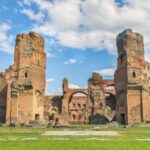
- Monumental walls and the feel of an imperial complex
- A typical bath day, reconstructed in ruins
- Mosaics and geometric motifs you can finally read
- Underfloor heating: the Roman comfort system behind the walls
- Guides and headsets: hearing the details without straining
- Small-group (max 10) vs private: how the hour changes
- Price and value: is $70 for an hour reasonable?
- Who this Caracalla tour suits best
- When it might feel rushed: the one downside to plan around
- Quick decision: should you book Caracalla Express?
- FAQ
- How long is the Caracalla Baths Express tour?
- Where is the meeting point for the tour?
- What is included in the price?
- Is it a small-group tour or a private tour?
- What languages are the guides available in?
- What should I bring, and what isn’t allowed?
Key highlights worth planning for
- Skip-the-ticket-line entry so you spend your hour seeing, not waiting
- Professional archaeologist guide who connects the ruins to how the baths ran
- Sterilized headsets for clear listening throughout the walk
- Hypocaust-style underfloor heating explained in plain terms
- Mosaic motifs and geometric designs you’ll understand more once they’re pointed out
- Small-group maximum of 10 (or private options) for a better pace
Caracalla Baths: the Roman spa that feels bigger than the photos
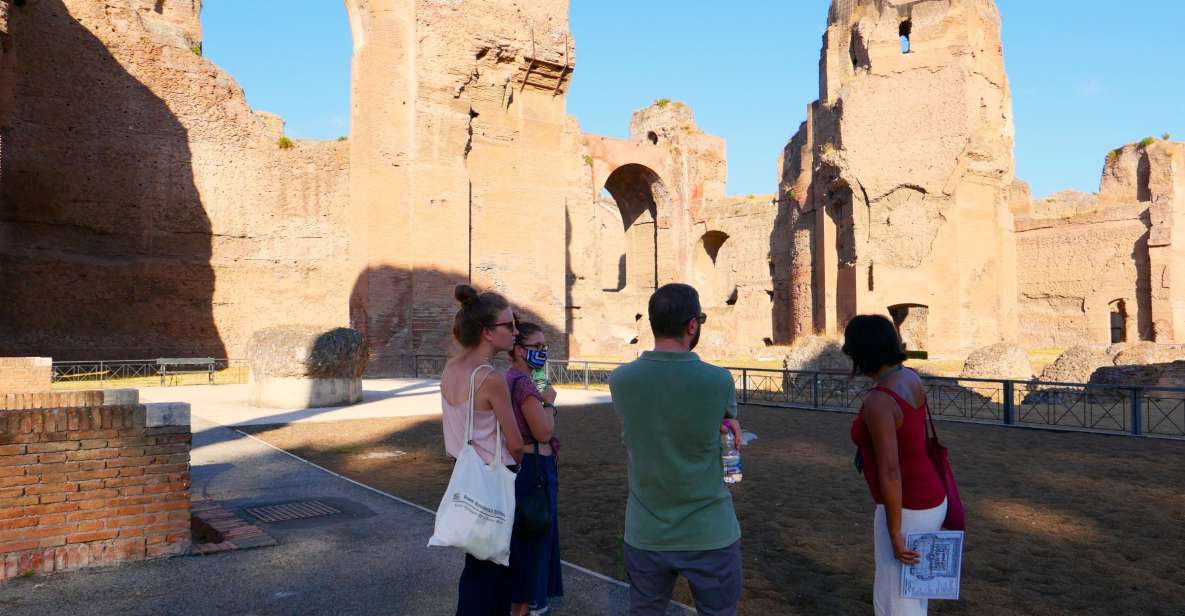
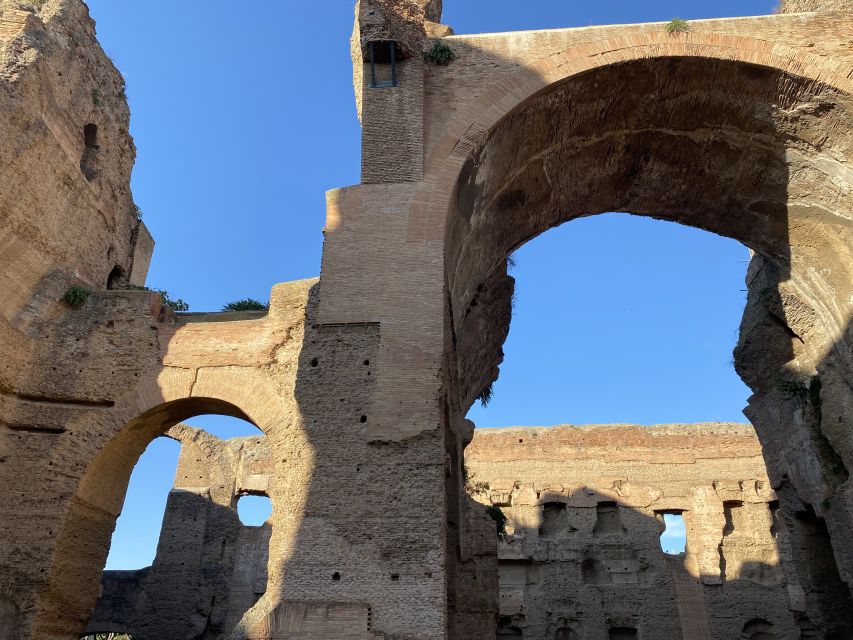
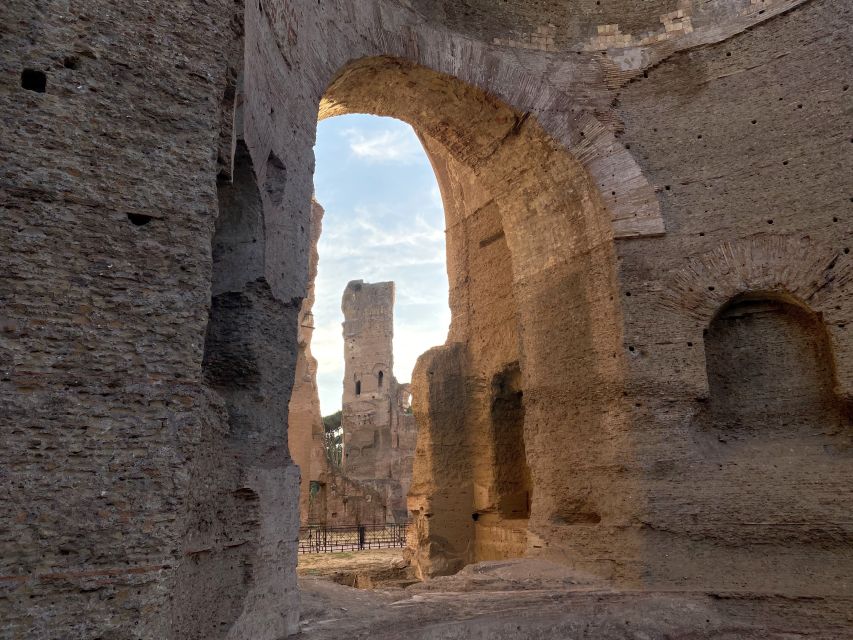
Caracalla Baths aren’t just ruins you pass by. They’re a whole working-world in stone and brick, designed for comfort, routine, and status. Even in an hour, you get the sense that this was where people came to reset their day—body, mind, conversation, and all.
What makes Caracalla so good for a short tour is how readable it is. The complex was built to impress, with monumental walls and strong spatial lines. Your guide will help you “read” the rooms instead of just wandering through them. That shift is the difference between seeing old walls and understanding a living system.
And yes, it’s often quieter than the big headline sites. More than one guide-led experience runs at a gentle pace that feels less like a sprint and more like you’ve been let into a carefully preserved corner of Roman life. The grand scale still hits—you just get it without the usual chaos.
You can also read our reviews of more private tours in Rome

Meeting at Circo Massimo: get oriented before you start
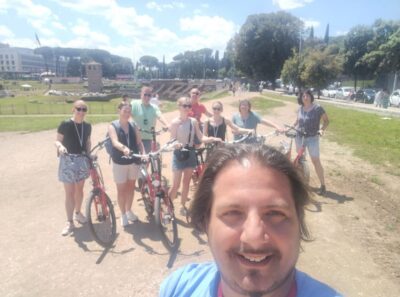
Logistics matter more with an hour-long tour than with a half-day one. Your meeting point is at the exit of the Metro Station Circo Massimo, in front of the FAO building. Look for the yellow label with TOURIKS on it, and arrive about 5 minutes early so the group can start smoothly.
This location is handy for two reasons. First, you’re already in the south-side Rome rhythm where locals actually move. Second, the start sets you up to reach the baths without spending your limited time hunting for the right entry.
Small practical tip: wear shoes you can walk in for the full hour. One drawback noted by a past participant is that extra walking (including time near Circus Maximus) can shorten how long you feel you have in the baths themselves. If you’re sensitive to walking time, mention it right at the start so your guide can calibrate the pace.
The real value of a 1-hour express guided tour
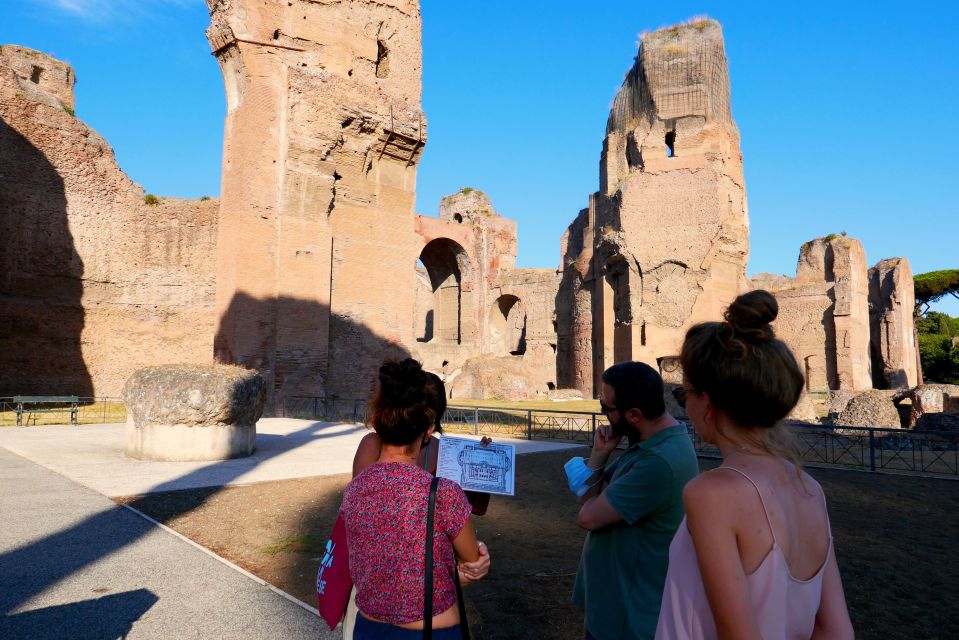
An hour can sound rushed, but this format works when the guide uses that time efficiently. The tour is designed as a complete guided visit rather than a quick glance. You’re not just getting “top five moments.” You’re walking through the complex in a way that follows how a Roman bath day likely ran.
Expect your guide to bring the site to life with the step-by-step rhythm of a typical routine from the 3rd century AD. That “day in the life” framework is useful because it gives meaning to the rooms. You’ll connect what you’re standing in front of—bathing spaces, circulation areas, service details—with why it existed.
The express part also matters because it’s structured. You get entrance included, ticket-line time saved, and a guided route that keeps you from duplicating effort. In practical terms: this is a good choice when your Rome schedule is already packed and you still want something real and different from the usual best-of list.
What you’ll see at the Baths of Caracalla (and why each stop clicks)
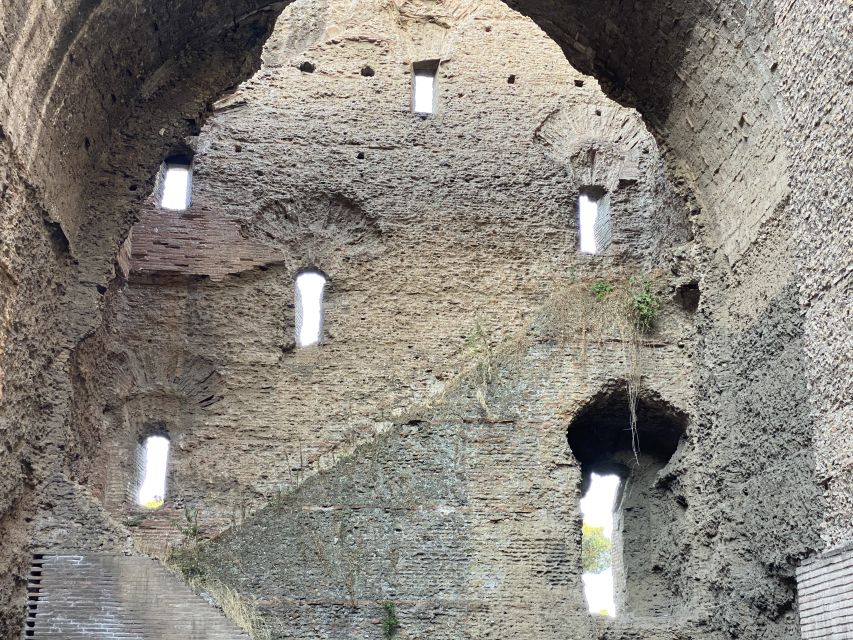
Monumental walls and the feel of an imperial complex
The tour starts by getting your bearings in the complex. Caracalla’s scale can be tricky if you only look at individual rooms; the bigger picture is the whole design. Your guide will point out how the architecture shapes movement and experience—how you’re guided from one space to the next.
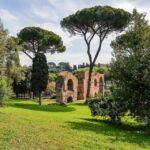
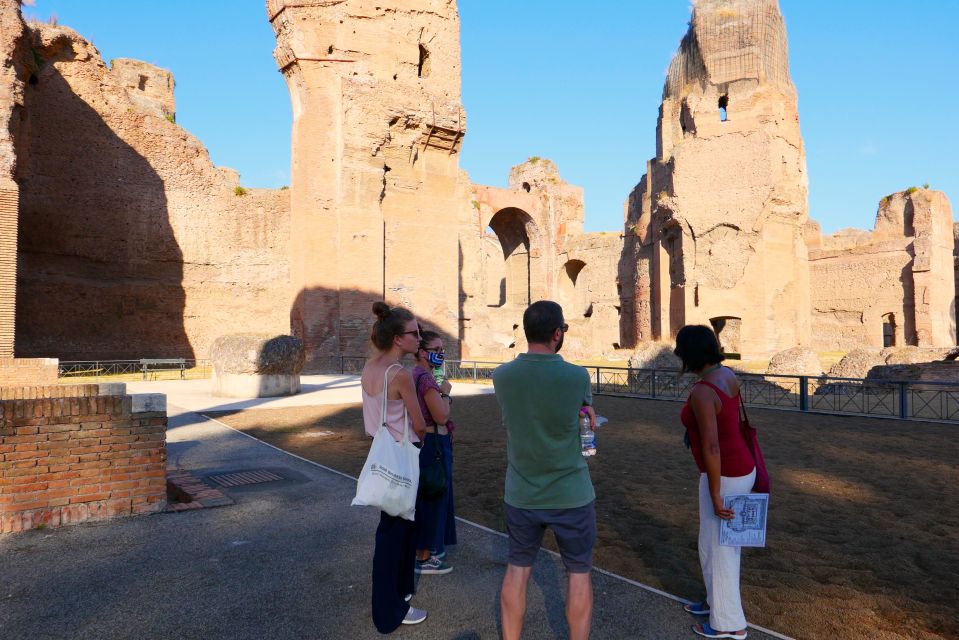
You’ll spend time in the monumental rooms of the thermal complex, where preserved walls still show the confidence of imperial Rome. The emphasis isn’t on trivia. It’s on how the site functioned as a leisure engine.


A typical bath day, reconstructed in ruins
Here’s the part that makes this tour more than a walkabout. You’ll go through the sequence of a bath day, basically translating the site into a human routine.
That means your guide will explain the services the baths offered—wellness for body and mind—so you’re not just picturing water and heat. You’ll understand the baths as a social and maintenance-focused space, not a single-purpose swimming pool. It’s a small but powerful shift.
Mosaics and geometric motifs you can finally read
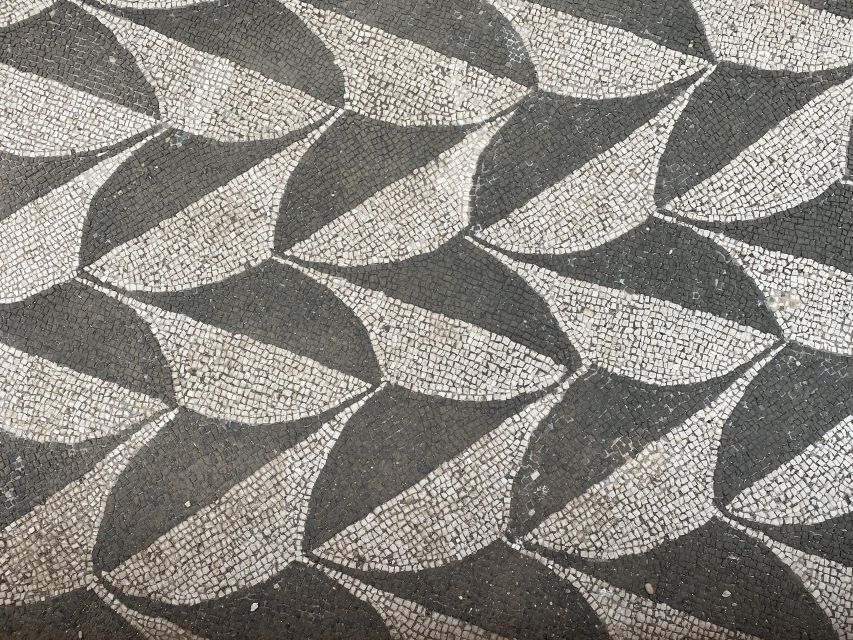
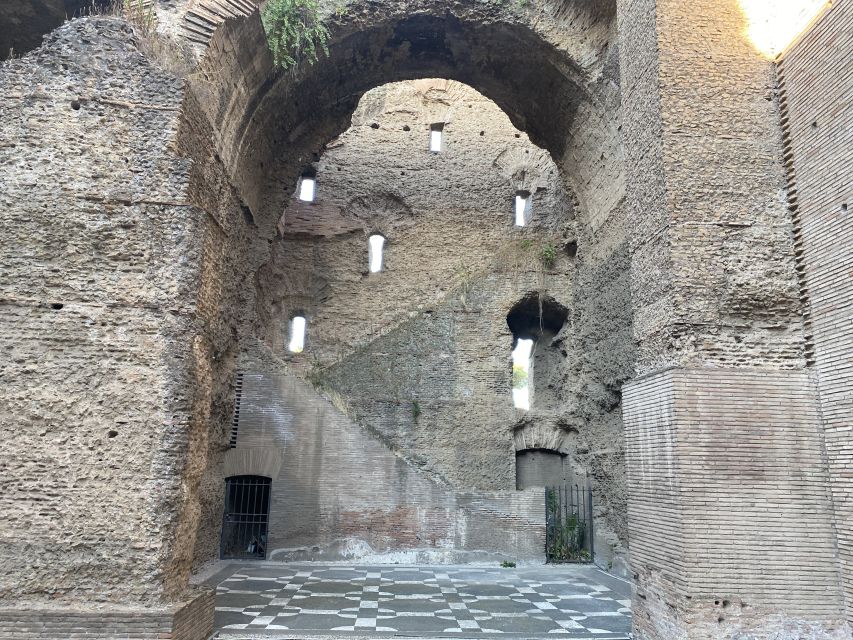
Caracalla includes beautiful mosaics with geometric motifs, and the difference is whether you know what you’re looking at. With a guide, you start noticing the pattern logic and placement instead of just spotting color.
This matters because mosaics are one of the easiest things to ignore when you’re moving quickly. A good guide slows you down exactly enough to turn decoration into information.
Underfloor heating: the Roman comfort system behind the walls
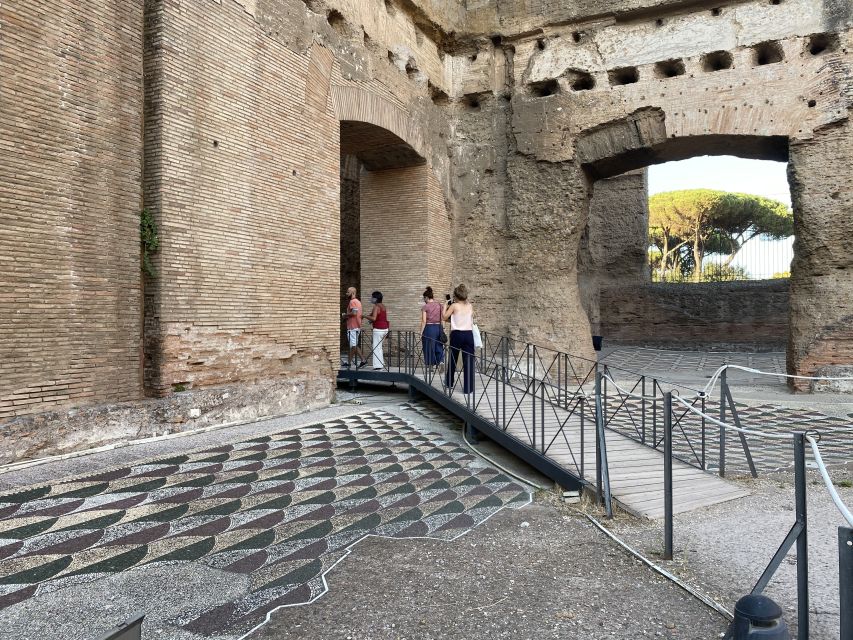
One of Caracalla’s most fascinating lessons is the technology needed to keep temperatures comfortable. Your guide will talk about the labor-intensive underfloor heating system, often connected to how Romans heated spaces.
This is where the tour becomes genuinely satisfying. Ancient engineering can sound abstract until someone explains what it takes to maintain heat room by room. You’re not learning a distant fact; you’re understanding what it means that people could rely on these spaces daily.
The way it’s explained on this tour is practical: you’ll hear how the system worked and how temperatures were maintained in different rooms. You also get context for why this wasn’t a casual setup. It took planning, labor, and ongoing maintenance—exactly the kind of realism that makes Roman construction feel impressive instead of mythical.
Guides and headsets: hearing the details without straining
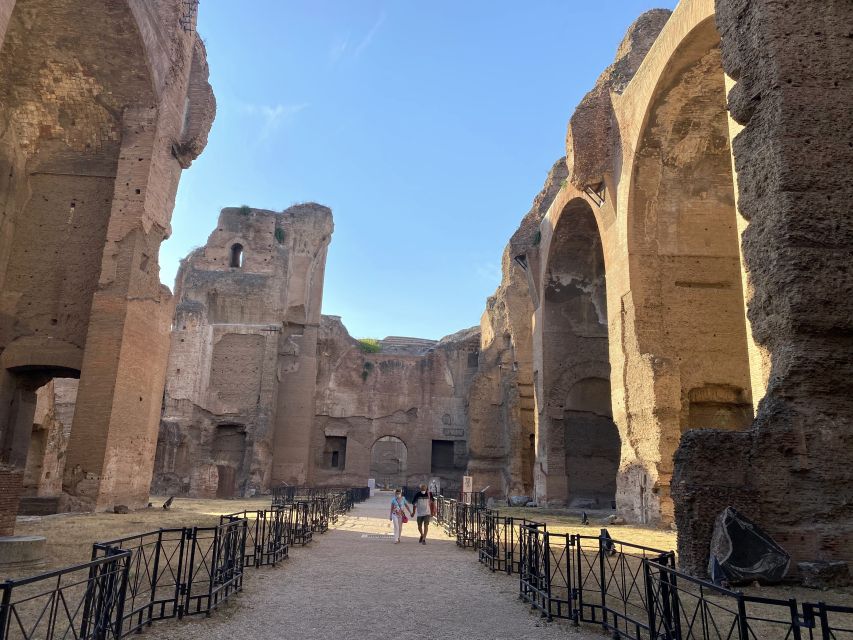
This tour uses sterilized headsets, which is a big quality-of-life detail. In a large ruin, wind, distance, and ambient noise can swallow quiet explanations. Headsets help you actually hear the guide without craning your neck.
The guide experience also shows up in real-world energy. Some guides keep it comfortable and fun (with names like Francesca and Mario coming up), while others lean into lots of thoughtful facts (for example, Chiara has been praised for sharing plenty of interesting points). I like that mix because it keeps the site from turning into a dry timeline.
Plus, you’ll often get useful add-ons. One guide reportedly offered tips for what else to see nearby, which is exactly what helps when you’re building a day in Rome and don’t want to waste time on the wrong turn.
Small-group (max 10) vs private: how the hour changes
This experience comes in small-group or private format. With a maximum of 10 participants, the pace tends to stay flexible enough for questions without turning the tour into a slow-moving queue.
If you choose small-group, you still get the benefit of learning from your guide while sharing the experience with a handful of people. It can feel like you’re eavesdropping on an excellent lecture, except you’re standing inside the architecture.
If you choose private, you can use the hour more strategically. For example, if you’re particularly interested in engineering or mosaics, you can steer the guide’s focus. With only one group, your time inside the baths can stay efficient.
Price and value: is $70 for an hour reasonable?
At $70 per person for a 1-hour tour, you’re paying for three practical things: entrance included, a professional archaeologist guide, and skip-the-ticket-line access. You’re also paying for someone else to solve the problem of interpretation.
If you tried to do Caracalla on your own, you’d likely be fine physically—but you’d lose the structured “how a day worked” framing and the explanation of heating, mosaics, and room purpose. With an express format, the value is less about seeing more and more about seeing with meaning.
In other words: this isn’t about a long wander. It’s about compressing expert interpretation into an hour when you’d otherwise move on to the next big site.
Who this Caracalla tour suits best
I’d point you to this tour if you want a Roman experience that’s dramatic but not exhausting. It fits well for:
- First-time Rome visitors who want something different from Colosseum-and-Pantheon only
- People who like guided context and hate guessing what you’re looking at
- Anyone working with limited time but still wants a real slice of ancient engineering
If you’re the type who wants to linger for long stretches in one area, you might feel the express nature more strongly. Remember that you’re trading depth of free time for depth of guidance.
When it might feel rushed: the one downside to plan around
The main potential frustration is time distribution. One participant felt rushed, especially because walking from the Circus Maximus area ate into time that they wanted to spend inside the baths.
You can reduce this risk. Start by being clear with your guide about what matters most to you—engineering, mosaics, or just soaking in the quiet atmosphere. If you’re walking slowly or need frequent breaks, say so early. A small-group setup makes it easier to adjust without turning the tour chaotic.
Quick decision: should you book Caracalla Express?
Book it if you want an efficient, expert-guided hour at one of Rome’s best-preserved bath complexes, with included entry and skip-the-line convenience. The combination of archaeologist-led explanations, headsets, and a pace that focuses on how the baths worked is the real win.
Hold off or adjust expectations if you’re the kind of visitor who needs lots of unstructured time inside ruins. This isn’t a slow afternoon. It’s a tight, purposeful hour that aims to leave you understanding what you saw.
FAQ
How long is the Caracalla Baths Express tour?
It lasts 1 hour.
Where is the meeting point for the tour?
Meet your guide at the exit of the Metro Station Circo Massimo, in front of the FAO building. Look for a yellow label with TOURIKS.
What is included in the price?
The tour includes entrance fees, sterilized headsets, a professional archeologist guide, and full on-site assistance.
Is it a small-group tour or a private tour?
You can choose private or small groups available. The group size has a maximum of 10 participants.
What languages are the guides available in?
The tour guide language options include German, Italian, English, Portuguese, French, and Spanish.
What should I bring, and what isn’t allowed?
Bring a passport or ID card. Luggage or large bags are not allowed.