REVIEW · ROME
Rome: Catacombs Skip-the-Line Tour with Tickets
Book on GetYourGuide →Operated by Rome With Mike · Bookable on GetYourGuide
Underground Rome tells stories above ground can’t. This tour leads you beneath the city into the Catacombs of San Domitilla, where you’ll track how Roman burial life changed as pagan religion gave way to early Christianity. You get skip-the-line tickets, so your time goes toward the tunnels, not the wait.
What I like most is the way the guide brings the setting to life underground, with clear explanations and lots of room for questions. A second big win: you’re not just passing monuments. You’re aiming at specific, meaningful stops—like the tombs linked to Nereus and Achilleus—and you also see some of the earliest Christian artwork available in Rome.
One consideration: you’re walking through an underground route with narrow passages, and the experience is not suitable for wheelchair users.
In This Review
- Key things you’ll notice on this catacombs tour
- Why San Domitilla catacombs feel different from a standard history stop
- Meeting at Via delle Sette Chiese 282, and what to do before you descend
- The guided underground route: part of a 180+ mile tunnel system
- From pagan Rome to Roman-Christian Rome: the story you’ll actually hear
- Stop focus: Nereus and Achilleus, plus early Christian artwork
- Narrow corridors, underground time, and how to make it comfortable
- Guides and storytelling: why the names you’ll hear matter
- How long is this, and what’s the real value of paying $54.66
- Who should book this catacombs tour
- Should you book this Rome catacombs skip-the-line tour?
- FAQ
- How long is the catacombs tour?
- Is the skip-the-line ticket included?
- What is the meeting point for the tour?
- Do I need to arrange transfer transportation?
- Can I take photos inside the catacombs?
- Is the tour wheelchair accessible?
- What should I wear or bring?
Key things you’ll notice on this catacombs tour
- Skip-the-line ticket included: you get direct access to the Catacombs of San Domitilla without the ticket bottleneck
- English mother-tongue guide: you’ll get stories and context, not just a list of dates
- San Domitilla’s underground world: part of a tunnel system totaling over 180 miles
- Major religious transition explained: how Rome moved from pagan practice to Roman-Christian burial culture
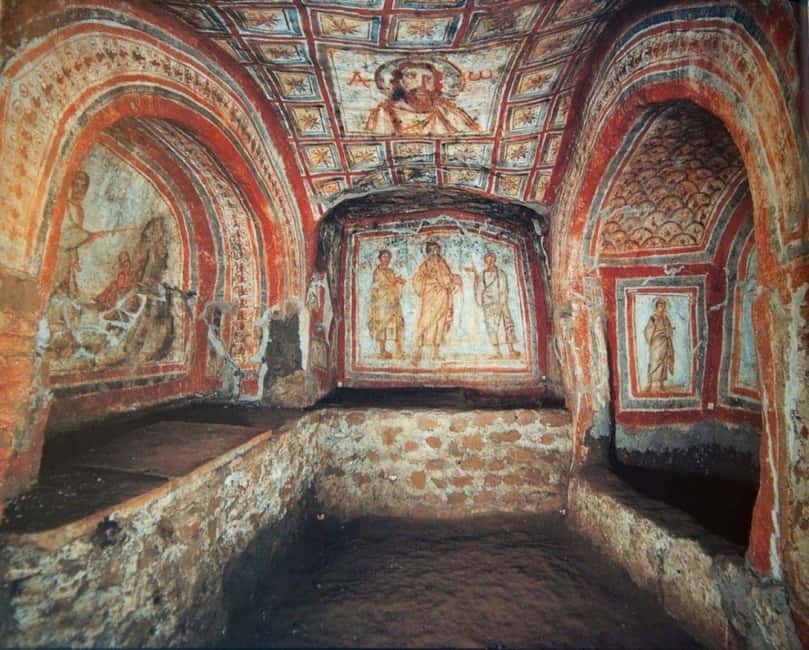
- Early Christian artwork and notable tombs: including the tombs of Nereus and Achilleus
- No photos inside: plan to rely on your memory, not your camera
Why San Domitilla catacombs feel different from a standard history stop
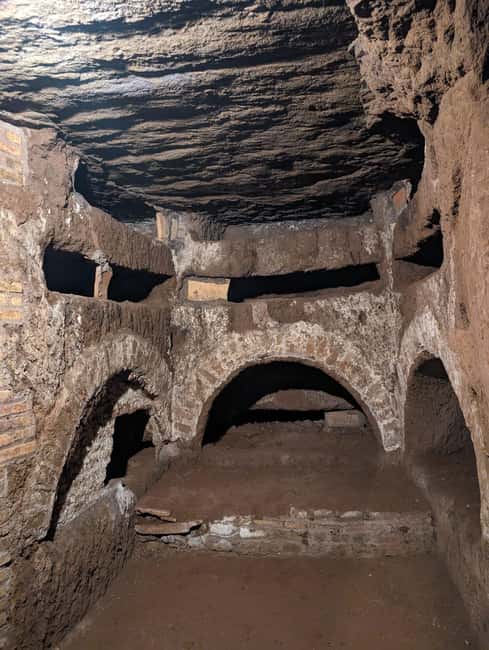
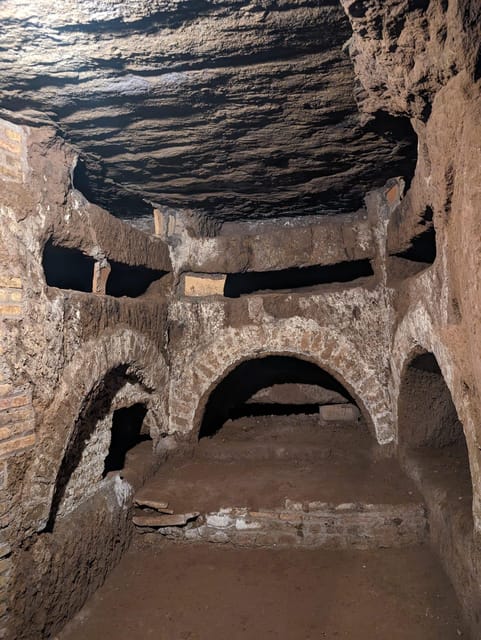
The catacombs are famous for one big reason: they’re not a display case. They’re a working underground space, built for burial and rituals, shaped by real lives and real fear. Instead of reading about faith shifts in Rome, you’re seeing how burial practices adapted as Christianity spread and as the relationship between religion and power changed.
The tour’s focus on the Catacombs of San Domitilla matters. This isn’t just about walking underground for atmosphere. It’s about understanding why these secret spaces existed—then tying that to the broader shift from pagan Rome to Roman-Christian Rome. If you want a story you can physically follow with your feet, this is one of the better ways to do it.
And because the ticket is included with a guide, you spend the clock time where it counts: in the tunnels.
You can also read our reviews of more tours and experiences in Rome



Meeting at Via delle Sette Chiese 282, and what to do before you descend
Your starting point is Via delle Sette Chiese, 282. The meeting happens in the garden, near the picnic tables by the white gazebo/umbrellas. That detail sounds small, but it helps you avoid the usual scramble when you’re in a new neighborhood and trying to find a tour group quickly.
Before you go underground, you’ll want to get yourself ready for two realities:
- You’ll be on uneven surfaces and walking through narrow areas.
- You’ll be underground, so a jacket helps even on milder days.
Bring comfortable shoes. This tour is short—about 2 hours—so you don’t want blisters slowing you down once the underground part starts.
The guided underground route: part of a 180+ mile tunnel system
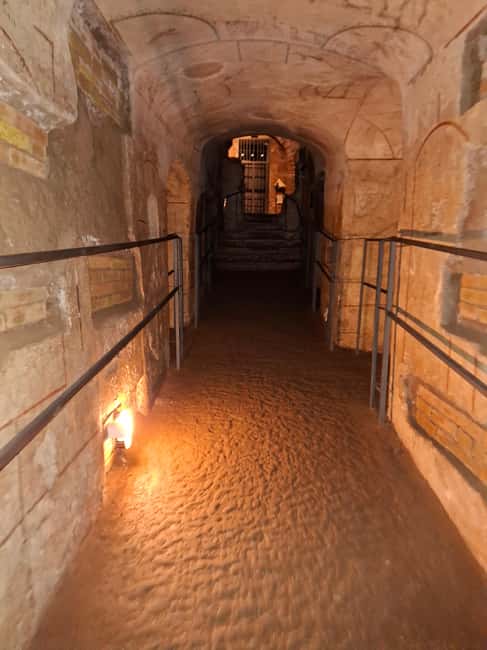
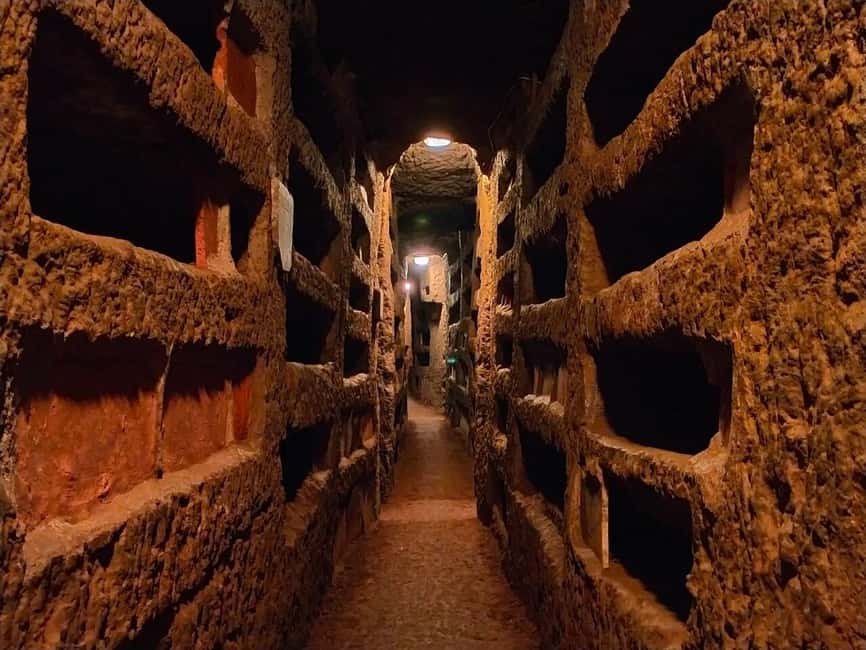
The catacombs cover an enormous total area—over 180 miles of tunnels—but you won’t see it all in a 2-hour visit. Instead, you’ll explore part of the system outside the city walls, with a guide steering you to the stops that explain the big themes.
Here’s what that does for you: it prevents the common problem where underground visits feel like you’re moving through long corridors with no map. With an English guide, you get interpretation—why certain passages existed, what different spaces were for, and how Roman burial culture worked.
It also helps that the highlights include guide attention on a small-group or private underground tour. That matters because catacombs questions aren’t always quick. You might want clarification on religious persecution, burial rites, or why a specific tomb matters. A smaller group makes that more realistic.
From pagan Rome to Roman-Christian Rome: the story you’ll actually hear
This tour doesn’t treat Christianity as a sudden switch. It treats it as a shift in Rome’s worldview, and that’s where the experience gets moving.
You’ll hear about:
- religious persecutions tied to early Christian life
- the shift from pagan practice to Roman-Christian burial culture
- how burial rites and rituals evolved along with belief systems
That framing matters because the catacombs aren’t just spooky decoration. They’re part of a social answer to danger, identity, and community. Early Christians needed places to bury their dead with dignity. Over time, the catacombs also became a way to express beliefs through images and burial customs.
If you like history that connects religion, politics, and daily life, this is the heart of the tour.
Stop focus: Nereus and Achilleus, plus early Christian artwork
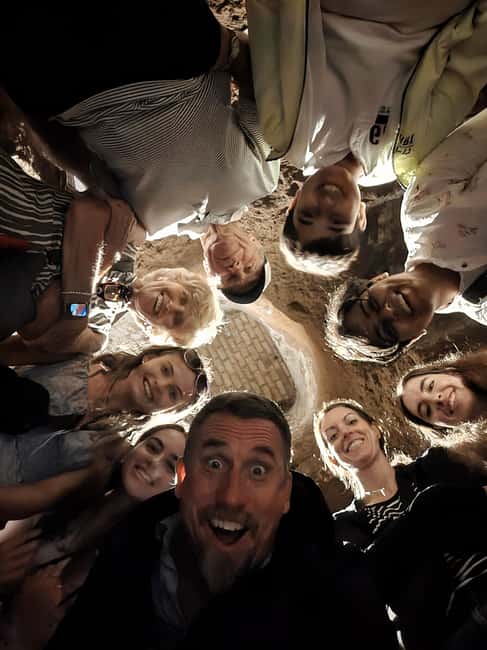
One of the most concrete highlights is the chance to see tombs connected to Roman history, including the tombs of Nereus and Achilleus. The value here is not only the names—it’s the link the guide can make between these burial sites and the changing world above them.
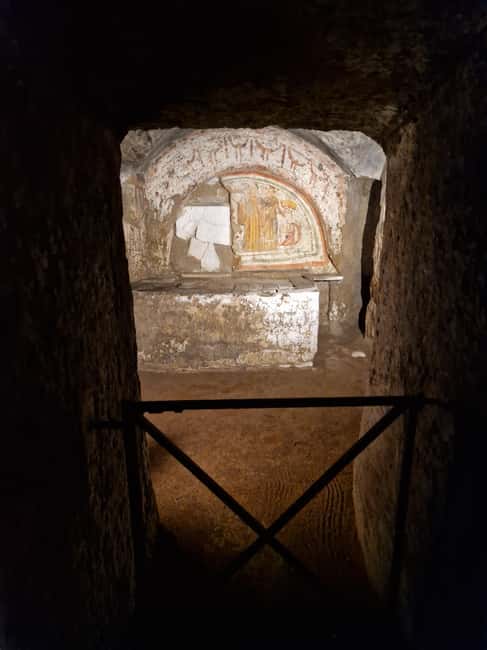
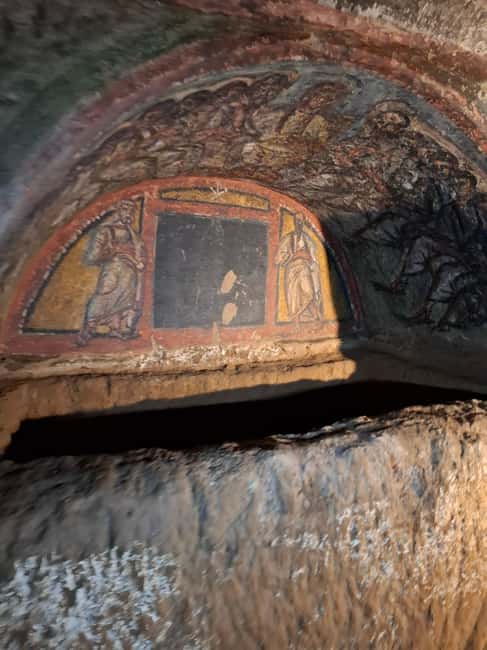
The tour also includes some of the earliest Christian artworks you can see in Rome. Even if you’re not an art person, these early images carry weight because they’re part of a community finding ways to communicate through limited space and under pressure.
Just note the reality of the experience: you can’t photograph inside. That’s not unusual for religious underground sites, but it does mean you should mentally slow down and look carefully while you’re there.
Also, expect the guide to explain what you’re seeing in plain language, with enough background to make those images and tombs feel connected rather than random.
You can also read our reviews of more tours and experiences in Rome





Narrow corridors, underground time, and how to make it comfortable
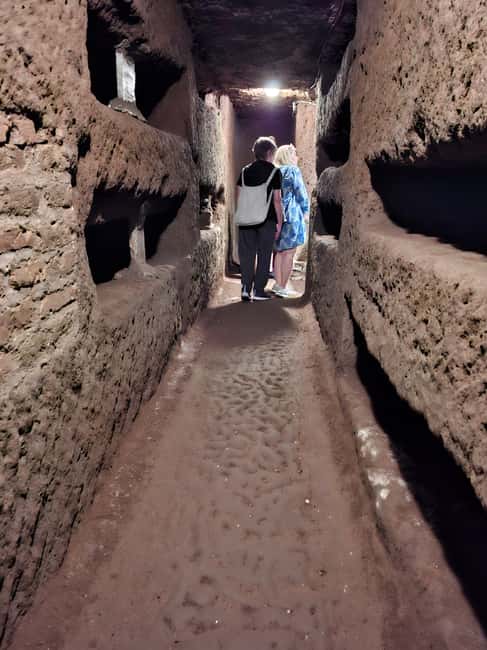
Underground spaces can feel claustrophobic, and the tour takes you into passages where exits are limited. That’s something to plan for honestly. If you’re uneasy in tight spaces, bring a calm mindset and let the guide know what you need. The tour is guided, and that helps because you’re not wandering on your own.
What you can control:
- Wear comfortable shoes with good grip.
- Bring a jacket for temperature changes underground.
- Leave extra time for nerves. This isn’t the time to rush yourself.
Also, the tour is not suitable for wheelchair users. If mobility access is a concern, this one won’t work.
Guides and storytelling: why the names you’ll hear matter
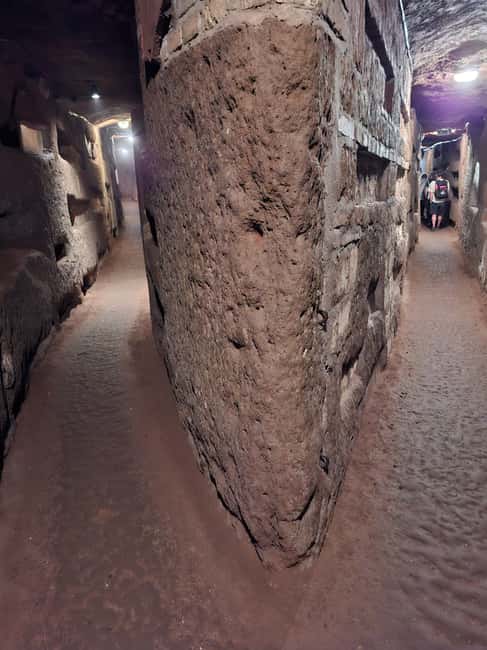
A standout pattern is guide style. The experience can’t rely only on archaeology because catacombs history is layered. The guides make the difference by turning tunnels into a narrative.
Names you may encounter include John, Divan, Sean, Heather, and Mike, among others. What they have in common from the feedback is that they start with background info, then keep the pace moving with clear storytelling and humor. Mike and Sean, for example, are described as funny while still delivering the essential facts. Divan is praised for organized delivery and for putting people at ease during the underground sections.
I like that because it changes the tone. You don’t feel like you’re studying for a test. You feel like you’re learning while walking.
How long is this, and what’s the real value of paying $54.66
The price is $54.66 per person for a 2-hour experience with:
- a skip-the-line ticket
- an English-speaking guide
- access focused on the Catacombs of San Domitilla
For value, you should compare what’s included. A catacombs visit without guidance is usually faster, but it can feel like a string of spaces with no story thread. With a guide included, you’re paying for interpretation—especially important in a site built on ritual and symbolism.
Also, skip-the-line is a real value driver. Underground sites often have time slots and ticket flow. Paying for tickets bundled with your entry means less waiting and more time inside where the tour pays off.
If you only have a short window in Rome and you want something unforgettable but not overly long, 2 hours hits a sweet spot.
Who should book this catacombs tour
This fits best if you:
- want an English-guided underground history experience
- care about how religion, politics, and daily life intersect
- like small-group tours where you can ask questions
- appreciate early Christian art and burial history more than grand museum crowds
It might be less ideal if you:
- need wheelchair access
- hate narrow, underground corridors
- want photography as a key part of your memory-making (it’s not allowed inside)
Should you book this Rome catacombs skip-the-line tour?
I’d book it if you want a guided, focused visit to San Domitilla that explains the transition from pagan Rome to Roman-Christian burial culture—and you want it without wasting time in line. The combination of a skip-the-line ticket plus an English guide who tells the story with clarity and humor makes the experience feel complete, not rushed.
Skip it only if the underground conditions would stress you out (narrow passages, limited exits) or if mobility access is required.
If you’re the kind of person who likes history you can walk through, this is a strong pick for your Rome time.
FAQ
How long is the catacombs tour?
The tour is 2 hours.
Is the skip-the-line ticket included?
Yes. The tour includes a skip-the-line ticket.
What is the meeting point for the tour?
Meet at Via delle Sette Chiese, 282, in the garden near the picnic tables by the white gazebo/umbrellas. The tour ends back at the same meeting point.
Do I need to arrange transfer transportation?
Transfer is not included, so you’ll need to get yourself to the meeting point.
Can I take photos inside the catacombs?
No. Photography inside is not allowed.
Is the tour wheelchair accessible?
No. The tour is not suitable for wheelchair users.
What should I wear or bring?
Wear comfortable shoes and bring a jacket and weather-appropriate clothing.