REVIEW · ROME
Highlights of Rome: Historical Center Walking Tour
Book on GetYourGuide →Operated by Tour in the City - Travel Agency Rome - · Bookable on GetYourGuide
Rome’s classics, handled in three calm hours.
This private squares-and-fountains walk runs you through major Baroque and Renaissance stops (Spanish Steps, Trevi, Pantheon, Piazza Navona) plus a few more you’d miss on your own. I especially like the family-friendly pace—not rushed, and built for groups that include youngsters. The one thing to plan for is that it’s still real walking on city streets, so you’ll want comfortable shoes and a steady rhythm.
What makes it work is the guide and the way you hear them. A punctual, story-focused guide can make big landmarks feel less like photos and more like places with meaning, and the explanations stay clear and specific. If your group is larger than 8, you’ll also have headsets, which makes a huge difference when you’re moving and talking through crowds.
One practical consideration: entrance fees are included, but you should not count on dome entry or access to the Necropolis and the Treasury Museum. If those are must-dos for you, plan separate tickets, because this walk is built around seeing and understanding the sights from the outside and key interiors it includes.
In This Review
- Key things that make this tour stand out
- Why this 3-hour Rome walk is a smart choice
- Meeting at Piazza della Trinità dei Monti and setting the pace
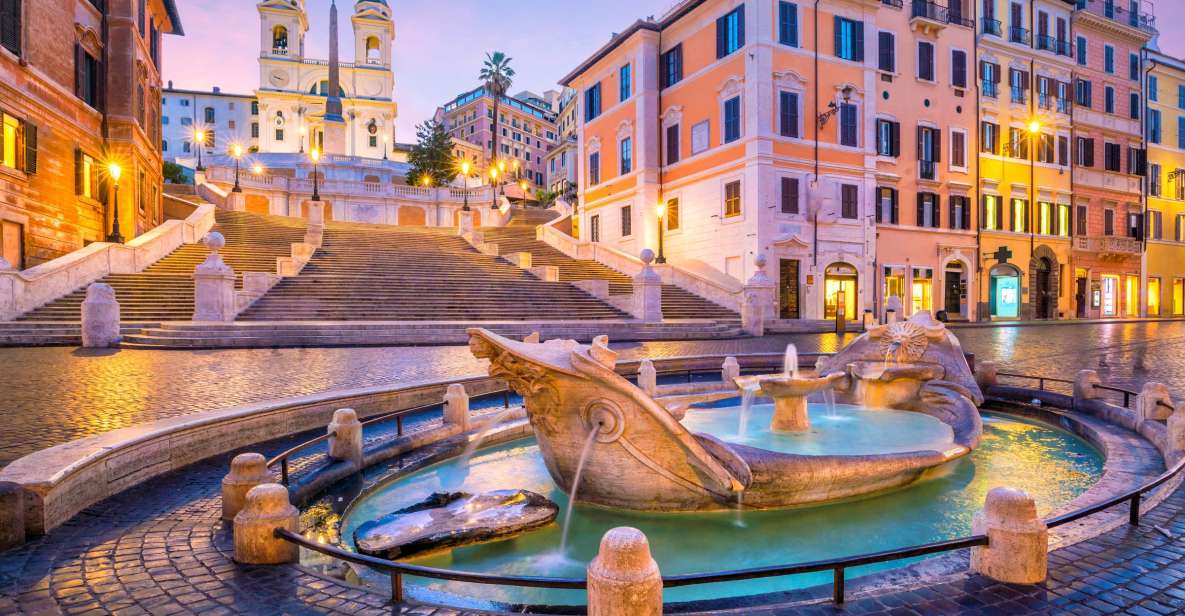
- Spanish Steps and Barcaccia Fountain: getting the Baroque mood right
- Trevi Fountain: iconic look, plus the story behind it
- Piazza Colonna and the Temple of Hadrian: ancient Rome’s presence
- Pantheon: the dome you can’t ignore (and why it’s special)
- Piazza Navona and the Four Rivers: Baroque art with named authors
- Campo de ’Fiori and Largo di Torre Argentina: markets and Caesar’s shadow
- The river crossing arc: Ponte Sant’Angelo and Castel Sant’Angelo
- Vittoriano: the unification finale (and what to look for)
- In the real world: pacing, headsets, and what to wear
- What’s included, what isn’t, and whether the $141.61 makes sense
- Who this tour suits best
- Should you book this Rome squares-and-fountains tour?
- FAQ
- Where does the tour start?
- How long is the experience?
- Is this tour private or group-based?
- What sights are included on the route?
- Are entrance fees included?
- What is not included?
- What should I bring, and is there anything I can’t bring?
Key things that make this tour stand out
- A tight route with major icons: Spanish Steps, Trevi Fountain, Pantheon, Piazza Navona, plus river and basilica area highlights
- Stories behind the famous stops: why Trevi matters beyond its look, and what’s tied to Julius Caesar’s assassination
- Stops with specific artistic names: Bernini, Borromini, Rainaldi, and da Cortona are woven into Piazza Navona details
- Better audio for moving crowds: headsets are included for groups larger than 8
- Value built into the ticket: professional guide, entrance fees, and a St. Peter’s Basilica audio guide are included
- Wheelchair accessible, with the note that it’s still a walking tour with moderate walking involved
Why this 3-hour Rome walk is a smart choice
Rome can be overwhelming because every corner feels like a postcard. This tour is a practical fix: you get a structured route through the city center, so you’re not spending your limited time trying to figure out what’s next.
I also like that the tour blends spectacle and context. You see the obvious icons (Trevi and the Pantheon), but you also learn why certain squares and fountains exist and how different eras shaped the look of central Rome.
The price—$141.61 per person—doesn’t just buy a “walk and photos.” It includes a professional guide, entrance fees, and on top of that an audio guide for St. Peter’s Basilica in multiple languages plus a paper map. That package matters in a city where ticket lines and confusing choices can chew up time.
You can also read our reviews of more walking tours in Rome

Meeting at Piazza della Trinità dei Monti and setting the pace
You meet at Piazza della Trinità dei Monti, next to the obelisk in the middle of the square, with your guide holding a sign that says Tour in the City. It’s a good starting point because you can quickly orient yourself before the walk begins.
From the start, the emphasis is on moving with purpose. The itinerary includes quick photo stops and guided segments, so you’re not stuck listening for too long at any one location, which helps kids and adults stay happy.
Bring comfortable shoes, because this is moderate walking through a dense, historic area. Also note what’s not allowed: walking frames aren’t permitted, and pets aren’t allowed. If you’re using a mobility aid, plan around what you can comfortably manage on uneven sidewalks.
Spanish Steps and Barcaccia Fountain: getting the Baroque mood right
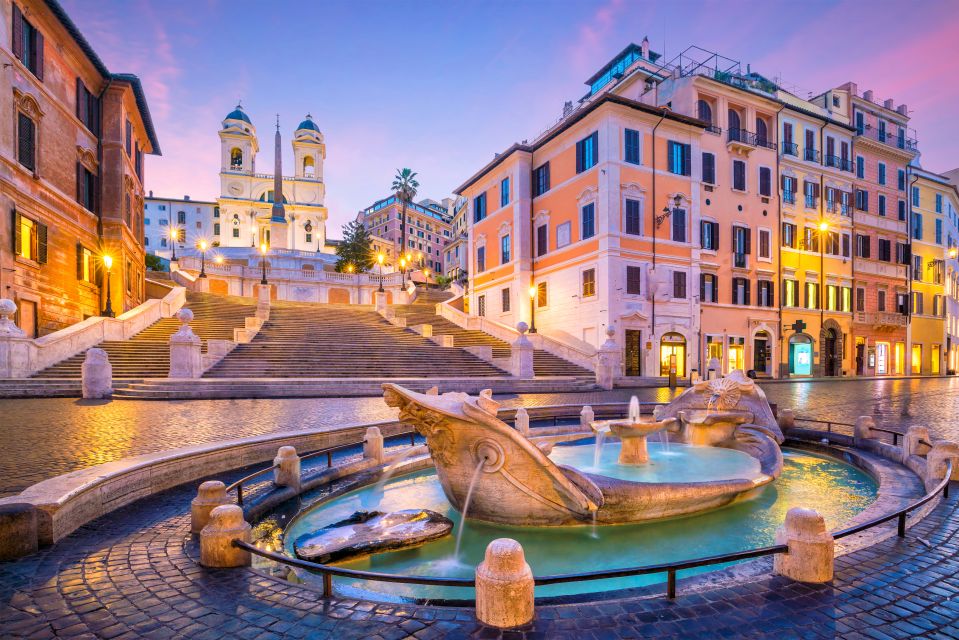
The walk begins with photo opportunities and guided time around Santissima Trinità dei Monti, then heads to the Spanish Steps. This is a classic Rome setup: elevation, views, and a dramatic sense of space—exactly the kind of scene where a guide helps you see more than the obvious angles.
One of the first visual anchors is the Barcaccia Fountain by the Spanish Steps, with the tour starting next to it in the middle of the square. Even if you’ve seen it in photos, hearing what makes it memorable can change how you notice its design.
This is also a spot where pacing matters. If you’re traveling with kids, the tour’s style is meant to keep things moving without turning the walk into a sprint.
Trevi Fountain: iconic look, plus the story behind it
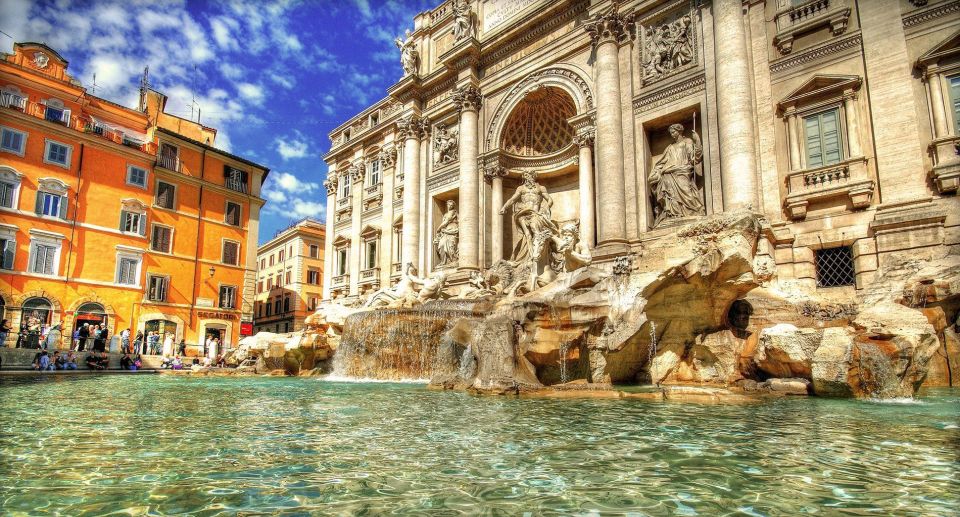
Next up is Trevi Fountain, widely regarded as one of the most stunning fountains in the world. You’ll get time for photos, then a guided walk that explains what lies behind the fountain beyond pure beauty.
What I like about Trevi on a guided tour is the difference between seeing it and understanding it. You’re not just watching water and architecture—you’re learning how Rome uses art and public space to communicate power, religion, and culture across centuries.
Practical tip: treat Trevi like a busy intersection, even if it doesn’t feel like one at first. If you want good pictures, you’ll do best by following your guide’s positioning and being ready to move when your moment comes.
Piazza Colonna and the Temple of Hadrian: ancient Rome’s presence
After Trevi, the itinerary includes Piazza Colonna and the Temple of Hadrian area. This is where the tour starts stretching your sense of time: you’re no longer only in the most theatrical corners of Baroque Rome.
The Temple of Hadrian stop helps you recognize how Roman design principles survived and influenced later styles. You might find the contrast interesting: you go from fountains and staged squares into a more restrained, ancient feel.
If you’re the type who likes to connect dots, this segment is useful. It sets up what comes next at the Pantheon by reminding you that Rome’s “main character” is continuity—layer upon layer of design choices.
You can also read our reviews of more historical tours in Rome



Pantheon: the dome you can’t ignore (and why it’s special)
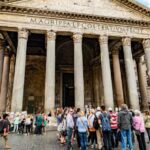
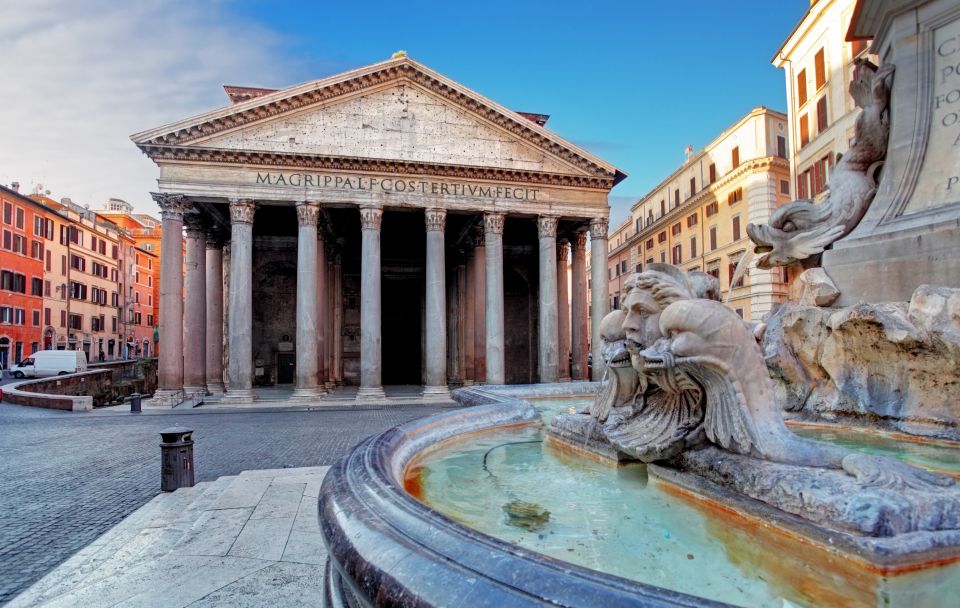
Then comes the Pantheon, built as a temple to all the gods of Olympus. The tour calls out the dome, constructed in ancient times, and notes that it’s the largest in the world.
This is one of those stops where your guide’s role matters because you’re surrounded by details that are easy to miss if you only have your phone out. You’ll have a guided moment here, plus time for photo-taking so you can appreciate the scale without feeling rushed.
Also, keep expectations realistic. The tour includes the main entrance experience and guided time, but it does not include dome entry. If going up is on your personal list, you’ll need a separate plan.
Piazza Navona and the Four Rivers: Baroque art with named authors
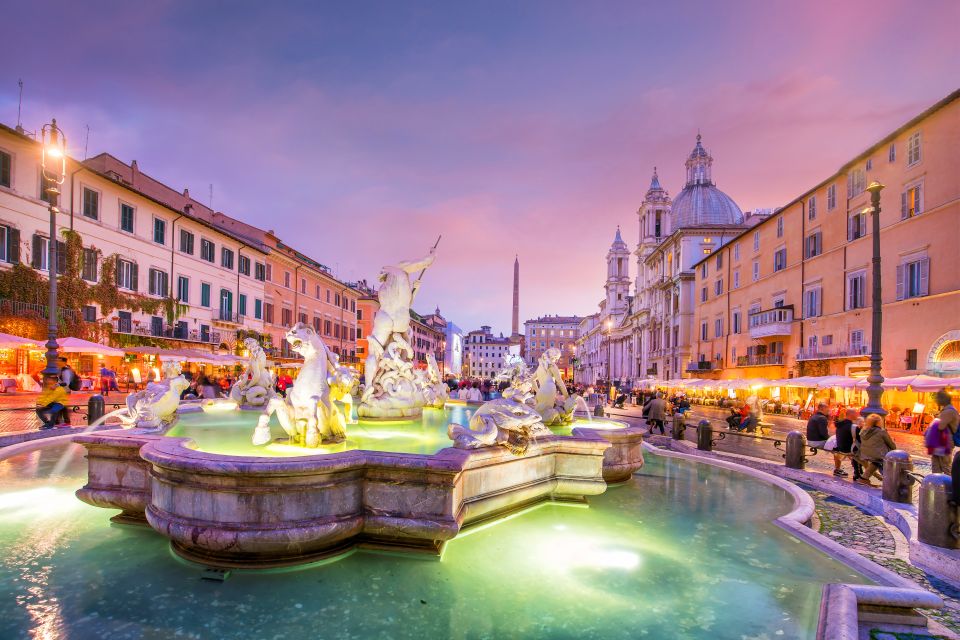
After the Pantheon, you’ll reach Piazza Navona, known as the delight of Baroque Rome. This square is famous for its sculptural and architectural energy, and the tour points directly to the artists behind key works.
You’ll hear references to Bernini and the Fountain of the 4 Rivers, along with connections to Borromini, Rainaldi (Church of St. Agnes in Agony), and da Cortona (frescoes in the Palazzo Pamphili). Having those names attached to what you see makes Piazza Navona much more rewarding than a quick walk-through.
One practical note: Piazza Navona can be lively. Your best strategy is to treat guided narration as the “route map” for where to look. Move with the guide, then take your photos where the sightlines make sense.
Campo de ’Fiori and Largo di Torre Argentina: markets and Caesar’s shadow
As the route continues, you’ll stop in the area of Campo de ’Fiori. Since 1869, it has been home to a colorful local market, so it’s a living piece of the city rather than only a museum-like backdrop.
Then you’ll reach the Area Sacra di Largo di Torre Argentina, described as the place of Julius Caesar’s assassination. This part of the tour adds a darker thread to what you’ve been seeing—Roman power and politics under the same sky as Baroque fountains.
If you like historical cause-and-effect, this is a meaningful pivot. It shows you that Rome’s famous beauty sits on top of real, sometimes violent, turning points.
The river crossing arc: Ponte Sant’Angelo and Castel Sant’Angelo
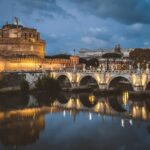
The detailed stop list includes Ponte Sant’Angelo, then Castel Sant’Angelo, with St. Peter’s Basilica as the final stop on that stretch. If you’re drawn to angles and river views, this section can be a good break from dense square-to-square pacing.
You’ll get photo stops and guided time along the way, plus scenic viewpoints. And when you arrive at St. Peter’s Basilica, the tour includes an audio guide in Italian, English, Spanish, and French and a paper map of the basilica.
One key point: entrance to the Dome isn’t included, and there’s no mention of included access to the Necropolis and the Treasury Museum. If you want those specific compartments, treat them as add-ons rather than part of the walk.
Vittoriano: the unification finale (and what to look for)
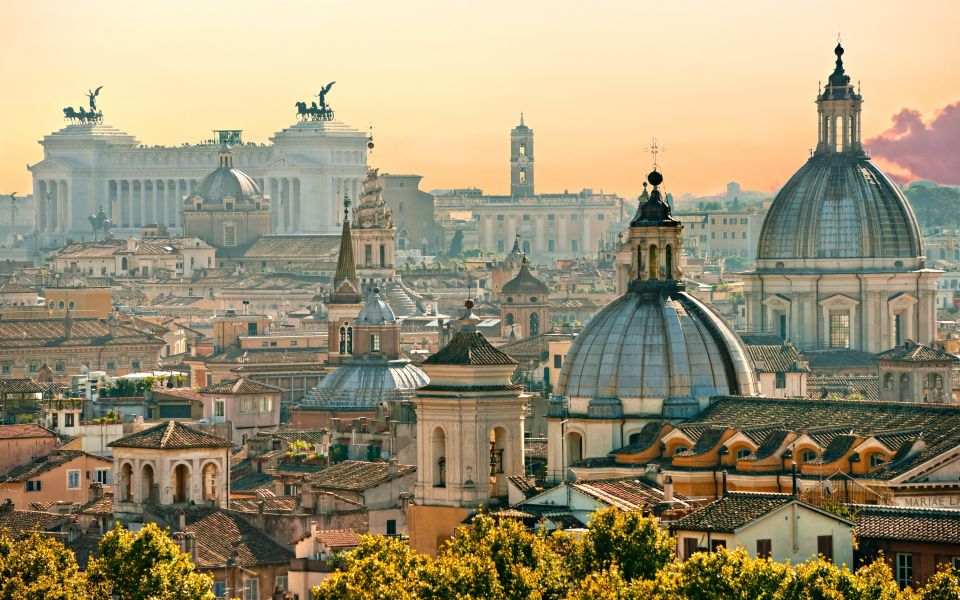
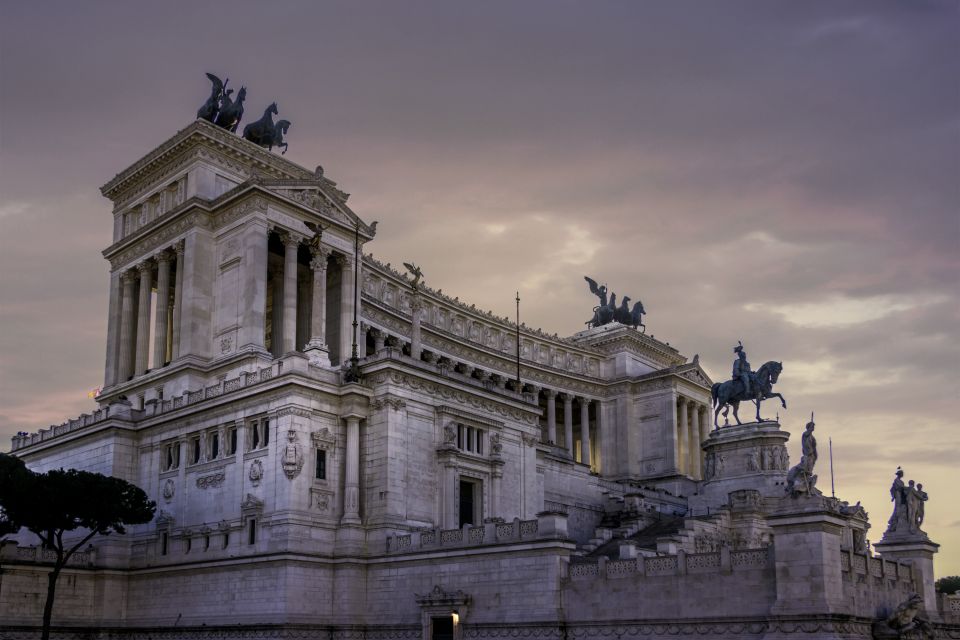
The tour overview also states the final stop is Vittoriano, commemorating the unification of Italy. Work on the monument began in 1885 and it was inaugurated in 1911 in honor of Victor Emmanuel II of Savoy.
This ending spot changes the emotional tone. You’ve moved from ancient temples and Baroque squares into a modern-national monument that tells a different kind of story: Rome as the center of a newly unified Italy.
If you’re a detail watcher, look at how the monument’s scale signals the shift from empire-era Rome to nation-state ambition. Even without special ticketed access, a stop like this can help your brain organize the city’s timeline.
In the real world: pacing, headsets, and what to wear
This is a private group tour, which usually means less crowd chaos around you and more control of the walking pace. The tour is also described as suitable for families, including youngsters, so the guide is likely to adjust timing so you’re not constantly rushing.
For groups bigger than 8, headsets are included, which is a big quality-of-life upgrade. You’ll hear the guide more clearly while walking, especially when you’re stopping near busy intersections or crowded squares.
Wheelchair accessible is listed, which is great news if mobility is a concern. Still, expect moderate walking and sidewalks that can be tricky, so do what you can to plan around your comfort level.
Dress casual and wear comfortable shoes, and you’ll be set. Nothing special is required, but your legs will notice cobblestones.
What’s included, what isn’t, and whether the $141.61 makes sense
Here’s the value picture as it’s actually packaged:
Included:
- Private walking tour with a professional guide
- Headsets for groups larger than 8
- Entrance fees (for the included parts of the route)
- St. Peter’s Basilica audio guide in Italian, English, Spanish, and French
- Paper map of St. Peter’s Basilica
Not included:
- Food and drinks
- Transportation to/from attractions
- Hotel pickup/drop-off
- Skip the line entrance
- Entrance to the Dome
- Entrance to the Necropolis and the Treasury Museum
So is it worth it? For many people, yes, because you’re buying time and clarity. You’re getting an organized route through major sights, plus guided context and the audio tools for St. Peter’s.
If you’re the type who already knows exactly what you want to see and doesn’t need interpretation, you might spend less on a self-guided plan. But if you want the stories behind Trevi, the labeled context at Piazza Navona, and the historical framing at Caesar’s assassination site, this format often feels like a shortcut to understanding.
Who this tour suits best
This is a great fit if you want:
- A high-impact route that covers major highlights without feeling like you’re sprinting
- A guide who can explain what you’re seeing in a way that makes it stick
- A pace that can work for families and mixed ages
- Clear listening support thanks to headsets (especially for larger groups)
It may be less ideal if:
- You are laser-focused on Dome entry or Necropolis/Treasury access
- You hate walking and want everything minimized
- You’re hoping for skip-the-line entry included in the price
Should you book this Rome squares-and-fountains tour?
If you want an organized way to see central Rome with enough context to make it meaningful, I’d book it. The combination of private guiding, entrance fees included, and audio support for St. Peter’s is the kind of practical value that matters in a city where time and attention are hard to stretch.
On the other hand, if dome views or underground museum areas are your top priority, treat those as separate ticket goals. This tour is built to connect the dots across squares, fountains, and key monuments—then give you the right tools for St. Peter’s—without trying to do everything.
FAQ
Where does the tour start?
The meeting point is Piazza della Trinità dei Monti, next to the obelisk in the middle of the square. The guide holds a signboard that reports Tour in the City.
How long is the experience?
It lasts 3 hours. Starting times vary, so you’ll need to check availability.
Is this tour private or group-based?
It’s a private group walking tour.
What sights are included on the route?
The tour covers major stops such as the Spanish Steps, Trevi Fountain, Pantheon, Piazza Navona (including the Fountain of the 4 Rivers), and it also includes stops like Ponte Sant’Angelo, Castel Sant’Angelo, and St. Peter’s Basilica. The tour overview also highlights Vittoriano and the Area Sacra di Largo di Torre Argentina.
Are entrance fees included?
Yes. Entrance fees are included for the parts of the visit that are included in the tour plan.
What is not included?
Food and drinks are not included, and skip the line entrance is not included. Also, entrance to the Dome and the Necropolis and the Treasury Museum are not included.
What should I bring, and is there anything I can’t bring?
Bring comfortable shoes. Pets are not allowed, and walking frames are not allowed.