REVIEW · ROME
Rome: Campo de Fiori & Ghetto Street Food Sightseeing Tour
Book on GetYourGuide →Operated by Bea Tours · Bookable on GetYourGuide
Street food meets Rome’s big stories. I love the hands-on menu—supplì and pizza by the slice—and I also like how guides (think Andrea or Marco) turn each stop into a clear story of the Roman Ghetto and the city around it.
One possible drawback: this tour isn’t for vegans or people with lactose intolerance, so you’ll want to plan dietary needs carefully before booking.
In This Review
- Key highlights you can plan your day around
- Campo de’ Fiori to the Jewish Ghetto: a 2.5-hour Rome route with food built in
- The food lineup: why this tour works better than a solo food crawl
- Where the tastings happen: restaurants, bakeries, and a market start
- Wine and beer samples: fun, but watch your comfort level
- Pompey’s Theatre and Via dei Chiavari: history you can see while you taste
- The Roman Ghetto and Great Synagogue area: more than just a photo stop
- Largo Argentina and Area Sacra: a strong finish with dessert included
- Price and value: what $41 buys you in real terms
- Who this tour suits (and who should skip it)
- Meeting point and on-foot logistics: start easy, wear the right shoes
- Should you book the Campo de’ Fiori & Ghetto street food tour?
- FAQ
- How long is the Rome Campo de’ Fiori & Ghetto street food tour?
- Where do I meet the tour guide?
- What’s included in the price?
- Is the tour suitable for vegans or lactose intolerance?
- What language are the tours in?
- Can I get a refund if my plans change?
Key highlights you can plan your day around
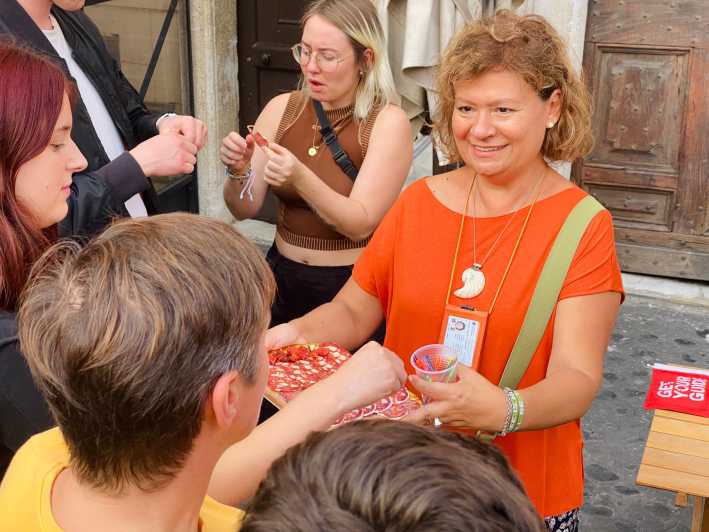
- Supplì, pizza al taglio, fried artichokes, and ice cream as a real Roman-style tasting lineup
- Wine and beer samples paired with food stops at local spots
- Pompey’s Theatre, Portico d’Ottavia, and Largo Argentina to connect streets to history
- Giordano Bruno statue meeting point and an easy, on-foot walking route through historic neighborhoods
- English-speaking guides who explain the story without turning it into a lecture
Campo de’ Fiori to the Jewish Ghetto: a 2.5-hour Rome route with food built in
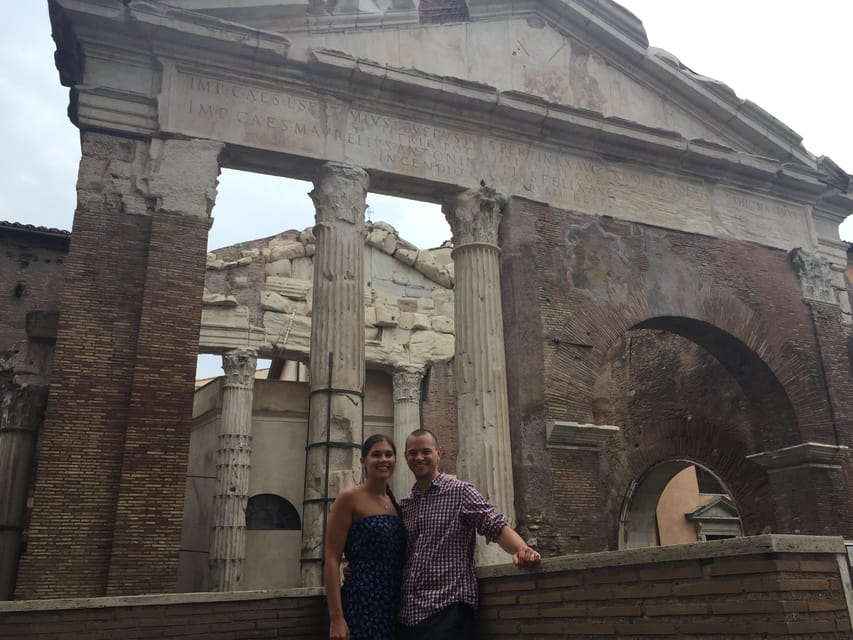
This is the kind of Rome walk I recommend when you want two things at once: real street food and a guided route through some of the city’s most important sites. You start at Campo de’ Fiori, one of Rome’s most recognizable squares, and you build your way through nearby streets toward the Jewish Ghetto area and then onward to Largo Argentina.
The timing matters here. The tour is listed as 2.5 hours, so you’re not stuck for a half-day. You get enough stops to taste a lot, but the pace stays workable for most people who are comfortable on foot for a short walking day.
Also, Campo de’ Fiori changes with the day. In daytime, it’s described as an open-air market scene; later, it becomes more of a social hub where people gather. Either way, it’s a great place to begin because you’re dropped into the rhythm of local life instead of just standing in front of a landmark.
You can also read our reviews of more food & drink experiences in Rome


The food lineup: why this tour works better than a solo food crawl
I like street food tours when they do two things well: they pick the right items, and they help you understand what you’re tasting. Here, the menu focuses on classic Roman flavors instead of generic Italian snacks.
You can expect tastings that include:
- Supplì (deep-fried rice balls)
- Pizza al taglio (pizza by the slice, typically thin and crispy)
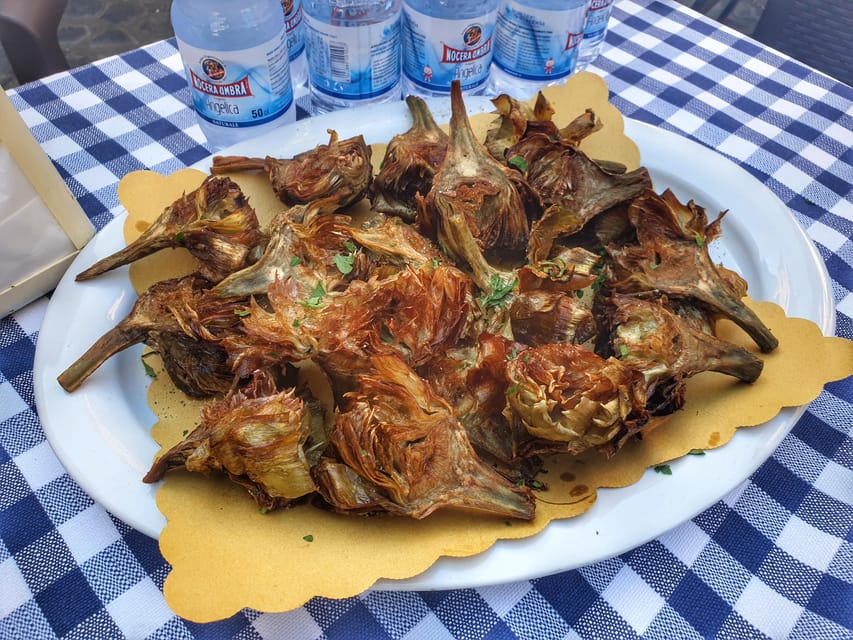
- Carciofi alla giudia (fried artichokes)
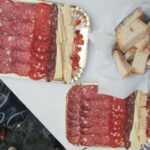
- Cured meat
- Fried artichoke as a highlight item
- Ice cream as a sweet finish
- Plus wine and beer samples
Why that lineup matters: Rome’s food identity is often misunderstood as “pasta everywhere.” But Roman street food is its own world—crispy, fried, simple ingredients done seriously well. Supplì and pizza al taglio are perfect examples: you learn the names, you taste the textures (crunch outside, hot center), and you quickly get why these foods are still sold today around Campo de’ Fiori.
And it’s not just tiny bites. The feedback you can lean on says the portions are generous enough to keep you full for the day. That’s a big value point for a tour priced at $41 per person: you’re not just buying a snack; you’re getting multiple tastings plus alcohol samples and a guide to steer you to the right spots.
Where the tastings happen: restaurants, bakeries, and a market start
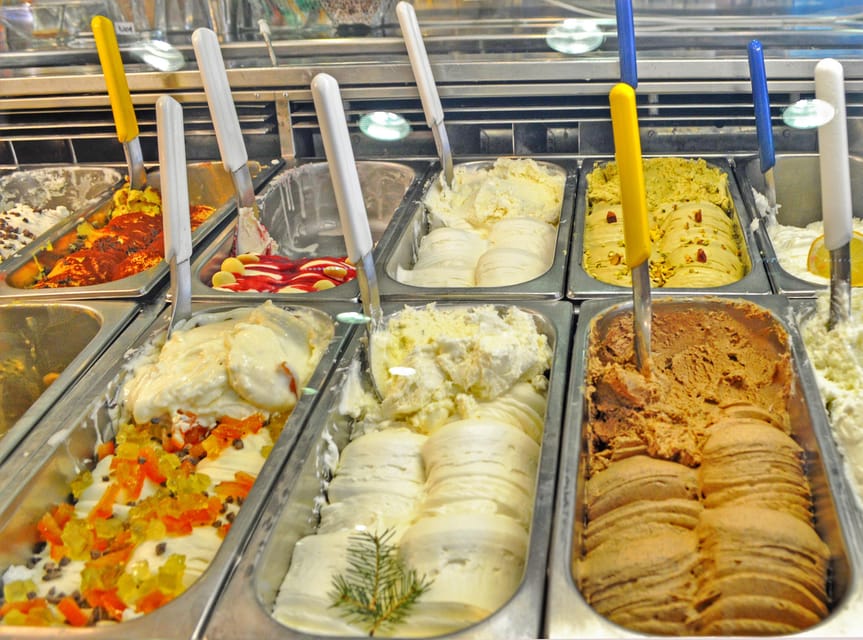
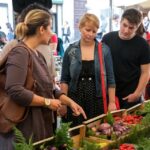
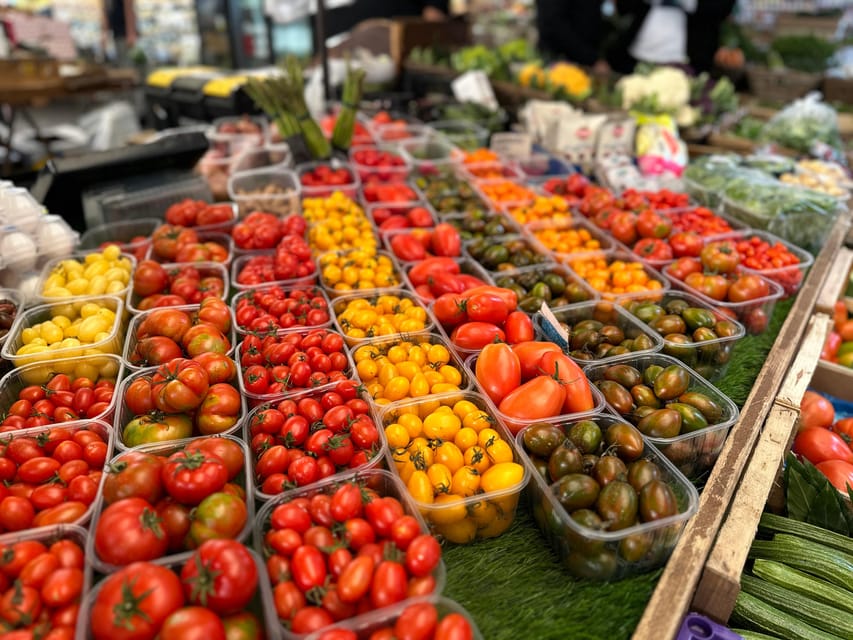
The day begins near the Giordano Bruno statue in piazza Campo dè Fiori. From there, you spend time at Campo de’ Fiori itself, and the tour includes a food market visit. If you catch a morning-style departure, you may also get tastings related to ingredients like truffles, olive oil, and balsamic vinegar. That’s useful even if you don’t buy anything, because you’ll learn what makes Roman flavors taste the way they do.
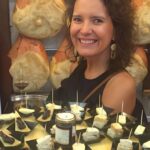
After the market, you move on foot to tasting stops. The structure is simple: you go from one food moment to the next, and each one gets a little story. You’ll hit a local restaurant for a wine tasting and additional street food, then a local bakery for more guided food-and-sightseeing time.
There’s also a short secret stop designed for the walk and the storytelling. Even though it’s brief, it helps break up the tour so you’re not eating nonstop without context.
Practical takeaway: if you’re the kind of person who gets hangry during museum hours, this format helps because food keeps showing up right when you need a reset.
Wine and beer samples: fun, but watch your comfort level
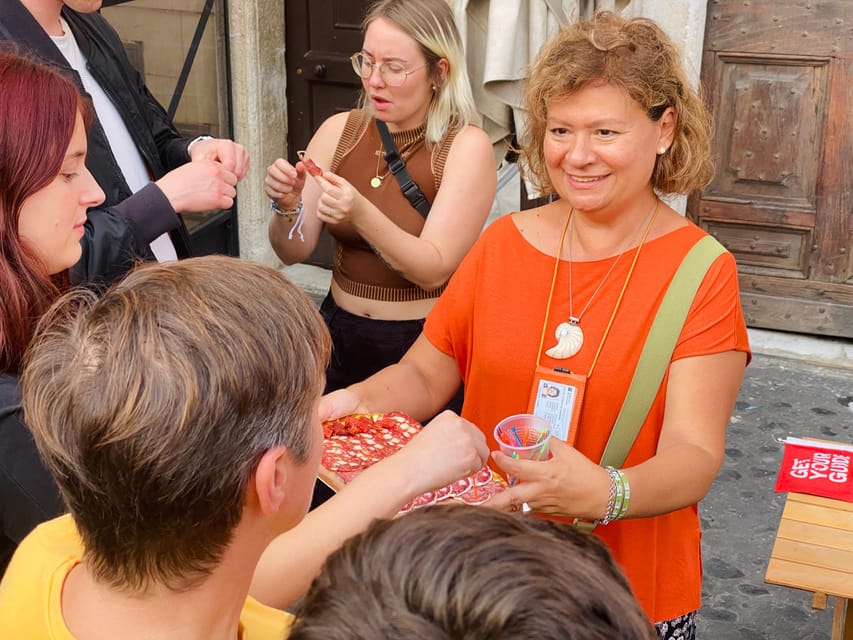
The tour includes a wine sample and a beer sample. For many people, that’s exactly the right amount—enough to feel like a genuine food-and-drink experience without turning it into a long drinking session.
One thing to consider: you’re also walking through several notable areas, including sight stops like Pompey’s Theatre and the Jewish Ghetto streets. If you know you’re sensitive to alcohol or you’d rather keep the day controlled, plan your pace accordingly.
If you don’t drink, the data doesn’t say what substitutions are offered, so you’ll want to double-check dietary and drink preferences before you go. The tour does include vegetarian options, but only with advance notice, so the same idea applies here.
Pompey’s Theatre and Via dei Chiavari: history you can see while you taste
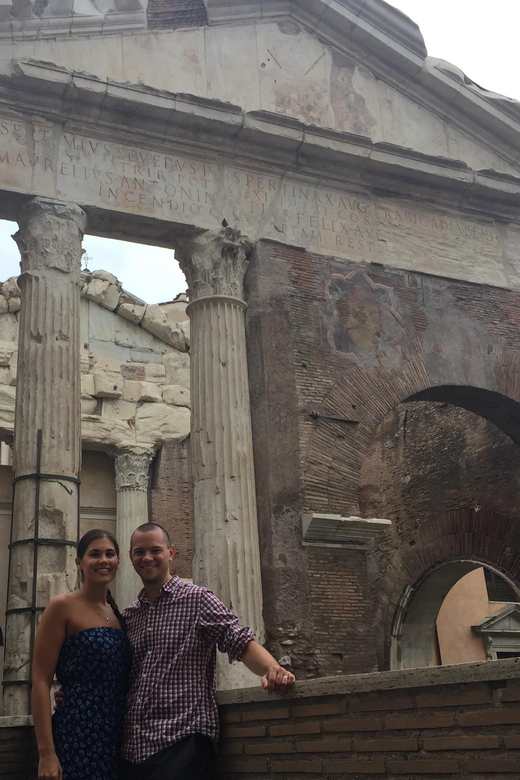
This tour doesn’t treat history as a separate activity. It threads it into the walking route. One clear example is the stop near Theatre of Pompey. Even if you’ve heard the name before, being in the neighborhood makes the story feel more concrete. You’re walking through the kind of area where layers of Roman life overlap.
On the way, you also pass through Via dei Chiavari, described as offering scenic views. That kind of street moment matters because it gives your brain a break from food and explanation. You can take a photo, look around, and soak up the geometry of Rome—the narrow streets, the sightlines, the way buildings frame the walk.
The tour also mentions stories that connect big Roman figures to the present. Julius Caesar comes up in the described history component, and you also learn about Giordano Bruno and other key references tied to the stops.
You can also read our reviews of more tours and experiences in Rome


The Roman Ghetto and Great Synagogue area: more than just a photo stop
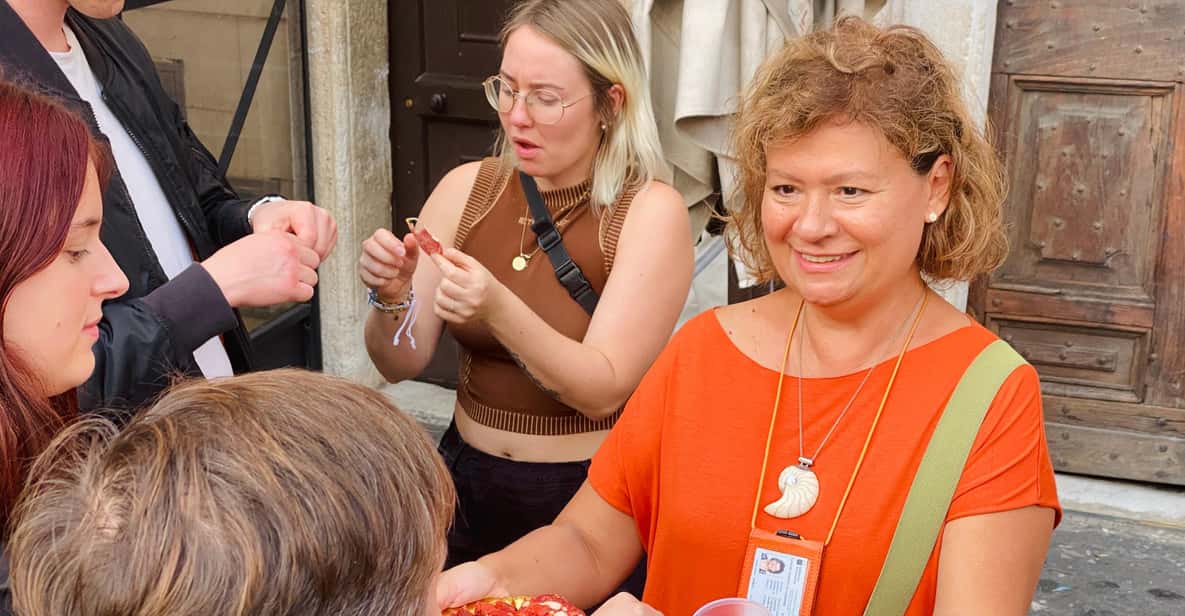
The Jewish Ghetto portion is a major reason many people choose this tour. It’s set up as a guided visit with stops that are meant to add context, not just check boxes.
You’ll spend time in the Jewish Ghetto area on foot, then walk near Portico d’Ottavia and pass by the Great Synagogue of Rome. The tour description frames this as learning about the Roman Ghetto and its historical background, and it includes a guided segment so you understand why these streets matter.
Why I think this part of the tour is valuable: the Ghetto area can feel like a neighborhood you simply move through unless someone explains what you’re seeing. Having the guide connect the present streets to the historical story helps you notice details you’d otherwise miss—like the way the area’s landmarks anchor the memory of the community.
It’s also a good reminder that Rome isn’t only about emperors and ruins. It’s also about people, culture, and how cities change while still carrying traces of the past.
Largo Argentina and Area Sacra: a strong finish with dessert included
The tour ends at Area Sacra di Largo Argentina, and there’s a dessert stop at Largo di Torre Argentina. That’s a smart finishing design: you get your final sweet moment while you’re already in one of Rome’s most striking historic areas.
Largo Argentina is known for its archaeological presence, and on this tour it’s presented as a sightseeing end point. The walk style keeps you in motion, so you arrive at the finish area ready to look and take in what’s around you.
Also, by the time dessert comes, you’re usually ready for it. Between the savory tastings earlier and the guided walk, you don’t end up wishing you’d paced your food better.
Price and value: what $41 buys you in real terms
At $41 per person for a 2.5-hour guided street food route, you’re paying for four main things:
- Multiple food tastings (Roman staples like supplì, pizza al taglio, fried artichokes, cured meat, ice cream)
- Alcohol samples (wine and beer)
- A professional English-speaking guide
- Guided sightseeing time that includes Pompey’s Theatre and the Jewish Ghetto area
If you tried to copy this on your own, you’d spend time searching for places that do these specific Roman items well. You might also miss the “why” behind what you’re eating and seeing. Here, the guide keeps the pace and the flow tight: you go from market to restaurant to bakery to historic stops without having to plan the whole route.
Value is also about fullness. The feedback you can take seriously suggests the tastings add up—enough that you won’t feel like you need a second big meal right after.
Who this tour suits (and who should skip it)
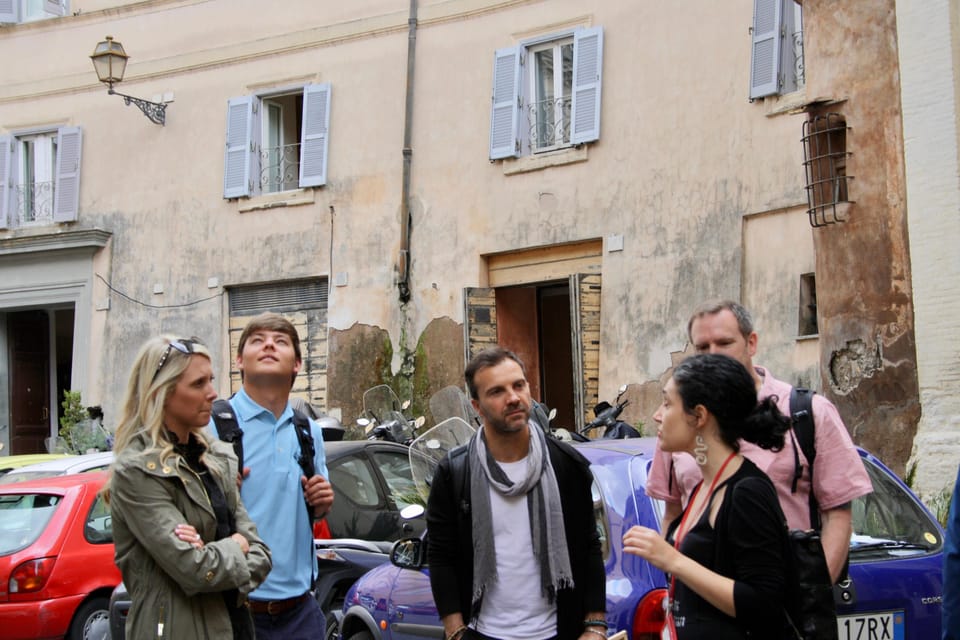
This tour is a strong match if you:
- Want a first-time Roman food intro with a real guide
- Like walking tours that mix food with sightseeing
- Enjoy classic Roman fried and street-ready dishes
- Prefer English explanations that connect food to place and time
It’s a poor match if you:
- Are vegan (not suitable)
- Have lactose intolerance (not suitable)
- Need flexibility on drink substitutions not covered by the tour info
Vegetarian options exist, but you have to request them in advance.
Meeting point and on-foot logistics: start easy, wear the right shoes
You meet at the Giordano Bruno statue in piazza Campo dè Fiori. That’s a helpful detail because it’s a clear landmark, and it places you right where the story starts: the square that anchors the market and the neighborhood.
The tour is designed around walking with short transfers (you’ll move between squares and streets). So the basics still apply: comfortable shoes, a bottle of water, and a light layer if the weather changes. You’re also outside in active areas, so it helps to come ready to look up as well as look down at your food.
Also, because the schedule includes multiple tasting moments and several scenic stops, you’ll likely want to show up hungry. The tour is built to feed you.
Should you book the Campo de’ Fiori & Ghetto street food tour?
I’d book it if you want a guided Roman street food experience that also gives you the historical thread. The biggest selling points are the food lineup (supplì, pizza al taglio, carciofi alla giudia, and ice cream), the wine and beer samples, and the fact that guides like Andrea and Marco are praised for making the history understandable and the stops genuinely fun.
Skip it if dietary needs are a problem, since it’s explicitly not suitable for vegans or lactose intolerance. And if you don’t like walking while eating, you may find the rhythm too “on-the-move.”
If you’re somewhere in the middle—curious about Rome beyond ruins and ready for real food—this is one of the smarter short tours to choose. You finish with full stomachs, clearer context, and a route you can recognize later when you wander on your own.
FAQ
How long is the Rome Campo de’ Fiori & Ghetto street food tour?
It runs for 2.5 hours.
Where do I meet the tour guide?
You meet at the Giordano Bruno statue in piazza Campo dè Fiori.
What’s included in the price?
The tour includes street food, a wine sample, a beer sample, and a professional guide. Vegetarian options are available if requested in advance.
Is the tour suitable for vegans or lactose intolerance?
No. The tour is not suitable for vegans and not suitable for people with lactose intolerance.
What language are the tours in?
The live tour guide speaks English.
Can I get a refund if my plans change?
Yes. There is free cancellation up to 24 hours in advance for a full refund.