REVIEW · ROME
Rome Evening Walking Tour
Book on GetYourGuide →Operated by Romaetravel · Bookable on GetYourGuide
Rome looks different after dark, and this walk proves it. You start at Piazza di Spagna and follow the city’s main symbols as they glow under evening light, with a local guide filling in the stories.
I especially like how the route strings together the big-name sites—Trevi Fountain and the Pantheon—without turning it into a rushed checklist. It’s paced for seeing details you might miss in daylight.
One thing to consider: you’ll climb the Spanish Steps area (the famous 135 steps are part of the story), so comfortable shoes matter and you should be ready for stairs and nighttime footing.
In This Review
- Key Highlights You’ll Actually Use
- Start at Piazza di Spagna: The Evening Version of a Classic
- What to watch for here
- Spanish Steps to Trinità dei Monti: A Short Climb with Big Payoff
- Why this works in a 2-hour tour
- Trevi Fountain by Night: The Coin Tradition Makes More Sense
- A practical note at Trevi
- Walking to the Pantheon: Roman Design You Can Feel
- Nighttime advantage
- Piazza Navona: Where the City Stacks Its Time
- Why this ending is more than pretty
- The Guide Factor: Small Group, Big Storytelling
- Price and Value: Is $79 Worth It?
- Who This Tour Fits Best
- Quick Tips for Your Night Out
- Should You Book This Rome Evening Walking Tour?
- FAQ
- Where does the tour start?
- How long is the Rome evening walking tour?
- What are the main sights on the route?
- Does the tour include the coin tradition at Trevi Fountain?
- Is hotel pickup included?
- What languages is the guide available in?
- What should I bring?
- What group size is it?
- Is there a refund if I cancel?
Key Highlights You’ll Actually Use
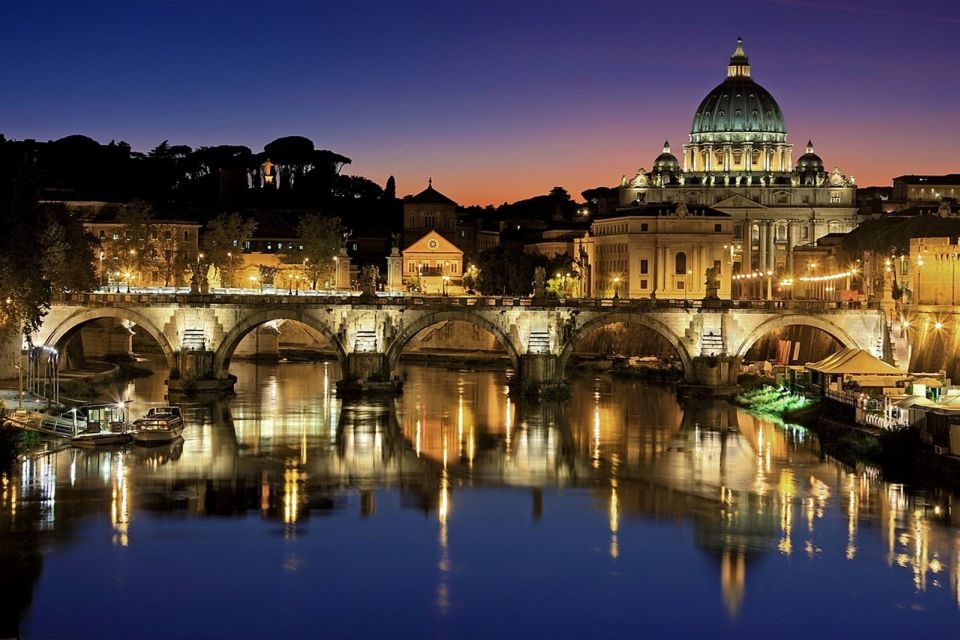
- Spanish Steps to Trinità dei Monti: history plus a classic Rome skyline moment from the top
- Trevi Fountain at night: the famous coin tradition is explained as part of the ritual
- Pantheon context: you learn why this massive brick dome shaped later architecture
- Piazza Navona’s layer-cake past: the square sits on ruins of the Domitian Circus
- A small-group, guide-led pace: you get backstory at each stop, not just photos
Start at Piazza di Spagna: The Evening Version of a Classic
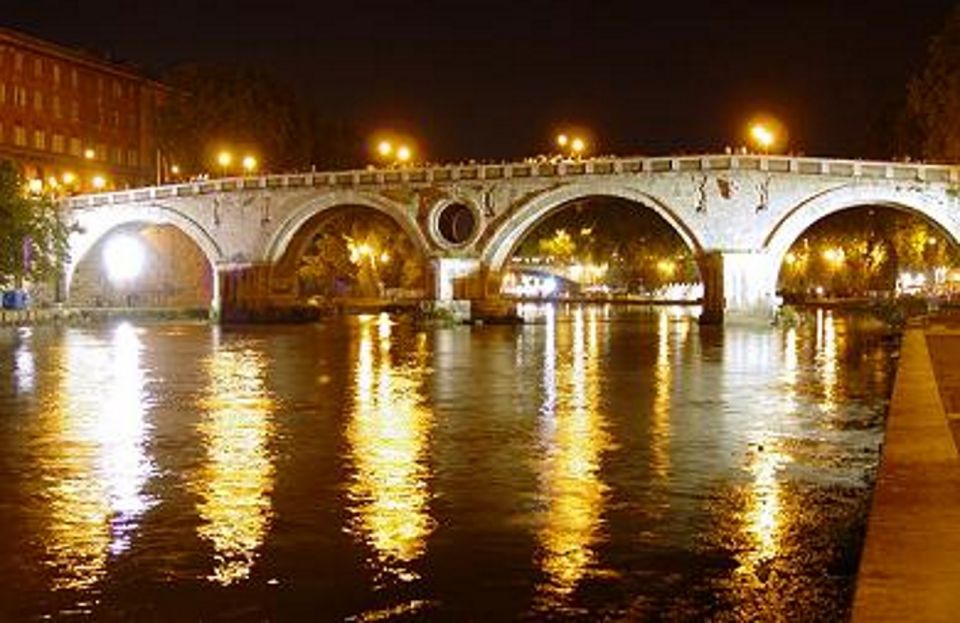
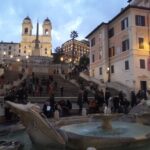
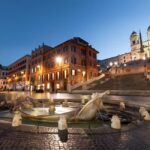
Your tour begins in Piazza di Spagna, right by the Spanish Steps area (meeting point: Piazza di Spagna 46, in front of the McDonald shop). This is a smart way to begin, because the light here tells you instantly that Rome at night isn’t just quieter—it’s more dramatic.
From the start, you’re set up to understand why people obsess over this corner of the city. The Spanish Steps aren’t only a photo spot. They connect the Bourbon Spanish Embassy era to the church of Trinità dei Monti on the summit. As you move along, your guide frames what you’re seeing with the kind of context that turns stone and statues into a timeline you can follow.
A guide also helps you look beyond the obvious. In one strongly praised experience, Luisa was noted for deep storytelling that made the piazzas, buildings, and the art you see around you feel tied to specific moments in Rome’s 16th and 17th-century life. That’s the big difference here: you’re not just walking between landmarks. You’re learning how the city thinks.
You can also read our reviews of more walking tours in Rome

What to watch for here
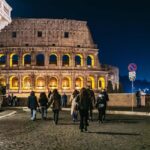
The evening surfaces can feel a bit more slippery, and it’s dark enough that you’ll want to keep your head up. And yes, this area is connected to the Spanish Steps story—so bring shoes with grip and expect some stair-and-slope movement.
Spanish Steps to Trinità dei Monti: A Short Climb with Big Payoff
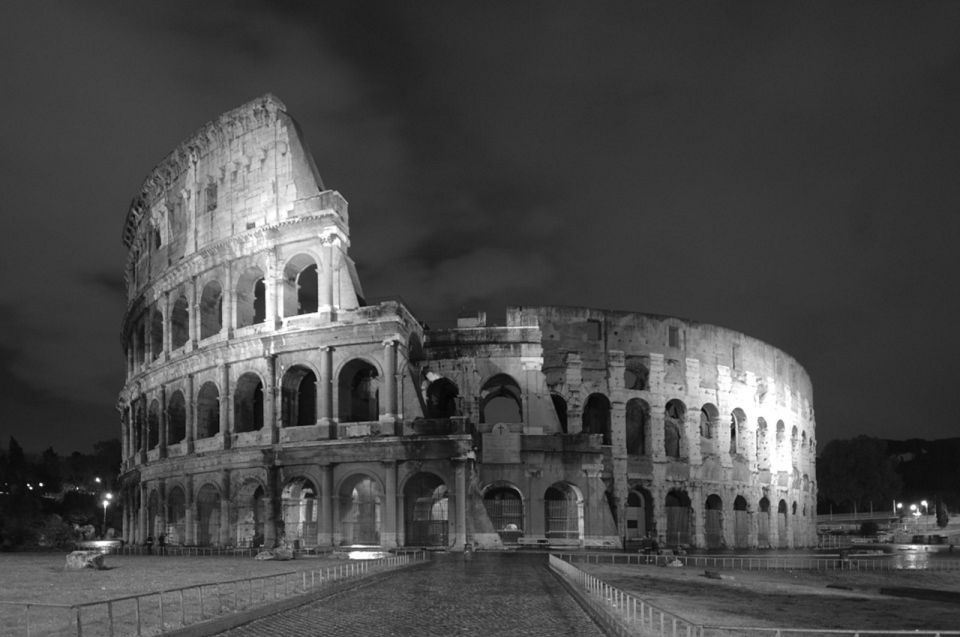
The Spanish Steps are part of the tour’s narrative, and they’re the easiest place to understand why walking Rome at night feels special. You’re moving from the bustle of a central plaza into a higher vantage, guided by the city’s layout and its history.
The steps are famous for a reason, but your guide gives you the key detail: they’re tied to the historic Bourbon Spanish Embassy and the climb leads toward Trinità dei Monti at the top. That simple chain—embassy to church—helps you “read” the steps rather than treating them like a single viewpoint.
Even if you don’t spend the entire time counting steps, the route makes you slow down. And slowing down in Rome is how you catch the little things: the way streets funnel views upward, the way facades look more sculptural after dark, and how people move through the space like it’s a stage.
Why this works in a 2-hour tour
This tour is only 2 hours, so you don’t have time for lots of detours. The Spanish Steps section is an efficient use of time: it gives you height, perspective, and a major historical thread before you drop back toward the center of Rome’s museum-worthy showpieces.
Trevi Fountain by Night: The Coin Tradition Makes More Sense
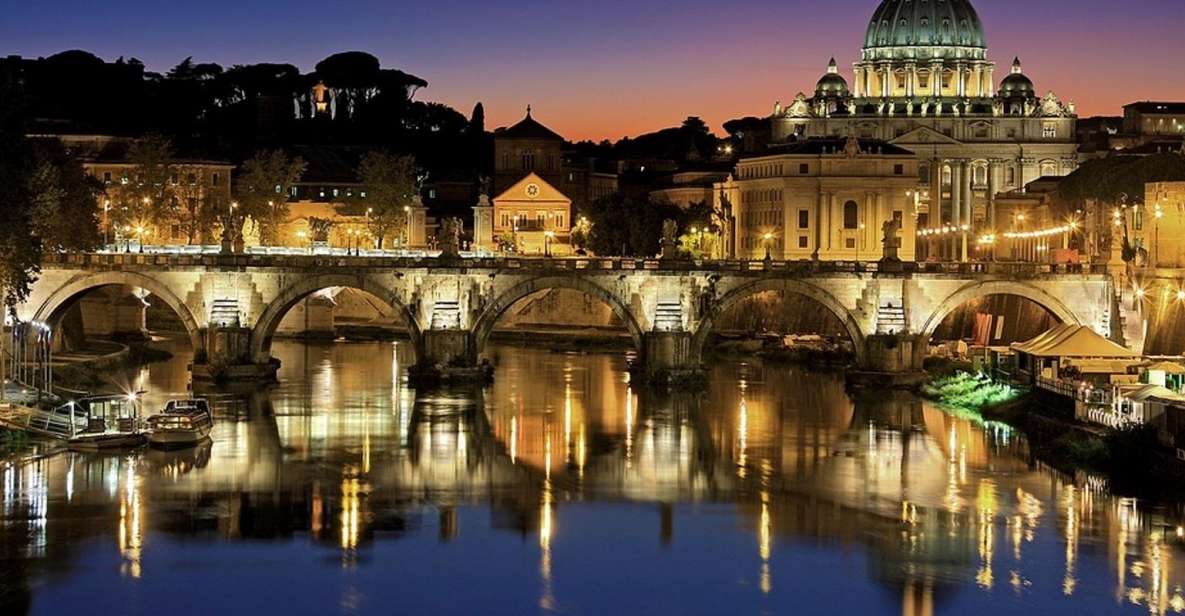
Next comes Trevi Fountain, and doing it at night is one of the best ways to experience it. Daytime is dramatic too, but evening light softens the edges and makes the fountain feel more theatrical—like the city is presenting its greatest hits with better lighting.
Your guide walks you through what you’re seeing and explains the tradition of throwing a coin over your shoulder into the fountain. It’s a small moment, but it’s also a surprisingly good memory anchor. Once you connect the ritual to the place, you don’t just see a monument—you understand why people line up and what they’re trying to symbolize.
This is also where the tour earns its keep as a guided experience. You’ll hear the kind of stories that help you interpret the scene instead of only photographing it. In the positive reviews, the standout praise wasn’t just the sites—it was the way the guide made each stop feel meaningful.
You can also read our reviews of more evening experiences in Rome
A practical note at Trevi
Trevi is popular in any hour, and at night it can still be busy. If you want photos, aim for quick shots while staying respectful of how people flow around the fountain.
Walking to the Pantheon: Roman Design You Can Feel
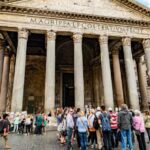
From Trevi, you walk toward the Pantheon, and this is one of the tour’s smartest moves. The Pantheon isn’t just famous because it’s old. It’s famous because it’s structurally impressive, and your guide helps you notice that.
The Pantheon is described as the largest brick dome in the history of architecture, and it’s also considered a forerunner of many modern places of worship. Even if you can’t take in every detail in two hours, this is the kind of explanation that makes the building click. You stop seeing it as a single postcard scene and start seeing it as engineering that shaped the world.
You’ll also get the religious-cultural angle: the Pantheon is dedicated to the gods of Olympus, and it’s known as one of the best-preserved monuments of ancient Rome. That mix—belief, symbolism, and construction—helps the building feel complete, not just ancient.
Nighttime advantage
At night, big stone and brick structures often look more solid and less flat. The dome silhouette is easier to read, and the overall atmosphere makes the Pantheon feel like the center of an older Rome, not just a timed stop on your itinerary.
Piazza Navona: Where the City Stacks Its Time
The tour ends at Piazza Navona, which is built on the ruins of the Domitian Circus. That single fact changes how you see the square. You’re not only looking at a charming plaza with fountains. You’re standing in a shape shaped by Roman entertainment and public space—then rebuilt and decorated over centuries.
Piazza Navona is also where Bernini’s Fountain of the Four Rivers comes in. The four rivers theme is part of the place’s identity, and it’s a fitting finale because it ties together the themes your guide has been working on all night: symbolism, art, and layers of Rome’s past.
You’ll finish with a sense of closure that feels natural. Starting at Spanish Steps and ending here lets you trace a gentle arc through central Rome’s most meaningful public spaces.
Why this ending is more than pretty
Piazza Navona is a great capstone because it’s visually dramatic even when you’re tired from a two-hour walk. And it’s historically loaded in a way that helps you connect the evening’s story threads: earlier Rome, later Rome, and the art that stitched it all together.
The Guide Factor: Small Group, Big Storytelling
This is a small group tour with a local guide, offered in Italian and English. That matters because the value here isn’t only the landmarks—it’s what’s said between them.
In the reviews, the best feedback points to the guide experience. One guest specifically praised Luisa for immense knowledge and a welcoming approach, describing how she made the piazzas and buildings feel alive with 16th- and 17th-century stories. Another praised a competent guide who clearly handled the language well and led them through the city’s “glanzvollen” sights and secrets.
Even when you’re not chasing every fact, a good guide changes what you notice. You start spotting why a street bends, why a square looks the way it does, and why Rome feels like it’s constantly repeating its own themes.
Price and Value: Is $79 Worth It?
At $79 per person for a 2-hour evening walk, the value depends on what you want out of Rome.
If your plan is simply to see Trevi, the Pantheon, and Piazza Navona, you could piece it together on your own. But this tour sells something different: a guided route that strings those stops into one coherent story, with explanations and traditions tied directly to the sights.
You’re paying for:
- A local guide (the main value driver)
- A structured route that saves decision-making
- Small-group attention so you’re not lost in a crowd of strangers
- A night-friendly pace that keeps the sights from feeling like a sprint
For me, the strongest “value” argument is that you get meaningful context at multiple major stops in a short time window. If you only have one evening, this format is a practical way to make it count.
Who This Tour Fits Best
This tour is a good match if you:
- Want a high-impact evening in central Rome with minimal planning
- Like guided explanations tied to real places (traditions, symbolism, architecture)
- Prefer a small group over trying to navigate everything alone at night
- Are excited by the big landmarks but also want the “why,” not only the “what”
It’s less ideal if:
- You hate stairs or uneven surfaces (the Spanish Steps area is part of the experience)
- You want a super-long, slow wander with lots of free time at each stop (this one is deliberately 2 hours)
Quick Tips for Your Night Out
- Wear comfortable shoes. The route is short, but you’ll still feel the evening movement.
- Bring a camera. Trevi and Piazza Navona look especially good after dark.
- Keep your expectations realistic: this is a guided walk with major highlights, not a deep museum-style day.
- If you’re sensitive to crowds, be ready for popular photo spots along the way.
Should You Book This Rome Evening Walking Tour?
If you want a simple plan for one memorable evening—and you care about getting the stories behind Rome’s icons—this is an easy yes. The combination of Piazza di Spagna, Trevi Fountain, the Pantheon, and Piazza Navona in just 2 hours is exactly the kind of tight itinerary that works when you don’t want to spend your precious time figuring things out.
Book it especially if you love guided storytelling and traditions, like the coin ritual at Trevi. Pass if stairs and nighttime crowds are a dealbreaker for you.
FAQ
Where does the tour start?
It starts at Piazza di Spagna, and the meeting point is Piazza di Spagna 46 in front of the McDonald shop.
How long is the Rome evening walking tour?
The tour lasts 2 hours.
What are the main sights on the route?
You’ll see Piazza di Spagna, Trinità dei Monti, Trevi Fountain, the Pantheon, and end at Piazza Navona.
Does the tour include the coin tradition at Trevi Fountain?
Yes. Your guide explains the tradition of throwing a coin over your shoulder into the fountain.
Is hotel pickup included?
No. Hotel pickup and dropoff are not included.
What languages is the guide available in?
The live guide is available in Italian and English.
What should I bring?
Bring comfortable shoes and a camera.
What group size is it?
It’s described as a small group tour and also listed as private group.
Is there a refund if I cancel?
You can cancel up to 24 hours in advance for a full refund.